Artwork
Head of a Bearded Man
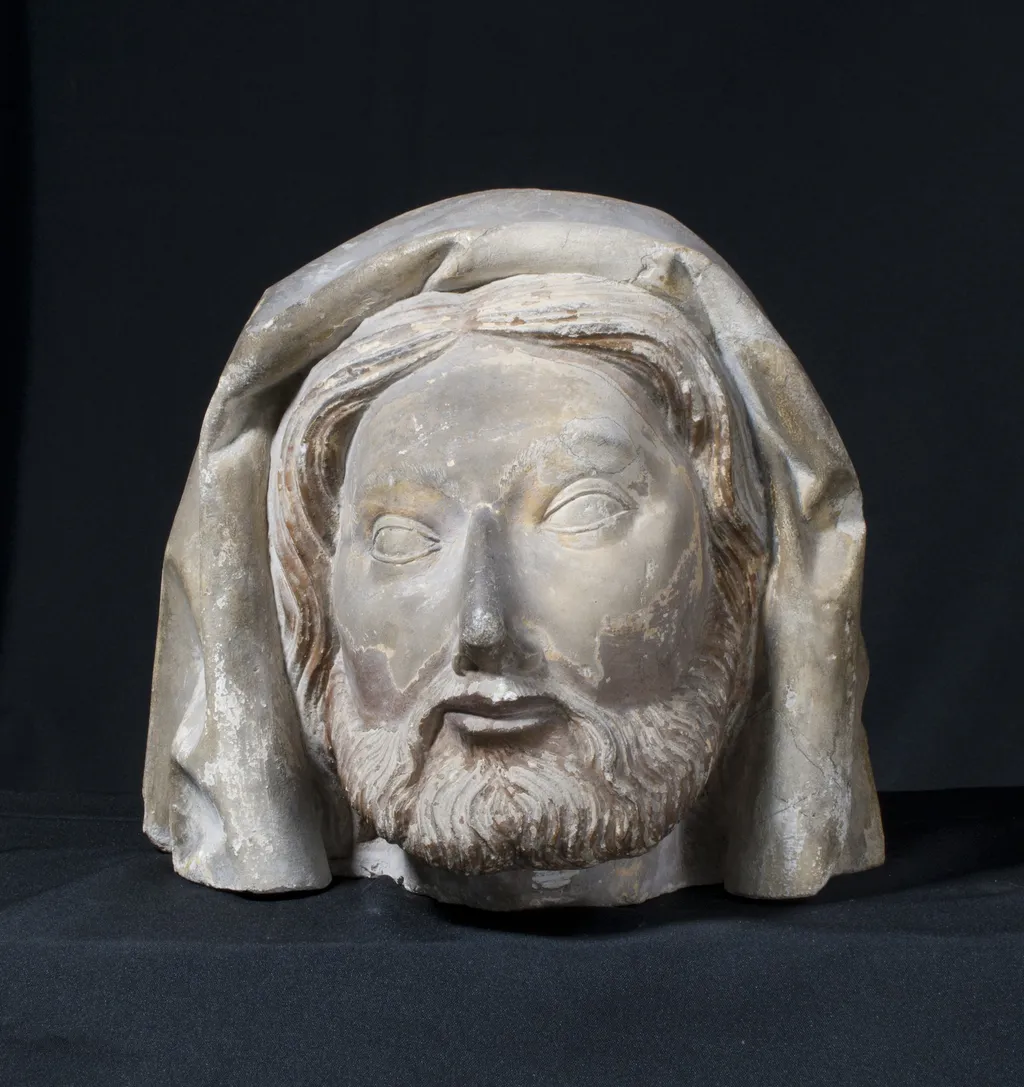
Head of a Bearded Man is an unspecified painting. It dates from 1450 and is held in the collection of the Metropolitan Museum of Art. The work is a stone head portraying a bearded figure, presently displayed at the Metropolitan Museum of Art.
About this work
Overview
The work is a stone head portraying a bearded figure, presently displayed at the Metropolitan Museum of Art. Carved from a single block, the head exhibits a smooth facial surface contrasted with a weathered texture that reveals its antiquity. The piece appears to be a fragment, suggesting it once formed part of a larger sculptural composition.
Subject & Meaning
The figure’s beard and the faintly up‑turned lips convey a calm, perhaps contemplative presence. Hollowed eye sockets and a draped cloth that merges with the stone’s shoulders hint at a stylized representation rather than a portrait of a specific individual, inviting viewers to consider broader themes of age and anonymity.
Technique & Style
The sculptor employed deep incised lines to define the eyes and mouth, while the overall surface was polished to a smooth finish, creating a tactile contrast with the surrounding roughness. The drapery is rendered through subtle carving that allows the stone to suggest fabric without separate modeling, a technique common in ancient relief work.
History & Provenance
Although the exact origin is undocumented, the head’s condition—cracks in the beard and forehead and signs of wear—indicates considerable age and exposure. Its identification as a fragment of a larger statue is based on the continuation of the draped cloth into the stone, suggesting it was once attached to a broader composition.
Context
Fragments of carved heads are typical of archaeological finds where larger monuments have been broken or repurposed over time. The piece aligns with a tradition of monumental stone sculpture that emphasized stylized facial features and draped attire, often used in funerary or commemorative settings.
Legacy
Now part of a major public collection, the head serves as a tangible link to ancient sculptural practices, offering scholars and visitors insight into material durability, artistic conventions, and the fragmentary nature of surviving ancient art.
Artist & collection