Artwork
Mary Hodge Johnson
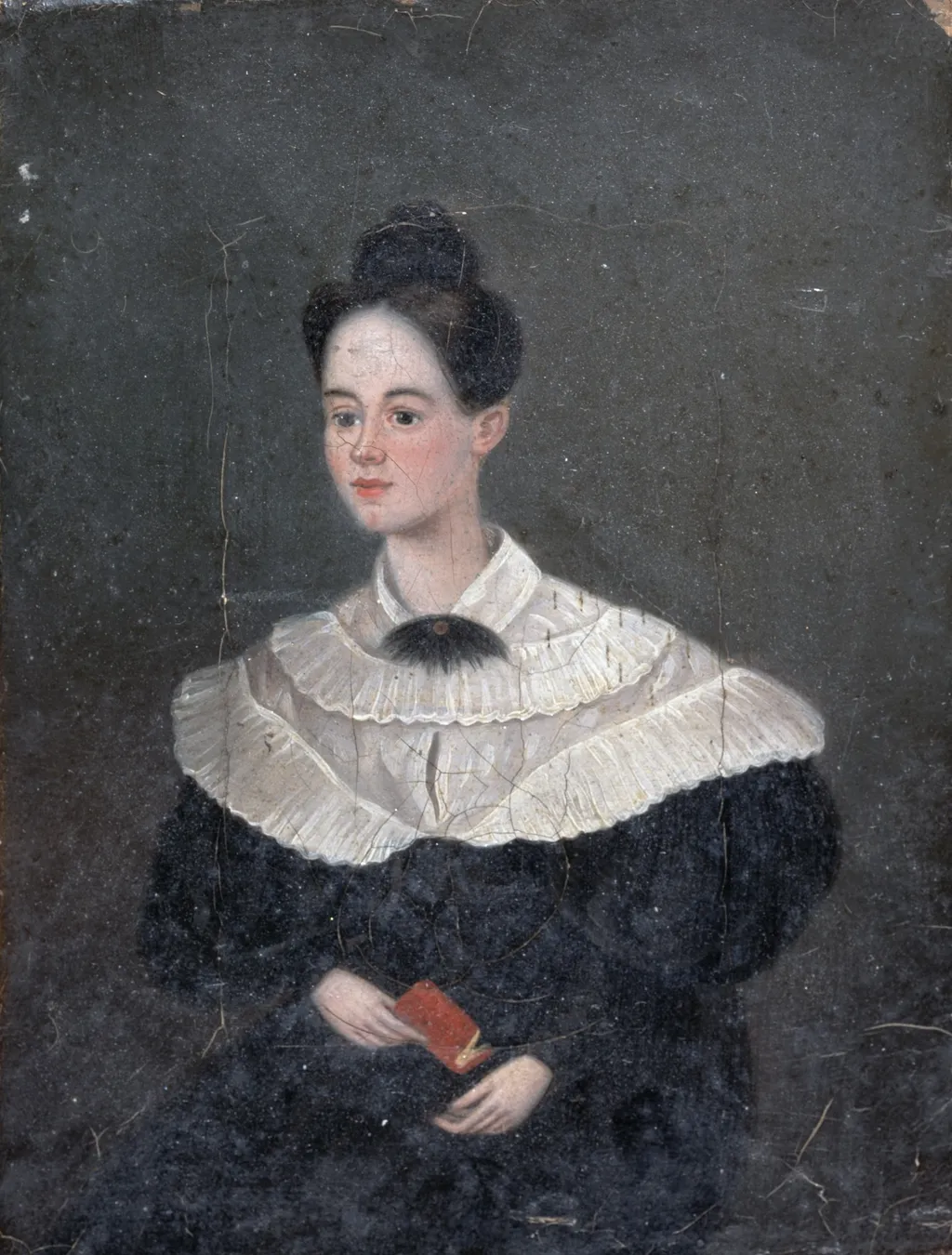
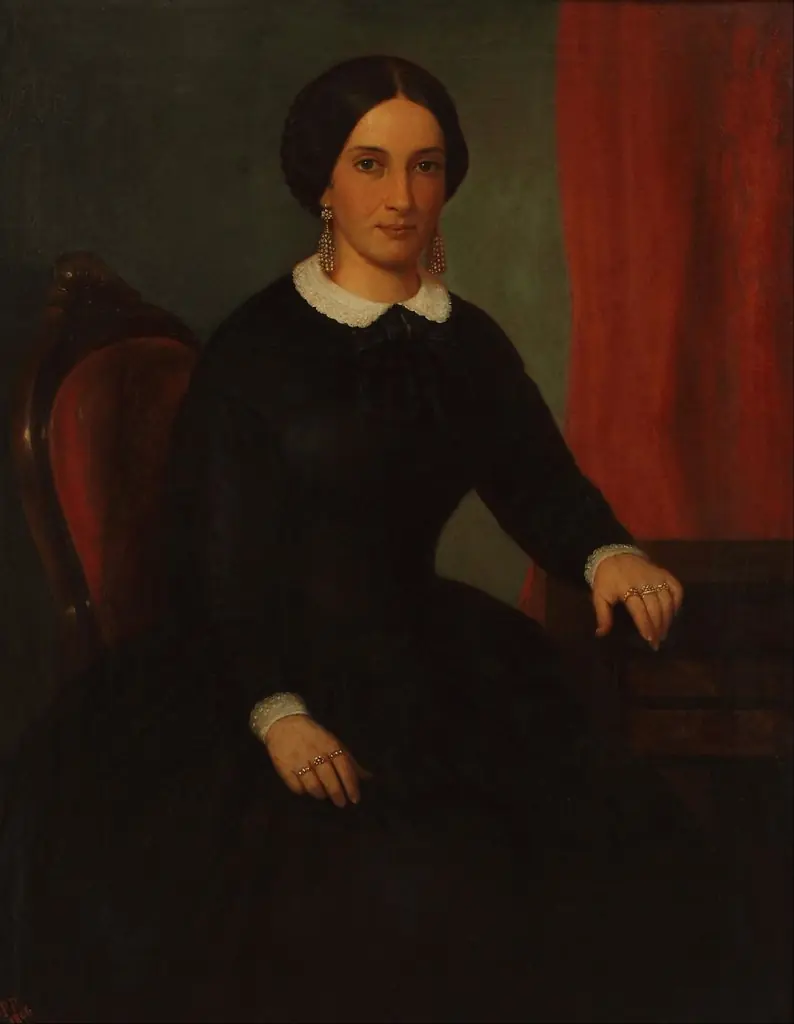
Mary Hodge Johnson is an unspecified painting by Unknown. It dates from 1840 and is held in the collection of the Detroit Institute of Arts. The work is a 19th‑century portrait depicting a seated woman in dark clothing.
About this work
The use of chiaroscuro in this painting creates a sense of depth and volume, drawing the viewer's eye to the woman's face and hands.
This painting is a portrait of a woman, likely from the 19th century. She is dressed in dark attire with a white ruffled collar and a black bow at her neck. Her dark hair is styled in an updo, and she holds a small red book in her hands.
The woman's facial expression is neutral, and her gaze is directed slightly to the left of the viewer. The background of the painting is a dark, muted color, which helps to focus attention on the subject.
The use of chiaroscuro in this painting creates a sense of depth and volume, drawing the viewer's eye to the woman's face and hands. For more information on this technique, explore the concept of chiaroscuro.
Overview
The work is a 19th‑century portrait depicting a seated woman in dark clothing. She wears a white ruffled collar and a black bow at the neck, her hair gathered in an up‑do. A small red book rests in her hands, and her neutral expression is directed slightly left of the viewer. The background is uniformly dark, allowing the figure to dominate the composition.
Subject & Meaning
The sitter appears to be a genteel lady, suggested by her refined attire and the presence of a book, which may allude to literacy or personal devotion. The restrained pose and subdued gaze convey a sense of modesty and interiority, typical of portraiture intended to emphasize character over overt sentiment.
Technique & Style
The artist employs chiaroscuro, contrasting illuminated areas of the face and hands with the surrounding deep tones. This modeling generates a three‑dimensional presence, emphasizing the contours of the cheek, the texture of the fabric, and the delicate handling of the red book. The limited palette and soft brushwork contribute to a quiet, intimate atmosphere.
Context
Portraits of this type were common among the emerging middle class in the 1800s, serving both as records of identity and as symbols of social standing. The inclusion of a book reflects contemporary values that associated women’s education and piety with respectable femininity.
Artist & collection

 Domestic Scene
 Giacomo and Cardinal Marco, investing Andrea, Abbot of San Zeno, with his Benefice
 The Nymph of Fontainebleau
 Portrait of a Woman
 Madonna and Child with Saints in the Enclosed Garden
 Venus and Minerva
 Family Group of Four on Sofa
 Wall painting from Room H of the Villa of P. Fannius Synistor at Boscoreale
 Self-portrait
 Portrait of a Lady
 Portrait of a woman
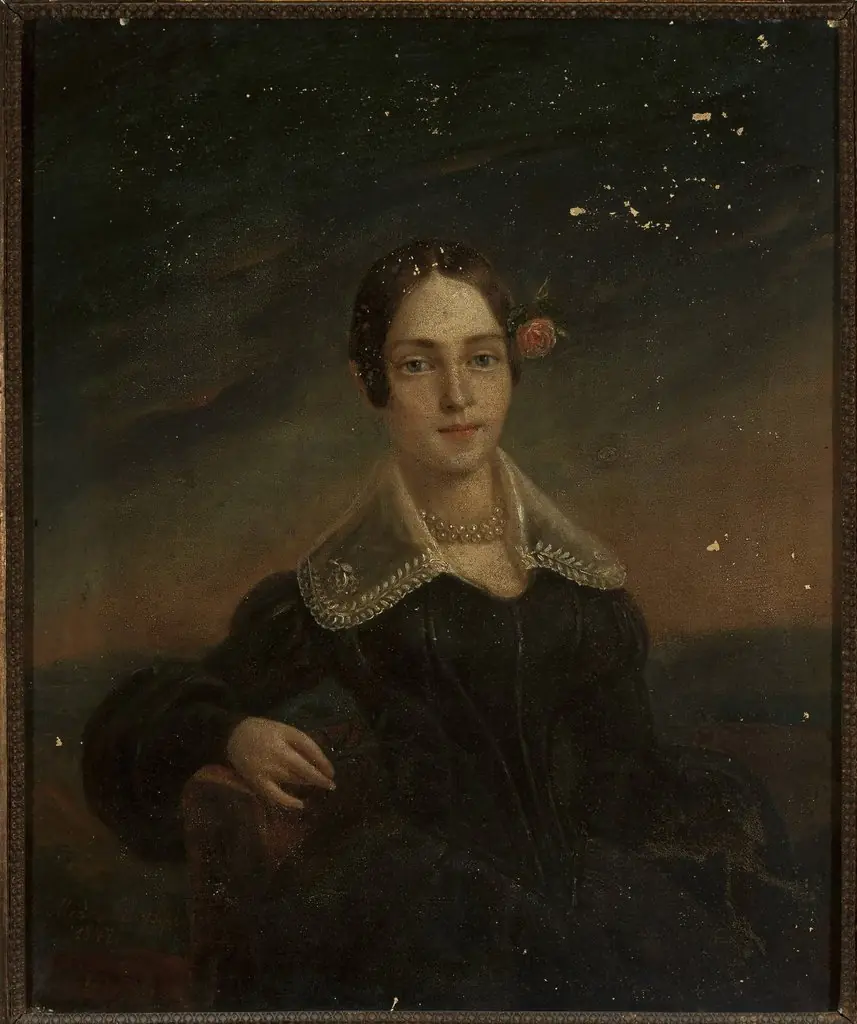 Portrait of a young woman
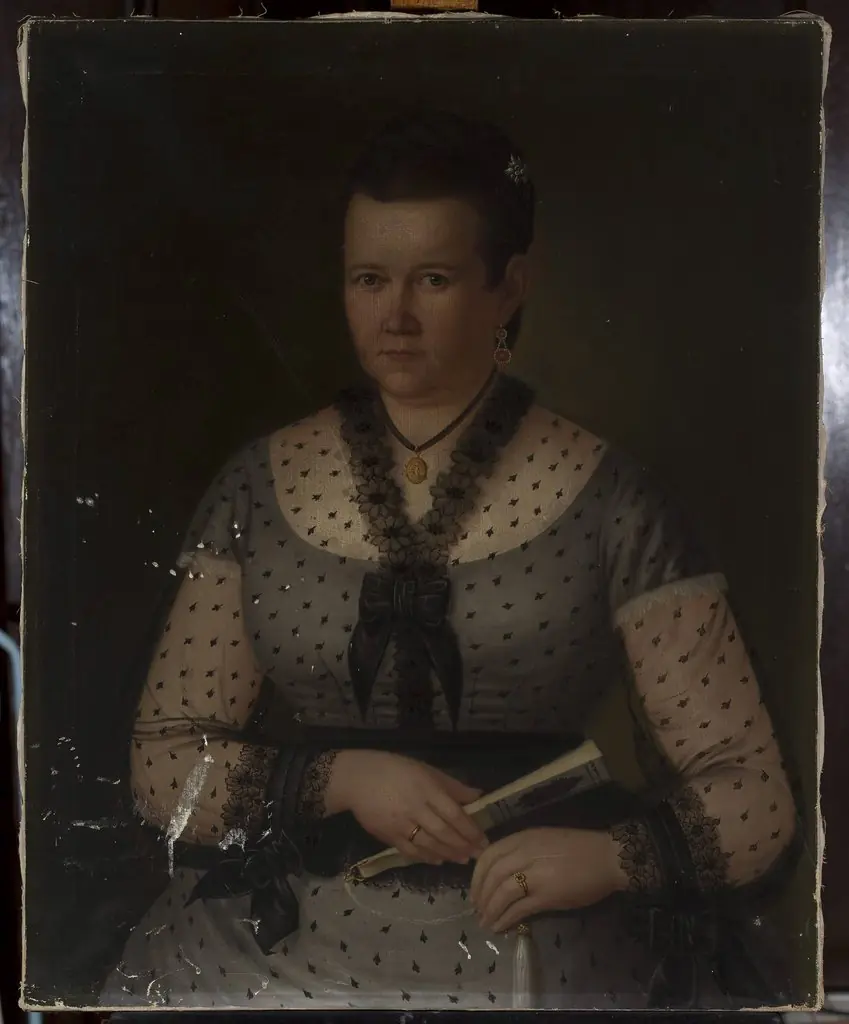 Portrait of Michalina Chojnacka
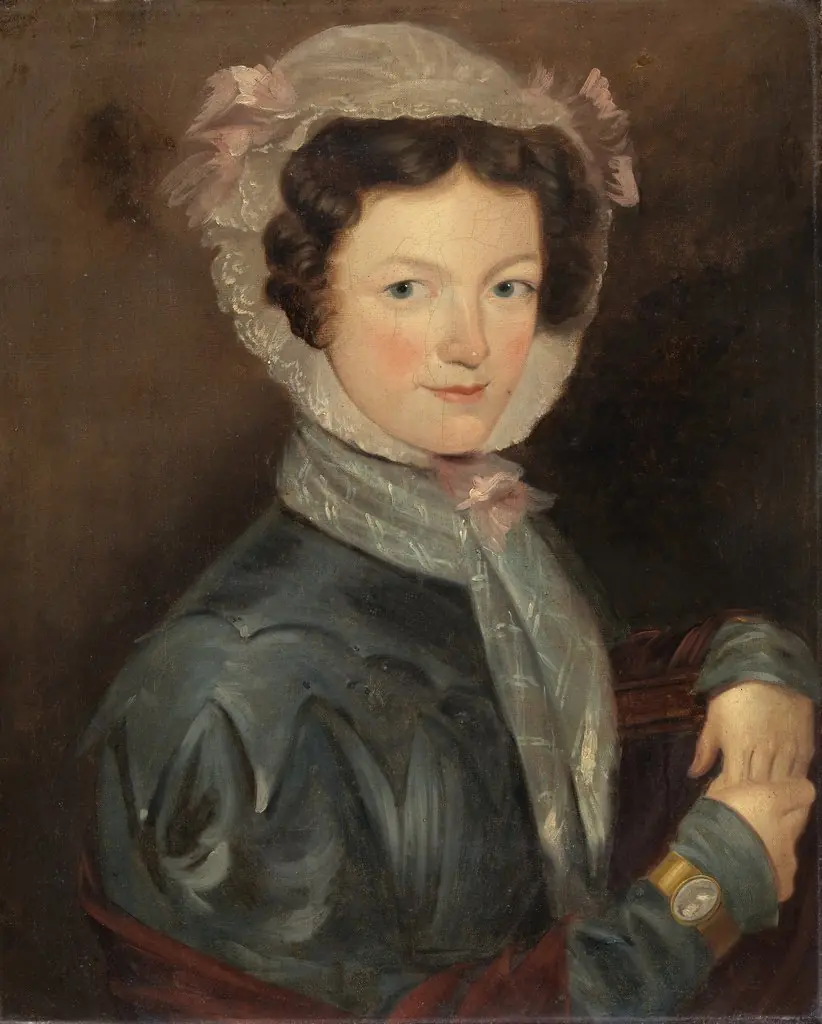 Portrait of Mrs McCarthy, Grandmother of J.H. McCarthy
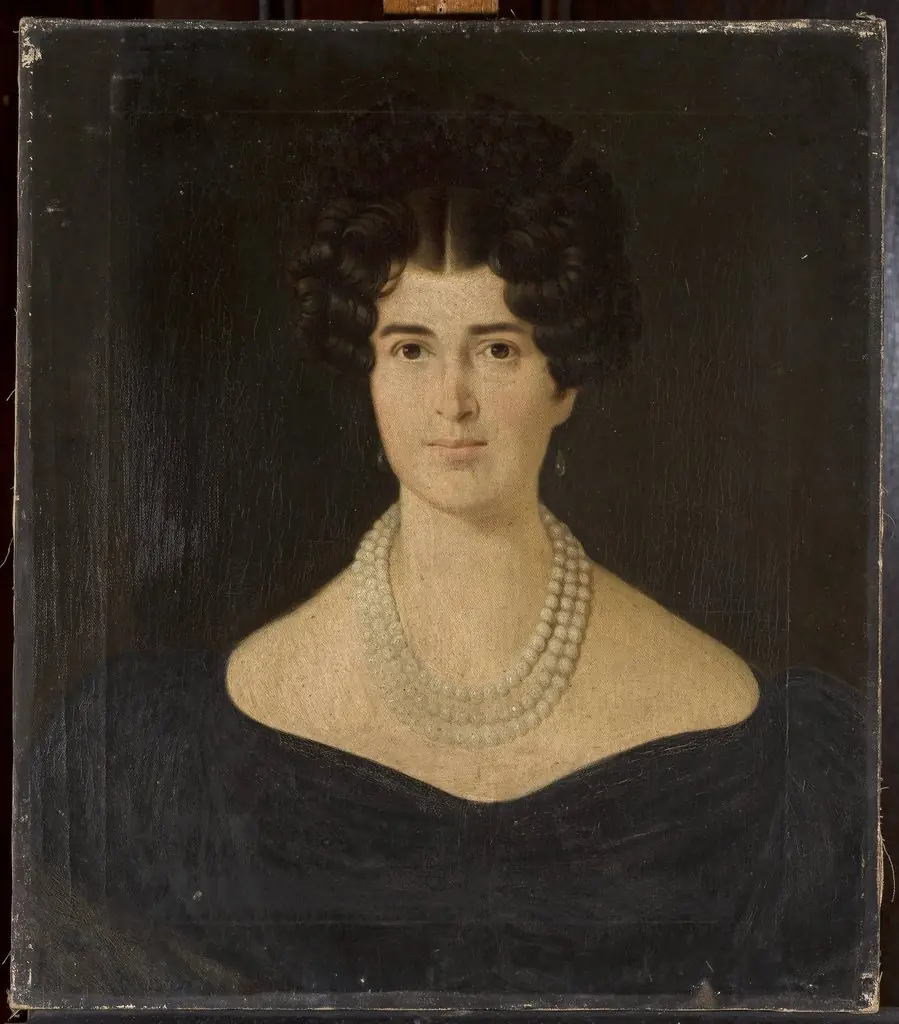 Portrait of Józefina Deboli née Drużbacka
 Woman in a Blue Dress
 Portret de femeie (profil de femeie)
 Lady Seated in a Boston Rocker
 Mărioara din Slatina
 Trinidad Saravia de Huergo