Artwork
Ecce Homo
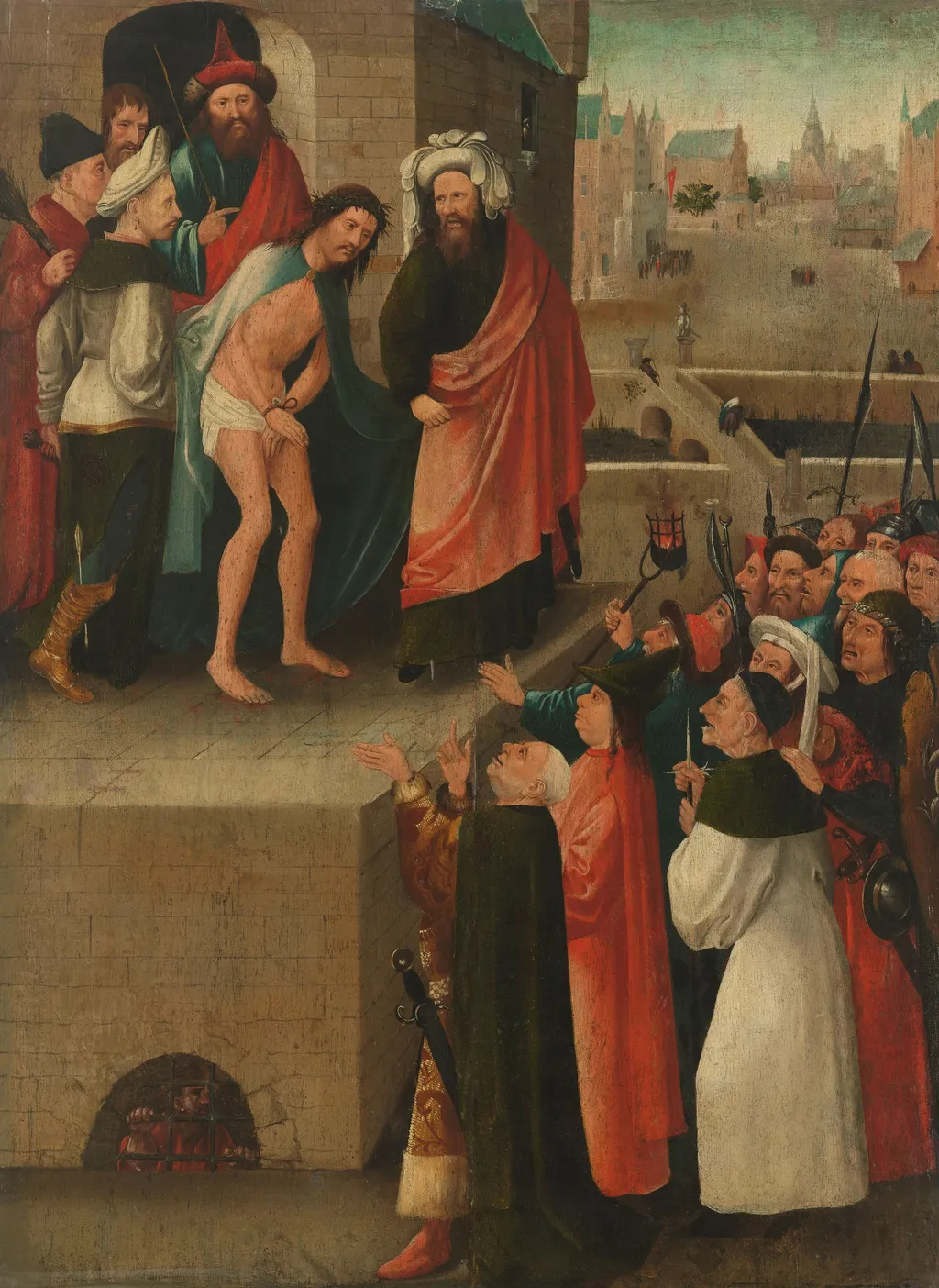
Ecce Homo is an oil painting. It dates from 1530 and is held in the collection of the Rijksmuseum.
About this work
Overview
The oil painting titled Ecce Homo depicts a bustling street scene centered on a half‑naked figure crowned with thorns. He stands on a stone pavement surrounded by a crowd dressed in vivid reds, greens and browns, while a distant cityscape with towers and a river recedes behind them.
Subject & Meaning
The central figure represents the biblical “Ecce Homo,” the moment when Pontius Pilate presents a scourged Jesus to the public. The surrounding onlookers display a range of reactions—anger, curiosity, and indifference—suggesting the varied human responses to suffering and spectacle.
Technique & Style
The artist employs strong chiaroscuro, using deep shadows to isolate certain figures and draw attention to the crowned man. The palette combines saturated clothing colors with muted stone tones, and the composition balances a crowded foreground with a receding architectural background.
Context
Although the work’s provenance is not detailed, its subject aligns with a long tradition of Passion imagery in European art. The inclusion of a city and river situates the scene in an urban setting, reflecting the historical practice of placing biblical events within contemporary locales.
Artist & collection