Artwork
Tantric Manuscript "Sangrahani Sutra"
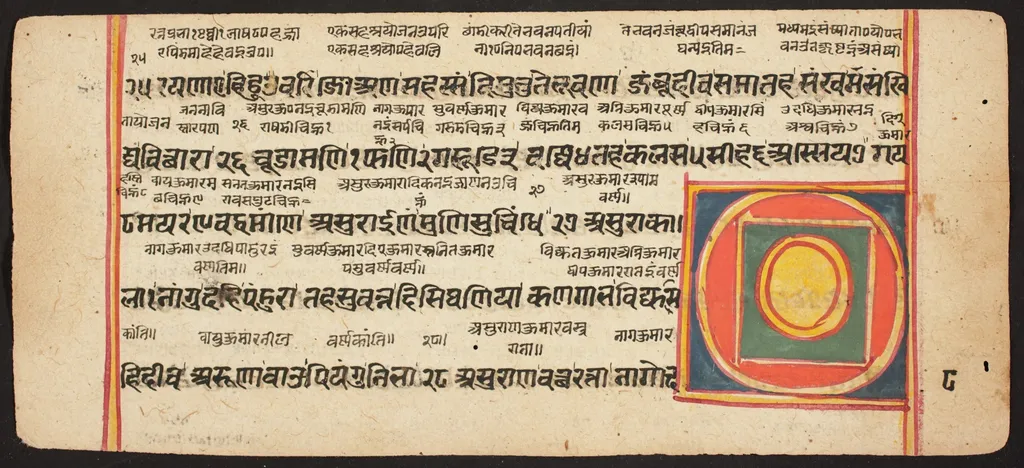
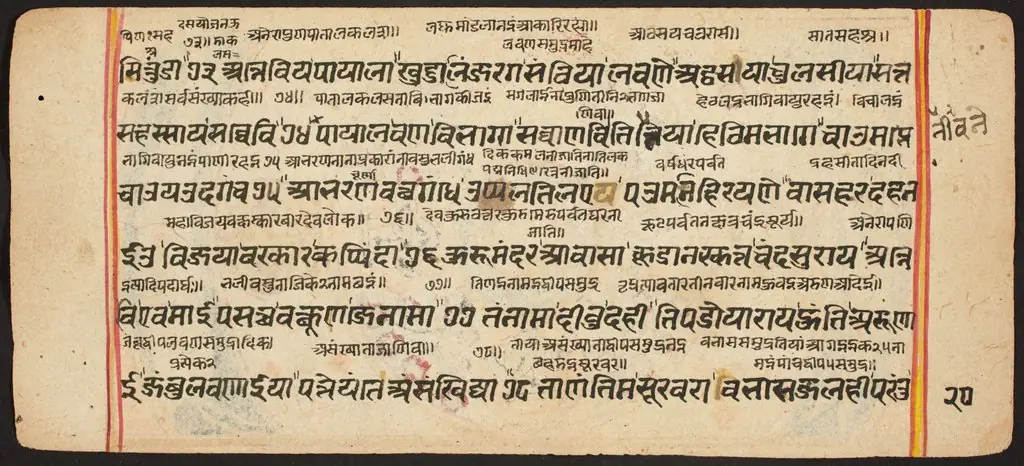
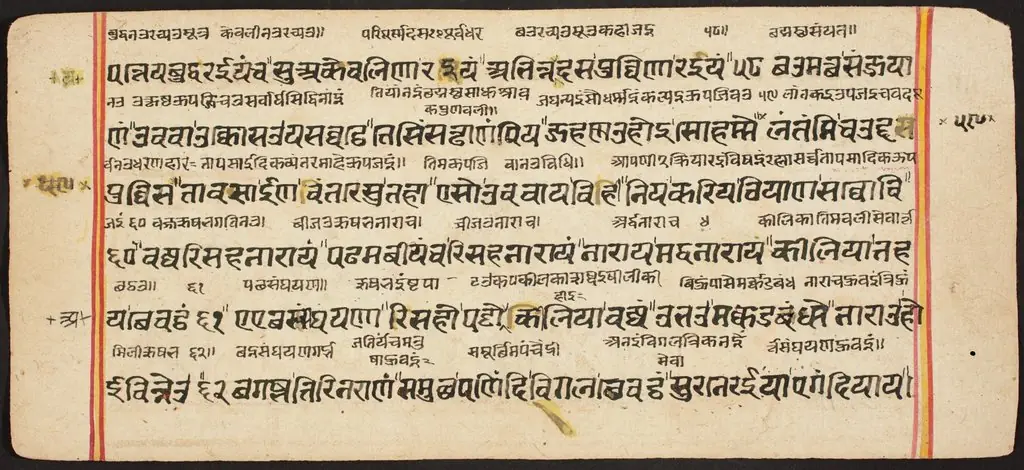
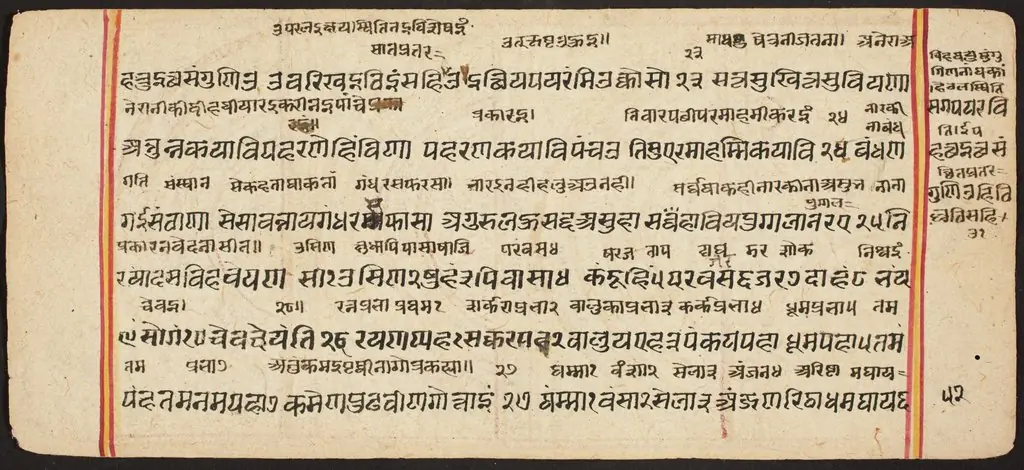
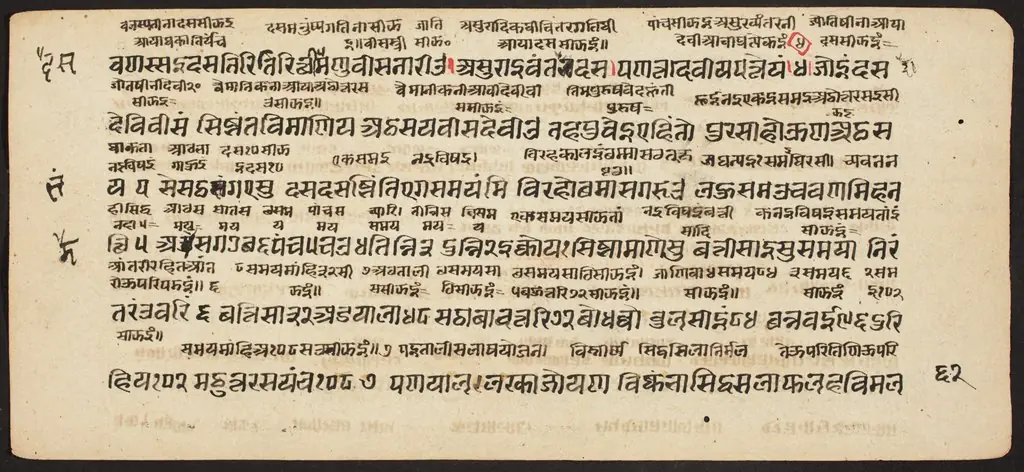
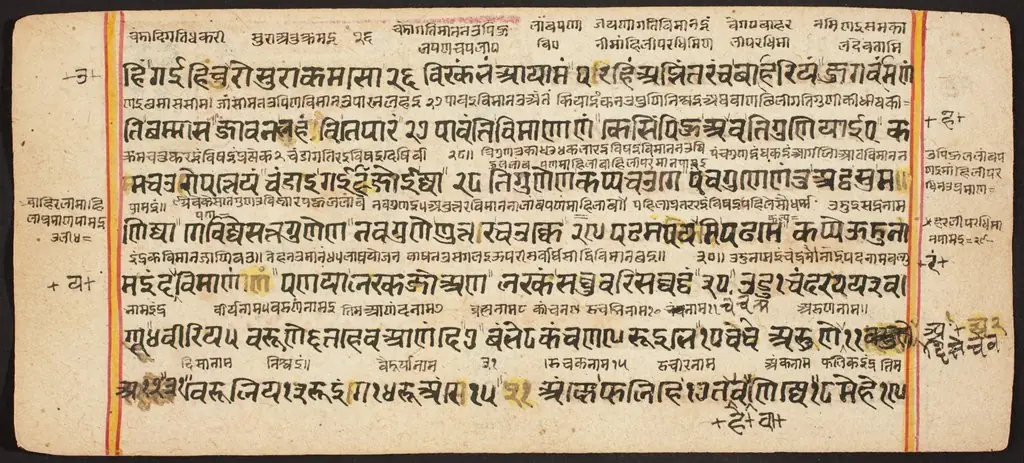
Tantric Manuscript "Sangrahani Sutra" is an unspecified painting by Unknown. It is held in the collection of the Detroit Institute of Arts. The object is a hand‑made paper sheet bearing a Sanskrit text identified as the Sangrahani Sutra, a tantric scriptural work.
About this work
Overview
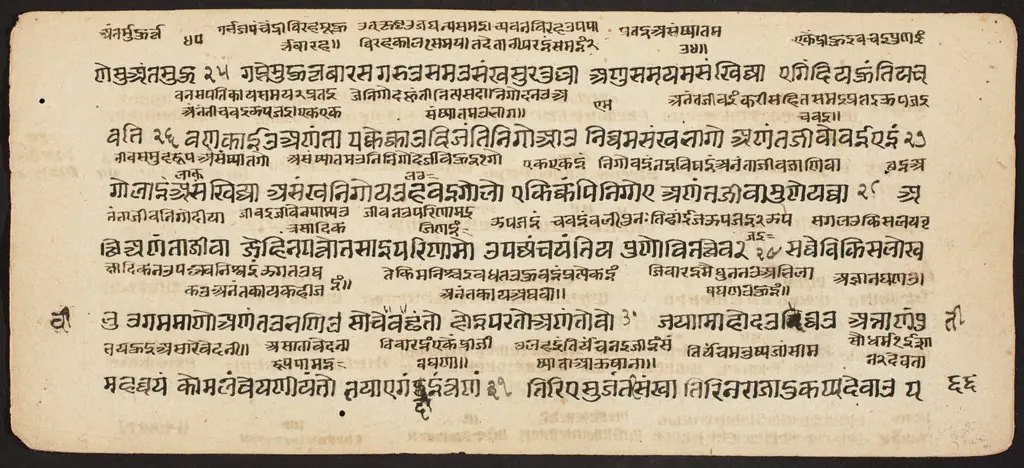
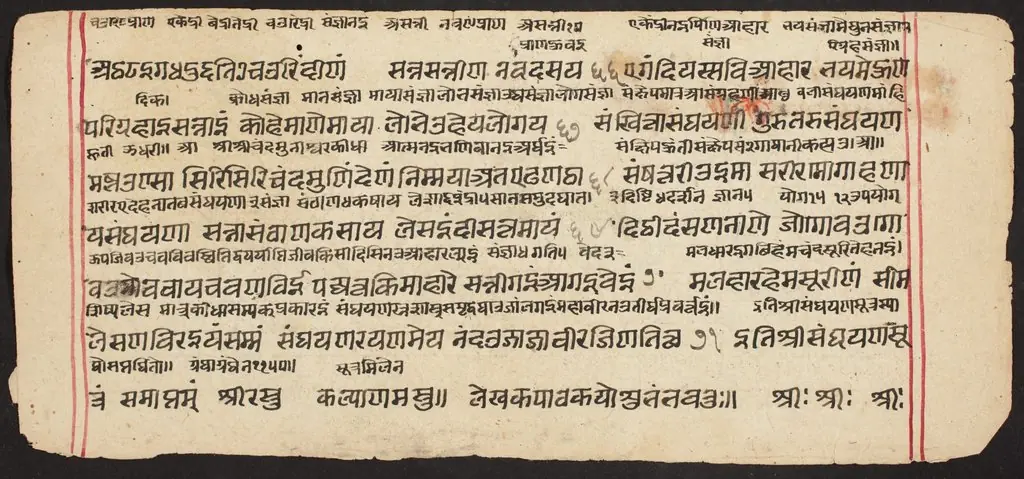
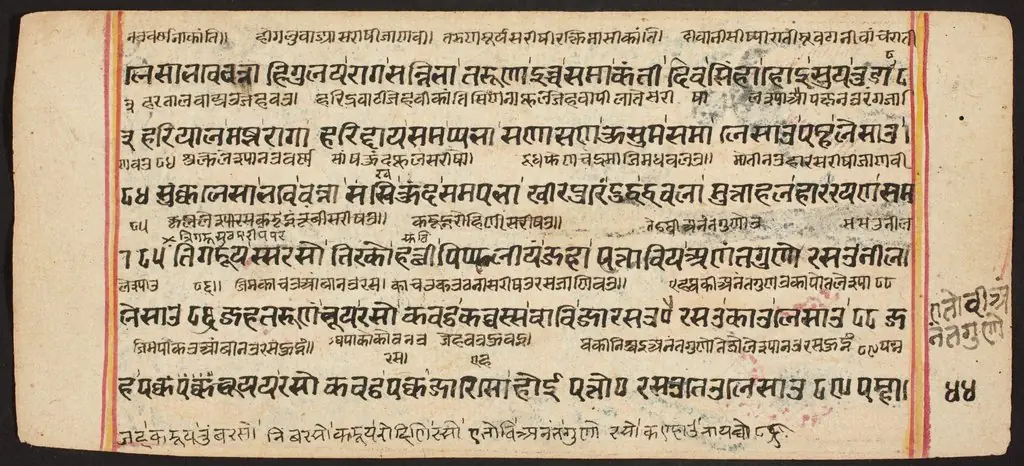
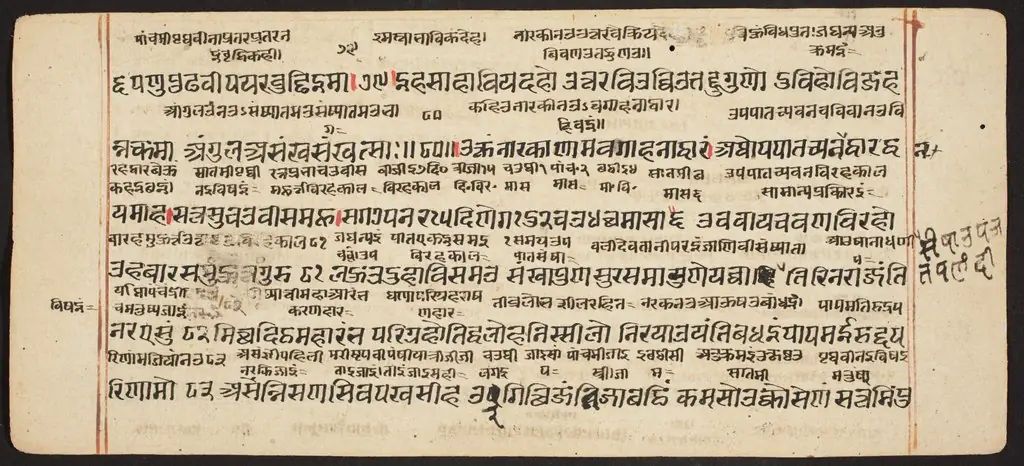
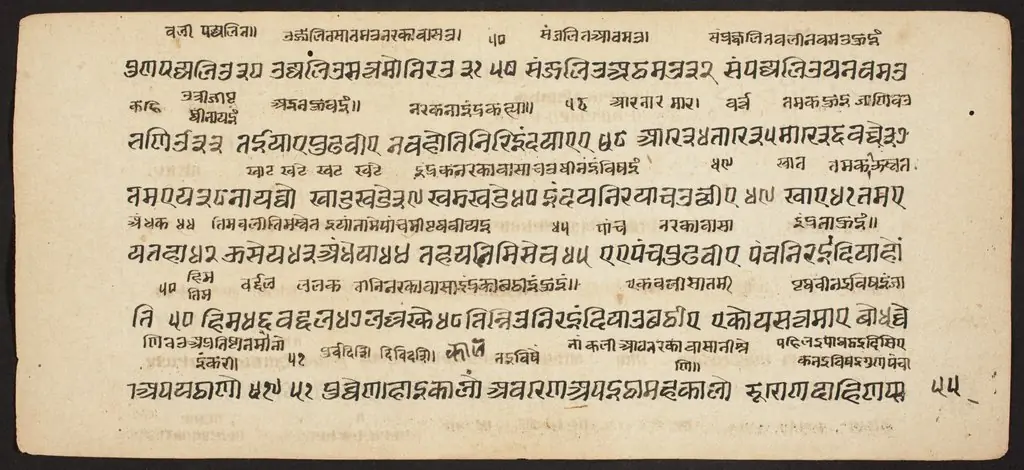
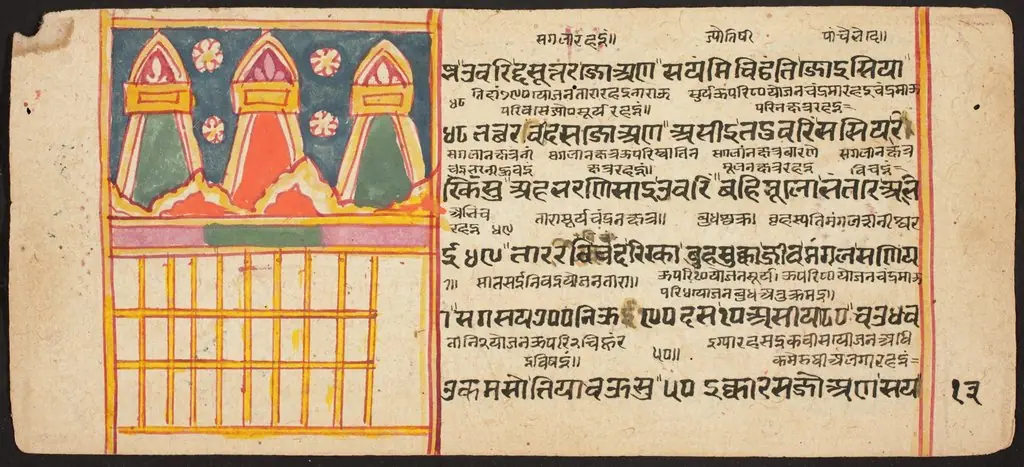
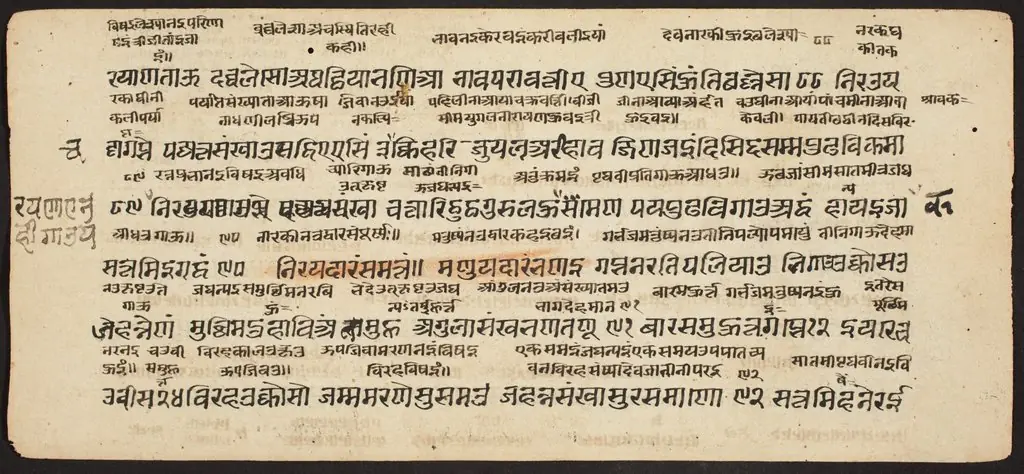
The object is a hand‑made paper sheet bearing a Sanskrit text identified as the Sangrahani Sutra, a tantric scriptural work. The manuscript is executed in black ink, with decorative borders in red and yellow that frame the written area. Its overall dimensions and condition suggest it was intended for ritual or scholarly use rather than display.
Subject & Meaning
The Sangrahani Sutra belongs to the corpus of tantric literature, containing esoteric teachings and practices. While the specific passages on this leaf are not transcribed here, the text would traditionally guide initiates in meditation, mantra recitation, and the visualization of deities associated with the tantric tradition.
Technique & Style
The scribe employed a fine brush or pen to render the Sanskrit characters in uniform black ink, a common practice in Indian manuscript production.
The scribe employed a fine brush or pen to render the Sanskrit characters in uniform black ink, a common practice in Indian manuscript production. Around the margins, thin red and yellow lines create a simple ornamental frame, and a geometric motif in the lower right combines a red border, a yellow circle, a green square, and a central yellow disc, reflecting the symbolic palette of tantric iconography.
History & Provenance
The manuscript originates from a region where Sanskrit tantric texts were copied on handmade paper, likely between the 12th and 15th centuries CE. Its precise provenance is undocumented, but such sheets often circulated among monastic libraries and private collections before entering museum holdings, as exemplified by its presence in the Detroit Institute of Arts.
Context
Tantric manuscripts like this were produced in workshops attached to monasteries or royal courts, where scribes combined textual transmission with decorative elements that reinforced the spiritual content. The use of colored borders and geometric symbols served both aesthetic and didactic purposes, marking the text as sacred and guiding the reader’s focus during ritual recitation.
Legacy
Objects of this type provide insight into the material culture of Indian esoteric traditions, illustrating how textual transmission was intertwined with visual symbolism. They continue to inform scholars of the interplay between script, art, and religious practice in medieval South Asia.
Artist & collection

 Domestic Scene
 Giacomo and Cardinal Marco, investing Andrea, Abbot of San Zeno, with his Benefice
 The Nymph of Fontainebleau
 Portrait of a Woman
 Madonna and Child with Saints in the Enclosed Garden
 Venus and Minerva
 Family Group of Four on Sofa
 Wall painting from Room H of the Villa of P. Fannius Synistor at Boscoreale
 Tantric Manuscript "Sangrahani Sutra"
 Tantric Manuscript "Sangrahani Sutra"
 Tantric Manuscript "Sangrahani Sutra"
 Tantric Manuscript "Sangrahani Sutra"
 Tantric Manuscript "Sangrahani Sutra"
 Tantric Manuscript "Sangrahani Sutra"
 Tantric Manuscript "Sangrahani Sutra"
 Tantric Manuscript "Sangrahani Sutra"
 Tantric Manuscript "Sangrahani Sutra"
 Tantric Manuscript "Sangrahani Sutra"
 Tantric Manuscript "Sangrahani Sutra"
 Tantric Manuscript "Sangrahani Sutra"