Artwork
Tantric Manuscript "Sangrahani Sutra"
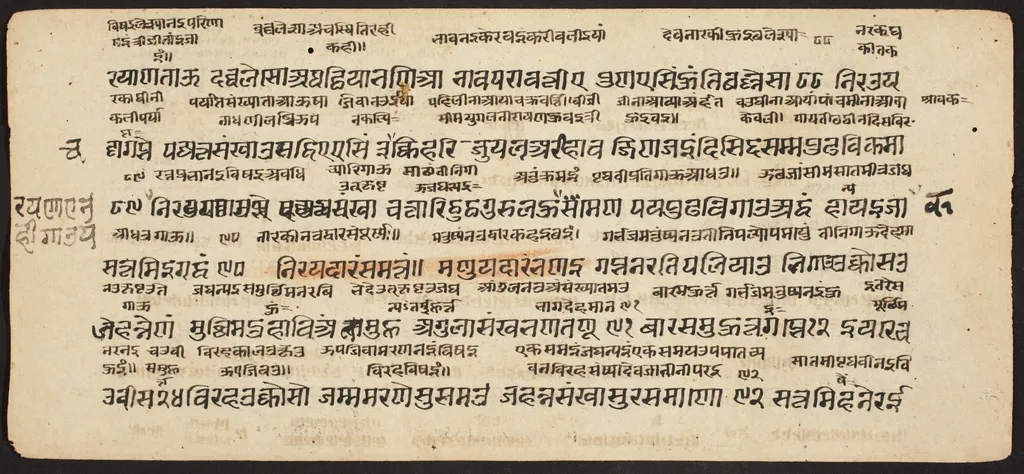
Tantric Manuscript "Sangrahani Sutra" is an unspecified painting by Unknown. It is held in the collection of the Detroit Institute of Arts. This page originates from a handwritten manuscript of the Sangrahani Sutra, a Buddhist text composed in Sanskrit.
About this work
Overview
Created on aged paper with black ink, select passages are emphasized in red, a traditional method to denote sacred or pivotal phrases.
This page originates from a handwritten manuscript of the Sangrahani Sutra, a Buddhist text composed in Sanskrit. Created on aged paper with black ink, select passages are emphasized in red, a traditional method to denote sacred or pivotal phrases. The script is meticulously rendered with ornamental flourishes, reflecting the devotional care invested in its production. Its preservation suggests it was valued as a ritual object, not merely a literary text.
Subject & Meaning
The Sangrahani Sutra serves as a doctrinal guide within esoteric Buddhist traditions, outlining principles of spiritual synthesis and meditative discipline. The use of red ink highlights key mantras or doctrinal anchors, signaling their importance in recitation and contemplation. The visual rhythm of the script mirrors the cadence of oral chanting, reinforcing its function as a tool for mindfulness and ritual practice.
Technique & Style
The calligraphy employs a fine brush with controlled strokes, combining legibility with decorative elegance. Flourishes extend from letter terminals, creating a visual harmony that elevates the text beyond mere communication. The contrast between the dark ink and the yellowed parchment enhances readability, while the sparing use of red ink draws attention without disrupting the overall serenity of the composition.
History & Provenance
This folio likely dates to the medieval period in South Asia, produced in a monastic scriptorium where scribes trained for years in sacred writing. Its survival indicates careful handling and storage, possibly within a temple or scholarly community. It entered the Detroit Institute of Arts through a documented acquisition, part of a broader collection of South Asian religious manuscripts.
Context
In the tradition of Buddhist manuscript culture, such texts were often commissioned by patrons seeking merit through the preservation of dharma. The labor-intensive process of copying by hand elevated the act itself as a spiritual practice. Similar manuscripts from the same era are found in Nepal, Tibet, and eastern India, sharing stylistic and liturgical conventions.
Legacy
This page exemplifies the enduring link between visual form and spiritual function in Buddhist practice. Its aesthetic discipline reflects a worldview in which beauty serves devotion. Today, it stands as a material witness to centuries of contemplative tradition, offering insight into how sacred knowledge was preserved, transmitted, and revered across generations.
Artist & collection

 Domestic Scene
 Giacomo and Cardinal Marco, investing Andrea, Abbot of San Zeno, with his Benefice
 The Nymph of Fontainebleau
 Portrait of a Woman
 Madonna and Child with Saints in the Enclosed Garden
 Venus and Minerva
 Family Group of Four on Sofa
 Wall painting from Room H of the Villa of P. Fannius Synistor at Boscoreale
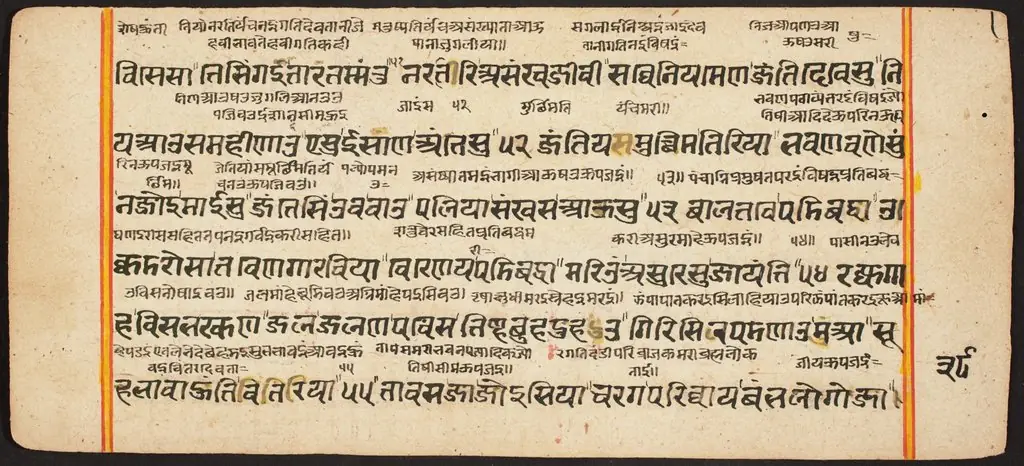 Tantric Manuscript "Sangrahani Sutra"
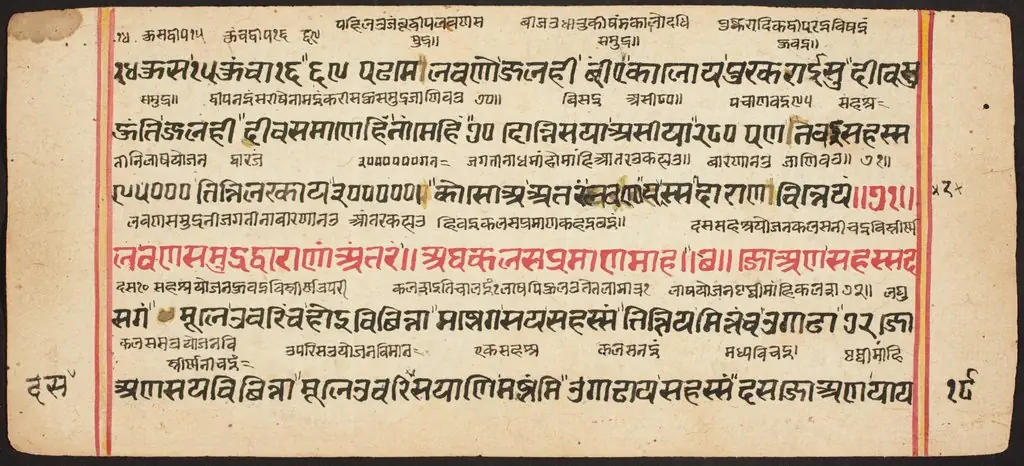 Tantric Manuscript "Sangrahani Sutra"
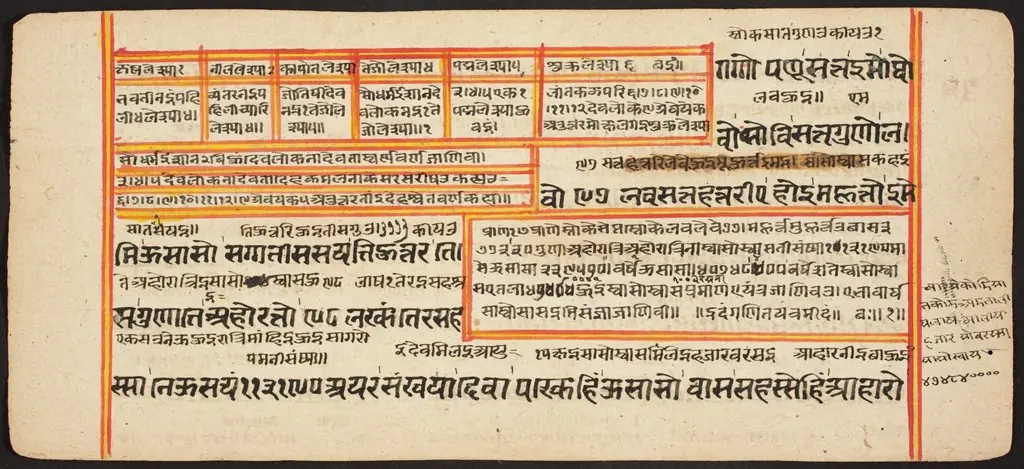 Tantric Manuscript "Sangrahani Sutra"
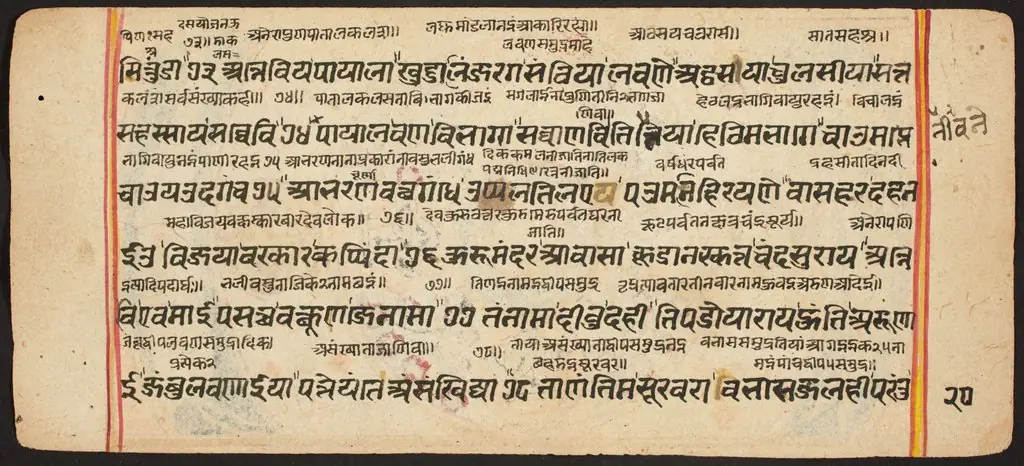 Tantric Manuscript "Sangrahani Sutra"
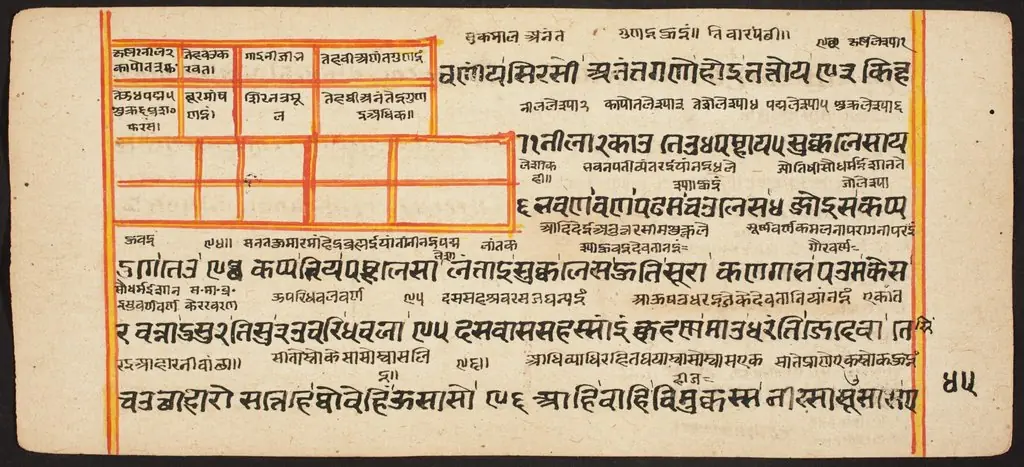 Tantric Manuscript "Sangrahani Sutra"
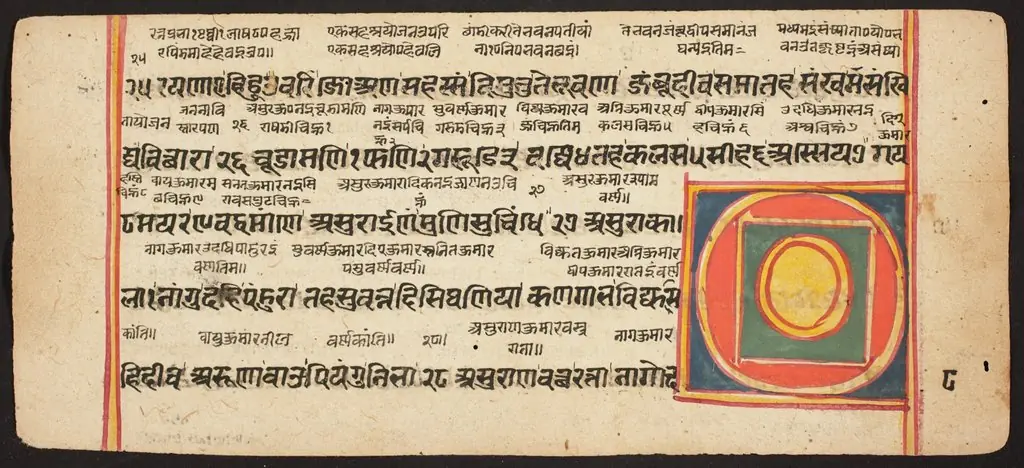 Tantric Manuscript "Sangrahani Sutra"
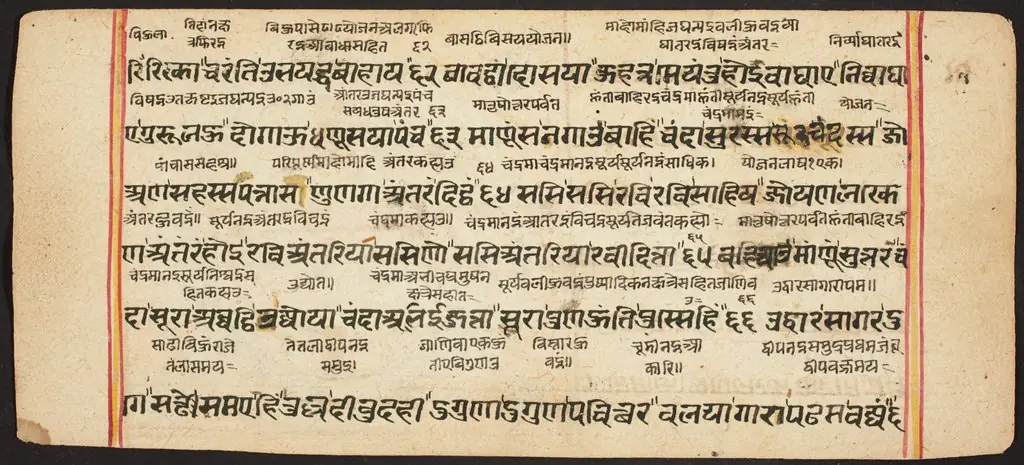 Tantric Manuscript "Sangrahani Sutra"
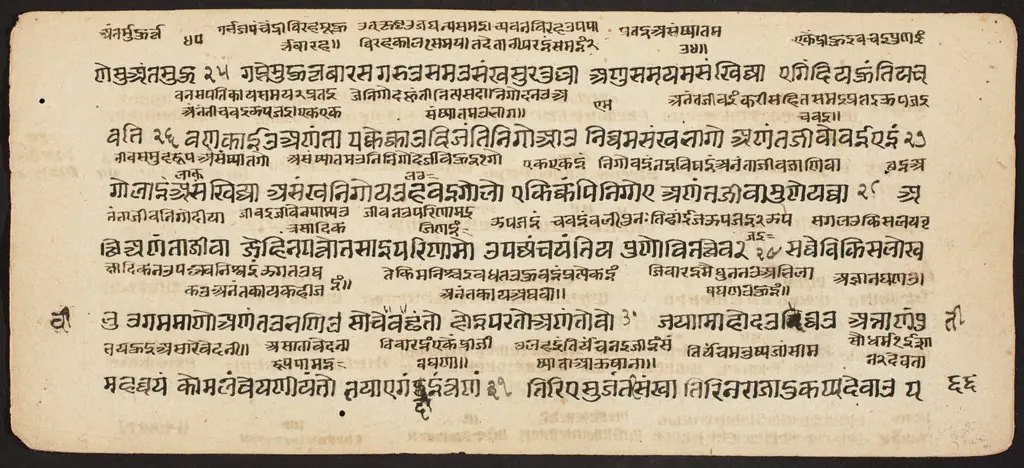 Tantric Manuscript "Sangrahani Sutra"
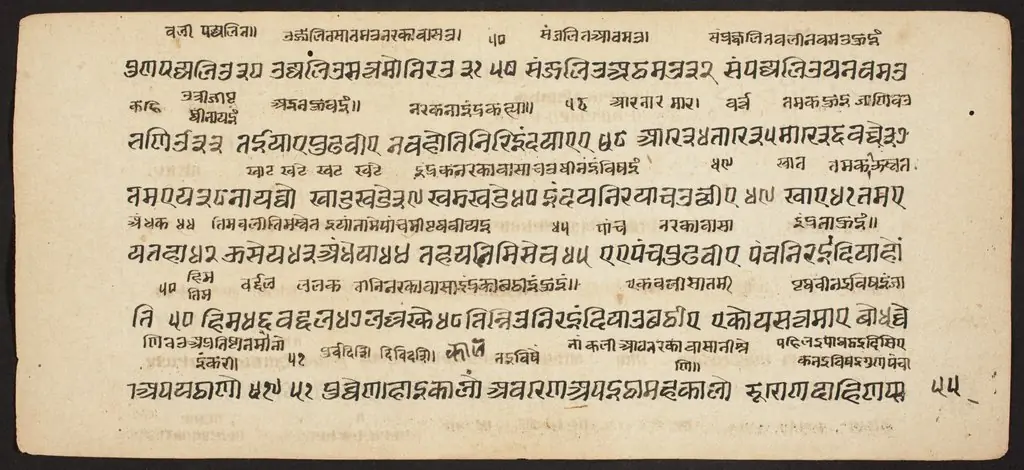 Tantric Manuscript "Sangrahani Sutra"
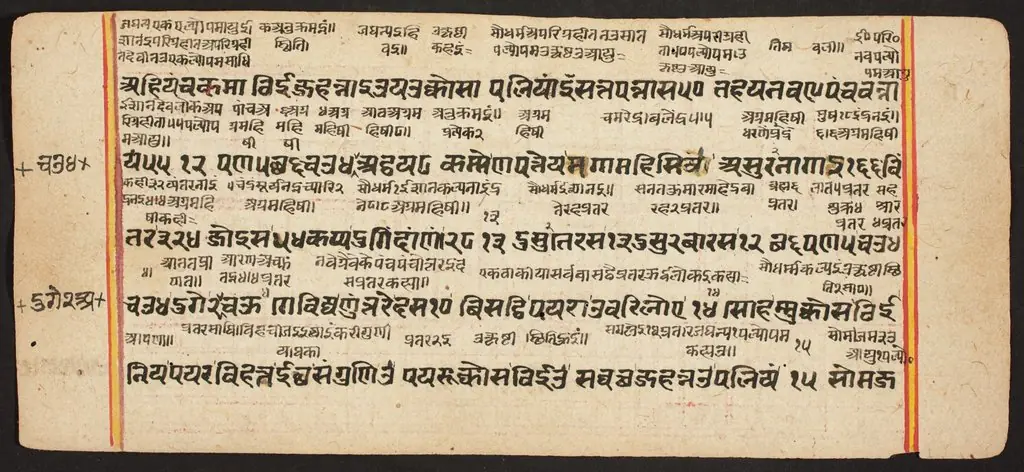 Tantric Manuscript "Sangrahani Sutra"