Artwork
A Boy Admiring a Statuette by Candlelight
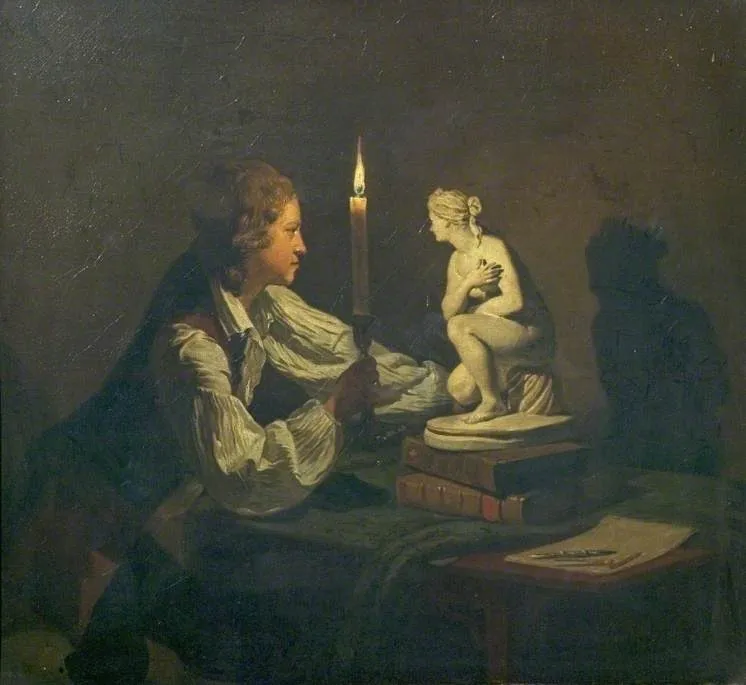
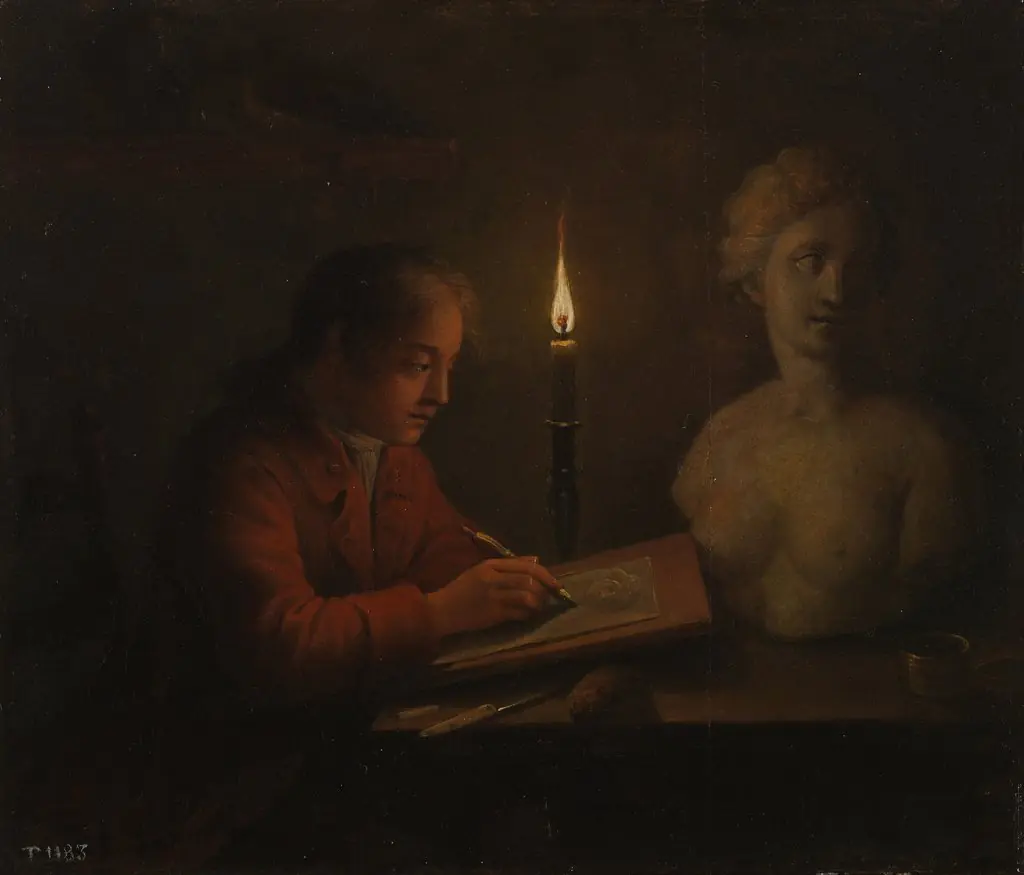
A Boy Admiring a Statuette by Candlelight is an oil painting by Unknown. It is held in the collection of the Derby Museum and Art Gallery. An oil painting from the 18th century portrays a young boy in period dress, illuminated by a single candle as he observes a small statuette.
About this work
Overview
An oil painting from the 18th century portrays a young boy in period dress, illuminated by a single candle as he observes a small statuette. The scene is intimate and still, with no other light sources or figures present. The boy’s posture and expression suggest deep, silent engagement with the object before him, emphasizing a moment of personal reflection rather than public display.
Subject & Meaning
The candlelight highlights the sculpture’s form while casting the boy’s face in soft glow, linking his awe to the enduring appeal of classical beauty.
The subject is a boy captivated by a classical female statuette, likely representing an idealized form from antiquity. The candlelight highlights the sculpture’s form while casting the boy’s face in soft glow, linking his awe to the enduring appeal of classical beauty. The scene implies an early encounter with art as a private, reverent experience, possibly symbolizing the awakening of aesthetic sensibility in youth.
Technique & Style
The artist employs chiaroscuro to concentrate attention on the boy and statuette, using the candle’s glow to define form against deep shadows. Brushwork is precise yet unobtrusive, favoring subtle transitions in tone over bold strokes. The dark background eliminates distraction, reinforcing the focus on light, texture, and the quiet interaction between viewer and object.
History & Provenance
The painting’s origin is tied to 18th-century European traditions of domestic art, where scenes of quiet contemplation were valued. While its exact provenance remains undocumented, its style aligns with works from Dutch and Flemish schools that emphasized intimate, candlelit interiors. It likely belonged to a private collector before entering institutional hands.
Context
During the 18th century, classical sculpture was widely admired as a model of beauty and moral virtue. Depictions of young people engaging with such objects reflected educational ideals, particularly among the educated elite. This painting fits within a broader cultural trend of portraying childhood as a time of moral and aesthetic formation through exposure to art.
Legacy
The painting contributes to a genre of quiet, introspective art that values subtlety over spectacle. Though not widely reproduced, its composition influenced later artists interested in the psychological dimension of art appreciation. Its enduring resonance lies in its understated portrayal of wonder — a universal moment rendered with restraint and clarity.
Artist & collection

 Domestic Scene
 Giacomo and Cardinal Marco, investing Andrea, Abbot of San Zeno, with his Benefice
 The Nymph of Fontainebleau
 Portrait of a Woman
 Madonna and Child with Saints in the Enclosed Garden
 Venus and Minerva
 Family Group of Four on Sofa
 Wall painting from Room H of the Villa of P. Fannius Synistor at Boscoreale