Artwork
Portrait of a Prince (Possibly Mohammad Mirza)
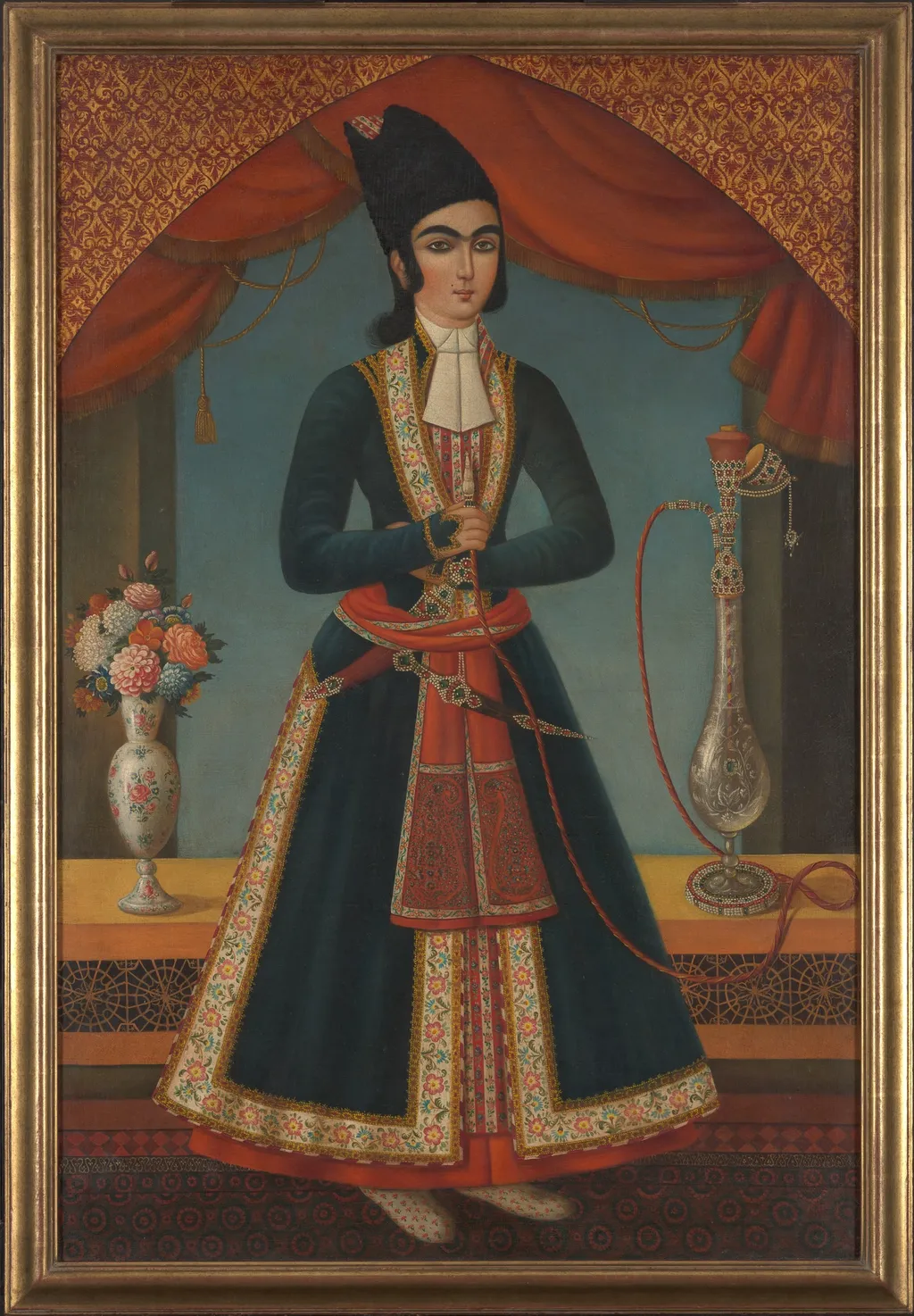
Portrait of a Prince (Possibly Mohammad Mirza) is an oil painting. It dates from 1820 and is held in the collection of the Metropolitan Museum of Art. The oil painting depicts a seated male figure within an interior setting, surrounded by opulent furnishings.
About this work
Overview
The oil painting depicts a seated male figure within an interior setting, surrounded by opulent furnishings.
The oil painting depicts a seated male figure within an interior setting, surrounded by opulent furnishings. He wears a dark coat accented with red and gold trim, complemented by a tall hat lined in red. His left hand holds a small object, while his right hand rests on his chest. A blue curtain frames the background, above which hangs a red draped cloth, and the composition includes a hookah on the right and a vase of pink and white flowers on a shelf to the left.
Subject & Meaning
The sitter is presented in luxurious attire, suggesting high social standing or royal affiliation, possibly a prince such as Mohammad Mirza. The inclusion of a hookah—a symbol of leisure and status in certain cultures—reinforces the notion of privilege and refined taste. The careful rendering of textiles and accessories underscores the importance of display and personal prestige in the portrait's intended audience.
Technique & Style
Executed in oil on canvas, the work employs meticulous brushwork to capture the sheen of fabrics and the reflective surfaces of metal and glass. The palette balances deep, saturated hues—dark blues, reds, and golds—with lighter accents, creating a sense of depth. Attention to detail is evident in the rendering of the hookah, the floral vase, and the intricate patterns of the clothing, reflecting a realistic yet decorative approach.
History & Provenance
The painting is identified as a portrait of a prince, potentially Mohammad Mirza, though definitive attribution remains uncertain. Its provenance includes collection by institutions interested in Persian or Ottoman court portraiture, and it has been catalogued in museum records for comparative study with similar works from the same period.
Context
Portraits of aristocratic figures in richly appointed interiors were common in the late 18th to early 19th centuries across the Middle East and South Asia, serving both as personal commemoration and as visual affirmation of authority. Elements such as the hookah and elaborate textiles reflect cultural practices of hospitality and display, situating the work within a tradition of elite portraiture that emphasized wealth and refinement.
Artist & collection