Artwork
Portrait of Franciszka Pawłowska née Kamieńska with her daughter Eliza, the would-be writer (Eliza Orzeszkowa)
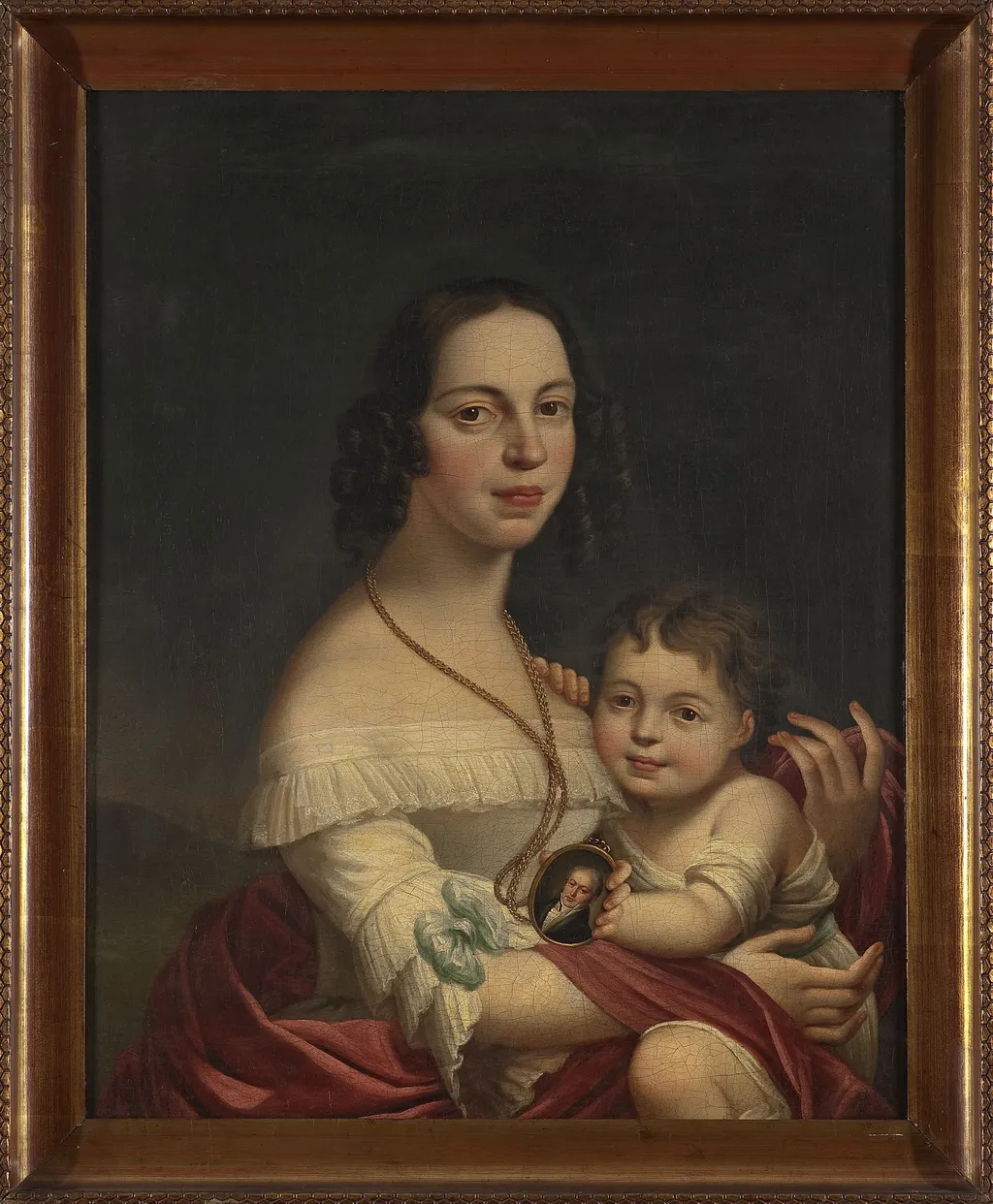
Portrait of Franciszka Pawłowska née Kamieńska with her daughter Eliza, the would-be writer (Eliza Orzeszkowa) is an oil painting by the Realist artist Unknown. It dates from 1843 and is held in the collection of the National Museum in Warsaw. This oil painting depicts Franciszka Pawłowska, née Kamieńska, seated with her young daughter Eliza.
About this work
Overview
A dark, unmodeled background isolates them, enhancing the focus on their forms and the subtle interplay of light across their clothing and skin.
This oil painting depicts Franciszka Pawłowska, née Kamieńska, seated with her young daughter Eliza. Both figures face the viewer directly, their expressions calm and composed. The composition centers on their gaze, drawing attention to their connection and presence. A dark, unmodeled background isolates them, enhancing the focus on their forms and the subtle interplay of light across their clothing and skin.
Subject & Meaning
The portrait captures a mother and daughter in a moment of quiet intimacy. The child holds a small mirror reflecting an unseen face, possibly hinting at self-reflection or the future identity she may assume. The locket on the mother’s necklace suggests personal memory or lineage. Together, these elements imply a transmission of identity, perhaps foreshadowing Eliza’s later role as a writer and public figure.
Technique & Style
The artist employs soft modeling and gentle chiaroscuro to define the figures against the dark ground. Light falls evenly across the faces and white dress, highlighting the child’s rounded features and the mother’s shawl. The brushwork is restrained, favoring smooth transitions over texture. The mirror’s reflection is rendered with minimal detail, inviting interpretation rather than literal representation.
History & Provenance
Painted in the mid-19th century, the portrait belonged to the family of Franciszka Pawłowska, mother of Eliza Orzeszkowa, who became a noted Polish writer. It remained in private hands within the family for generations before entering a public collection. Its survival reflects the cultural value placed on domestic imagery among Poland’s intelligentsia during a period of national upheaval.
Context
Created during a time when Polish identity was being redefined under foreign partitions, such portraits often carried subtle nationalist undertones. Depictions of educated women and their children affirmed the role of the family in preserving language and culture. This image, though intimate, aligns with broader efforts to elevate domestic life as a site of moral and intellectual continuity.
Legacy
The portrait endures as a quiet testament to the private lives behind public figures. Eliza Orzeszkowa’s later literary prominence lends the image historical resonance, though its power lies in its restraint. It offers a glimpse into the domestic sphere of 19th-century Polish intellectual families, where personal identity and cultural preservation were deeply intertwined.
Artist & collection

 Domestic Scene
 Giacomo and Cardinal Marco, investing Andrea, Abbot of San Zeno, with his Benefice
 The Nymph of Fontainebleau
 Portrait of a Woman
 Madonna and Child with Saints in the Enclosed Garden
 Venus and Minerva
 Family Group of Four on Sofa
 Wall painting from Room H of the Villa of P. Fannius Synistor at Boscoreale
 Mamă și copil
 The Holy Family
 Caritas: Johanna de Geer (1629-91) with her children Cecilia Trip (1660-1728) and Laurens Trip (b 1662)
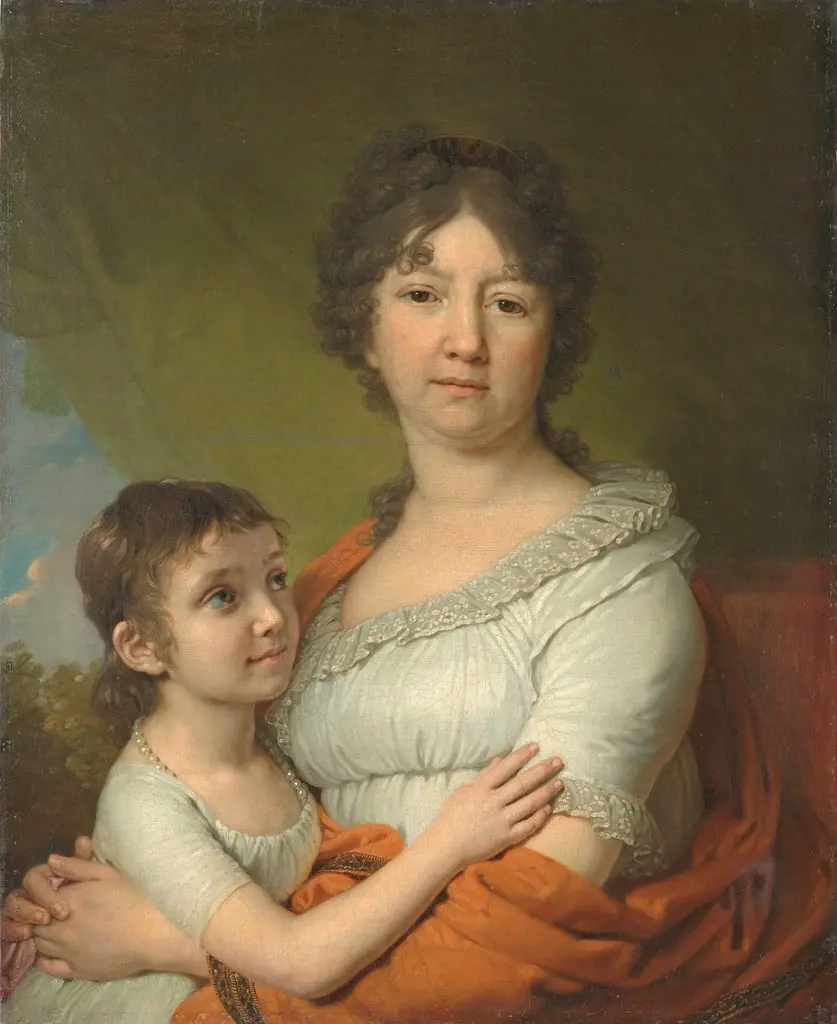 Портрет А.Е. Лабзиной с воспитанницей С.А. Мудровой
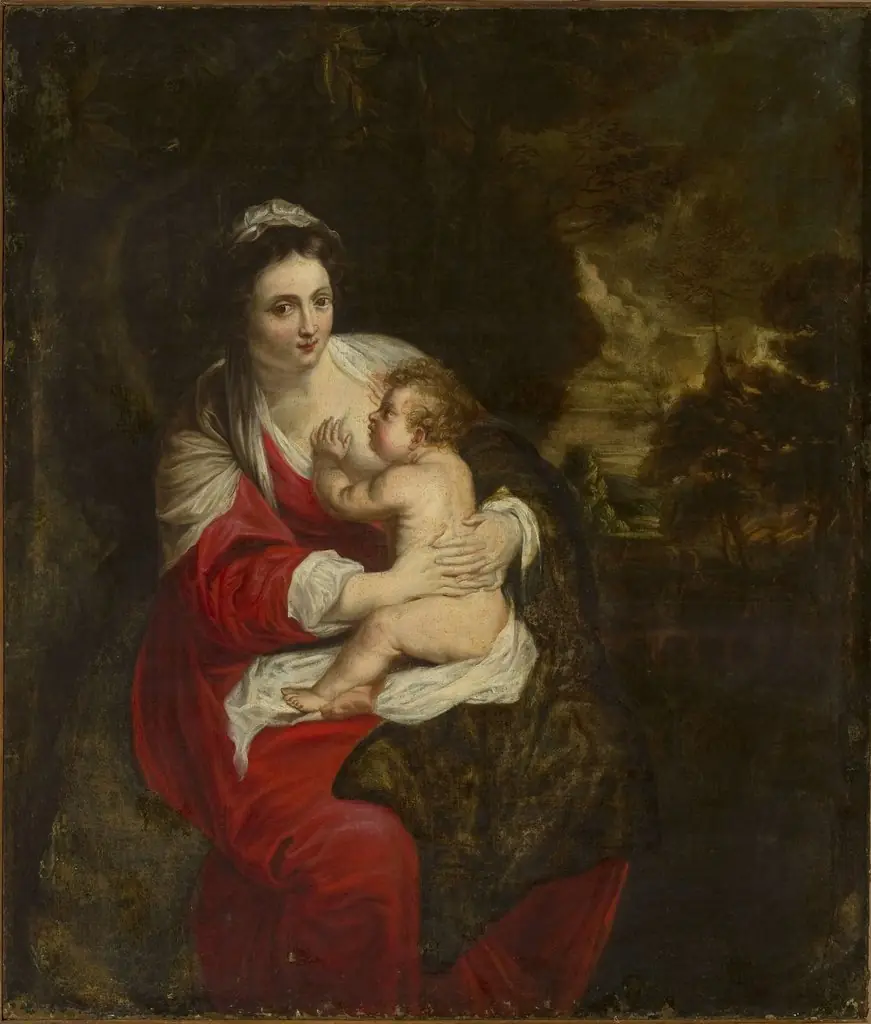 Madonna with Child Jesus
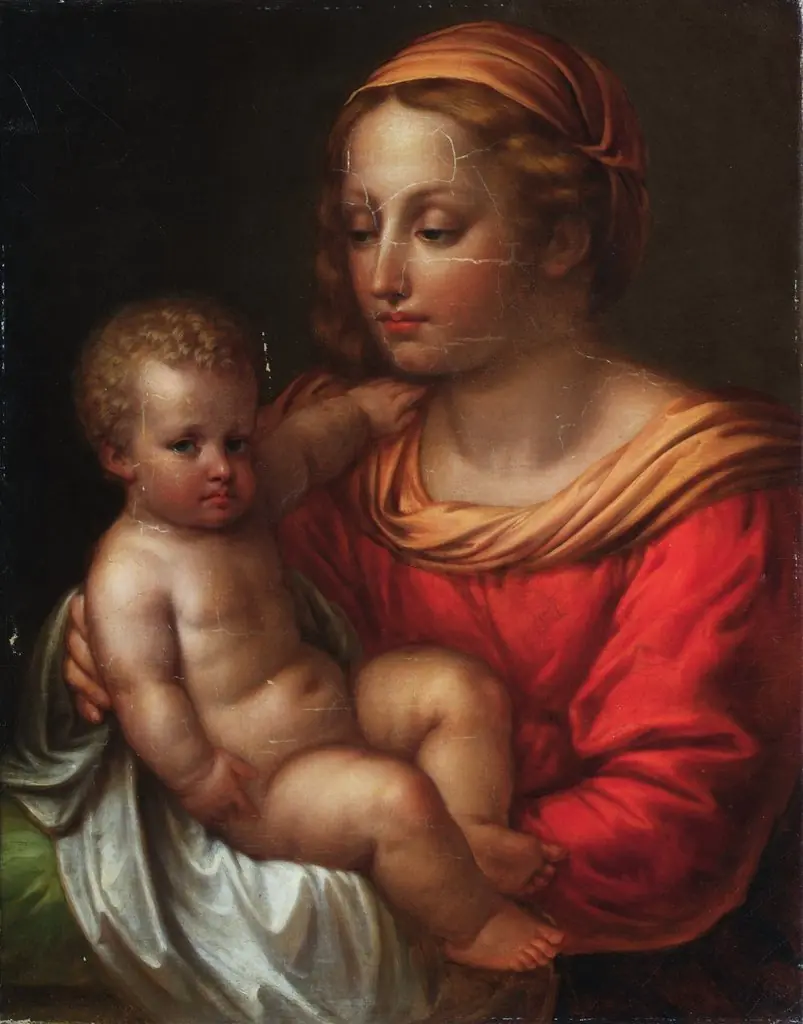 Madonna with Child
 Portrait of Baroness Elizabeth .D. Rosen, née Zubova, with Her Daughter
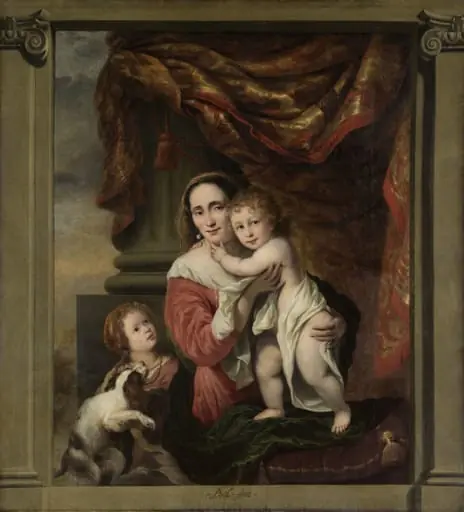 Caritas: Joanna de Geer (1629-1691) with her Children Cecilia Trip (1660-1728) and Laurens Trip (b. 1662)
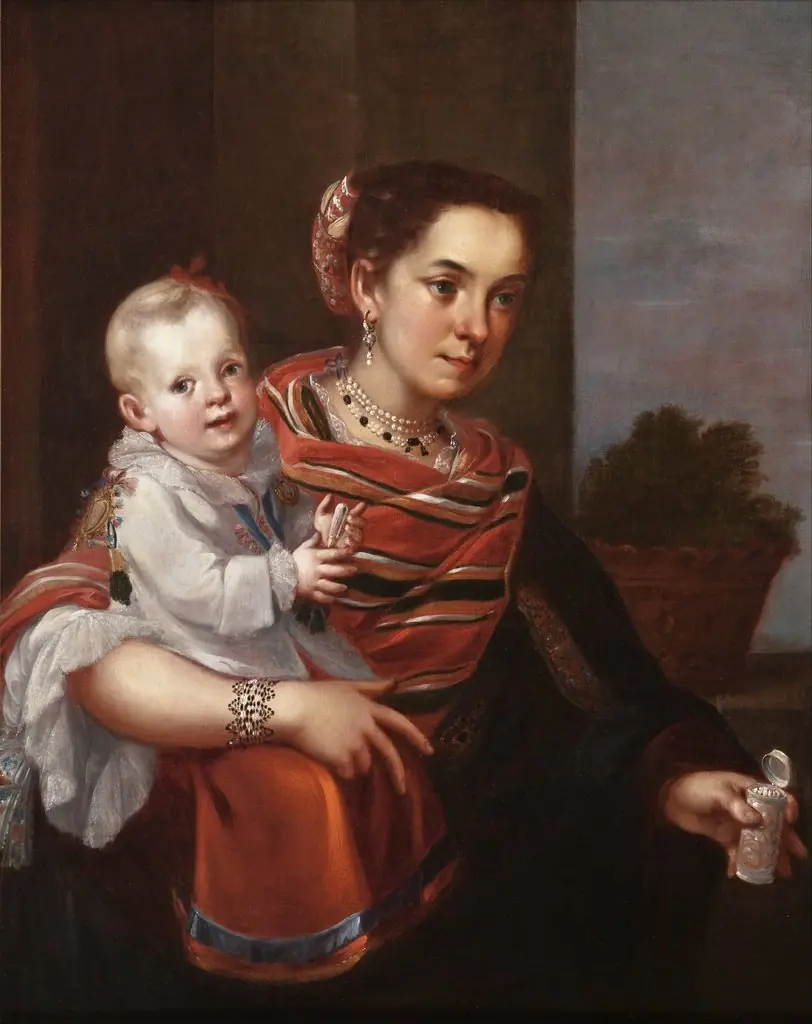 Morisca Woman and Albino Girl (Morisca y albina)
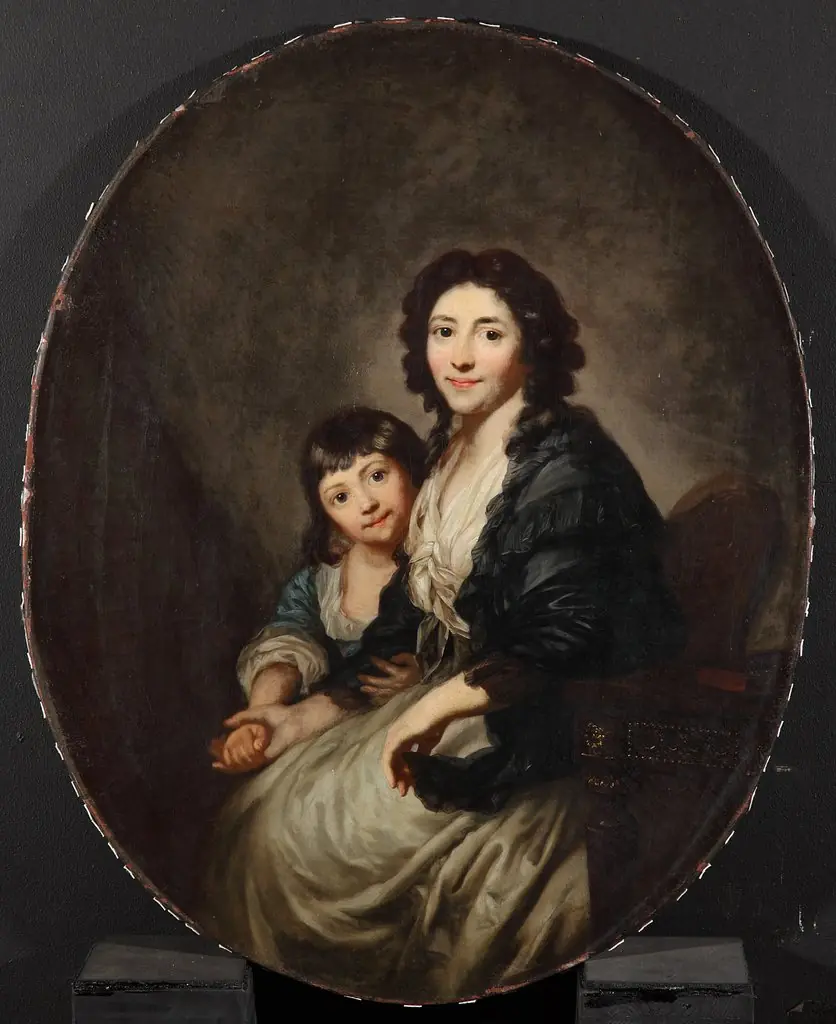 Elizabeth Sophia Augusta Graff, born Sulzer (1753-1812) and her Daughter Caroline Susanne (1781-1828)