Artwork
The Agony in the Garden
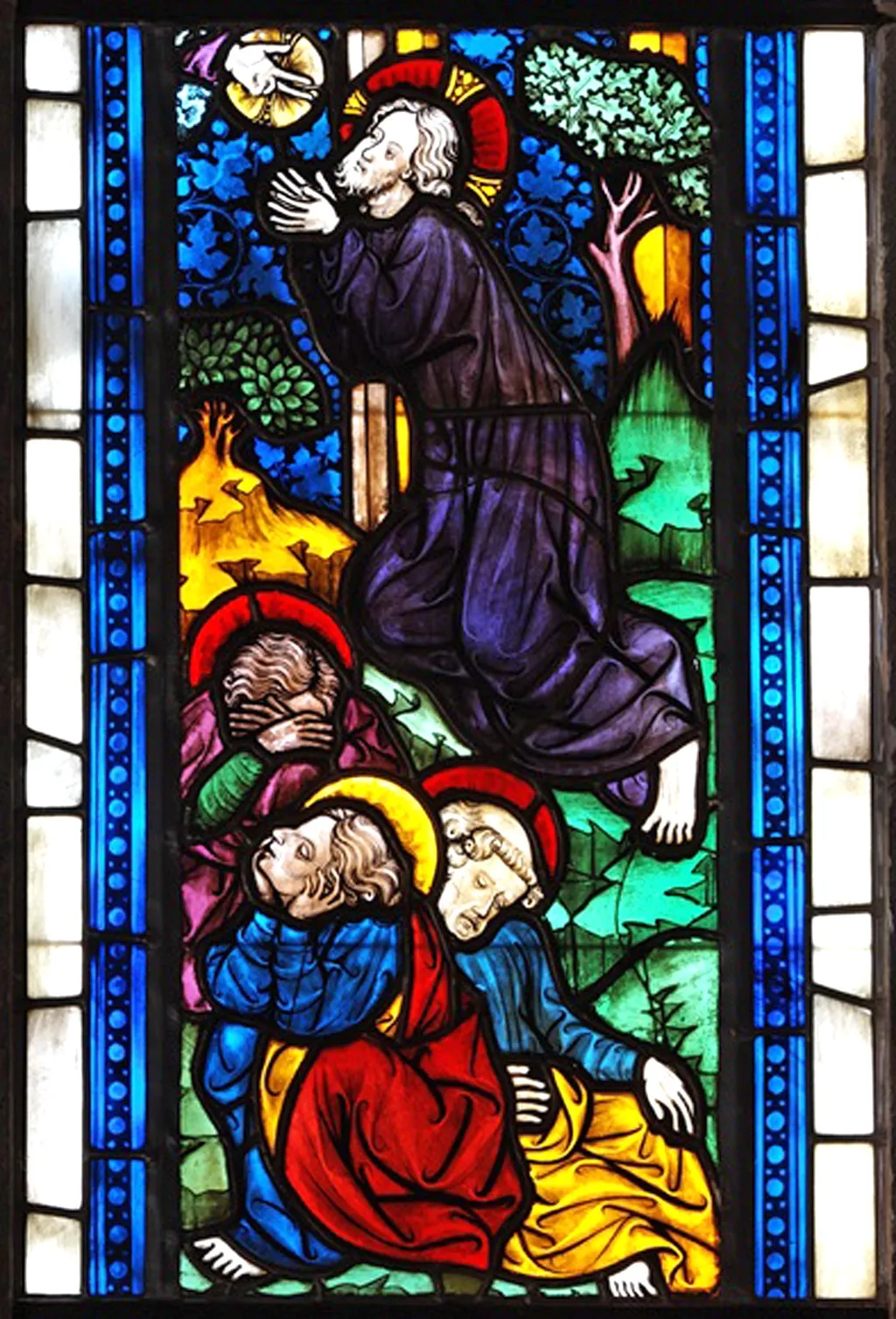
The Agony in the Garden is an unspecified painting. It dates from 1396 and is held in the collection of the Metropolitan Museum of Art.
About this work
Overview
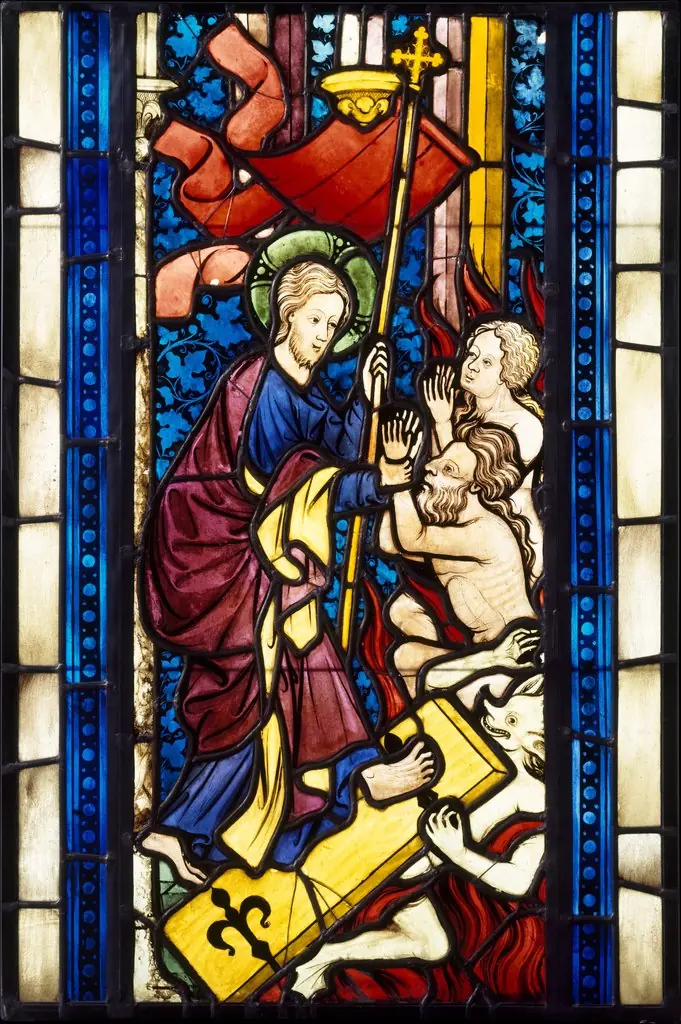
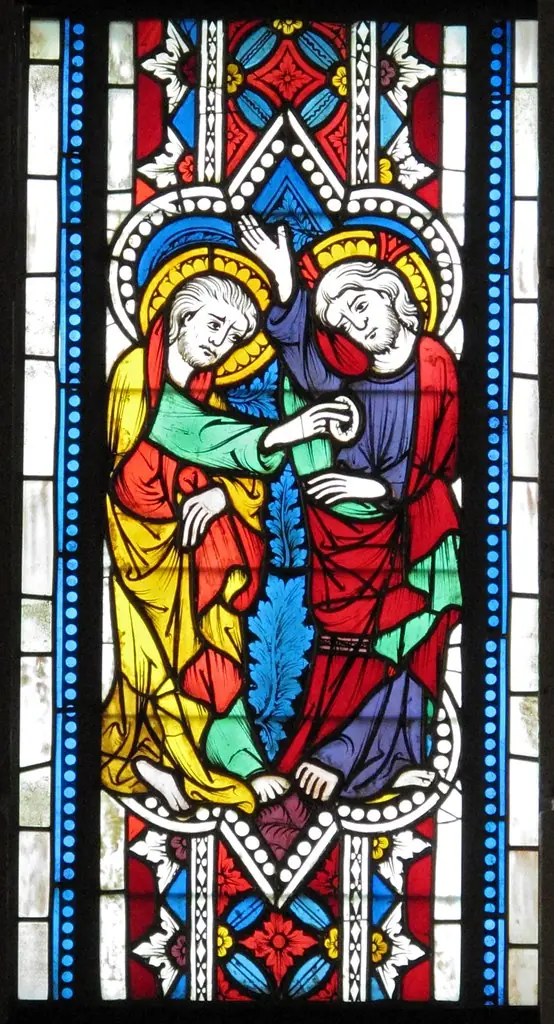
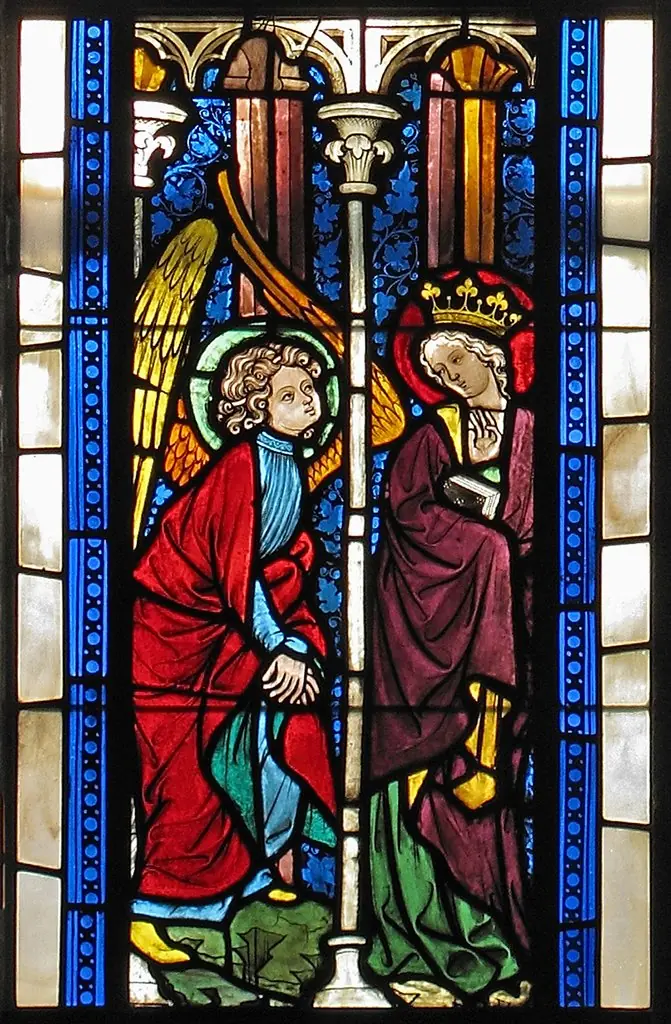
The work, titled *The Agony in the Garden*, is a stained‑glass composition depicting a nocturnal garden scene with three male figures.
The work, titled *The Agony in the Garden*, is a stained‑glass composition depicting a nocturnal garden scene with three male figures. The central figure kneels with clasped hands and a golden crown, while a second figure leans on him, head turned away. A third figure stands above, arms outstretched, clothed in a purple robe and encircled by a golden halo. The background is saturated with vivid reds, blues, and greens, suggesting trees and an illuminated sky.
Subject & Meaning
The tableau references the biblical episode of Christ’s prayer in Gethsemane, emphasizing themes of supplication and divine presence. The kneeling figure’s intense prayer posture, the supportive figure beside him, and the haloed figure above convey a narrative of human anguish met with heavenly assistance, underscored by the night setting that heightens the emotional gravity.
Technique & Style
The piece employs the traditional stained‑glass method of assembling colored glass pieces with lead cames, resulting in flat, unblended color fields that give the scene a bold, graphic quality. The use of bright primary hues and stark outlines creates a striking visual contrast, while the halo and crown are rendered in gold leaf or painted gold, adding luminous emphasis.
History & Provenance
The work is catalogued as a painting in some records, but its medium and visual characteristics identify it as stained glass, likely produced for a devotional setting such as a chapel or church. No specific date or artist is provided, and its ownership history remains undocumented in the available sources.
Context
Stained‑glass depictions of the Agony in the Garden were common in medieval and early modern ecclesiastical art, serving both didactic and contemplative functions. The vivid coloration and simplified forms align with later revivalist approaches that favored clear narrative over naturalistic detail, making the scene accessible to viewers in low‑light interiors.
Legacy
While the piece’s provenance is unclear, its visual language reflects enduring conventions in religious stained‑glass art, illustrating how color, light, and symbolic motifs continue to convey theological narratives across centuries.
Artist & collection