Artwork
The Virgin and Child with Saint John the Baptist and Angels
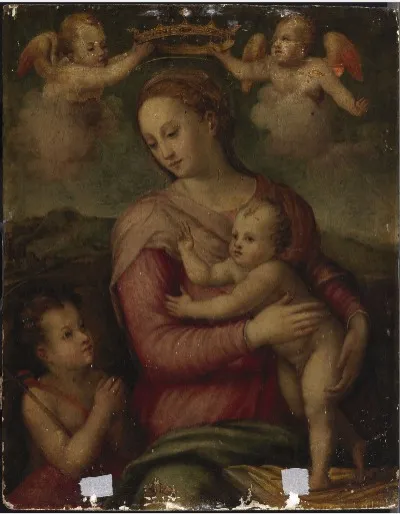
The Virgin and Child with Saint John the Baptist and Angels is an unspecified painting by Unknown. It is held in the collection of the National Gallery of Ireland.
About this work
Overview
This devotional panel depicts the Virgin Mary seated with the infant Jesus on her lap, accompanied by the young Saint John the Baptist kneeling in prayer.
This devotional panel depicts the Virgin Mary seated with the infant Jesus on her lap, accompanied by the young Saint John the Baptist kneeling in prayer. Two winged angels hover above, framing the central group against a dim, atmospheric background. The composition centers on quiet intimacy, with figures arranged in a stable, triangular formation that draws the viewer’s eye toward the tender interaction between mother and child.
Subject & Meaning
The scene presents a sacred moment of familial tenderness, reinforcing Mary’s role as the Mother of God and John’s early recognition of Christ’s divine nature. John’s posture of reverence anticipates his future role as the forerunner of Christ. The angels, though small, serve as celestial witnesses, elevating the earthly moment into a spiritual realm. The calm expressions and gentle gestures convey serenity and divine harmony.
Technique & Style
The artist employs chiaroscuro to model the figures with subtle gradations of light and shadow, giving them volume against the dark, undefined background. Rich red and deep blue garments contrast with the pale skin tones, enhancing the figures’ presence. The delicate rendering of fabric folds and soft facial features suggests attention to naturalism, while the ethereal quality of the angels reflects a lingering Gothic influence within an emerging Renaissance sensibility.
History & Provenance
The painting likely originated in late 15th-century Italy, possibly from a workshop in Tuscany or Umbria, where devotional images for private devotion were common. Its small scale and intimate subject suggest it was commissioned for domestic use rather than public worship. Early records are sparse, but it entered a major collection by the 19th century, where it has since been studied as an example of transitional religious art.
Context
During the late Quattrocento, private devotion to the Virgin and Child flourished among wealthy patrons, who sought images that combined spiritual reverence with emotional accessibility. This work reflects the period’s shift toward more humanized religious figures, blending traditional iconography with emerging naturalistic techniques. The inclusion of Saint John the Baptist as a child was a popular motif in Florentine art, symbolizing divine recognition and continuity.
Legacy
Though not attributed to a single renowned master, the painting exemplifies the quiet refinement of regional Italian workshops that bridged medieval symbolism and Renaissance humanism. Its influence lies in its quiet emotional clarity, which informed later devotional works across central Italy. It remains a representative example of how religious imagery evolved to engage viewers through personal, contemplative moments rather than grand spectacle.
Artist & collection

 Domestic Scene
 Giacomo and Cardinal Marco, investing Andrea, Abbot of San Zeno, with his Benefice
 The Nymph of Fontainebleau
 Portrait of a Woman
 Madonna and Child with Saints in the Enclosed Garden
 Venus and Minerva
 Family Group of Four on Sofa
 Wall painting from Room H of the Villa of P. Fannius Synistor at Boscoreale
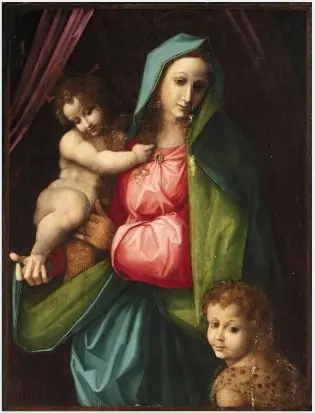 The Virgin and Child with Saint John the Baptist
 The Virgin and Child with Saint John the Baptist
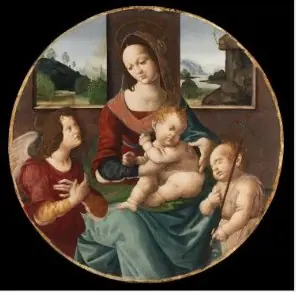 The Virgin and Child with Saint John the Baptist and an Angel
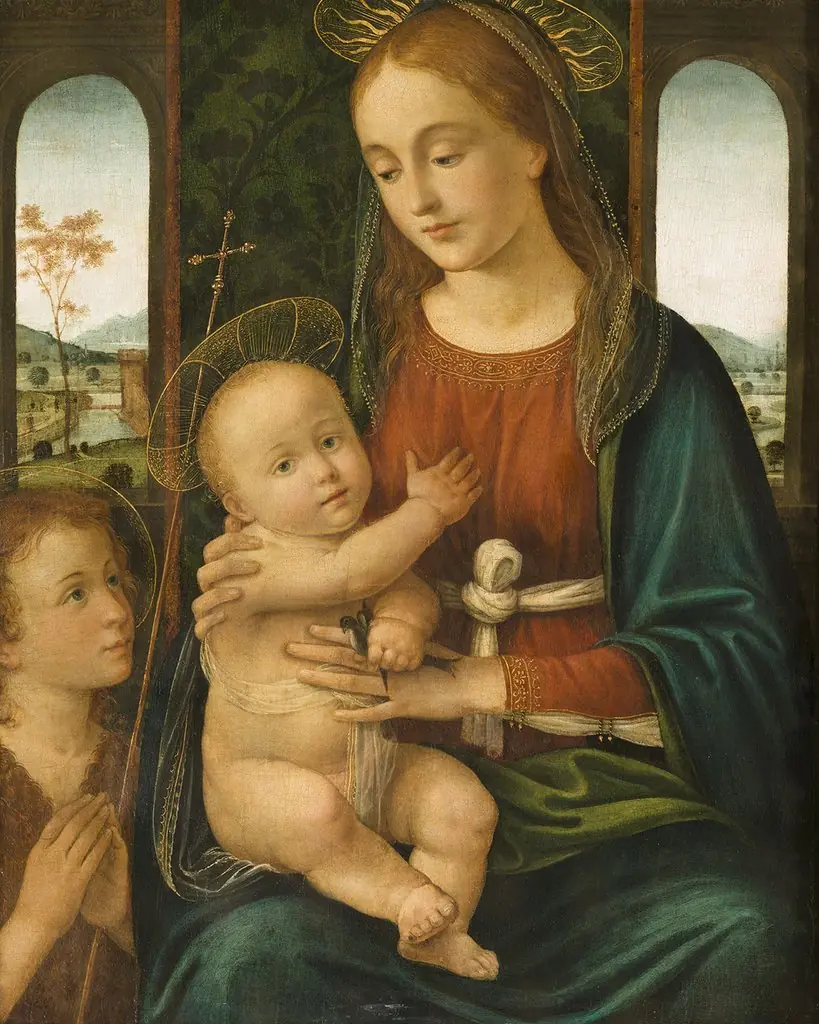 Virgin and Child with Saint John the Baptist
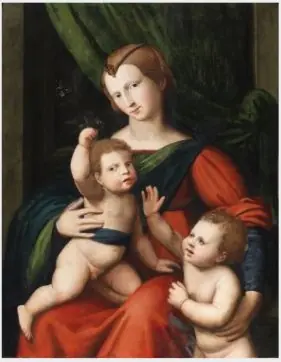 The Virgin and Child with Saint John the Baptist
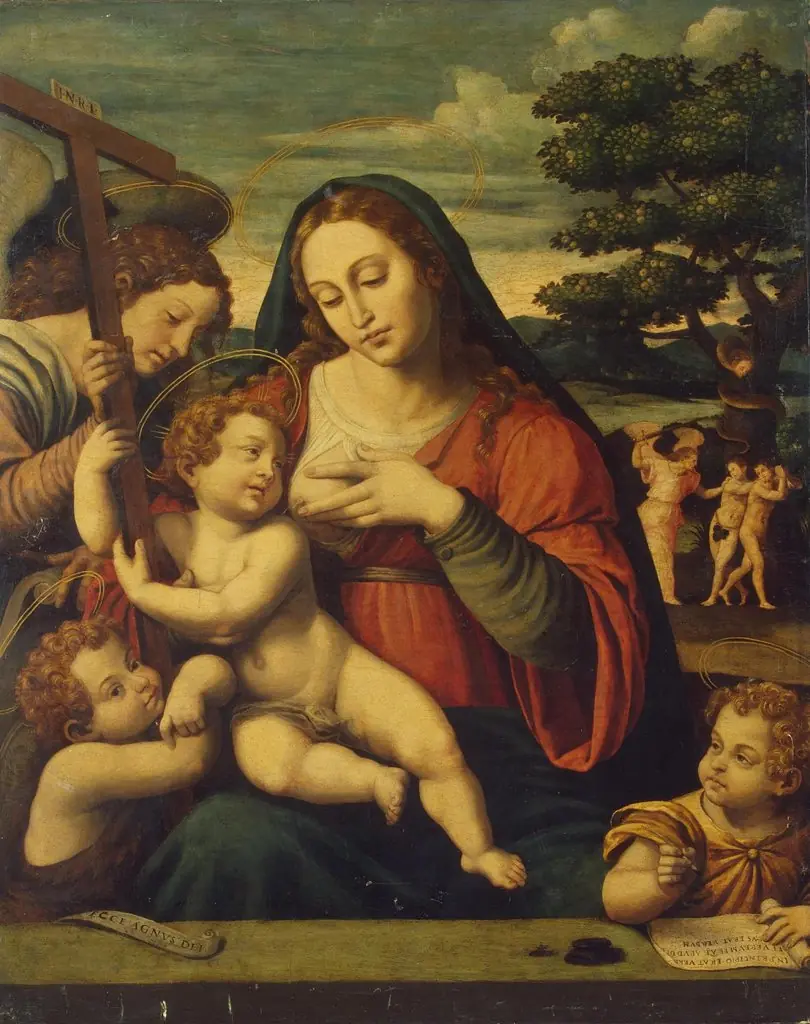 The Virgin and the Child with St John the Baptist, St John the Evangelist and an Angel
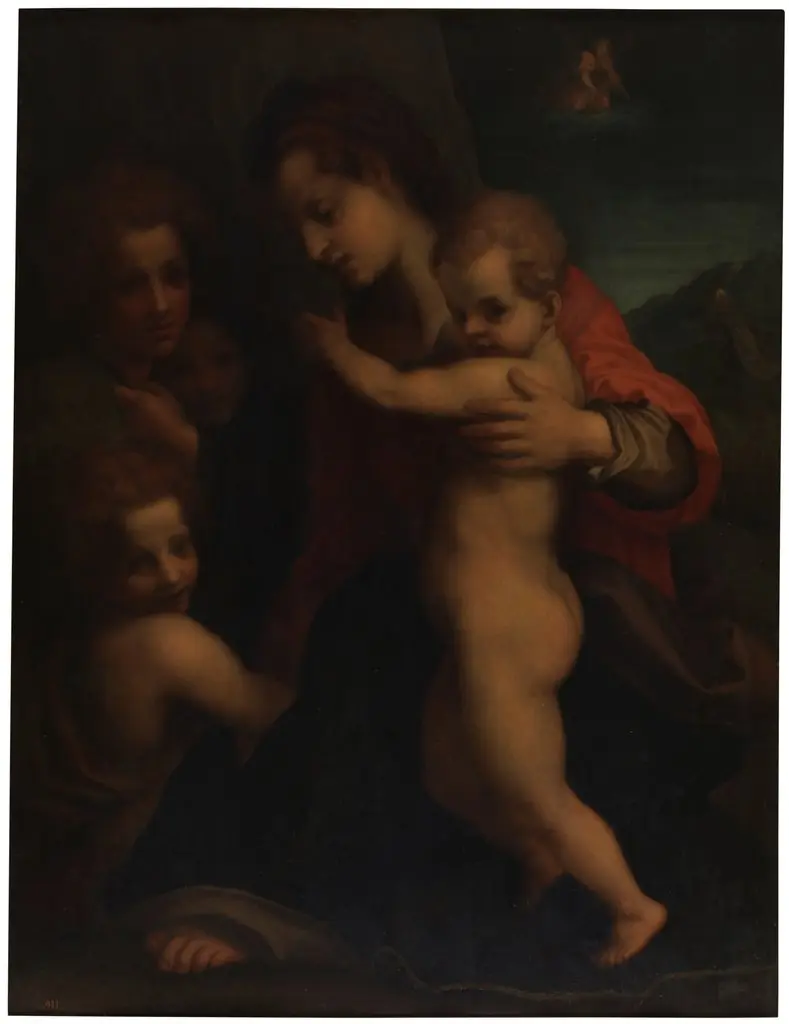 The Virgin with the Child, Saint John and Angels