Artwork
Panels from the High Altar of the Charterhouse of Saint-Honoré, Thuison-les-Abbeville: Pentecost
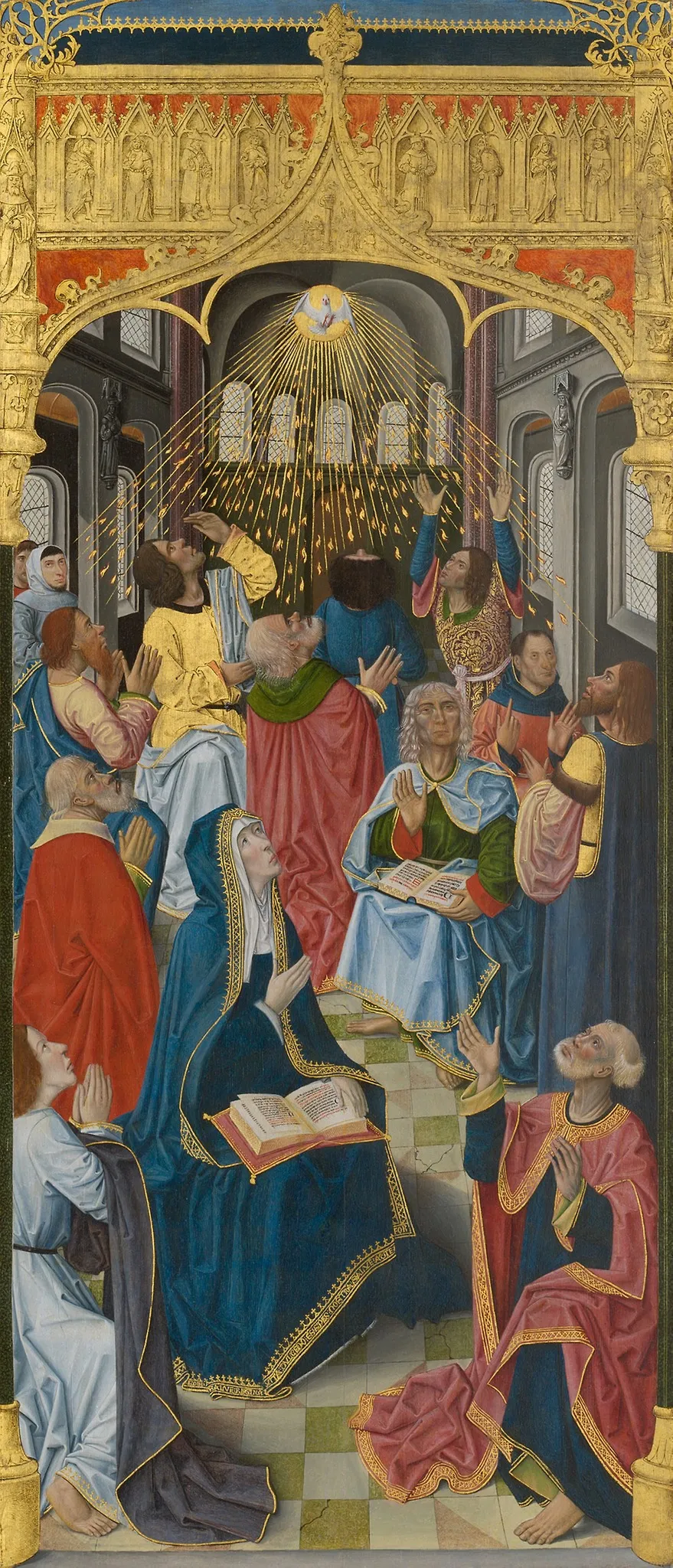
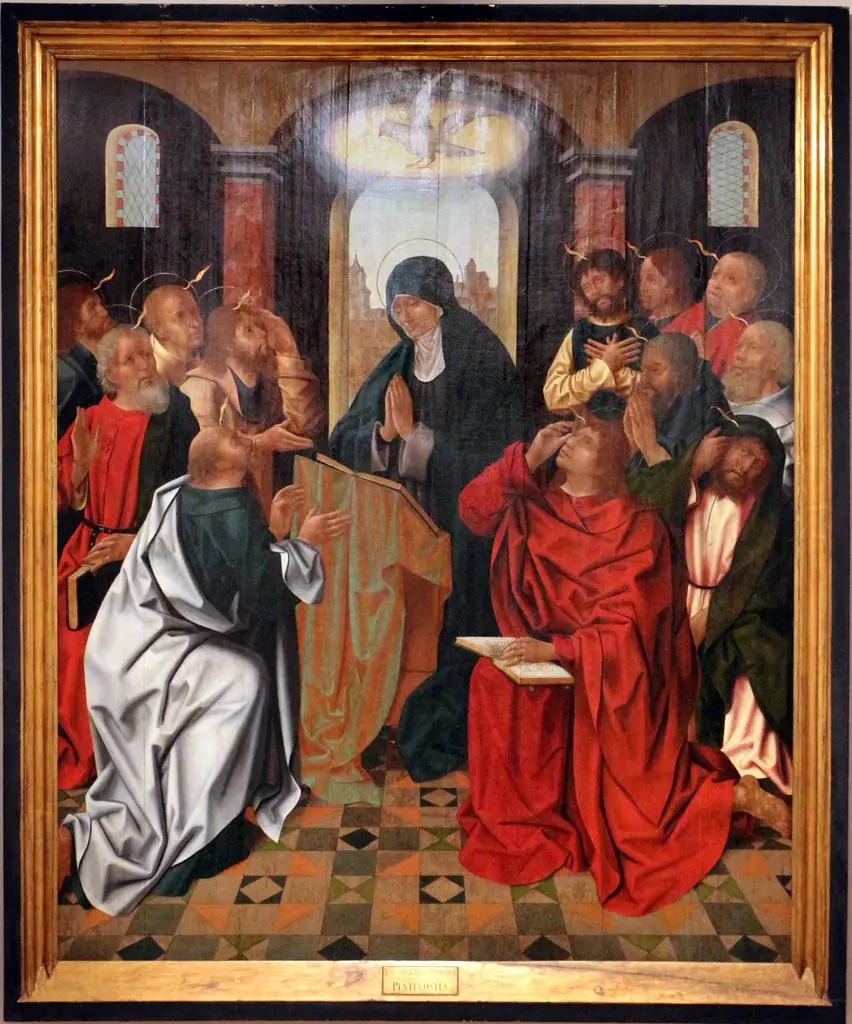
Panels from the High Altar of the Charterhouse of Saint-Honoré, Thuison-les-Abbeville: Pentecost is an unspecified painting by the Northern Renaissance artist Unknown. It dates from 1496 and is held in the collection of the Art Institute of Chicago. The work is a panel from the high altar of the Charterhouse of Saint‑Honoré in Thuison‑les‑Abbeville, depicting the Pentecost episode.
About this work
Overview
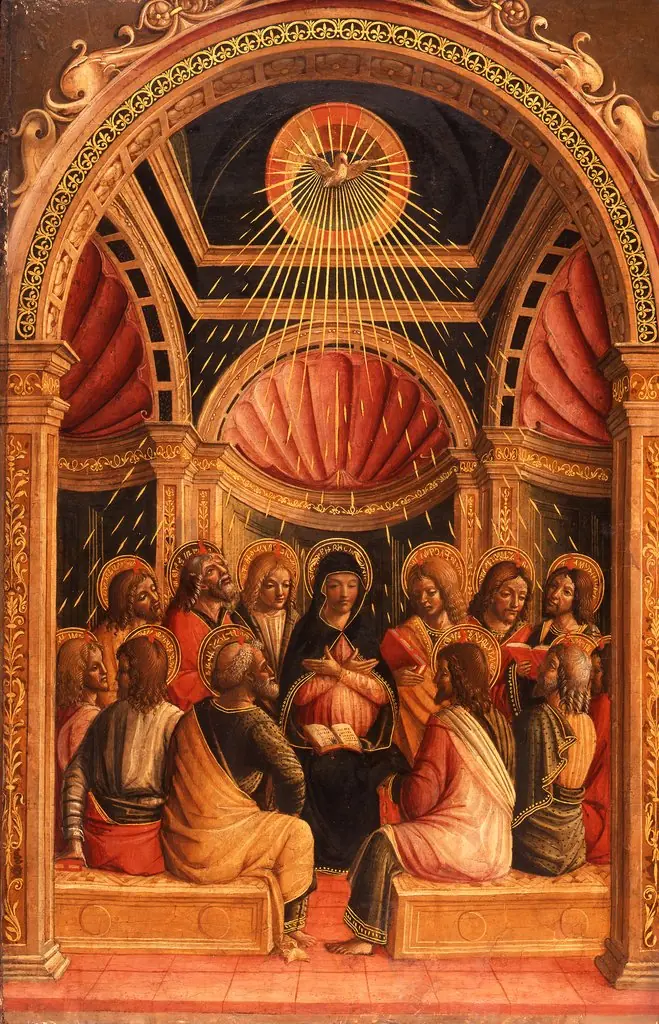
The work is a panel from the high altar of the Charterhouse of Saint‑Honoré in Thuison‑les‑Abbeville, depicting the Pentecost episode. Rendered in a richly decorated interior, the scene gathers a group of figures beneath a luminous beam that descends from above, illuminating the central female figure who holds an open book and gestures upward.
Subject & Meaning
The composition illustrates the descent of the Holy Spirit upon the apostles, a moment traditionally associated with tongues of fire and divine inspiration.
The composition illustrates the descent of the Holy Spirit upon the apostles, a moment traditionally associated with tongues of fire and divine inspiration. The woman in blue, likely representing a saint or the Virgin, receives the celestial light, symbolizing the transmission of spiritual knowledge, while the surrounding figures respond with awe, emphasizing the communal nature of the revelation.
Technique & Style
Executed with a pronounced chiaroscuro, the painter contrasts deep shadows with bright, golden highlights that catch the edges of the garments. The use of gold leaf on the trim and the vivid reds of the walls heighten the sense of opulence, while the interlacing beams of light create a visual network that unites the participants in a single, radiant space.
History & Provenance
Originally part of the high altar ensemble at the Carthusian monastery of Saint‑Honoré, the panel survived the dissolution of the monastic complex and entered the museum collection in the early twentieth century. Its preservation offers insight into the liturgical art commissioned for monastic settings in the late medieval to early modern period.
Artist & collection

 Domestic Scene
 Giacomo and Cardinal Marco, investing Andrea, Abbot of San Zeno, with his Benefice
 The Nymph of Fontainebleau
 Portrait of a Woman
 Madonna and Child with Saints in the Enclosed Garden
 Venus and Minerva
 Family Group of Four on Sofa
 Wall painting from Room H of the Villa of P. Fannius Synistor at Boscoreale