Artwork
Quail, Sparrows, and Millet
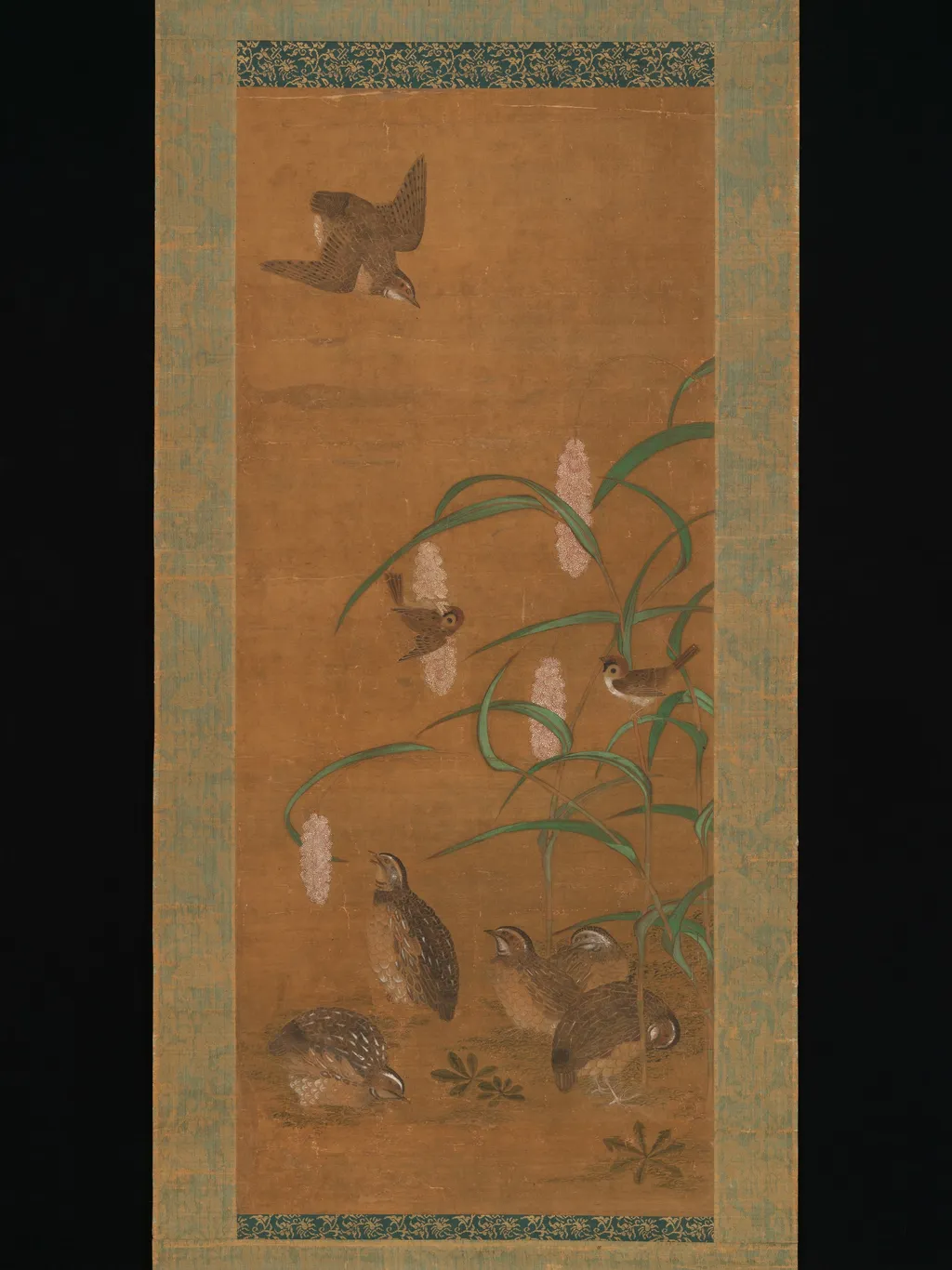
Quail, Sparrows, and Millet is an unspecified painting. It dates from 1516 and is held in the collection of the Metropolitan Museum of Art. The work presents a modestly sized canvas dominated by a muted brown field edged with a thin blue band.
About this work
Overview
The work presents a modestly sized canvas dominated by a muted brown field edged with a thin blue band. Within this setting a variety of avian figures—one in mid‑flight near the upper left and several others perched or grounded—interact with stylized foliage bearing elongated, curved leaves and diminutive blossoms. The composition balances naturalistic detail with decorative patterning.
Subject & Meaning
The painting depicts a tranquil garden scene populated by quail, sparrows and other small birds, suggesting an observation of everyday rural life. The inclusion of millet and other seed‑bearing plants hints at themes of sustenance and the cyclical rhythms of nature, while the birds’ varied postures convey a quiet dynamism within an otherwise still environment.
Technique & Style
A restrained palette of browns is layered in multiple tones, creating subtle gradations that give the surface a weathered appearance. The artist employs fine brushwork to render feather texture and leaf curvature, while broader washes suggest depth. The blue border functions as a framing device, delineating the pictorial space without breaking the overall tonal harmony.
Context
The piece aligns with a tradition of East Asian bird‑and‑flower painting, where meticulous observation of flora and fauna serves both decorative and didactic purposes. Its emphasis on modest, domestic subjects reflects a broader aesthetic preference for simplicity and natural order that was prevalent among literati painters during the late Ming and early Qing periods.
Artist & collection