Artwork
The Death of Dido
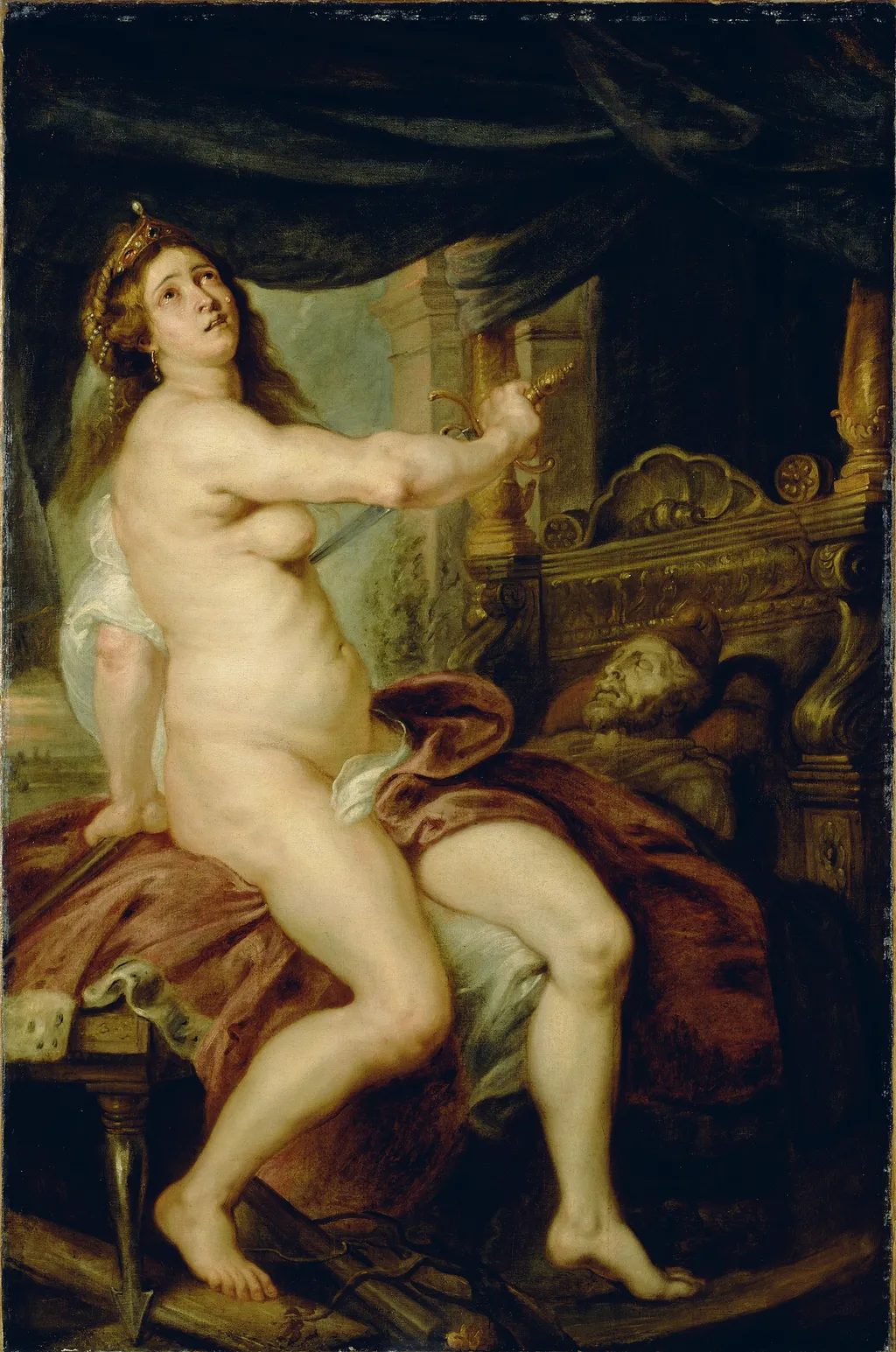
The Death of Dido is an oil painting by the Early Baroque Italian artist Unknown. It dates from 1640 and is held in the collection of the Philadelphia Museum of Art.
About this work
Overview
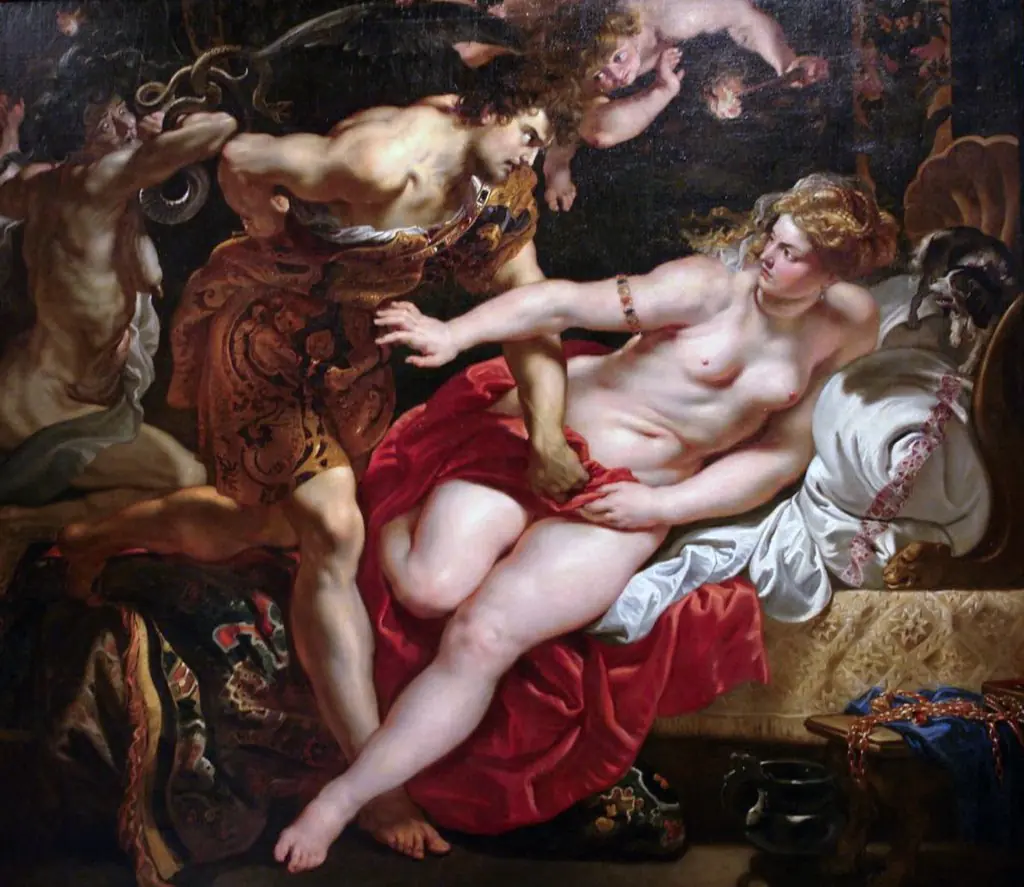
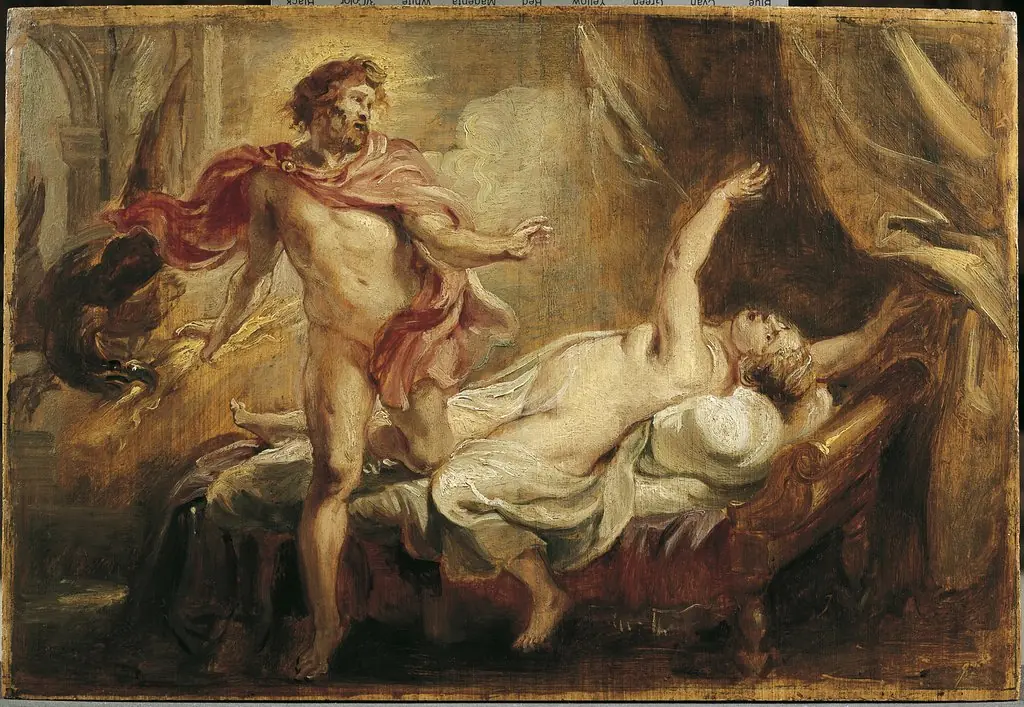
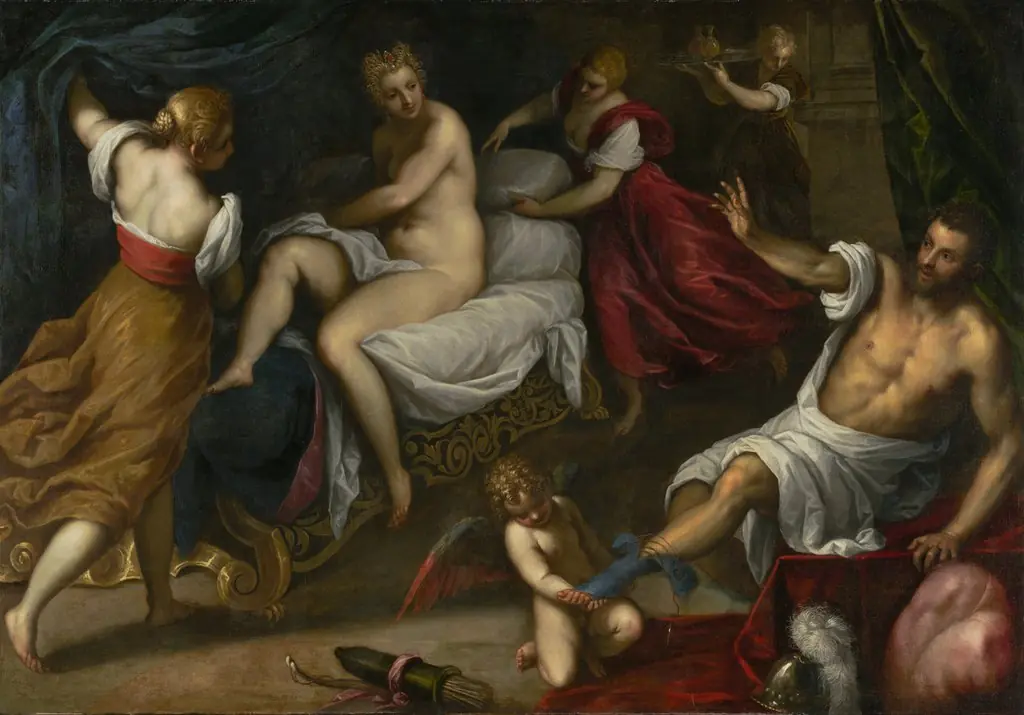
The work titled *The Death of Dido* is an oil painting that presents a dramatic tableau. A nude female figure, crowned and holding a sword aloft, stands upon a red‑draped table. Behind her, a man reclines on a bed beneath a hanging curtain, creating a tense, narrative moment captured on canvas.
Subject & Meaning
The composition alludes to the tragic end of Dido, queen of Carthage, whose suicide follows the betrayal by Aeneas. The crowned woman, poised with a sword, embodies the queen’s fatal resolve, while the prone male figure suggests the lover whose abandonment precipitates the act. The setting evokes a private, intimate space transformed into a scene of mythic fatalism.
Technique & Style
Rubens’ characteristic vigor is evident in the muscular anatomy, dynamic pose, and rich coloration that animate the narrative.
Executed in oil, the painting employs a pronounced chiaroscuro, contrasting illuminated flesh and bright drapery against deep shadows that recede into the background. This handling of light intensifies the emotional charge and gives the figures a three‑dimensional presence. Rubens’ characteristic vigor is evident in the muscular anatomy, dynamic pose, and rich coloration that animate the narrative.
History & Provenance
Attributed to Peter Paul Rubens, the piece reflects the Flemish master’s mature period, when he frequently revisited classical and literary subjects. While specific ownership records are limited, the work aligns with Rubens’ known commissions for aristocratic patrons who favored dramatic mythological scenes, underscoring the artist’s reputation for rendering powerful, emotionally resonant histories.
Artist & collection

 Domestic Scene
 Giacomo and Cardinal Marco, investing Andrea, Abbot of San Zeno, with his Benefice
 The Nymph of Fontainebleau
 Portrait of a Woman
 Madonna and Child with Saints in the Enclosed Garden
 Venus and Minerva
 Family Group of Four on Sofa
 Wall painting from Room H of the Villa of P. Fannius Synistor at Boscoreale