Artwork
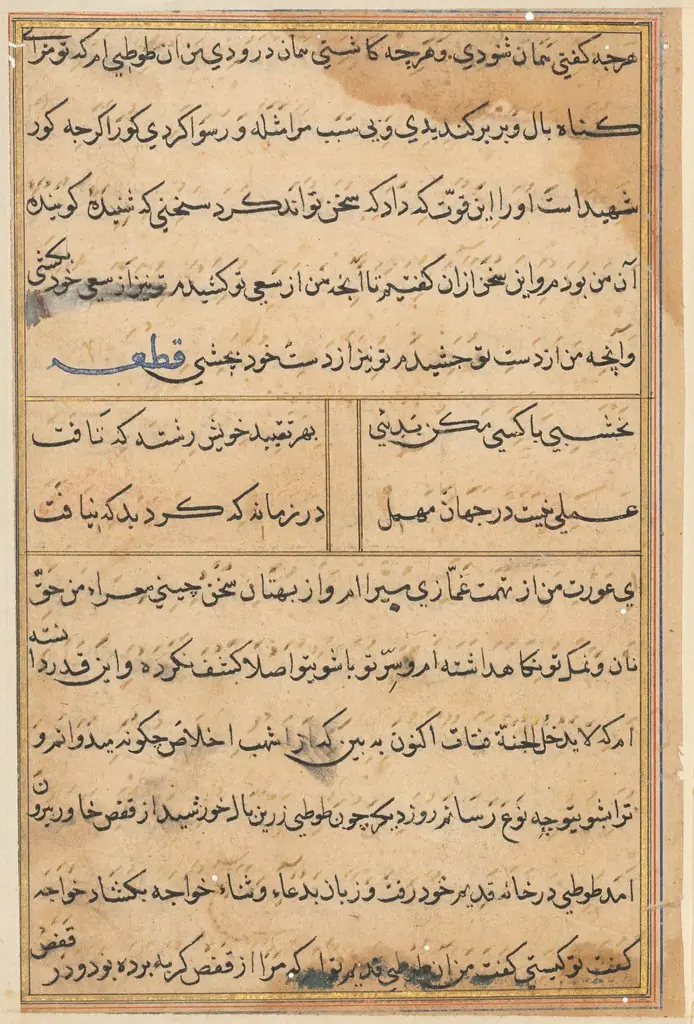
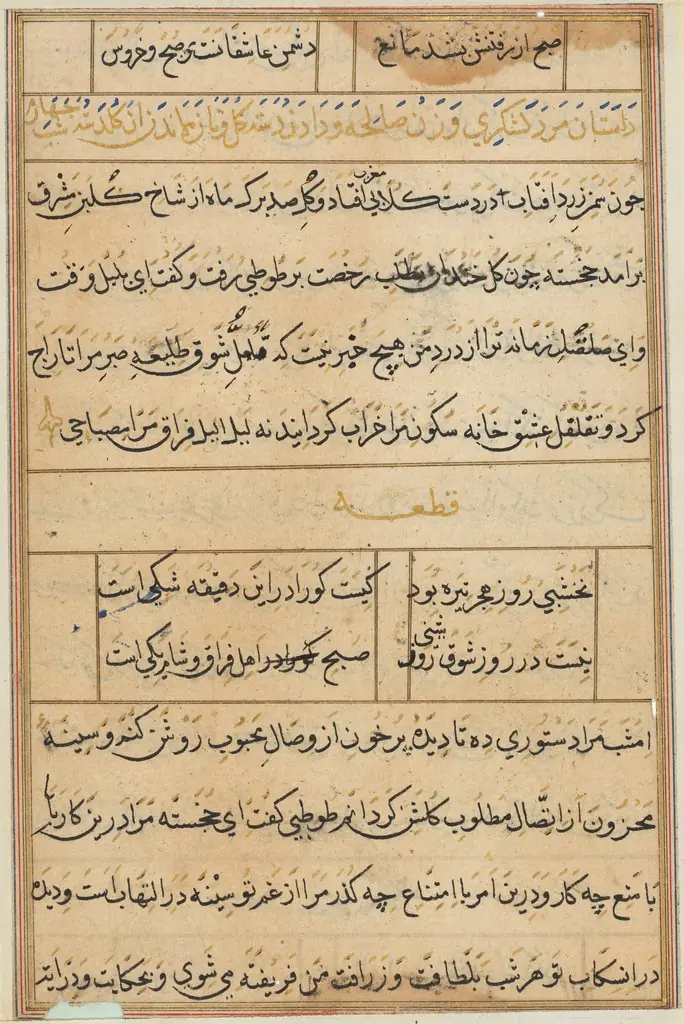
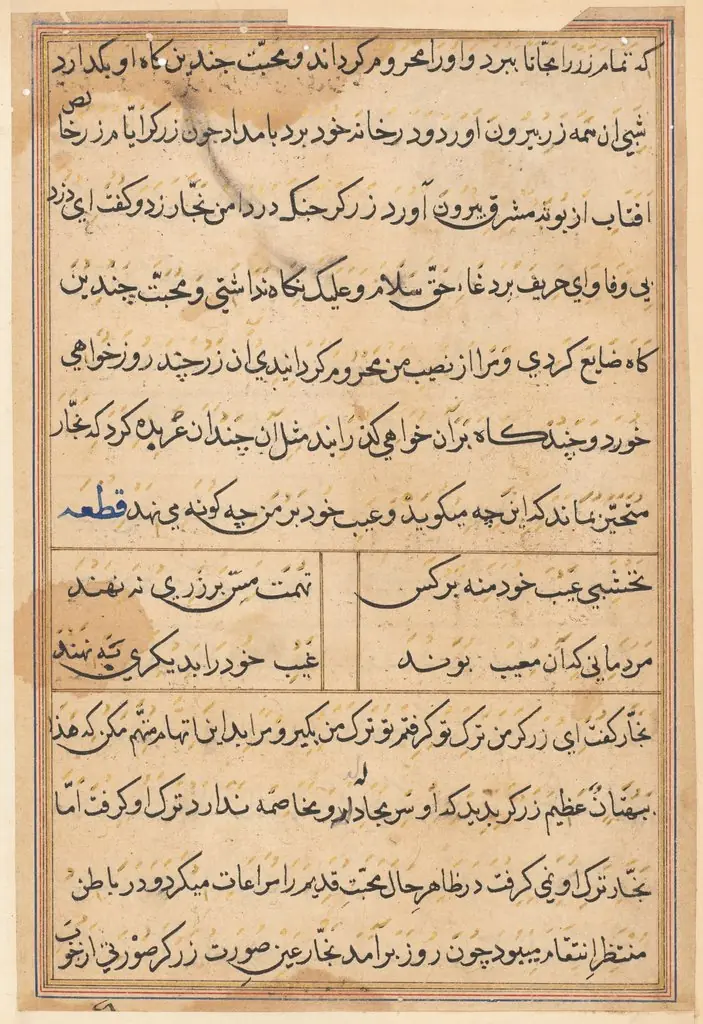
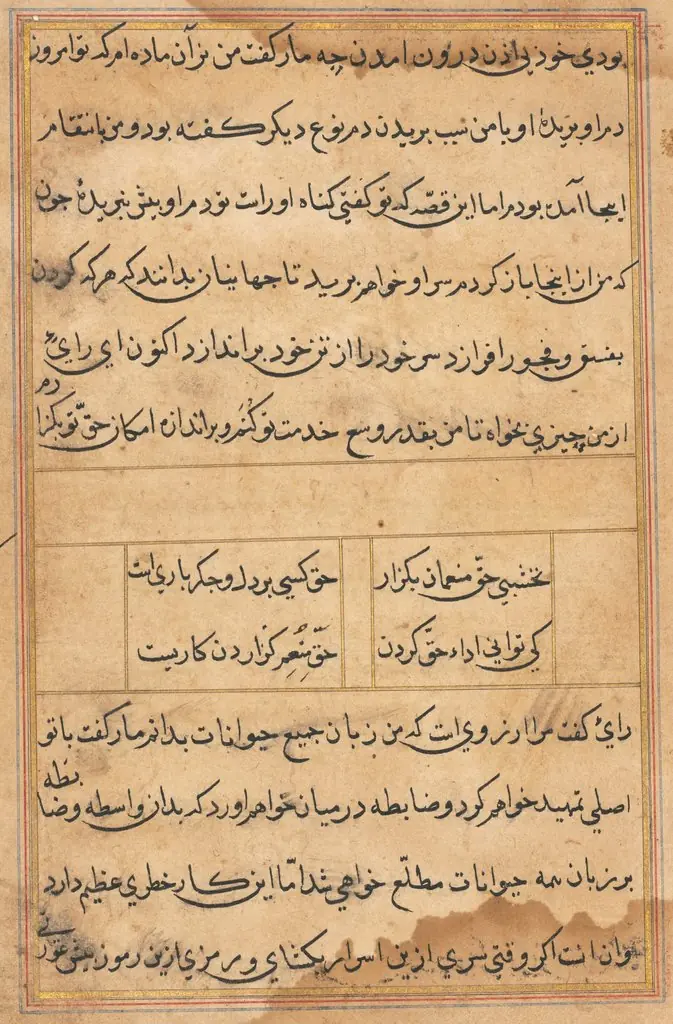
Text of Rustam and Suhrab, from the Shah-nama of Firdausi (Persian, c. 934–1020) (recto)
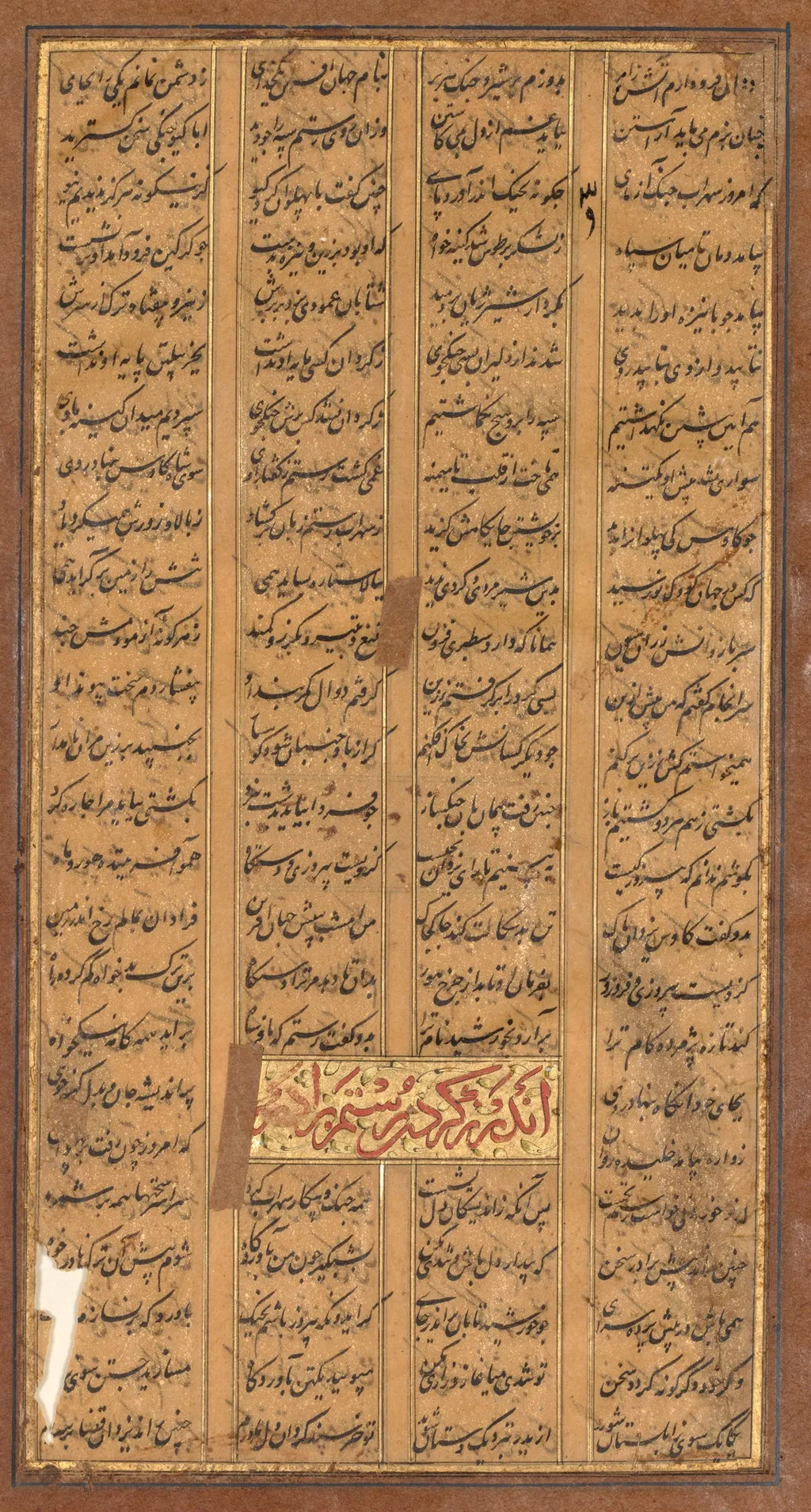
Text of Rustam and Suhrab, from the Shah-nama of Firdausi (Persian, c. 934–1020) (recto) is an unspecified painting. It dates from 1610 and is held in the collection of the Cleveland Museum of Art. This illuminated page presents a passage from the Shah‑namah, the epic poem by the Persian poet Firdausi (c.
About this work
Overview
This illuminated page presents a passage from the Shah‑namah, the epic poem by the Persian poet Firdausi (c.
This illuminated page presents a passage from the Shah‑namah, the epic poem by the Persian poet Firdausi (c. 934–1020). Executed as a manuscript leaf, the recto side is densely filled with black ink script arranged in tight columns, punctuated by a small red rectangle near the bottom that contains larger, multicolored lettering in gold and pink. The page was commissioned for a patron named Prince Salim.
Subject & Meaning
The text records the tragic encounter between Rustam and his son Suhrab, a central episode in the Shah‑namah that explores themes of fate, identity, and heroic duty. By selecting this particular narrative, the manuscript underscores the moral and cultural significance of loyalty and the consequences of hidden lineage within the Persian literary tradition.
Technique & Style
The calligraphy is rendered in a refined, precise hand, using dark, clean ink that fills each line uniformly. The decorative red rectangle employs a contrasting script with larger characters, highlighted by gold and pink pigments, indicating a hierarchical emphasis or marginal note. The overall aesthetic reflects the high‑quality manuscript production of the medieval Persian court, where meticulous pen work and selective color accents were prized.
History & Provenance
Created for Prince Salim, the leaf likely formed part of a larger Shah‑namah codex produced in a Persian workshop during the early medieval period. The manuscript eventually entered the collection of the Cleveland Museum of Art, where it is displayed alongside other comparable pages, illustrating the continuity of Persian illuminated book culture across centuries.
Context
During the 10th and 11th centuries, Persian courts commissioned lavishly illustrated copies of the Shah‑namah to affirm cultural identity and royal legitimacy. The text’s emphasis on heroic lineage resonated with princely patrons, who saw parallels between their own dynastic aspirations and the epic’s protagonists. Such manuscripts served both literary and diplomatic functions within the Islamic world.
Artist & collection