Artwork
Toilette of Radha
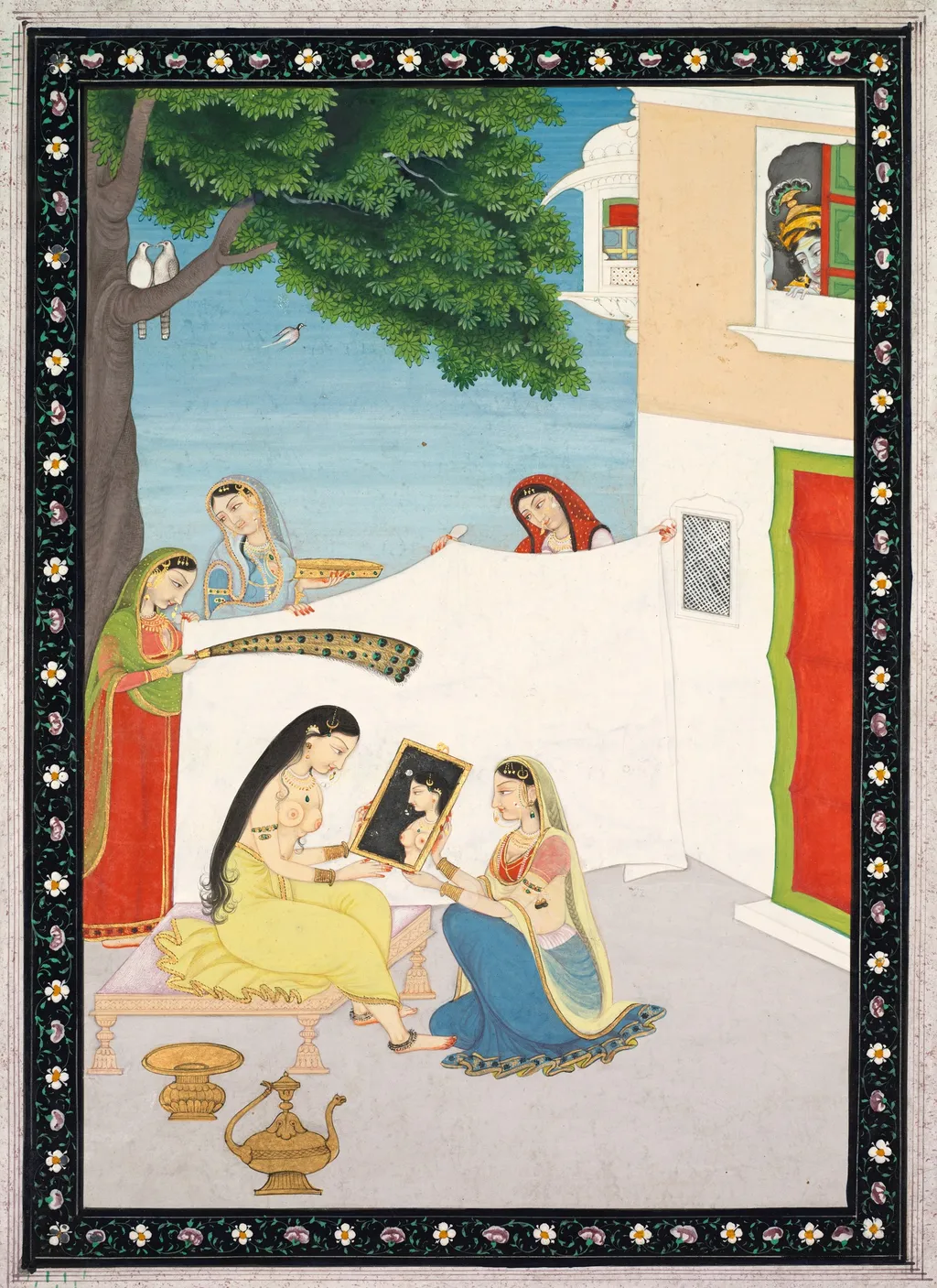
Toilette of Radha is an unspecified painting. It dates from 1815 and is held in the collection of the Cleveland Museum of Art.
About this work
Overview
Their attire is rendered in vivid hues of yellow, red, and blue, while a small architectural structure with a domed roof appears in the distance.
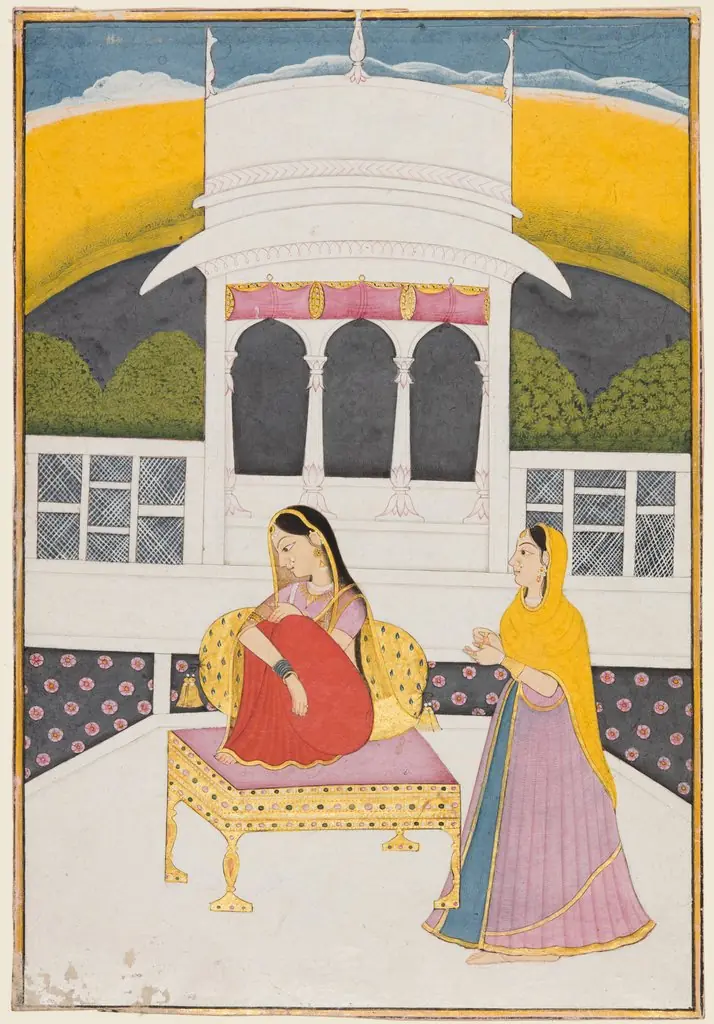
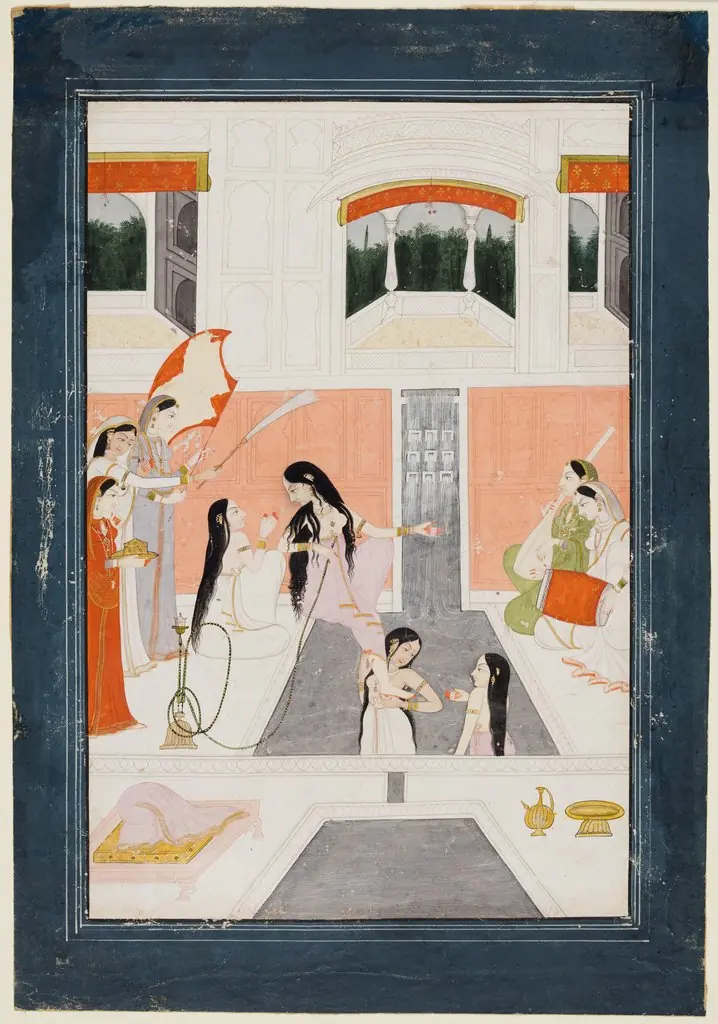
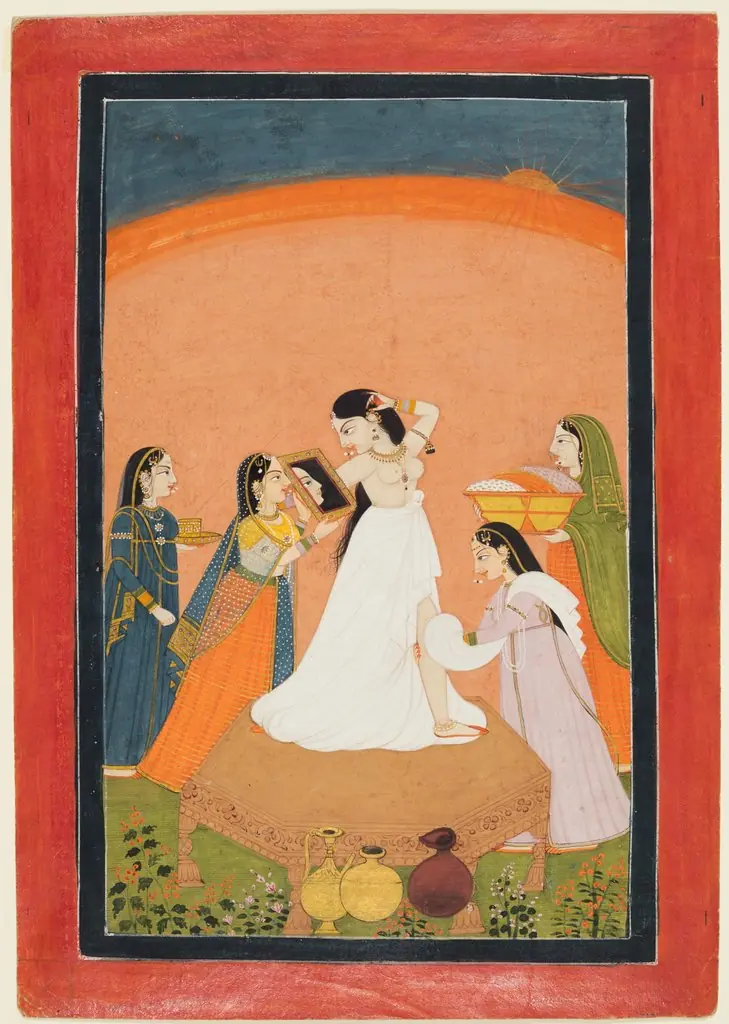
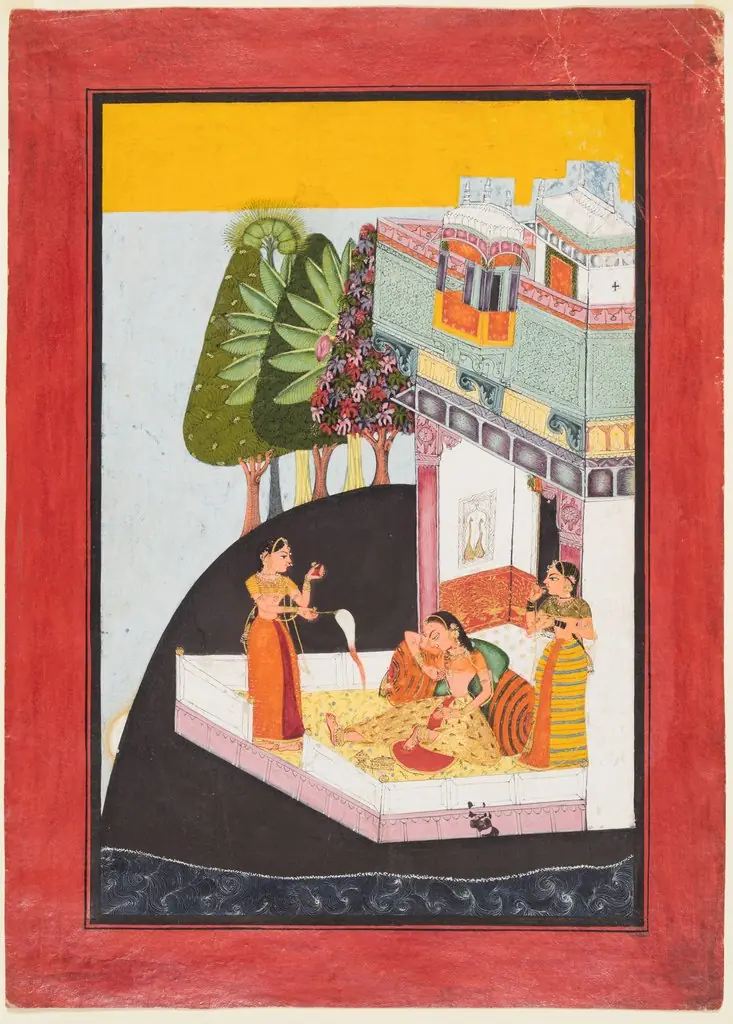
The work titled “Toilette of Radha” depicts a group of four women gathered beneath a tree, engaged in personal grooming. Their attire is rendered in vivid hues of yellow, red, and blue, while a small architectural structure with a domed roof appears in the distance. The scene includes decorative elements such as birds perched on branches, a red curtain to one side, and a patterned border adorned with miniature floral motifs.
Subject & Meaning
The composition captures a moment of preparation, likely a ritual of dressing or beautifying before a special event. One figure holds a mirror that another woman examines, while the remaining figures tend to jewelry and a handheld fan, suggesting themes of femininity, social ritual, and the cultural practice of adornment.
Technique & Style
Executed in a flat, decorative manner, the painting employs bold, saturated colors and clear outlines to define the figures and surrounding foliage. The border’s intricate floral pattern and the stylized rendering of the architectural background reflect a synthesis of narrative illustration and ornamental design typical of South Asian miniature traditions.
Context
The title references Radha, a celebrated figure in Hindu mythology associated with love and devotion, indicating that the scene may allude to mythological or courtly narratives wherein Radha prepares for a gathering or performance. The inclusion of a mirror and elaborate dress underscores the cultural emphasis on beauty and ritualized presentation.
Legacy
Works such as this illustrate the rich visual language of Indian courtly painting, where everyday moments are elevated through meticulous detail and vibrant coloration. The piece contributes to the broader understanding of gendered spaces and aesthetic values in pre‑modern South Asian art, informing both scholarly study and public appreciation.
Artist & collection