Artwork
San Francisco de Assisi: santo de retablo
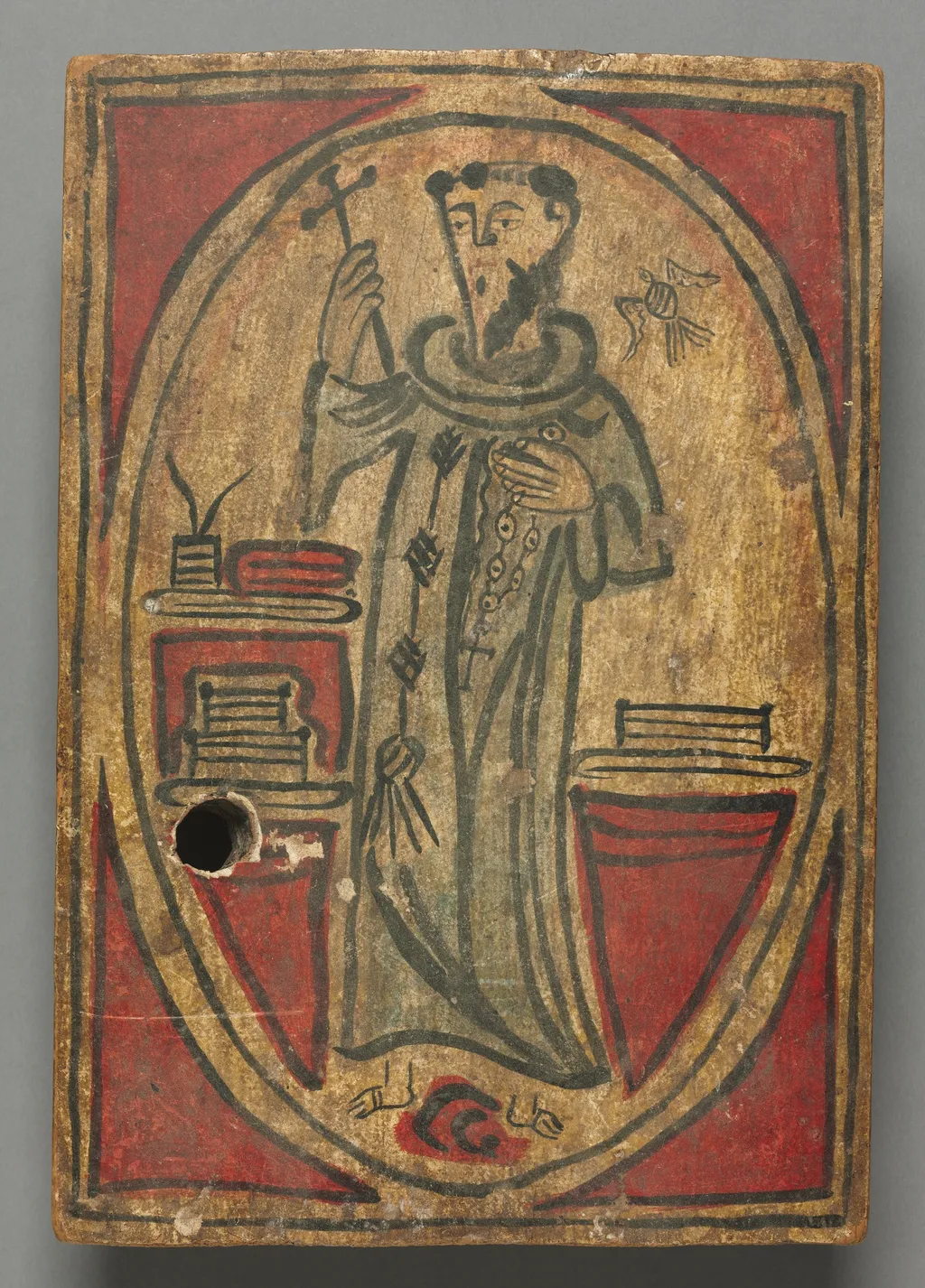
San Francisco de Assisi: santo de retablo is an oil painting. It dates from 1700 and is held in the collection of the Cleveland Museum of Art.
About this work
This painting shows a robed figure holding a book and a staff, standing inside a red circle.
This painting shows a robed figure holding a book and a staff, standing inside a red circle. Around him are simple objects: a small table with books, a stool, and a red bucket. The colors are mostly faded golds, reds, and greens, with a worn, aged look.
The figure looks like a saint, and the setup feels like a small altar scene. The painting is old—made around 1700—and shows signs of wear, like cracks and peeling paint.
Next, check out The Cleveland Museum of Art to see more works like this.
Overview
The work, titled *San Francisco de Assisi: santo de retablo*, is an oil painting dating to the early eighteenth century. It depicts a robed figure, likely Saint Francis, holding a book and a staff within a red circular frame. Simple objects—a small table bearing books, a stool, and a red bucket—surround the saint, creating a modest altar-like setting. The palette is dominated by muted golds, reds and greens, and the surface shows extensive aging, including cracks and flaking paint.
Subject & Meaning
The central figure is identified as Saint Francis of Assisi, a common devotional subject in Spanish religious art. His book and staff reference his role as a preacher and pilgrim, while the surrounding items suggest the tools of a modest shrine, emphasizing humility and piety. The red circle that encloses the scene may function as a visual focus, directing the viewer’s attention to the saint’s contemplative pose.
Technique & Style
Executed in oil on panel, the painting employs a restrained color scheme typical of late Baroque devotional images in the Iberian tradition. Brushwork is relatively flat, with softened edges that lend a faded, almost matte appearance. The overall effect is one of quiet reverence rather than dramatic chiaroscuro, aligning the work with smaller retablo panels intended for private worship.
History & Provenance
Created around 1700, the piece reflects the artistic conventions of Spanish colonial workshops that produced portable altarpieces for churches and private chapels. Its current location is not specified, but similar works are catalogued by institutions such as the Cleveland Museum of Art, indicating a broader collection of comparable devotional panels.
Context
During the early eighteenth century, retablo paintings served both liturgical and instructional purposes, often placed in side altars or domestic chapels. Saint Francis, revered for his asceticism, was a popular subject for such intimate settings, reinforcing ideals of simplicity and devotion among the faithful.
Legacy
Although modest in scale, the painting exemplifies the widespread production of devotional imagery that shaped everyday religious experience in the Spanish-speaking world. Its aged condition offers insight into the materials and techniques of the period, while its subject continues to inform scholarly understanding of popular saintly veneration.
Artist & collection