Artwork
Altarpiece (retablo) with Scenes from the Passion
Altarpiece (retablo) with Scenes from the Passion is an unspecified painting. It dates from 1450 and is held in the collection of the Metropolitan Museum of Art.
About this work
Overview
The artwork is distinguished by its division into multiple distinct panels, each contributing to a comprehensive visual account of these sacred events.
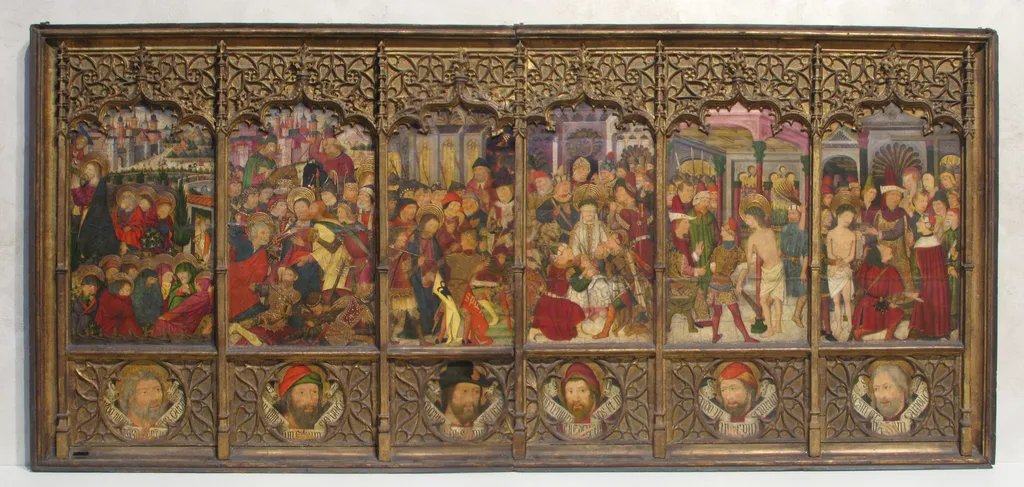
This painting, titled Altarpiece (retablo) with Scenes from the Passion, constitutes a part of a larger devotional structure designed for ecclesiastical settings. It visually recounts various episodes from the Passion of Christ, a pivotal narrative in Christian theology. The artwork is distinguished by its division into multiple distinct panels, each contributing to a comprehensive visual account of these sacred events.
Subject & Meaning
The central theme of the painting revolves around the suffering of Christ, portrayed through a sequence of six individual scenes. Each panel is densely populated with figures, many of whom are clad in rich red, blue, or gold attire, gathered around the central figure undergoing torment. In the lowest register, six smaller portraits depict bearded men wearing distinctive hats and collars bearing inscriptions, likely representing donors or significant religious figures.
Technique & Style
The artwork is formally organized into six separate pictorial fields, each presenting a distinct narrative moment. These scenes are characterized by their crowded compositions, featuring numerous individuals. A notable use of color is evident in the garments, with prominent reds, blues, and golds contributing to the visual richness. The bottom section features six smaller, bust-length depictions of men, identifiable by their beards, headwear, and collars adorned with text.
Context
As an altarpiece, or retablo, this painting fulfilled a specific role within a church environment. Such works were traditionally installed behind the altar, serving as a focal point for religious contemplation and a visual reinforcement of Christian doctrine. Its detailed portrayal of the Passion narrative would have provided congregants with a profound visual aid for meditation on the sacrifice of Christ.
Artist & collection