Artwork
Papier-mâchè side chair
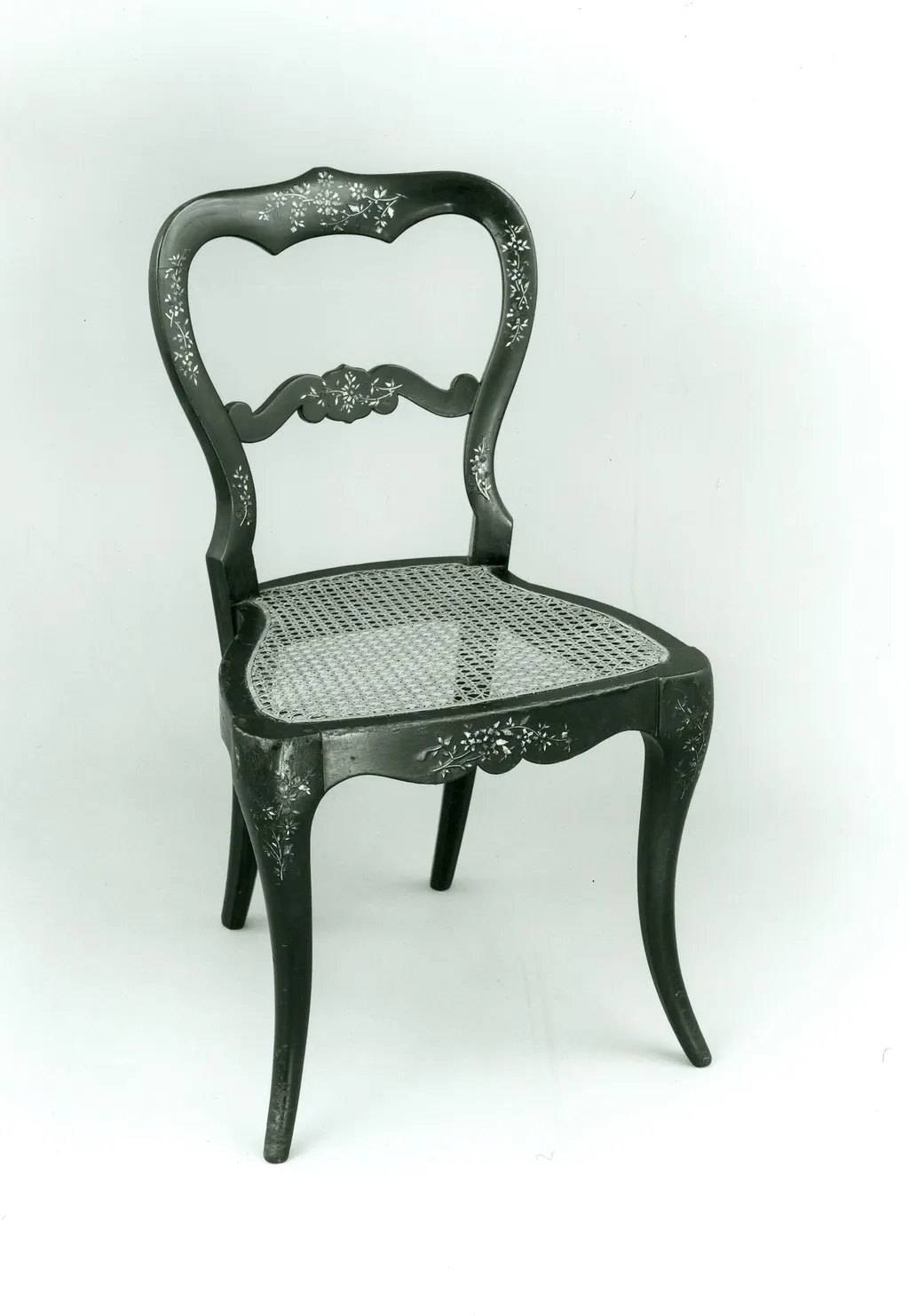
Papier-mâchè side chair is an unspecified painting. It dates from 1830 and is held in the collection of the Metropolitan Museum of Art.
About this work
Overview
The work presents a side chair rendered in a painted medium, depicting a dark, smoothly finished surface accented by carved floral motifs along its edges. The backrest forms a subtle heart shape capped by a modest crossbar, while the seat features a light, woven‑pattern texture. Slightly curved, tapered legs support the piece, lending it an overall impression of refined delicacy.
Subject & Meaning
The composition emphasizes the chair as both functional object and decorative element, highlighting the interplay between utilitarian form and ornamental detail. The floral carvings evoke natural motifs, suggesting an appreciation for organic beauty within everyday furnishings, while the heart‑shaped backrest introduces a gentle, perhaps affectionate, visual cue.
Technique & Style
Executed in paint, the artist reproduces the tactile qualities of wood, smooth grain, and carved relief through careful shading and line work. The light pattern on the seat is suggested by fine cross‑hatching, creating a sense of texture. The overall style aligns with a realistic yet stylized representation typical of decorative arts studies in the late nineteenth to early twentieth centuries.
History & Provenance
Specific details regarding the work’s creation date, artist, or ownership history are not documented in the available record. The piece appears to be catalogued as a painted study of a papier‑mâché chair, likely produced for instructional or illustrative purposes within a collection of furniture representations.
Context
Such painted studies were commonly used to document design trends and craftsmanship in interior décor, serving as visual references for designers, manufacturers, and collectors. The inclusion of floral carving and a heart‑shaped backrest reflects popular decorative motifs that blended romanticism with functional furniture design during the period.
Artist & collection
