Artwork
Philip II, King of Spain
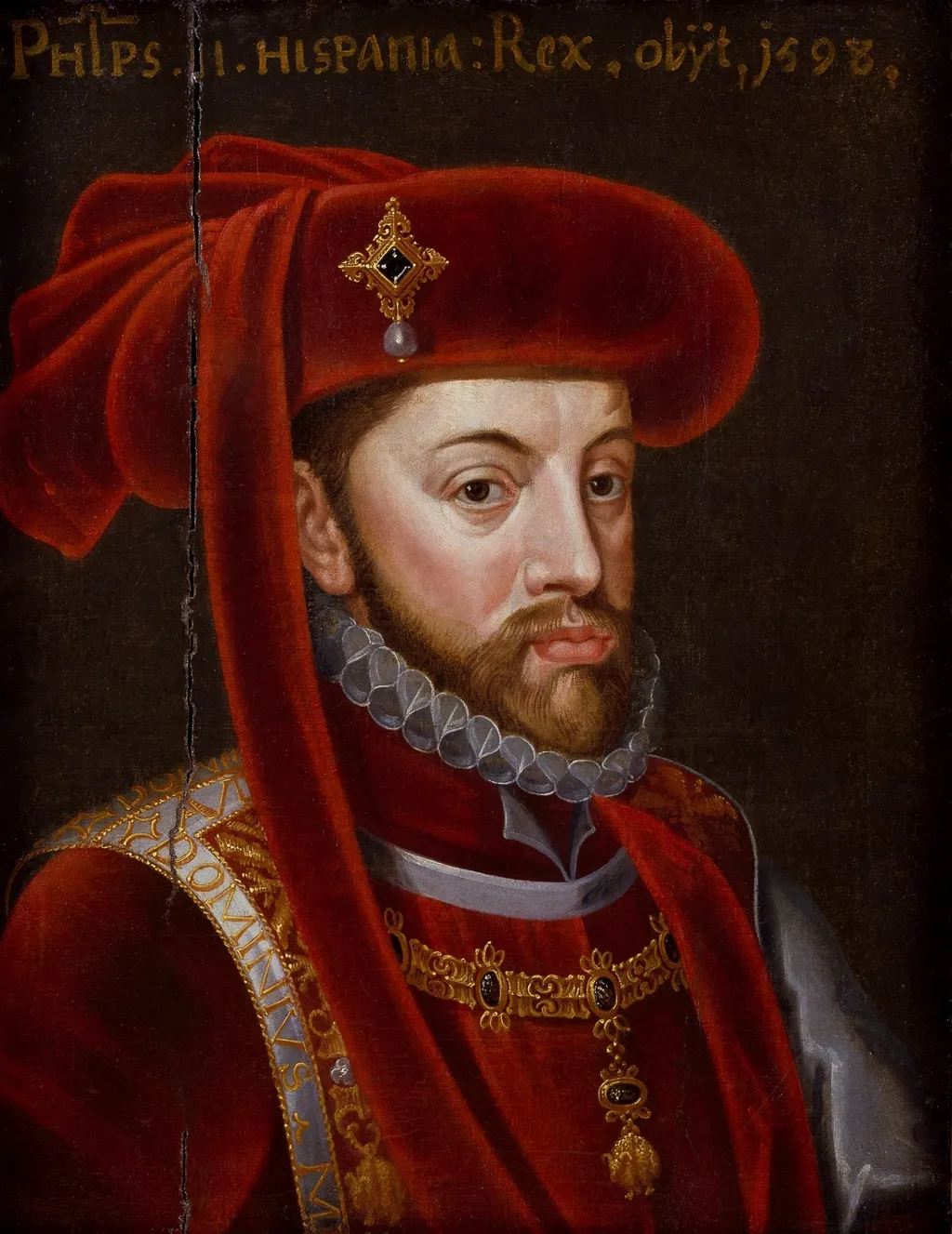
Philip II, King of Spain is an oil painting. It dates from 1501 and is held in the collection of the Museo del Prado. The portrait presents Philip II, the late monarch of Spain, rendered in oil on canvas.
About this work
The artist used small brushstrokes to show light hitting his beard and the folds of his robe.
This painting shows a man in a bright red robe and matching hat. His collar is stiff white, trimmed with gold. A thick gold chain with a black jewel hangs over his chest. The background is plain and dark, keeping all focus on his face and clothes.
The text at the top says "Philip II, King of Spain," and he died in 1598. The artist used small brushstrokes to show light hitting his beard and the folds of his robe.
Next, look up chiaroscuro to see how artists use light and shadow like this.
Overview
The portrait presents Philip II, the late monarch of Spain, rendered in oil on canvas. He is depicted in a vivid scarlet robe and matching hat, his white, stiffly ruffled collar edged with gold. A substantial gold chain bearing a dark jewel rests across his chest, while the background is a uniform, deep shade that isolates the figure.
Subject & Meaning
The work emphasizes the king’s authority and solemnity through his regal attire and composed expression. The bright red garments and gold accents signal wealth and power, while the plain, shadowed backdrop eliminates distractions, directing attention to Philip’s facial features and the symbols of his status.
Technique & Style
The artist employs fine, controlled brushwork to model the play of light across the subject’s beard and the folds of his robe, creating a subtle three‑dimensional effect. This handling of illumination and shadow aligns with chiaroscuro principles, using contrast to define form and convey a sense of presence.
History & Provenance
The portrait is dated to the period following Philip II’s death in 1598, though the exact creation date and artist remain unspecified in the provided information. It has been catalogued under the title “Philip II, King of Spain” and is identified as an oil painting.
Context
Philip II’s reign marked the height of Spanish imperial power in the late 16th century, a time when portraiture served to reinforce monarchical legitimacy. The use of rich textiles and jewelry reflects contemporary courtly fashion and the visual language employed to communicate sovereign authority.
Artist & collection
