Artwork
The Goddess Annihilates the Demon Raktabija, from a Devi-Mahatmya
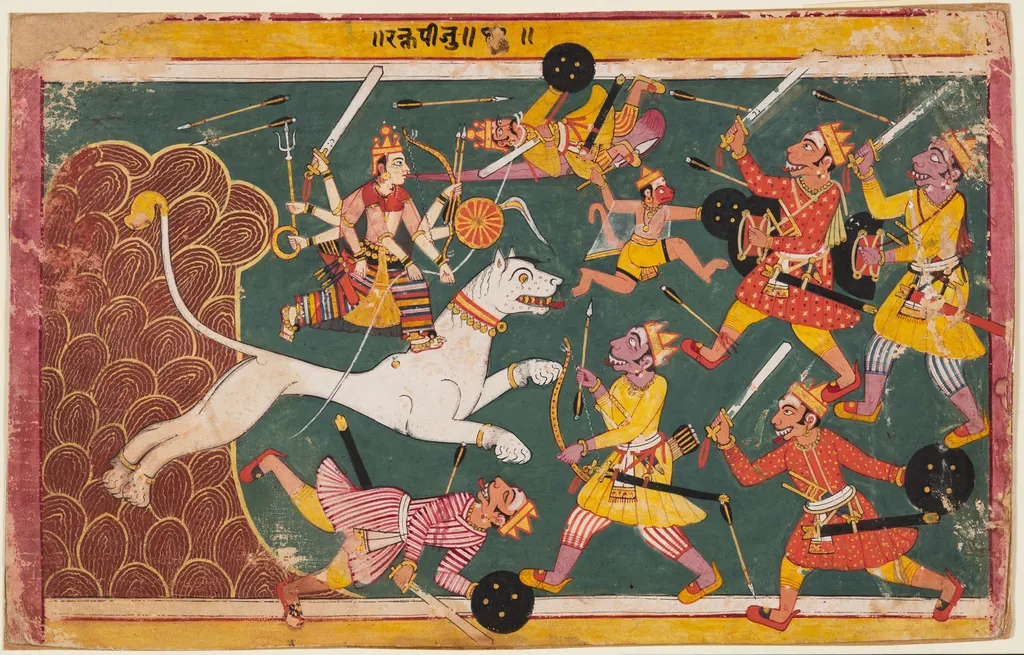
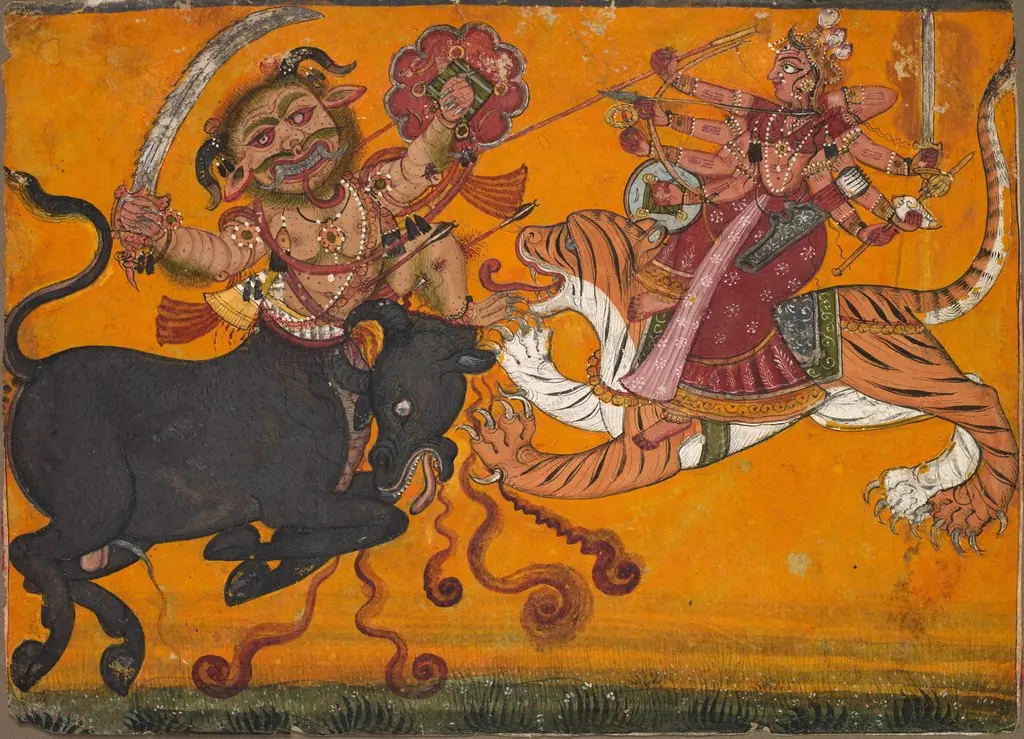
The Goddess Annihilates the Demon Raktabija, from a Devi-Mahatmya is an unspecified painting. It dates from 1640 and is held in the collection of the Cleveland Museum of Art. The work portrays a dynamic confrontation between a divine figure and a host of demons.
About this work
Overview
The work portrays a dynamic confrontation between a divine figure and a host of demons. Central to the scene is a goddess astride a white tiger, brandishing a sword in one hand and a shield in the other, while a multitude of vividly dressed demons clash around her. The composition is saturated with intense reds, yellows, oranges, and contrasting greens, creating a sense of kinetic energy.
Subject & Meaning
The goddess, rendered with a composed yet fierce expression, embodies triumph over malevolent forces, a theme drawn from the Devi‑Mahatmya narrative. The fallen demon at her feet and the aggressive postures of the surrounding foes emphasize the victory of divine order over chaos.
Technique & Style
Bold, sweeping lines delineate the figures, while the swirling patterned background in red and green adds movement to the battlefield. The vivid palette and exaggerated gestures heighten the drama, reflecting a stylized, narrative‑driven approach typical of Indian devotional painting.
History & Provenance
The painting originates from a series illustrating episodes of the Devi‑Mahatmya, a text celebrating the goddess’s exploits. Although specific dates and ownership details are not provided, the work reflects the iconographic conventions of traditional Hindu manuscript illustration.
Context
Depictions of the goddess slaying the demon Raktabija are common in religious art, symbolizing the containment of blood‑shed and the restoration of cosmic balance. The inclusion of a script at the top suggests the image may have accompanied a textual passage, reinforcing its didactic purpose.
Artist & collection