Artwork
Album of Landscape Paintings Illustrating Old Poems: Children Playing Blindman's Buff in a Garden
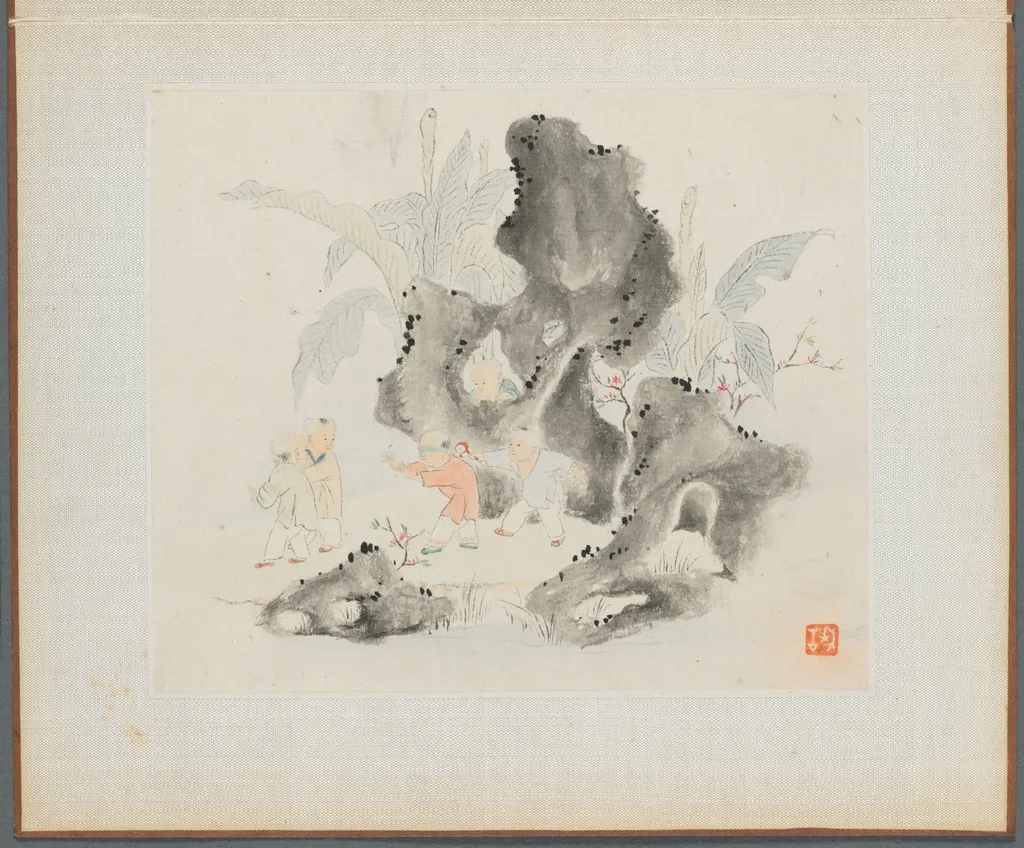
Album of Landscape Paintings Illustrating Old Poems: Children Playing Blindman's Buff in a Garden is an unspecified painting by the Baroque artist Hua Yan. It dates from 1745 and is held in the collection of the Cleveland Museum of Art.
About this work
This painting shows children playing blindman’s buff in a garden, their blindfolded leader reaching out.
This painting shows children playing blindman’s buff in a garden, their blindfolded leader reaching out. The boys wear simple robes, the girls have bound feet. A single lantern hangs from a tree, casting a soft glow on their faces.
It’s part of a scroll showing scenes from old poems. Hua Yan painted it to surprise viewers—he broke the rules of traditional Chinese art. The kids look playful, but his brushwork feels loose and free.
Check out more of Hua Yan’s work—try searching for *Hua Yan (Chinese, 1682–c. 1765)*.
Overview
This painting is one of a series of landscape scenes from classical poems, created by Hua Yan, a painter associated with the Yangzhou Eccentrics. It depicts children engaged in the game of blindman’s buff within a garden setting. Unlike conventional Chinese court or scholarly art, Hua Yan’s approach embraces informality and spontaneity, diverging from rigid compositional norms to capture everyday life with unpolished energy.
Subject & Meaning
The scene portrays children at play, their movements animated and unguarded. The blindfolded child reaches outward, while others react with playful anticipation. The presence of bound feet among the girls and simple robes reflects social realities of the time. The lone lantern suggests twilight, adding a quiet intimacy. The imagery draws from poetic tradition but renders it with immediacy, transforming literary reference into lived experience.
Technique & Style
Hua Yan employs a loose, expressive brushwork that departs from the refined precision of academic painting. Ink washes are applied with fluidity, allowing forms to emerge through suggestion rather than detail. The figures are rendered with minimal lines, yet convey motion and emotion. The lantern’s glow is implied through subtle tonal shifts, not explicit shading, reinforcing the painter’s preference for evocation over literalism.
History & Provenance
The painting belongs to a scroll album commissioned or compiled to illustrate classical verses, a format popular among literati. Hua Yan, active in Yangzhou during the early Qing dynasty, produced such works for patrons who valued artistic individuality. The album likely circulated among collectors sympathetic to the Eccentrics’ rejection of orthodoxy. Its survival suggests it was preserved as a curiosity and artistic statement rather than a conventional decoration.
Context
Hua Yan worked in a cultural climate where scholarly painting upheld strict conventions. The Yangzhou Eccentrics, including him, challenged these norms by embracing humor, eccentricity, and scenes of common life. Their work responded to rising urban merchant patronage, which favored accessible, emotionally resonant imagery over elite ideals. This painting reflects a broader shift toward personal expression in 18th-century Chinese art.
Legacy
Hua Yan’s approach influenced later generations of painters who sought to break from academic rigidity. His blending of literary allusion with informal subject matter expanded the possibilities of ink painting. While not widely celebrated in his lifetime beyond regional circles, his work is now recognized as a vital counterpoint to mainstream Qing aesthetics, embodying the quiet rebellion of individual vision within a tradition-bound culture.
Artist & collection

Artist
Hua Yan simplified Chinese: 华嵒; traditional Chinese: 華嵒; pinyin: Huà Yán; Wade–Giles: Hua Yen; courtesy name Qiu Yue (秋岳), sobriquets Xinluo Shanren (新罗山人), Dong Yuan Sheng (东园生), Buyi Sheng (布衣生), Ligou Jushi (离垢居士)and…

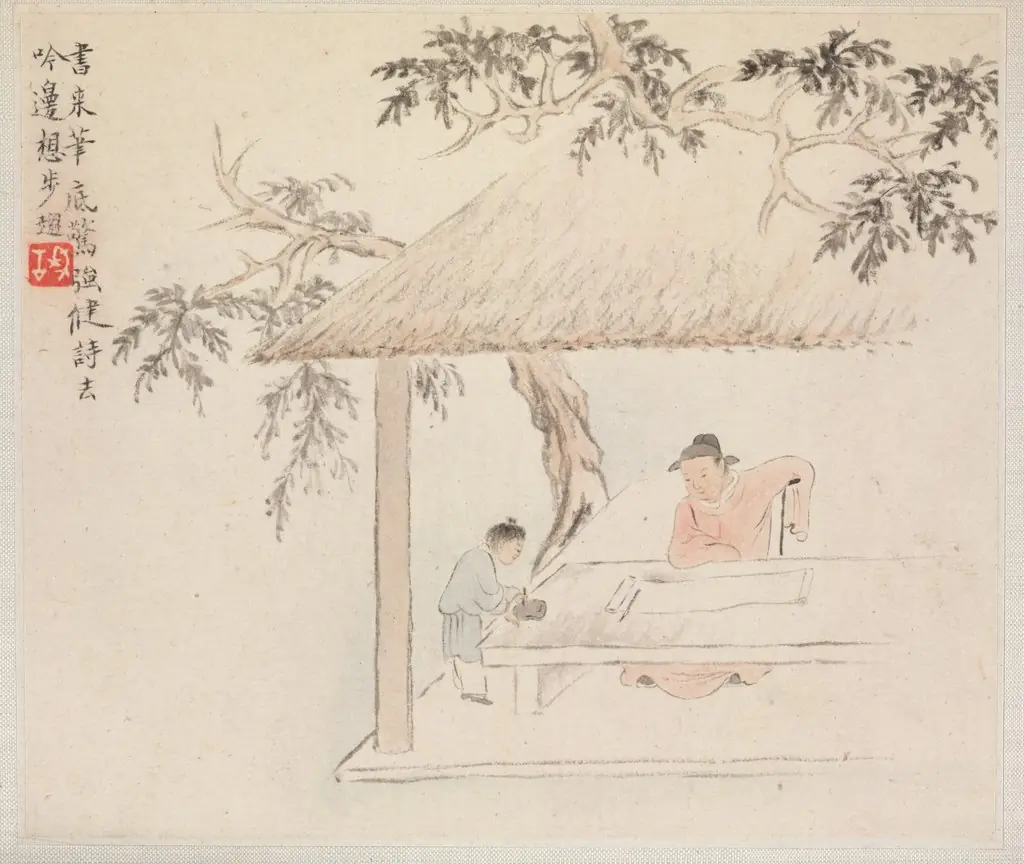 Album of Landscape Paintings Illustrating Old Poems: A Scholar at a Table with a Servant aside Preparing the Ink
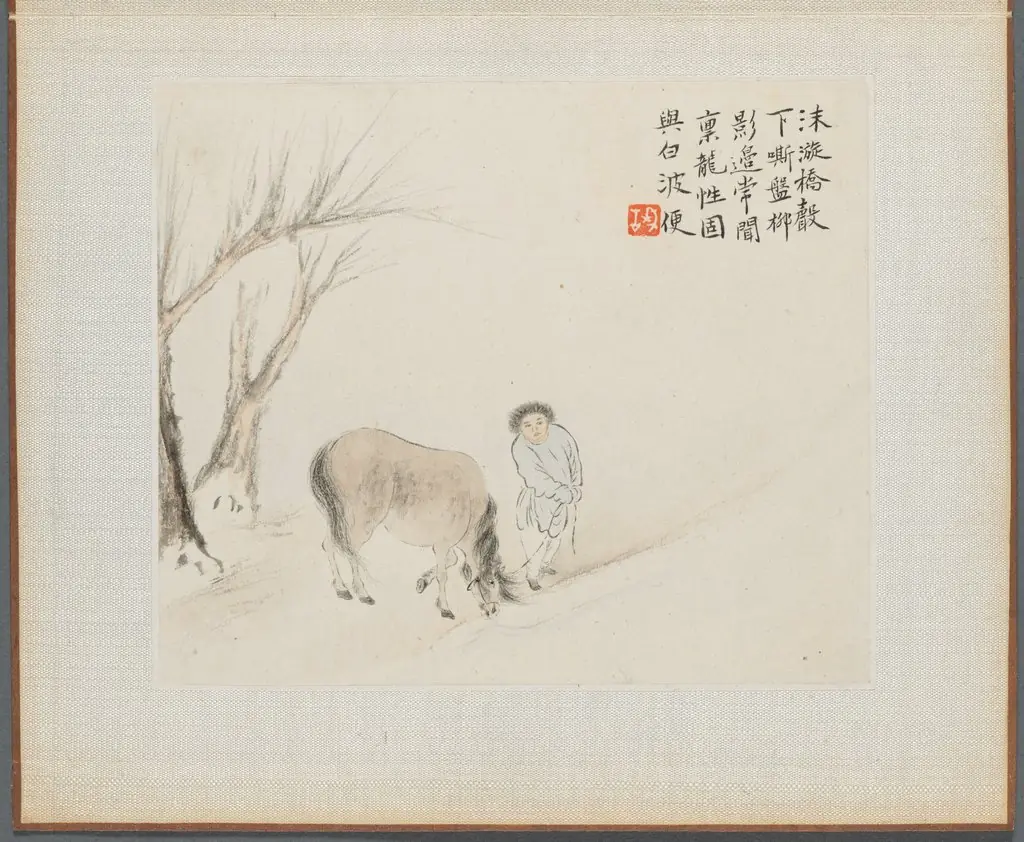 Album of Landscape Paintings Illustrating Old Poems: Boy Holding a Horse
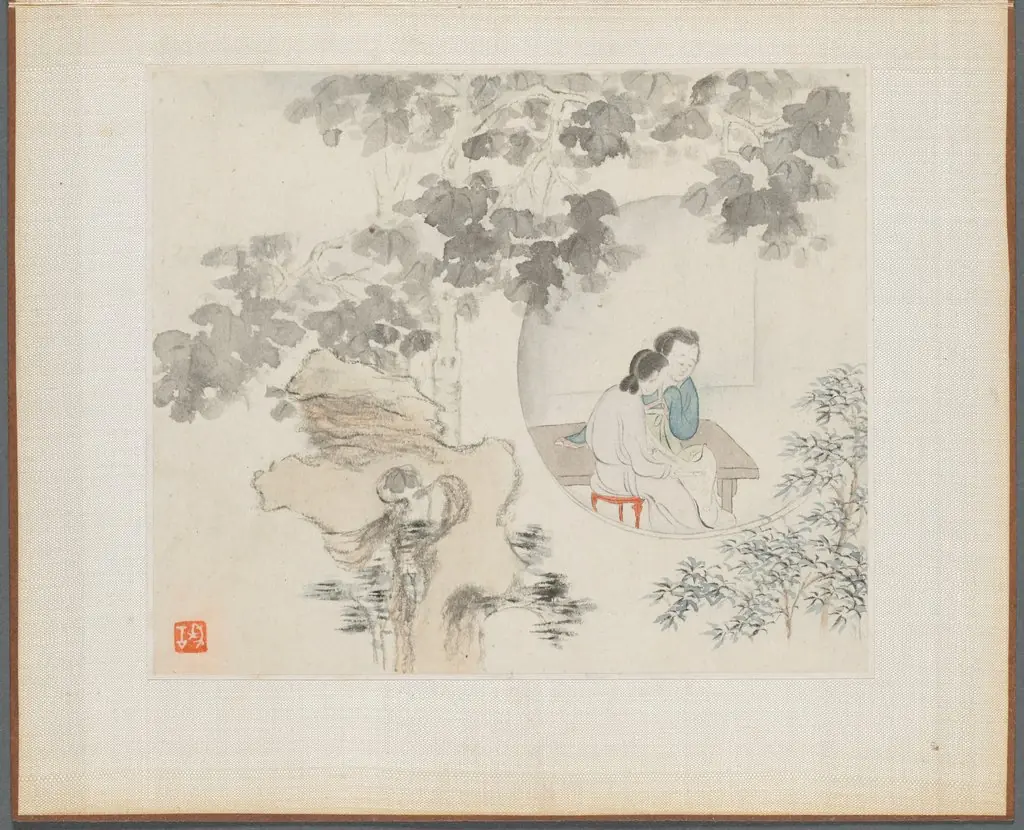 Album of Landscape Paintings Illustrating Old Poems: Two Women with Needlework in a Garden
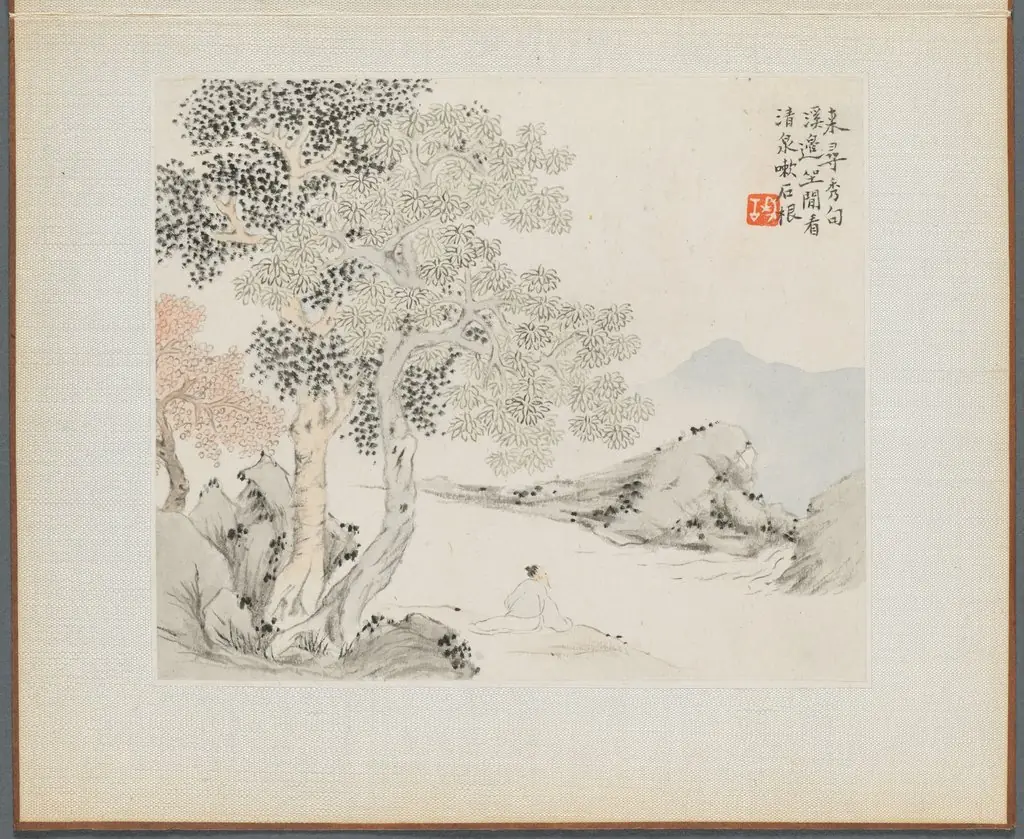 Album of Landscape Paintings Illustrating Old Poems: Three Big Trees, a Stream with an Old Man Sitting on the Bank
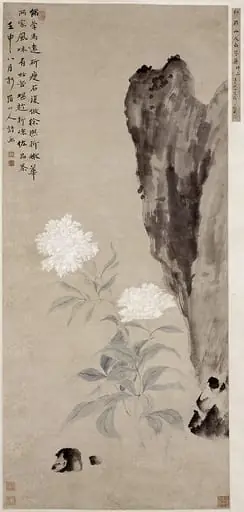 清 華喦 白芍藥圖 軸|White Peony and Rocks
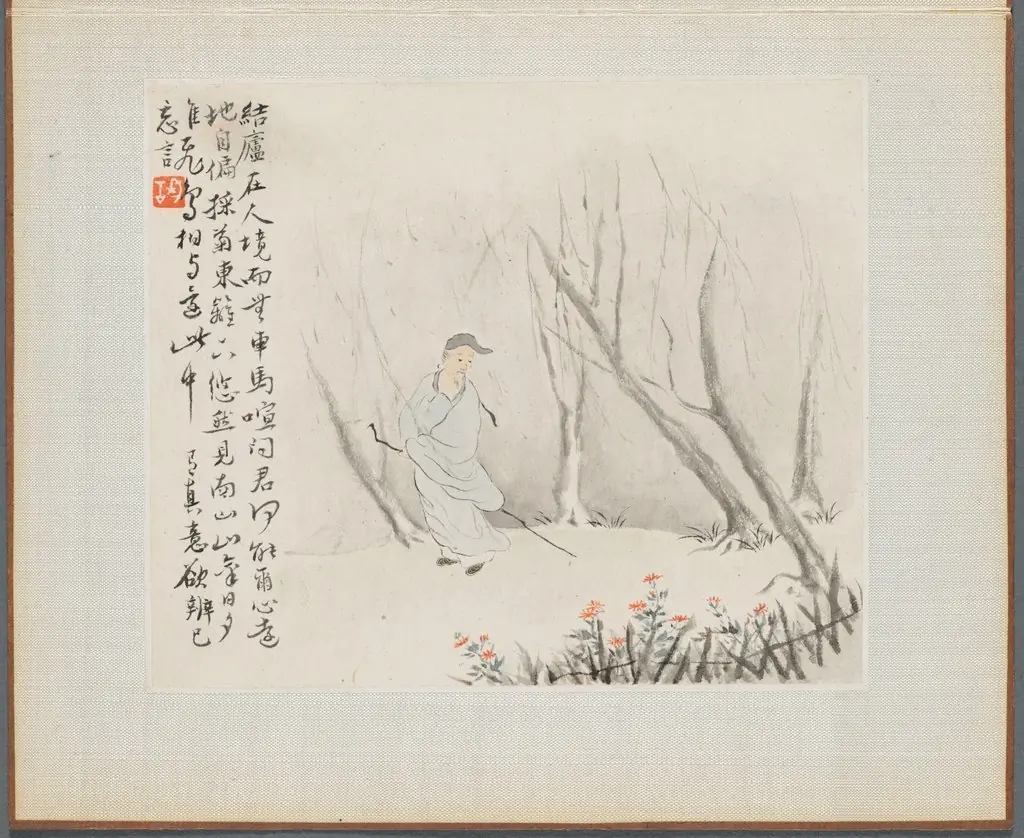 Album of Landscape Paintings Illustrating Old Poems: Man with a Staff Admires Chrysanthemums at a Fence
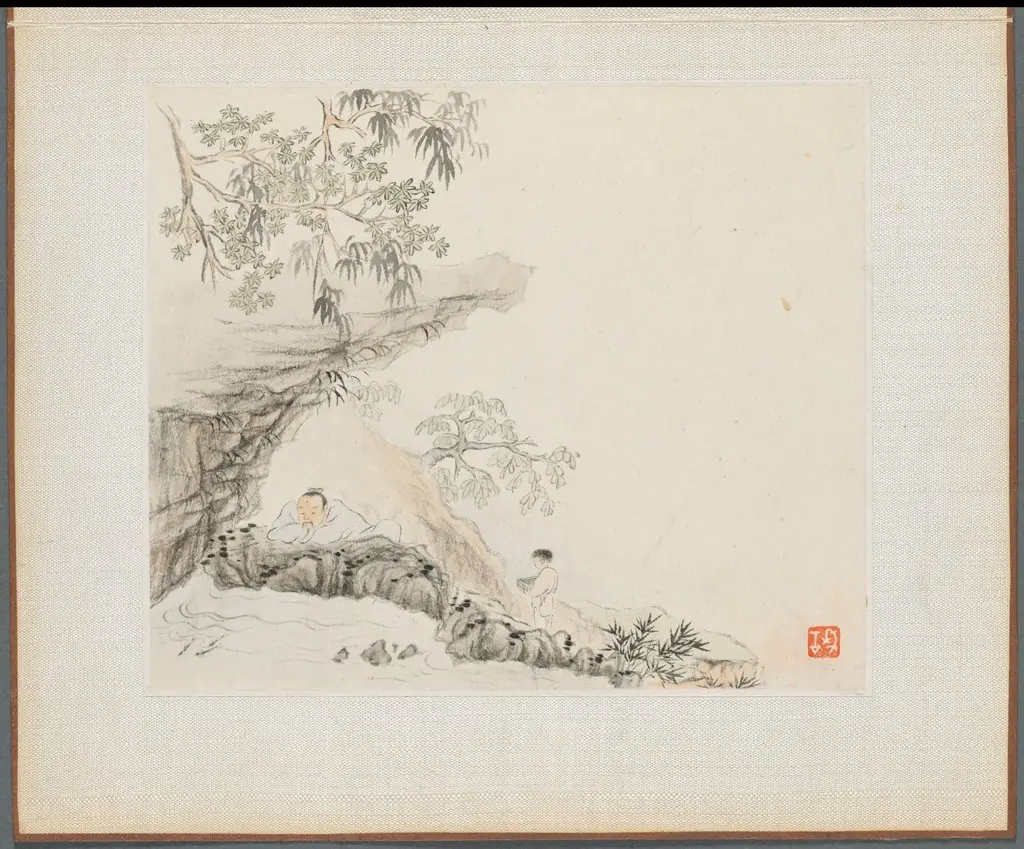 Album of Landscape Paintings Illustrating Old Poems: Scholar watching Fish
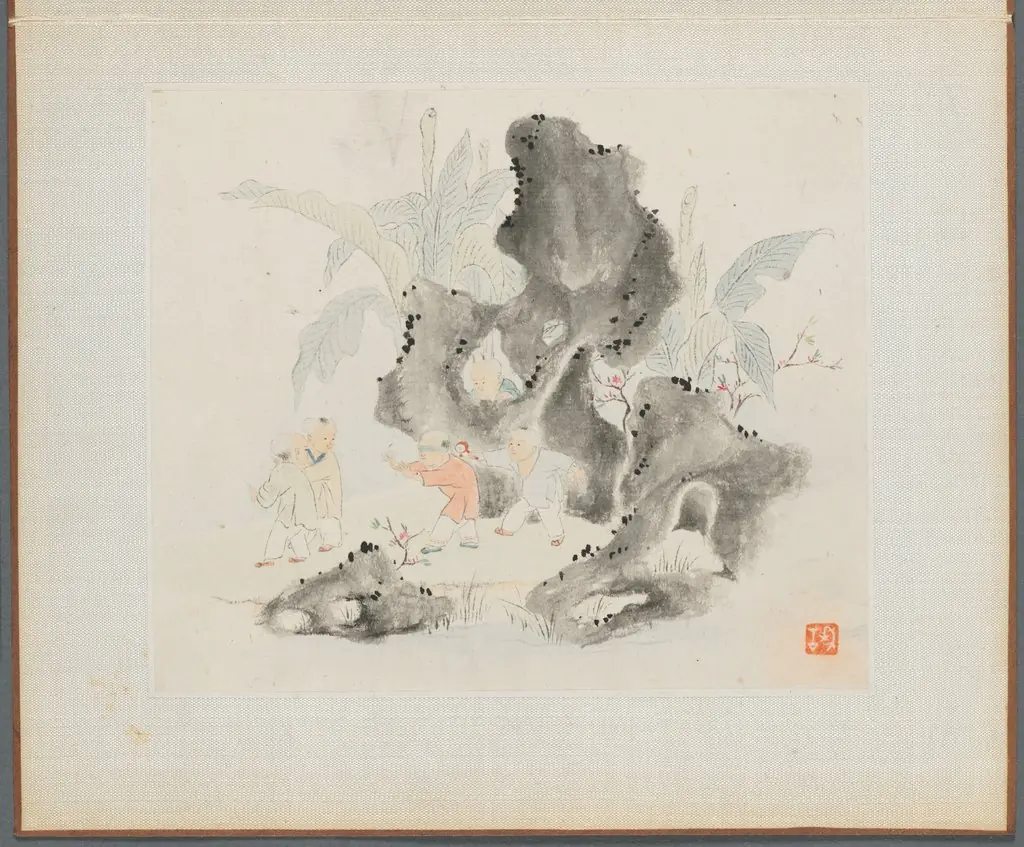 Album of Landscape Paintings Illustrating Old Poems: Children Playing Blindman's Buff in a Garden
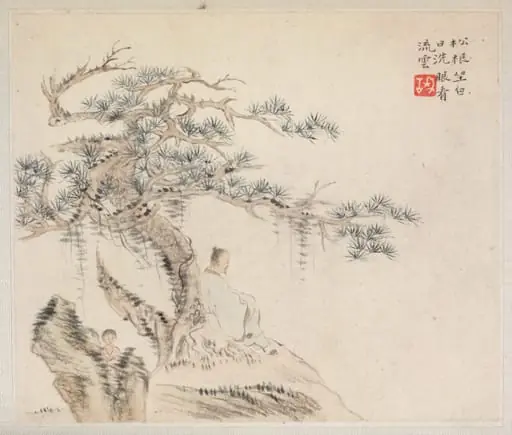 Album of Landscape Painting Illustrating Old Poems
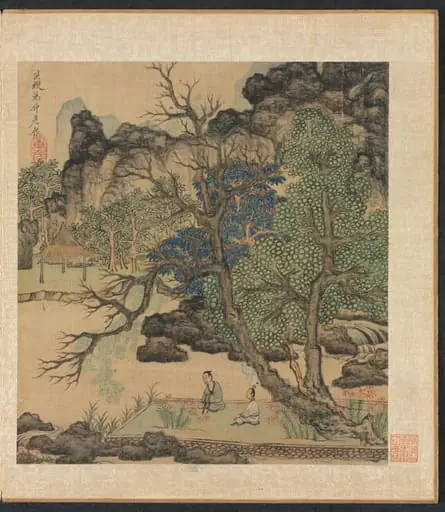 Paintings after Ancient Masters: Scholars in a Garden
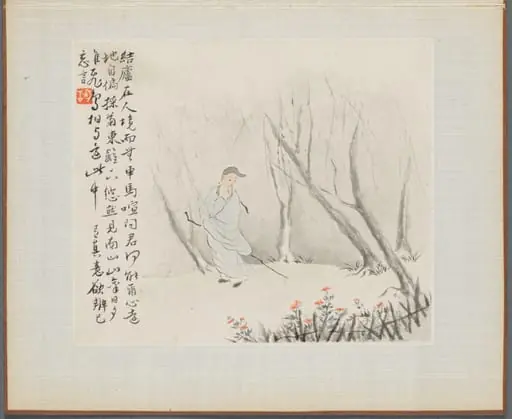 Album of Landscape Paintings Illustrating Old Poems: Man with a Staff Admires Chrysanthemums at a Fence
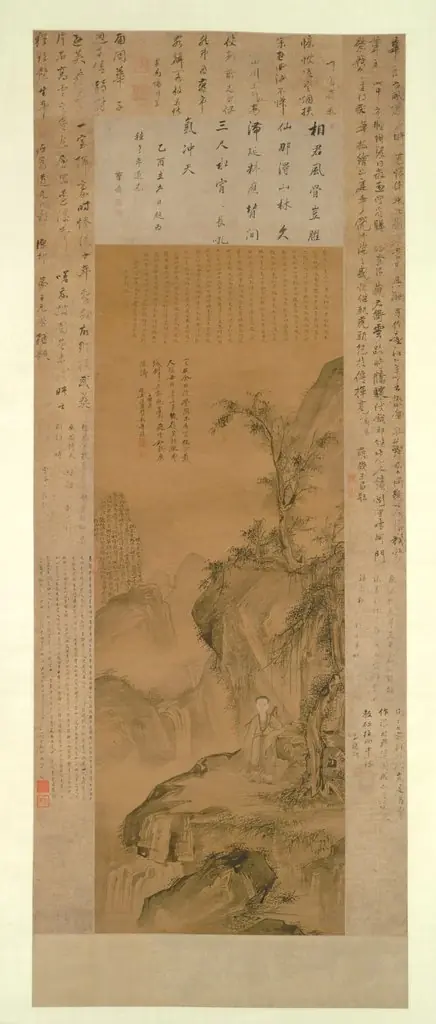 Layered Peaks and Splashing Waterfall: Portrait of Hua Yan as a Young Man
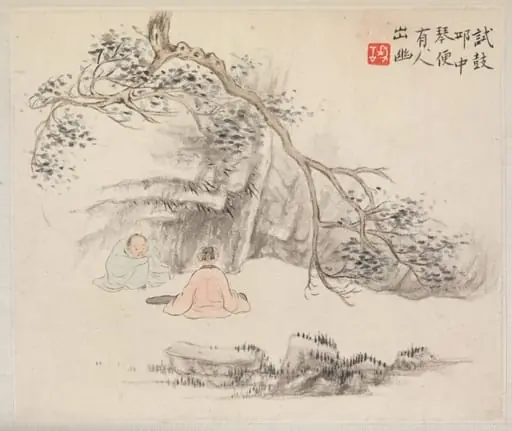 Album of Landscape Paintings Illustrating Old Poems: Listening to the Qin
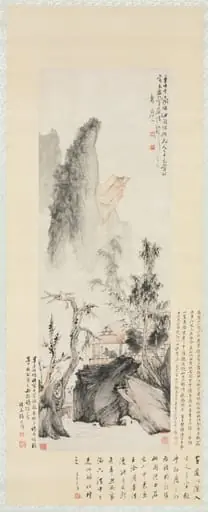 Conversation in Autumn