Artwork
Album of Landscape Paintings Illustrating Old Poems: Boy Tending a Water Buffalo
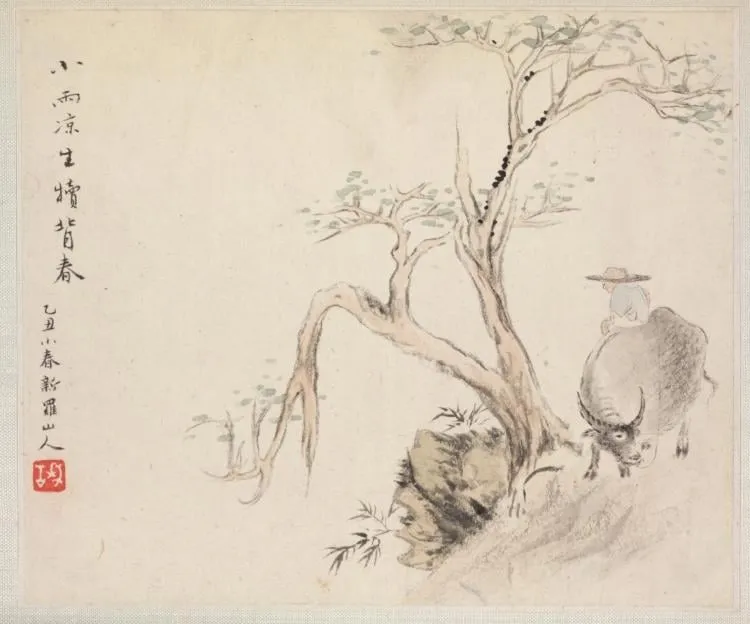
Album of Landscape Paintings Illustrating Old Poems: Boy Tending a Water Buffalo is an unspecified painting by the Baroque artist Hua Yan. It dates from 1745 and is held in the collection of the Cleveland Museum of Art.
About this work
Hua Yan was part of the Eight Eccentrics of Yangzhou, a group that broke the rules of proper Chinese painting.
You see a boy sitting on a water buffalo, both almost lost in a wide, misty field. The brushwork is loose—ink bleeds into the paper like wet clouds.
Hua Yan was part of the Eight Eccentrics of Yangzhou, a group that broke the rules of proper Chinese painting. They painted what they felt, not what teachers said was correct. This quiet scene feels personal, like a private moment.
If you like this, look up the subject: china, qing dynasty (1644-1911).
Overview
This painting is one of many in a series that pairs landscape imagery with classical poetry, created by Hua Yan, a member of the Eight Eccentrics of Yangzhou. Unlike traditional court painters, Hua Yan and his peers favored expressive, individualistic styles over rigid academic conventions. The work captures a fleeting, contemplative moment rather than a grand narrative, reflecting a shift toward personal expression in Qing-era art.
Subject & Meaning
The scene depicts a young boy seated atop a water buffalo, barely visible within a vast, mist-laden field. The simplicity of the subject—commonplace and unheroic—suggests a quiet reverence for rural life and solitude. It evokes poetic themes of harmony between human and nature, drawing from classical literary traditions while rejecting ornate or didactic interpretations favored by official schools.
Technique & Style
Hua Yan employed loose, wet ink brushwork that allows pigment to bleed and blur across the paper, creating an atmosphere of soft diffusion. Forms are suggested rather than defined, with minimal detail given to the boy and buffalo. This method prioritizes mood over precision, aligning with the Eccentrics’ rejection of polished technique in favor of spontaneous, emotional resonance.
History & Provenance
The painting belongs to a larger album commissioned or compiled during the mid-Qing dynasty, likely in the 18th century. Hua Yan, active in Yangzhou, produced such works for literati collectors who valued artistic individuality. The album format was common among scholar-artists, allowing multiple poetic and visual meditations to be experienced sequentially, often in intimate settings.
Context
In a period dominated by orthodox painting academies, the Eight Eccentrics of Yangzhou cultivated alternative aesthetics rooted in personal vision and literary allusion. Their work emerged amid urban commercial growth, where merchants and scholars sought art that felt authentic rather than ceremonial. Hua Yan’s imagery resonated with those who valued introspection over imperial grandeur.
Legacy
Hua Yan’s approach influenced later generations of Chinese artists who prioritized emotional authenticity over technical conformity. His integration of poetry and landscape helped sustain the literati tradition even as political and cultural norms shifted. The quiet power of his compositions continues to inform modern interpretations of Chinese ink painting beyond formal boundaries.
Artist & collection

Artist
Hua Yan simplified Chinese: 华嵒; traditional Chinese: 華嵒; pinyin: Huà Yán; Wade–Giles: Hua Yen; courtesy name Qiu Yue (秋岳), sobriquets Xinluo Shanren (新罗山人), Dong Yuan Sheng (东园生), Buyi Sheng (布衣生), Ligou Jushi (离垢居士)and…

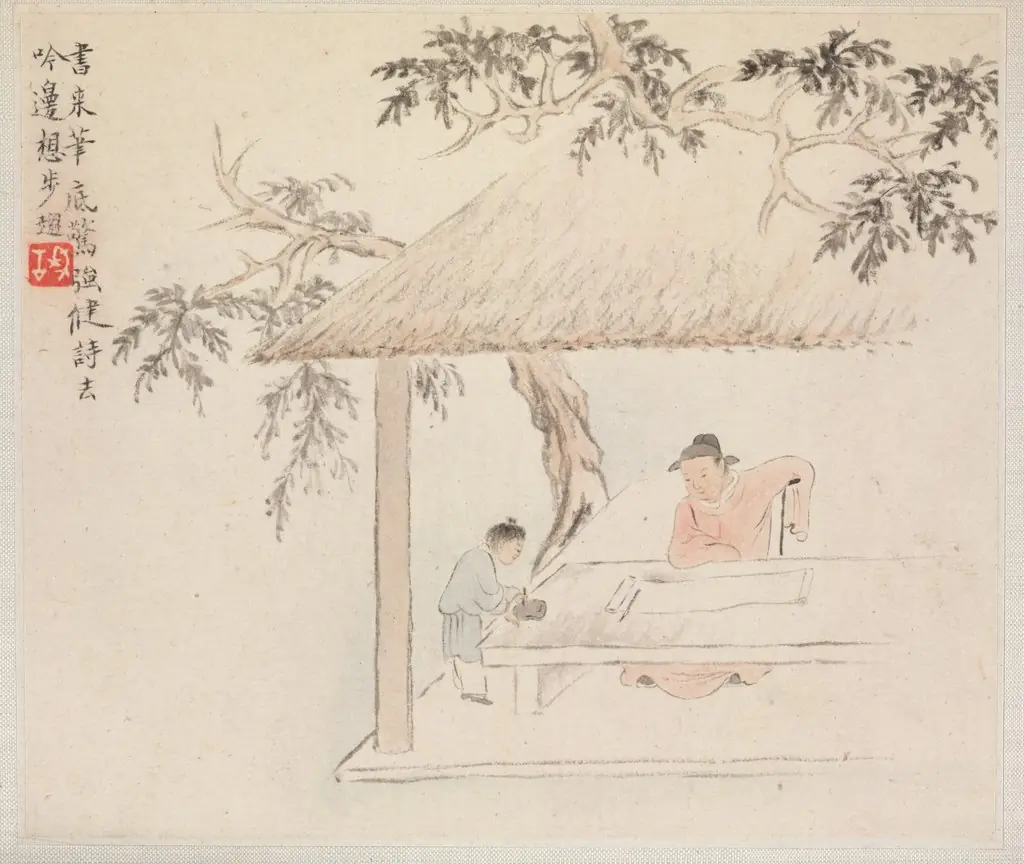 Album of Landscape Paintings Illustrating Old Poems: A Scholar at a Table with a Servant aside Preparing the Ink
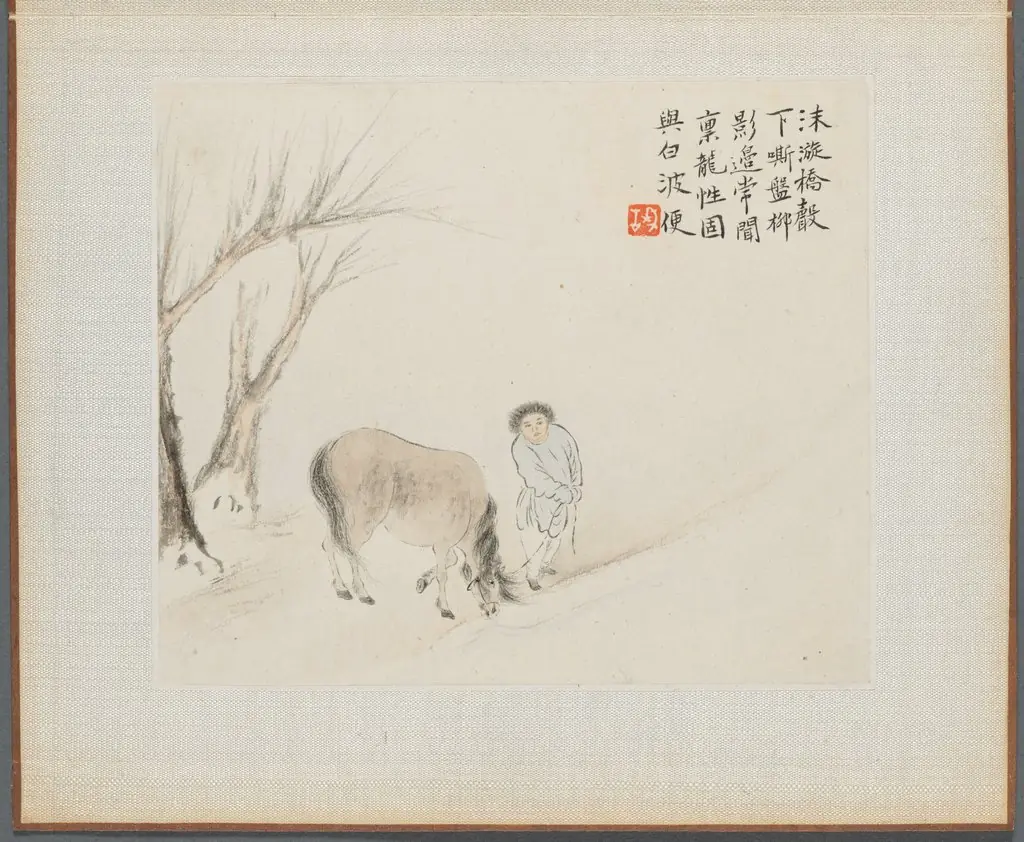 Album of Landscape Paintings Illustrating Old Poems: Boy Holding a Horse
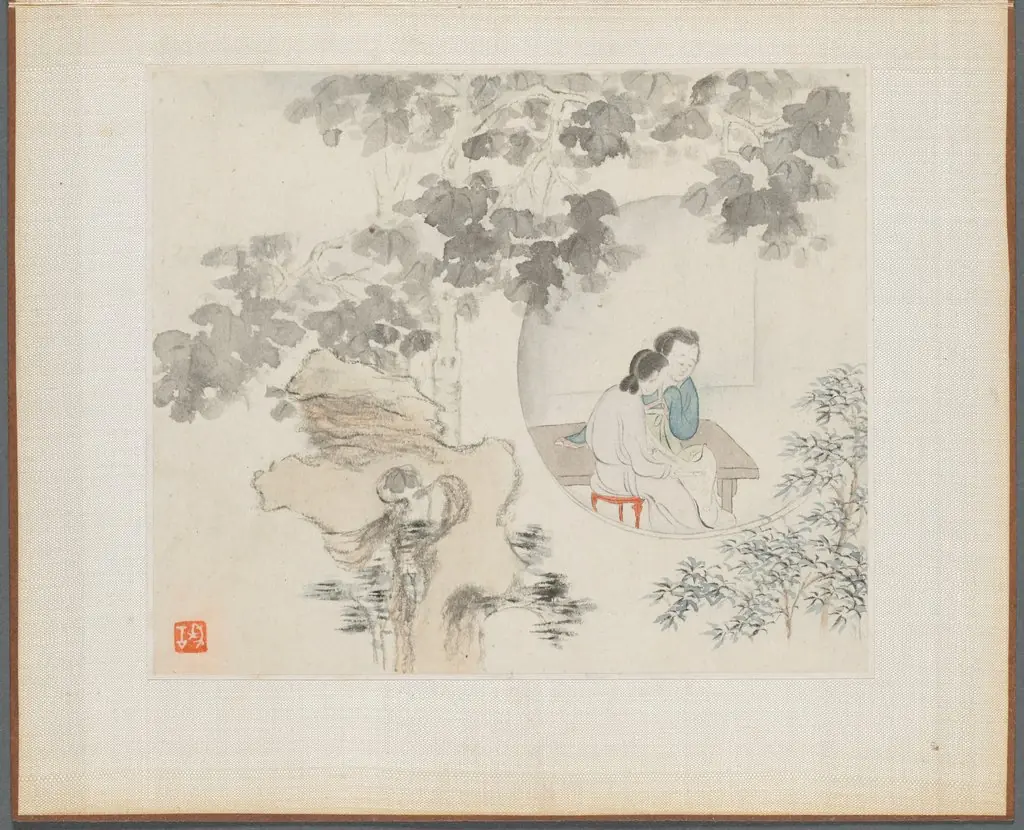 Album of Landscape Paintings Illustrating Old Poems: Two Women with Needlework in a Garden
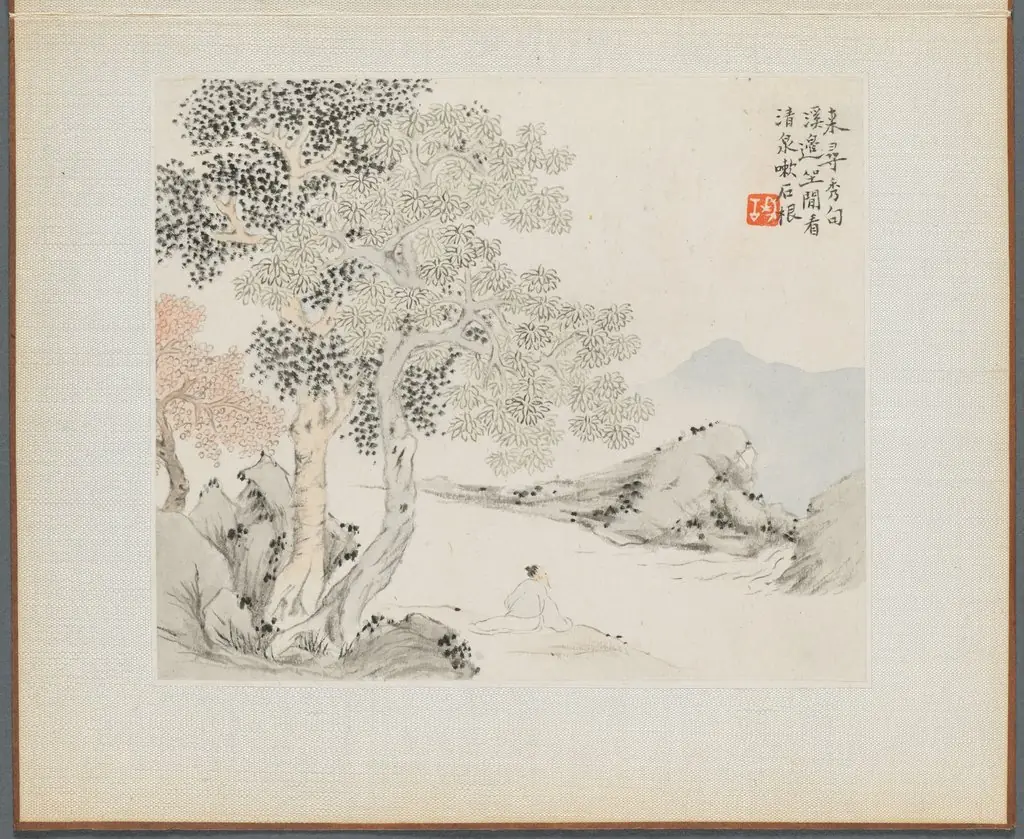 Album of Landscape Paintings Illustrating Old Poems: Three Big Trees, a Stream with an Old Man Sitting on the Bank
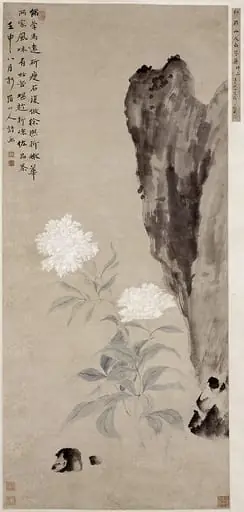 清 華喦 白芍藥圖 軸|White Peony and Rocks
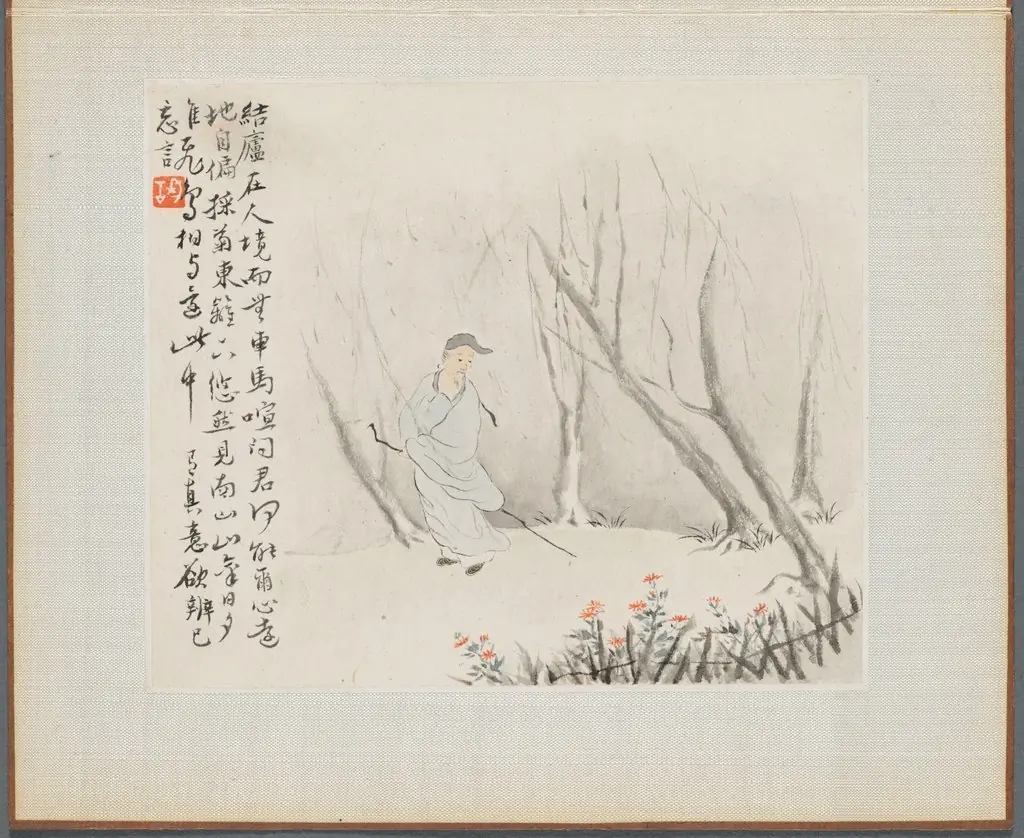 Album of Landscape Paintings Illustrating Old Poems: Man with a Staff Admires Chrysanthemums at a Fence
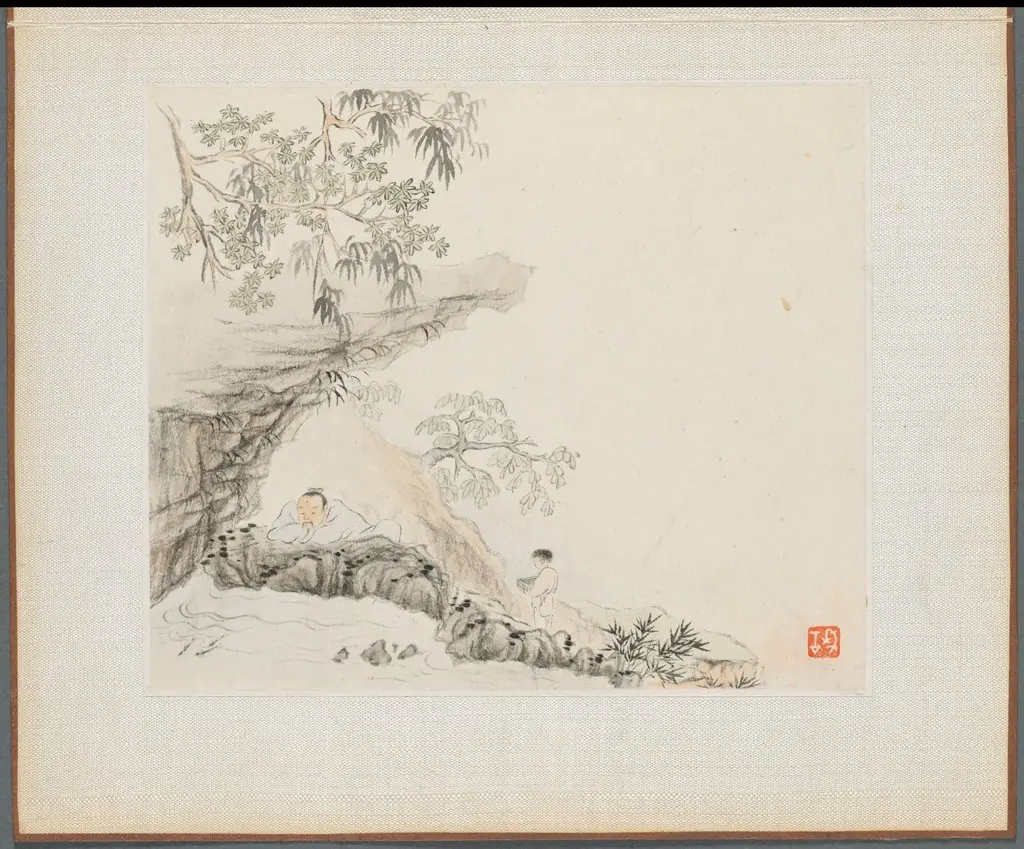 Album of Landscape Paintings Illustrating Old Poems: Scholar watching Fish
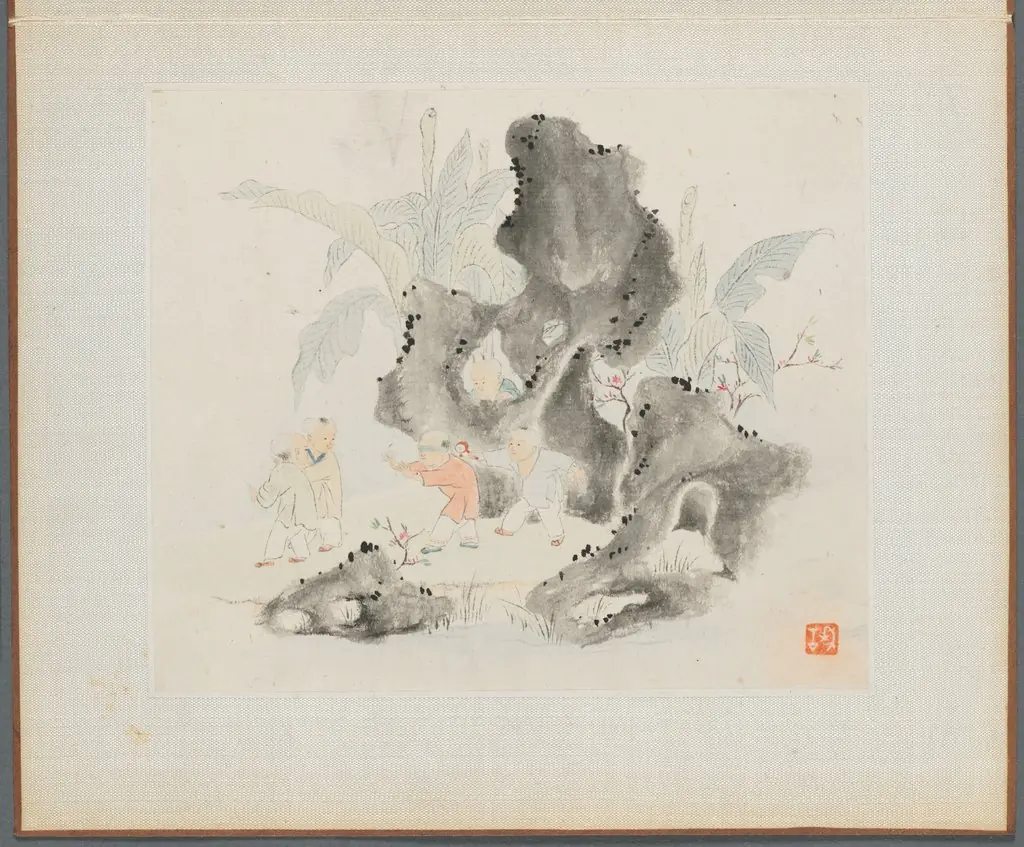 Album of Landscape Paintings Illustrating Old Poems: Children Playing Blindman's Buff in a Garden
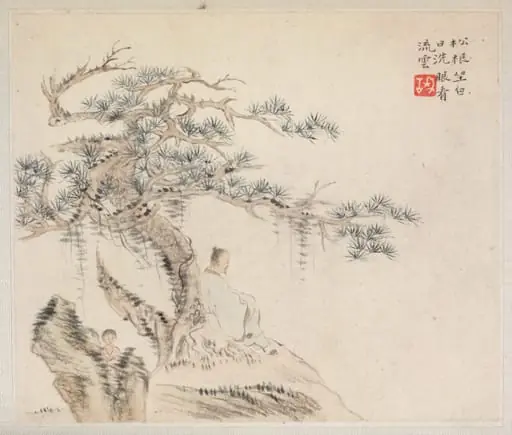 Album of Landscape Painting Illustrating Old Poems
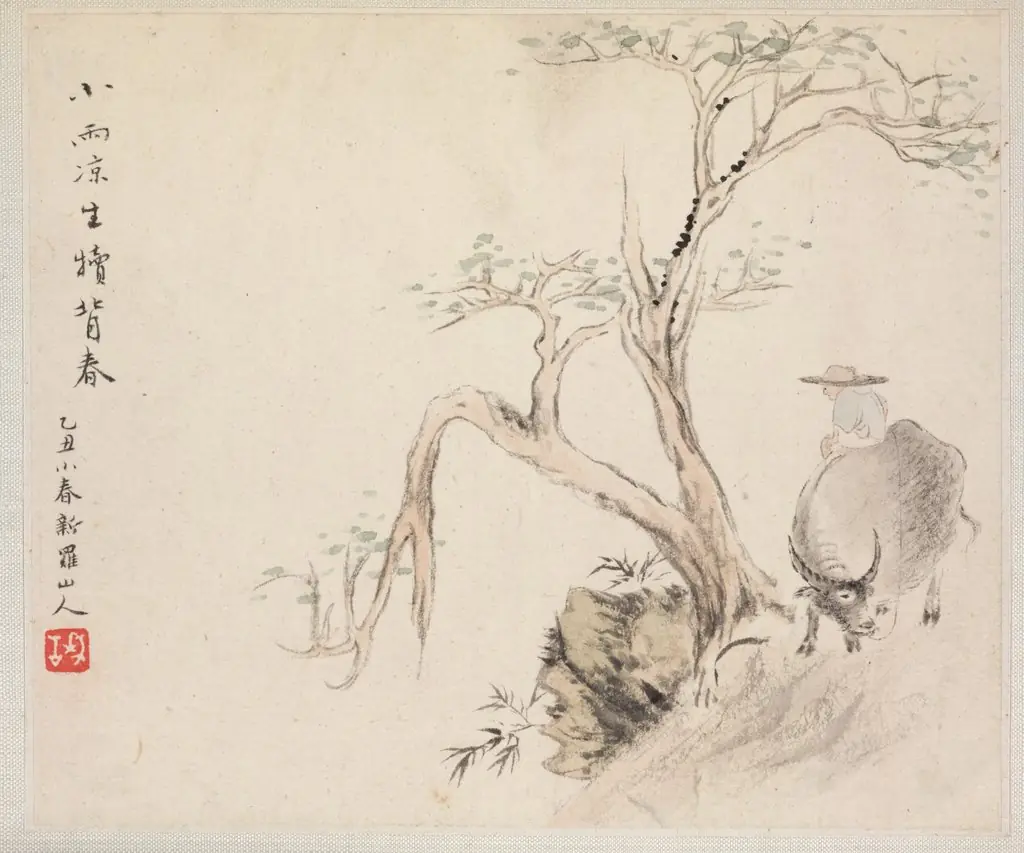 Album of Landscape Paintings Illustrating Old Poems: Boy Tending a Water Buffalo
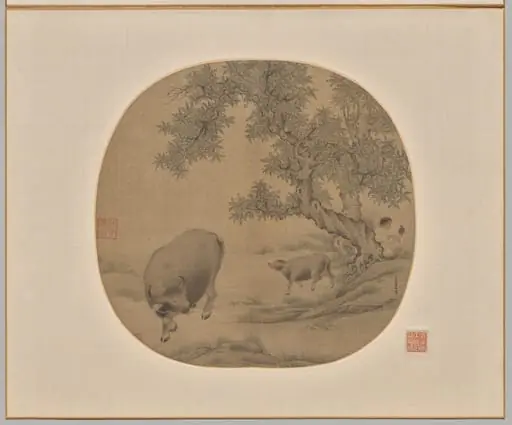 Man, Buffalo, and Calf
 Layered Peaks and Splashing Waterfall: Portrait of Hua Yan as a Young Man
 Landscape Album in Various Styles: Landscape after Mi Fei
 Conversation in Autumn