Artwork
Le Temple Antique
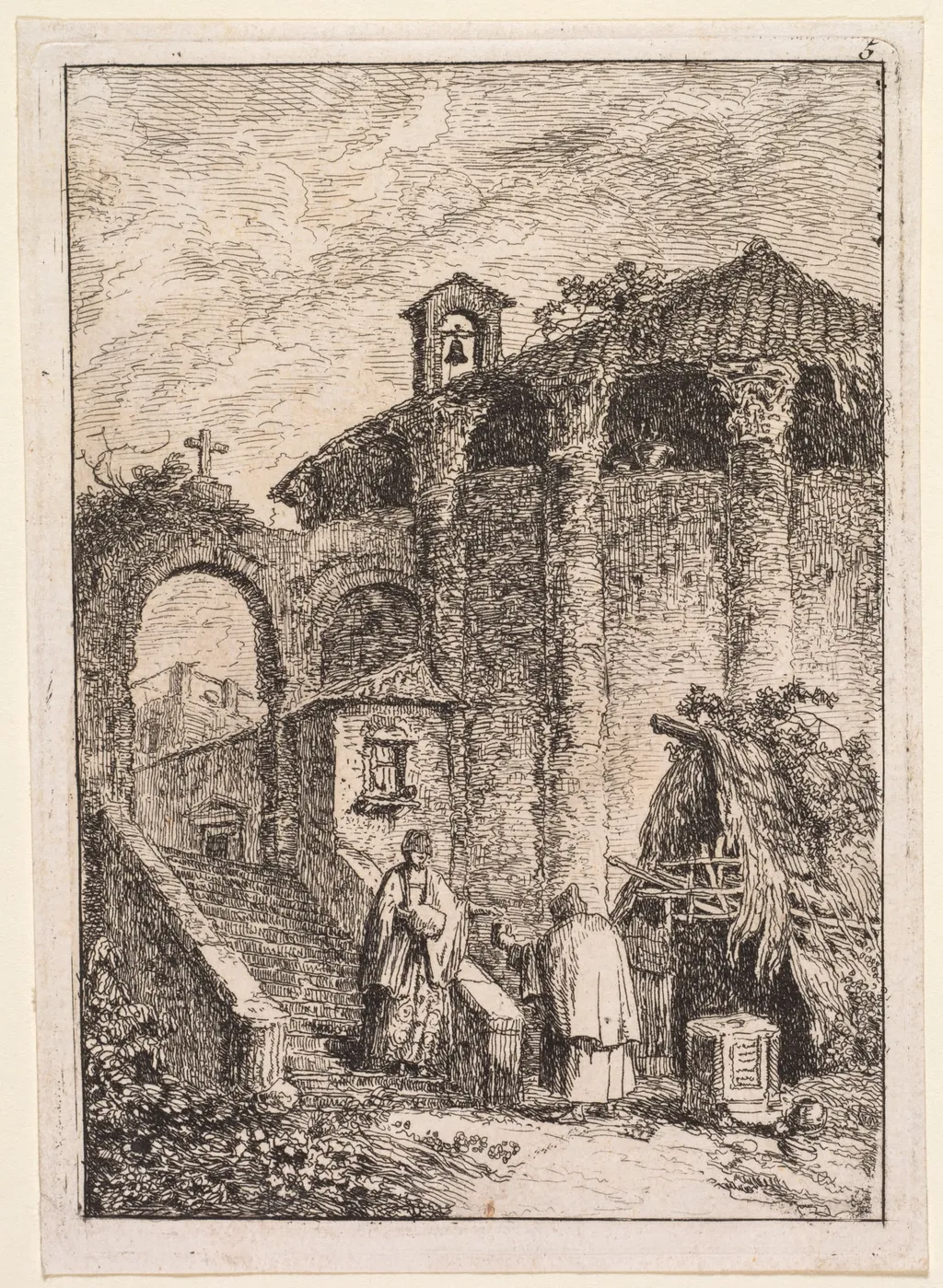
Le Temple Antique is a print by the Romanticist artist Hubert Robert. It dates from 1764 and is held in the collection of the Cleveland Museum of Art.
About this work
This kind of fake-but-fantastic view was popular in the 1700s.
You see a crumbling stone temple by moonlight. A few people stand around it, tiny against the grand ruins. The sky glows behind broken columns.
Robert painted this from his own drawings he made in Rome. He never actually visited the temple—it’s a made-up place. He used light and shadow to make the scene feel real.
This kind of fake-but-fantastic view was popular in the 1700s. Look up *Hubert Robert (French, 1733–1808)* next.
Overview
Le Temple Antique is a print from a series of etchings created by Hubert Robert, based on his own pen‑and‑ink sketches made while in Rome. The image depicts a ruined stone temple illuminated by moonlight, with a few diminutive figures positioned before the broken columns against a luminous sky.
Subject & Meaning
The composition presents an imagined ancient temple, not an actual archaeological site, surrounded by tiny human figures that emphasize the monument’s scale and decay. The moonlit atmosphere and the contrast of light and shadow evoke a sense of timelessness and the romantic allure of ruins popular in the eighteenth century.
Technique & Style
Robert translated his Roman sketches into etchings, employing fine lines to render architectural detail and atmospheric effects. The interplay of illuminated sky and darkened foreground demonstrates his skill in manipulating chiaroscuro within the print medium to suggest depth and mood.
History & Provenance
The suite of etchings was dedicated on its title page to Marguerite Le Compte, who visited Rome in 1764 with the writer and art patron Claude Henri Watelet. Both Le Compte and Watelet were amateur etchers and part of an Italian academy circle that included professional artists and printmakers. The dedication likely aimed to secure future patronage from Le Compte, who may be represented by the figure with a hand muff in the fifth plate, The Ancient Temple.
Context
Fictional yet meticulously rendered views of classical ruins were fashionable in the mid‑1700s, reflecting the period’s fascination with antiquity and the picturesque. Robert’s work aligns with this trend, offering imagined yet plausible scenes that catered to the tastes of collectors and connoisseurs of the Grand Tour.
Artist & collection
Artist
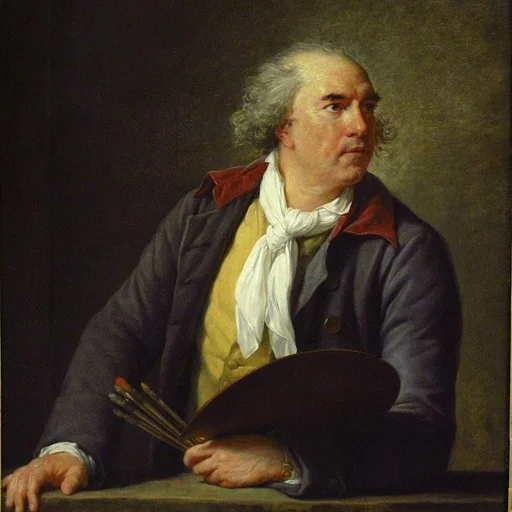
Hubert Robert (French pronunciation: ; 22 May 1733 – 15 April 1808) was a French painter in the school of Romanticism, noted especially for his landscape paintings and capricci, or semi-fictitious picturesque depictions of ruins in Italy…

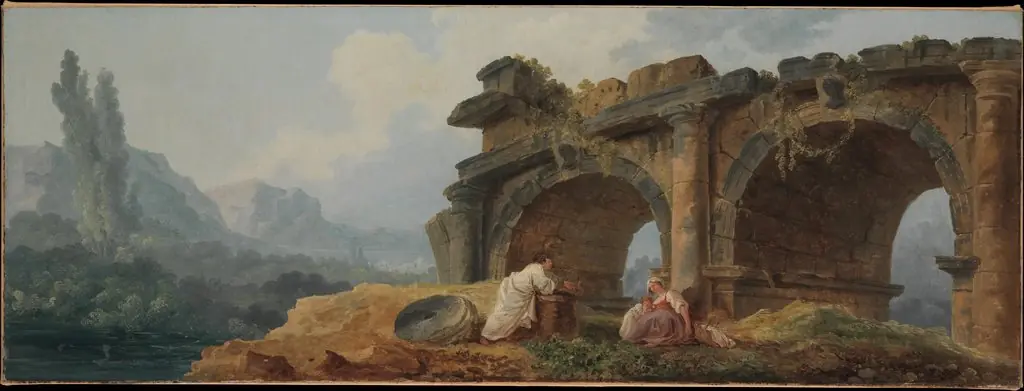
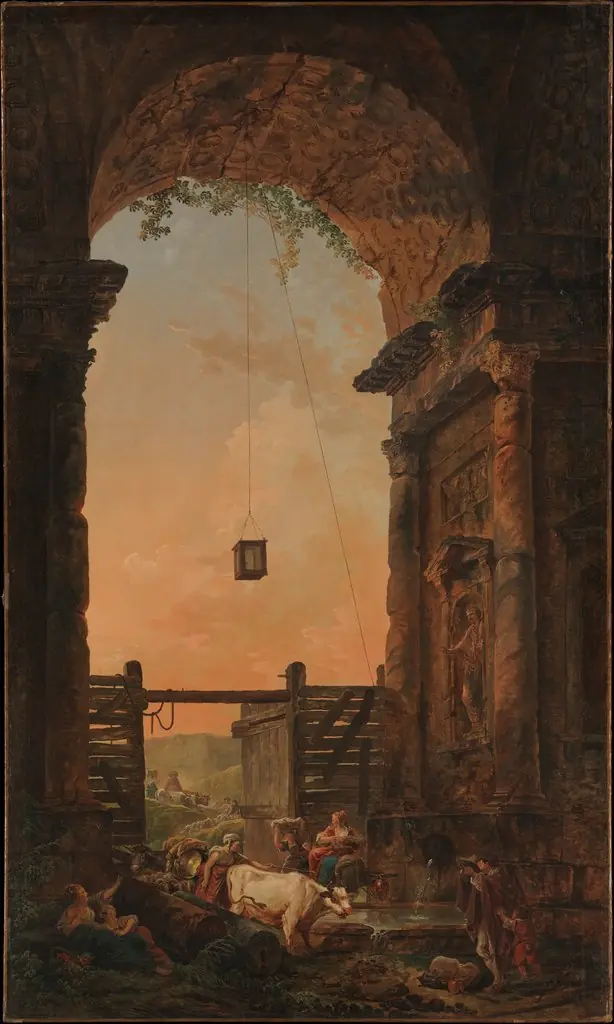
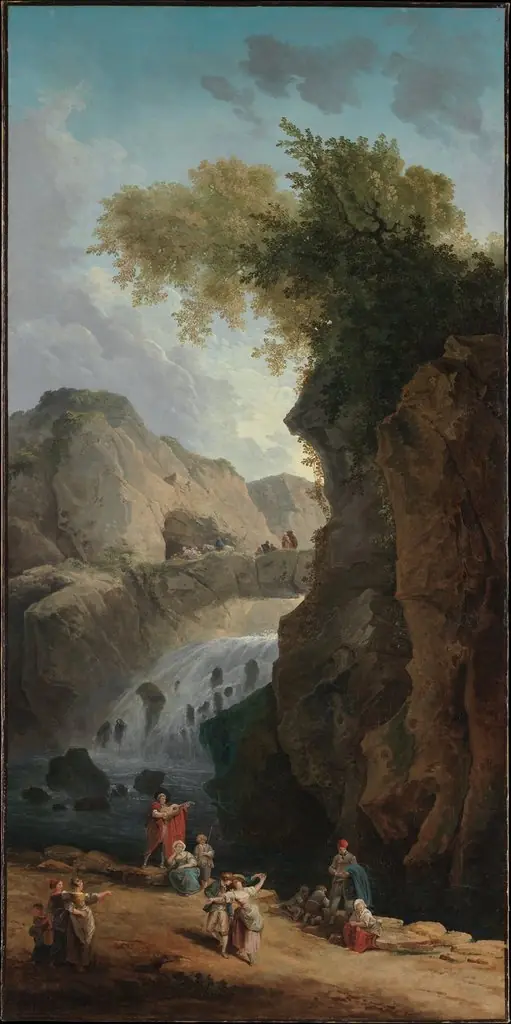
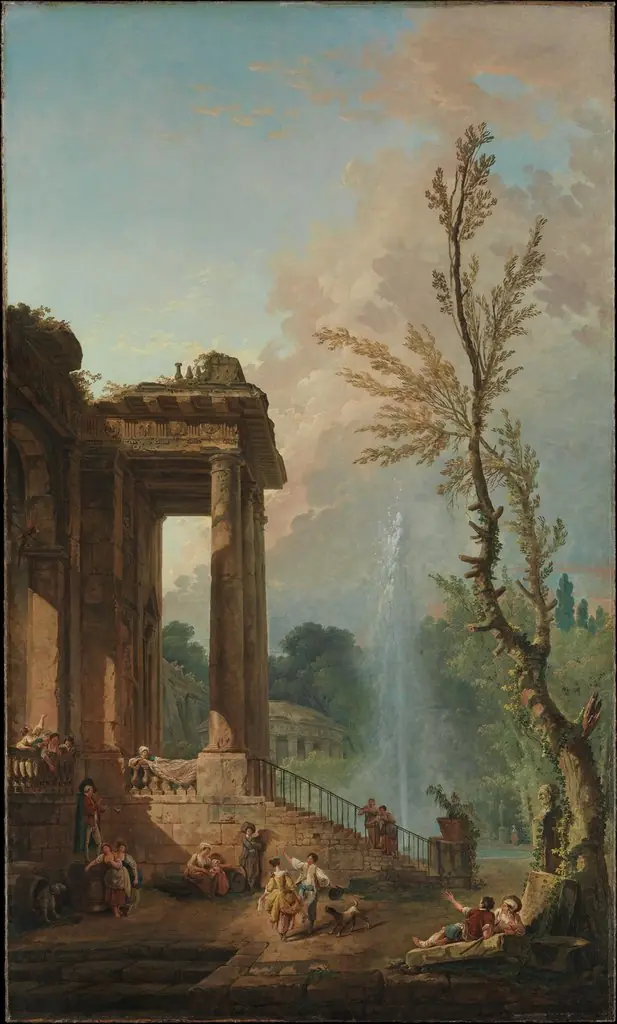
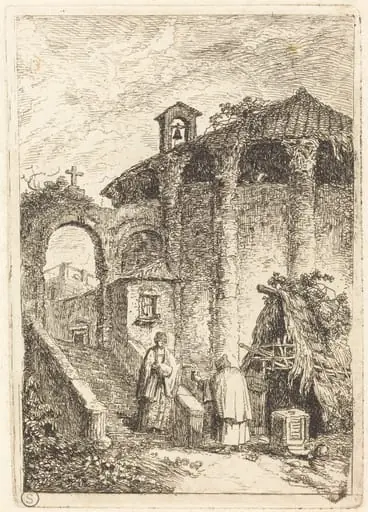 The Ancient Temple
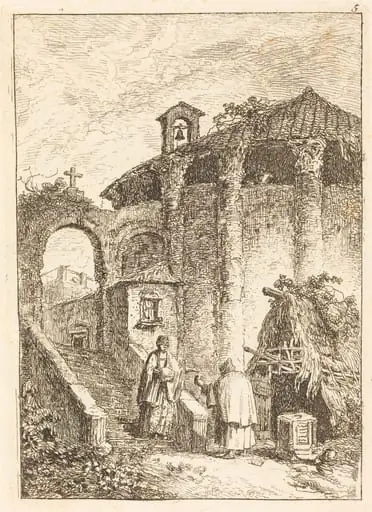 The Ancient Temple
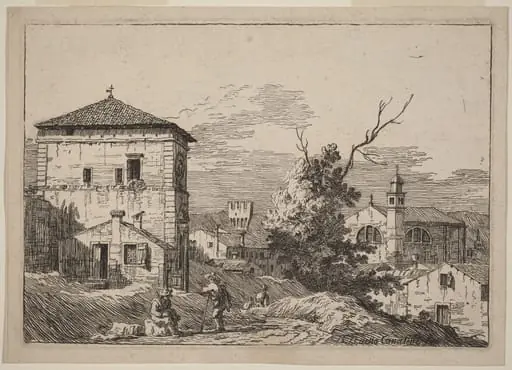 Landscape with a Dead Tree
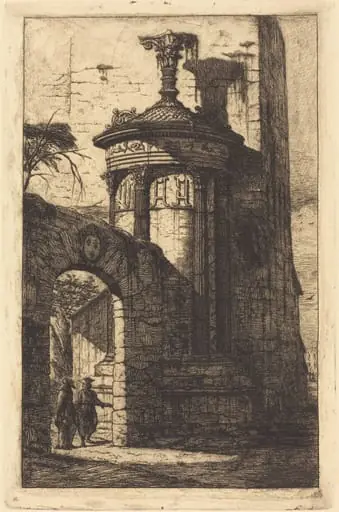 Entrée du Couvent des Capucins français à Athenes (Entrance to the French Capuchin Convent at Athens)
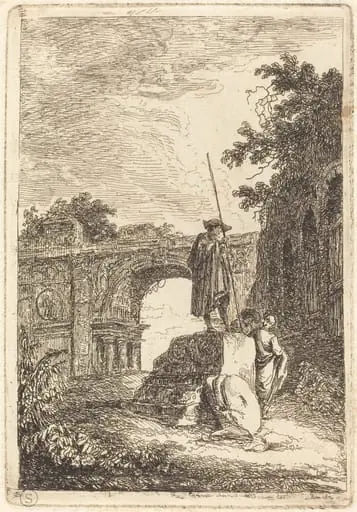 The Triumphal Arch
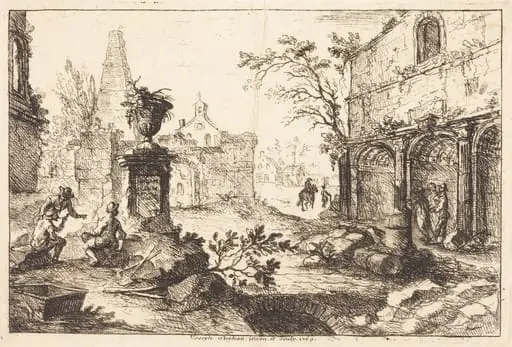 Architectural Fantasy with Roman Ruins
![Landscape with Tower and Two Ruined Pillars [left], by Canaletto](https://artifactworldgallery.com/img/canaletto--landscape-with-tower-and-two-ruined-pillars-left--60d58ba162fec5aa-w320.webp) Landscape with Tower and Two Ruined Pillars [left]
Landscape with Tower and Two Ruined Pillars [left]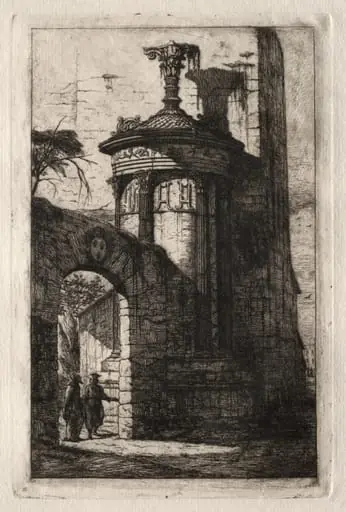 Entrance to the French Capuchin Convent at Athens