Artwork
The Ancient Temple
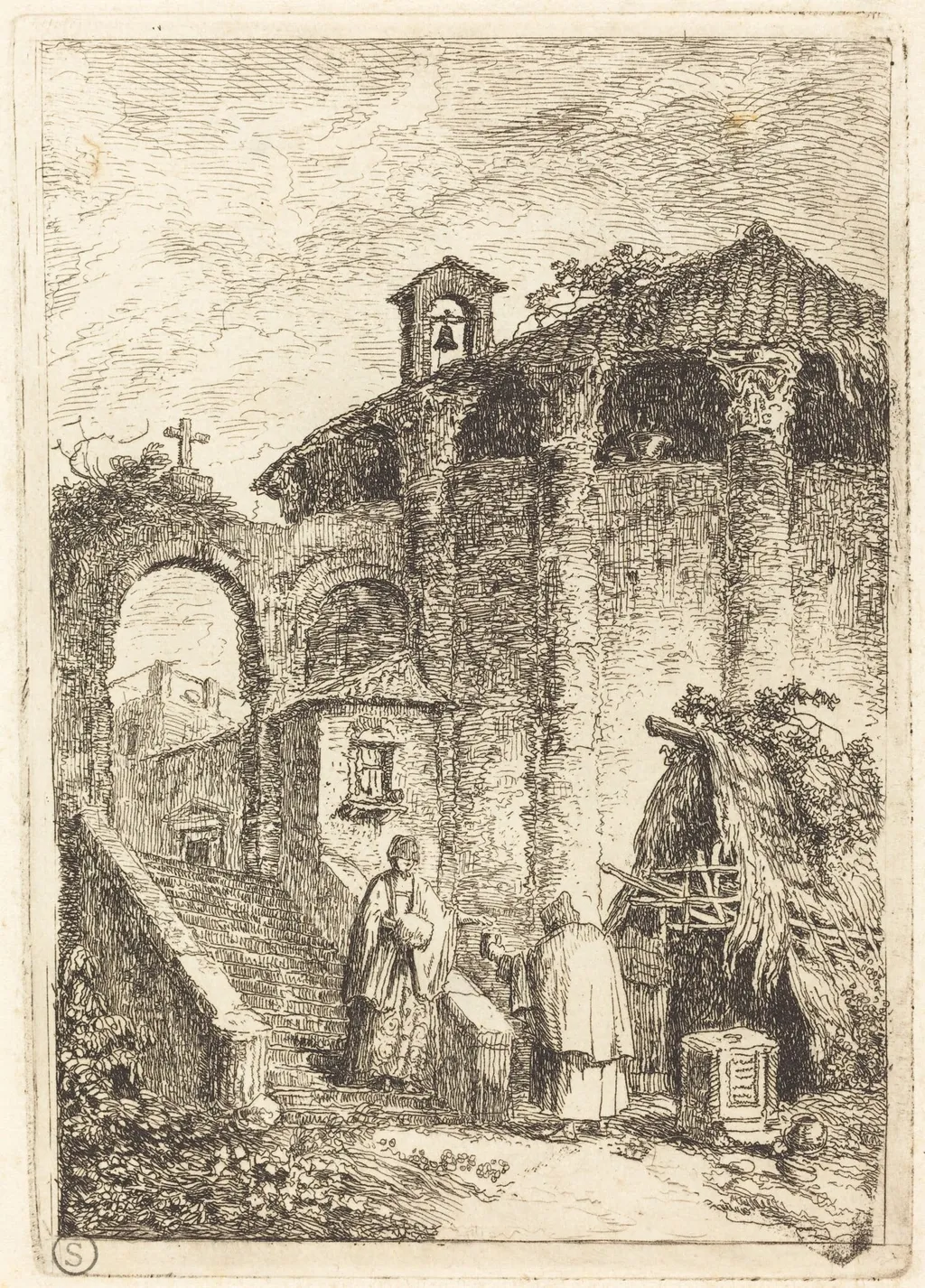
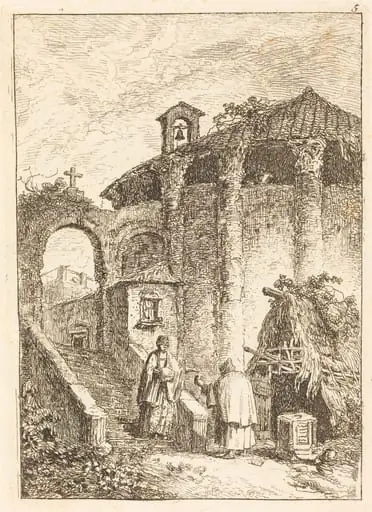
The Ancient Temple is an ink print by the Romanticist artist Hubert Robert. It dates from 1764 and is held in the collection of the National Gallery of Art.
About this work
Overview
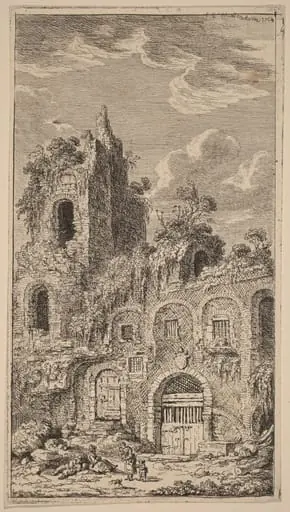
Created in 1764, *The Ancient Temple* is an etching executed on laid paper by the French artist Hubert Robert. The print presents a ruinous temple structure, its stone surfaces rendered with delicate lines that convey weathered texture and a sense of antiquity.
Subject & Meaning
The composition depicts a decaying temple featuring two arched openings, flanked by trees. Within the left doorway a solitary figure gazes outward, while another kneels nearby; on the right a larger, staff‑bearing figure leans against a wall, suggesting a narrative of contemplation amid ruin.
Technique & Style
Robert employed fine etching lines to delineate the worn stone and foliage, achieving subtle gradations of light and shadow. The left‑hand illumination creates depth through contrasting darks, a hallmark of his Romantic approach to imagined yet plausible architectural scenes.
History & Provenance
The work belongs to Robert’s early print output, produced during his period of extensive travel in Italy and France, when he was developing his reputation for capriccio landscapes that blend observed ruins with invented elements.
Context
Robert’s etchings often explored the Romantic fascination with decay and the sublime. *The Ancient Temple* reflects his interest in the picturesque, situating a classical ruin within a natural setting to evoke both historical nostalgia and emotional resonance.
Artist & collection
Artist
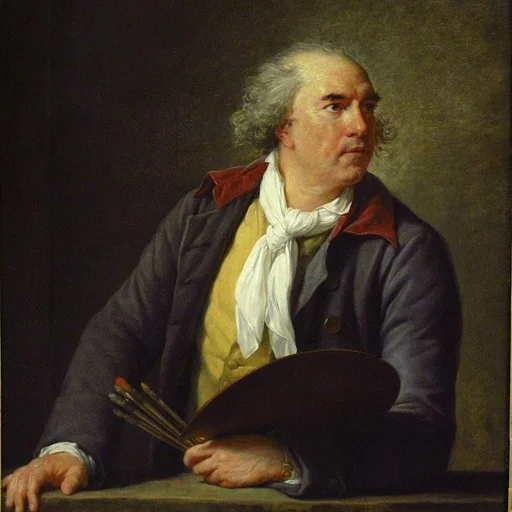
Hubert Robert (French pronunciation: ; 22 May 1733 – 15 April 1808) was a French painter in the school of Romanticism, noted especially for his landscape paintings and capricci, or semi-fictitious picturesque depictions of ruins in Italy…

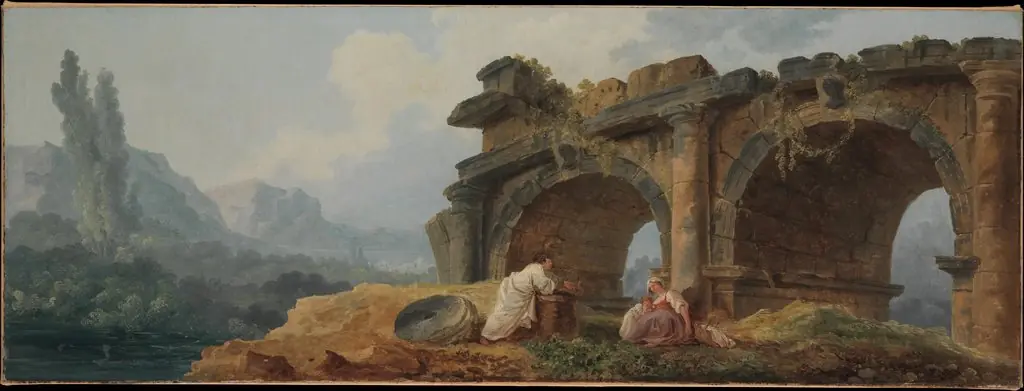
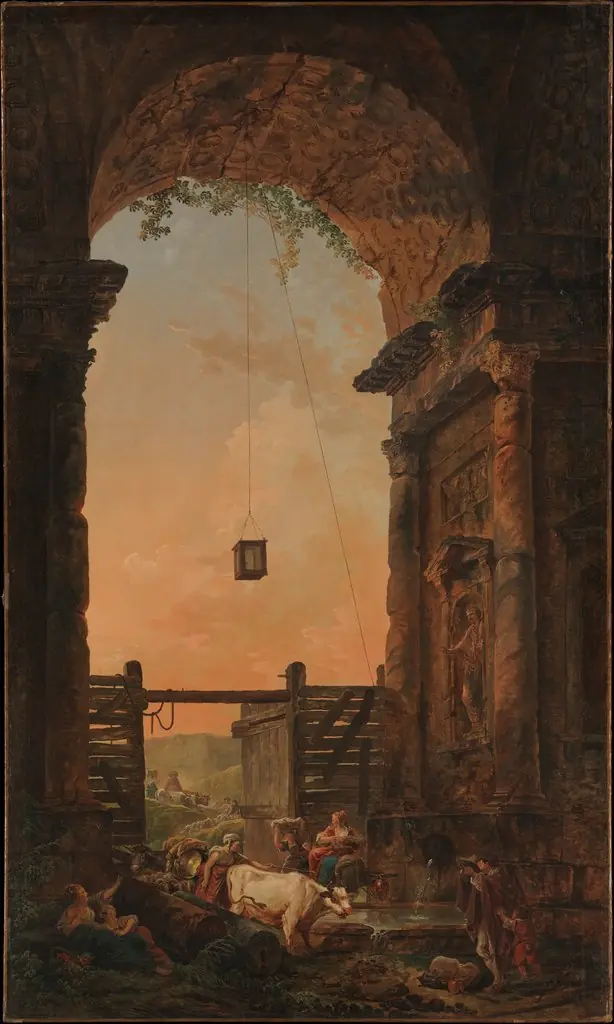
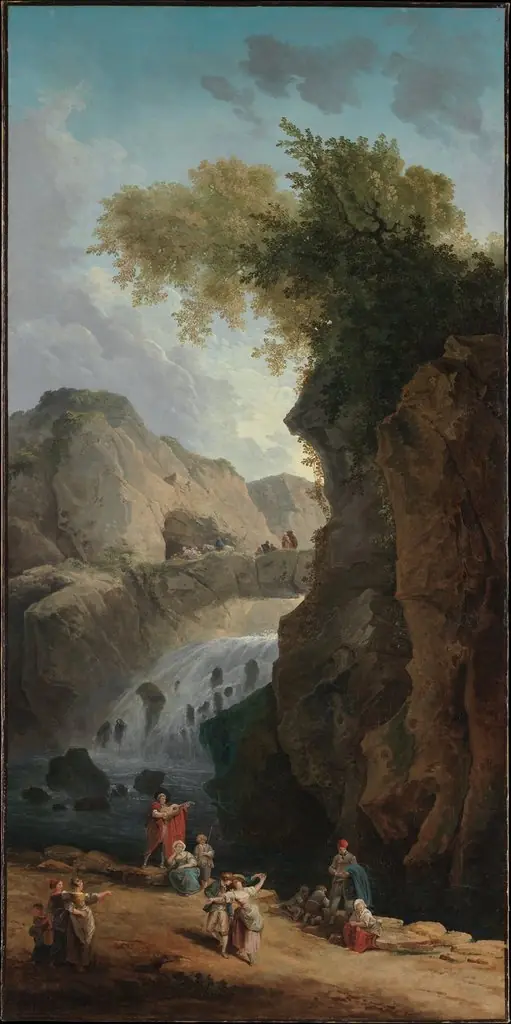
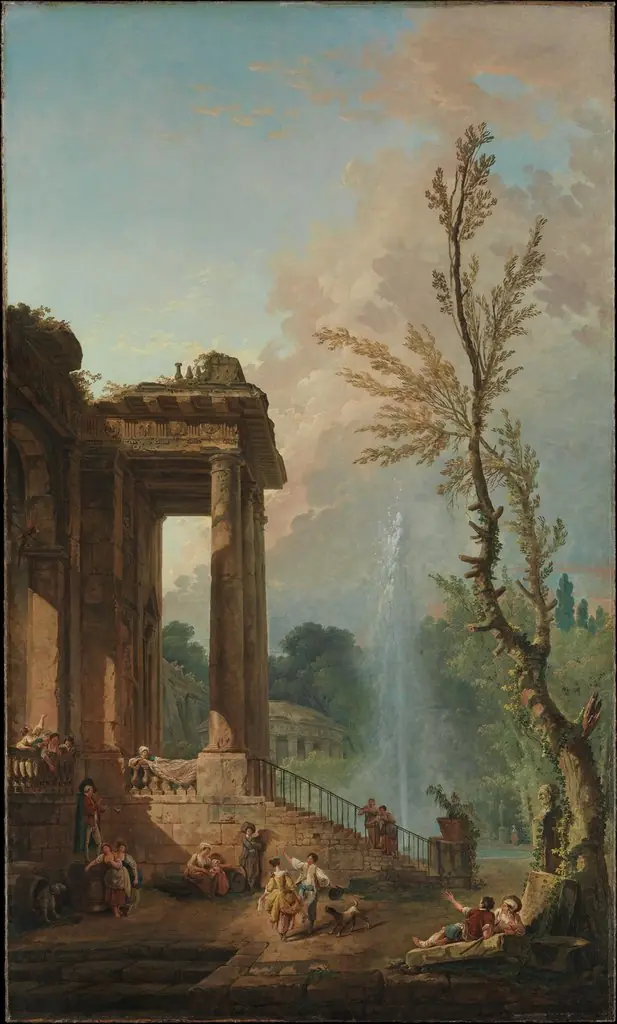
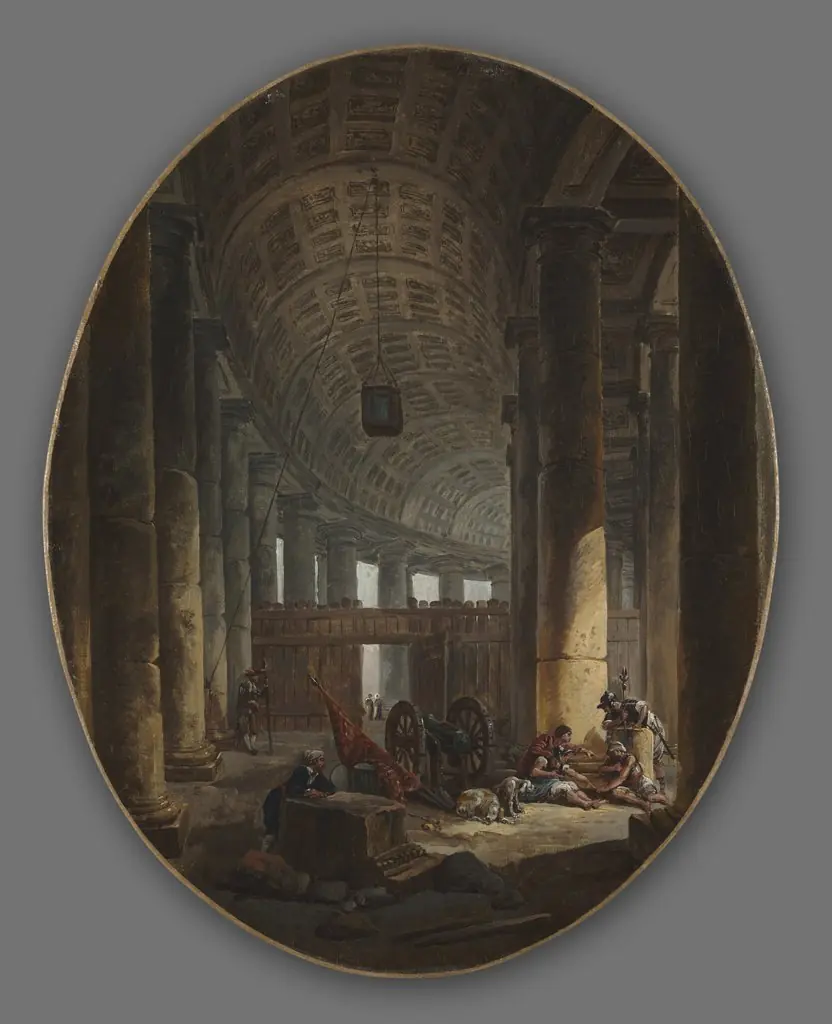
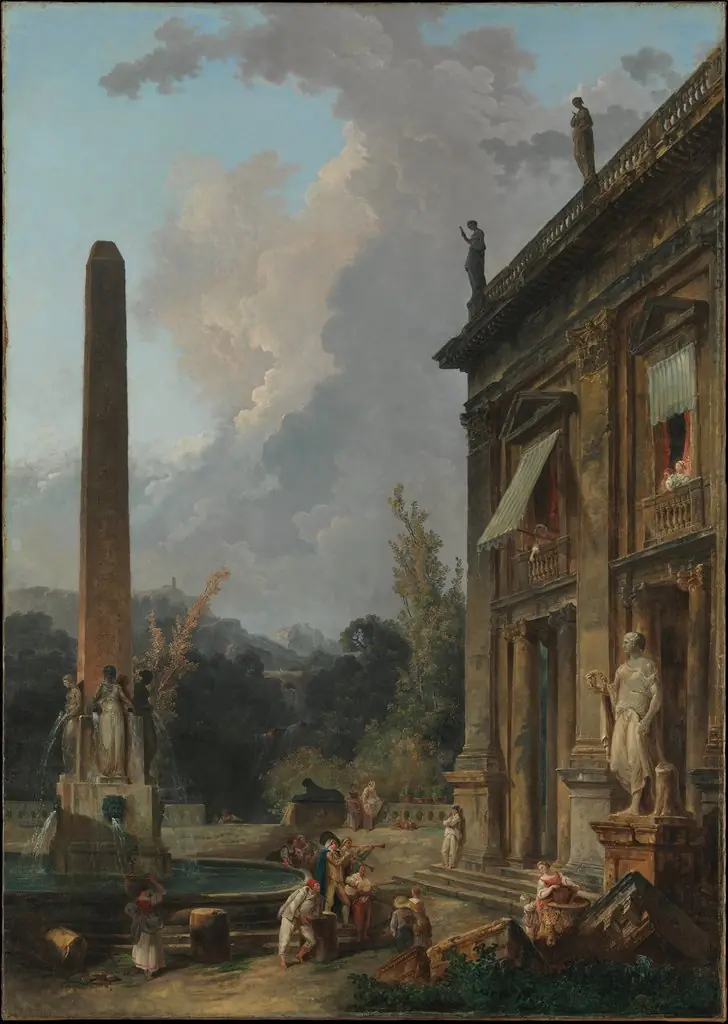
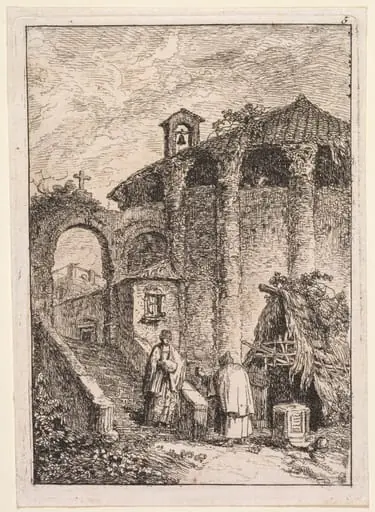 Le Temple Antique
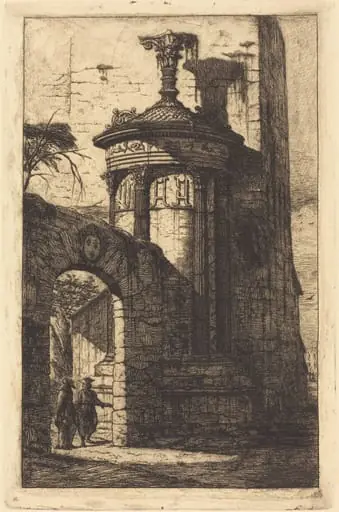 Entrée du Couvent des Capucins français à Athenes (Entrance to the French Capuchin Convent at Athens)
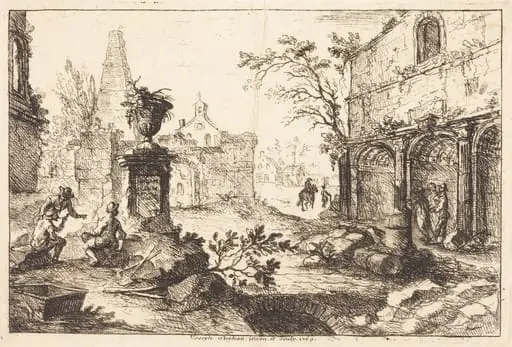 Architectural Fantasy with Roman Ruins
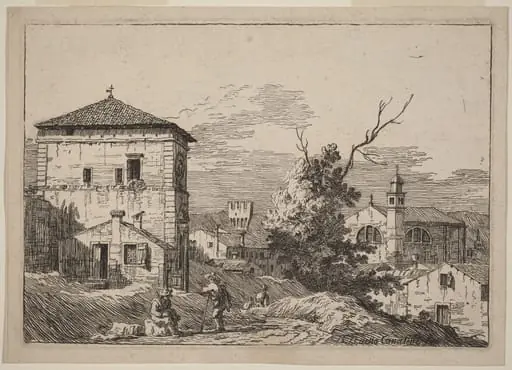 Landscape with a Dead Tree
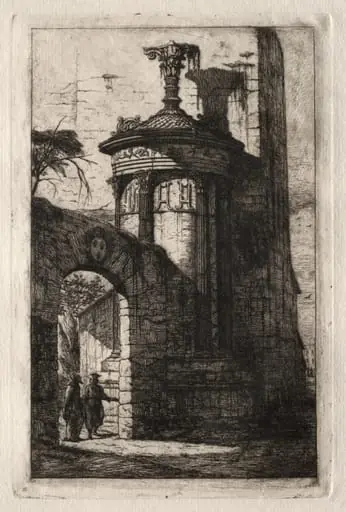 Entrance to the French Capuchin Convent at Athens
![The Bishop's Tomb [center], by Canaletto](https://artifactworldgallery.com/img/canaletto--the-bishop-s-tomb-center--d27fef1dd2f2d61a-w320.webp) The Bishop's Tomb [center]
The Bishop's Tomb [center]![Landscape with Tower and Two Ruined Pillars [left], by Canaletto](https://artifactworldgallery.com/img/canaletto--landscape-with-tower-and-two-ruined-pillars-left--60d58ba162fec5aa-w320.webp) Landscape with Tower and Two Ruined Pillars [left]
Landscape with Tower and Two Ruined Pillars [left]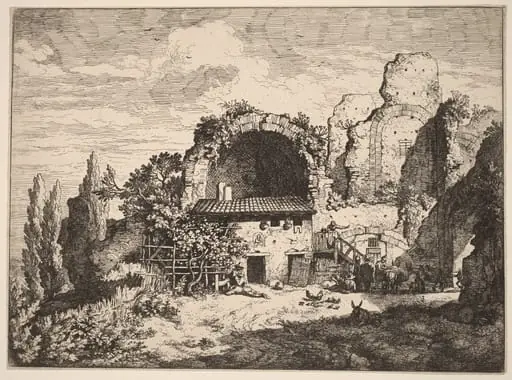 The Muleteers' Inn
 Fragment of the Old City Wall at San Giovanni Laterano
 The Ancient Temple