Artwork
Cupid and Psyche in the Nuptial Bower
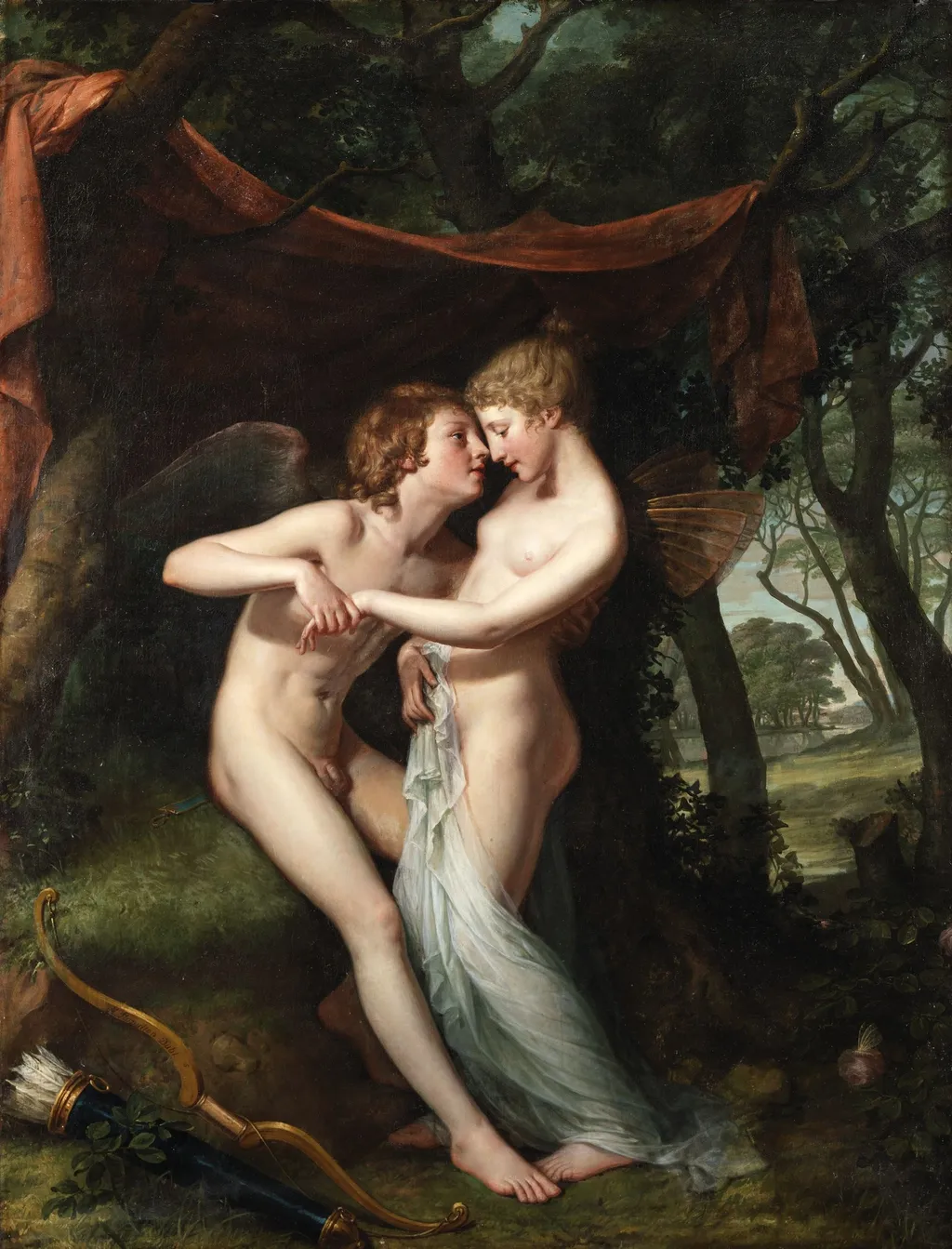
Cupid and Psyche in the Nuptial Bower is an oil painting by the Neoclassicist artist Hugh Douglas Hamilton. It dates from 1796 and is held in the collection of the National Gallery of Ireland.
About this work
Overview
The painting is now part of the National Gallery of Ireland’s collection, reflecting his late-career shift toward mythological subjects.
Painted in 1796 by Irish artist Hugh Douglas Hamilton, this oil-on-canvas work portrays a scene from Roman myth. Hamilton, previously known for pastel portraiture, turned to oil after years in London and Rome. He completed this piece after returning to Dublin, where he engaged with classical themes. The painting is now part of the National Gallery of Ireland’s collection, reflecting his late-career shift toward mythological subjects.
Subject & Meaning
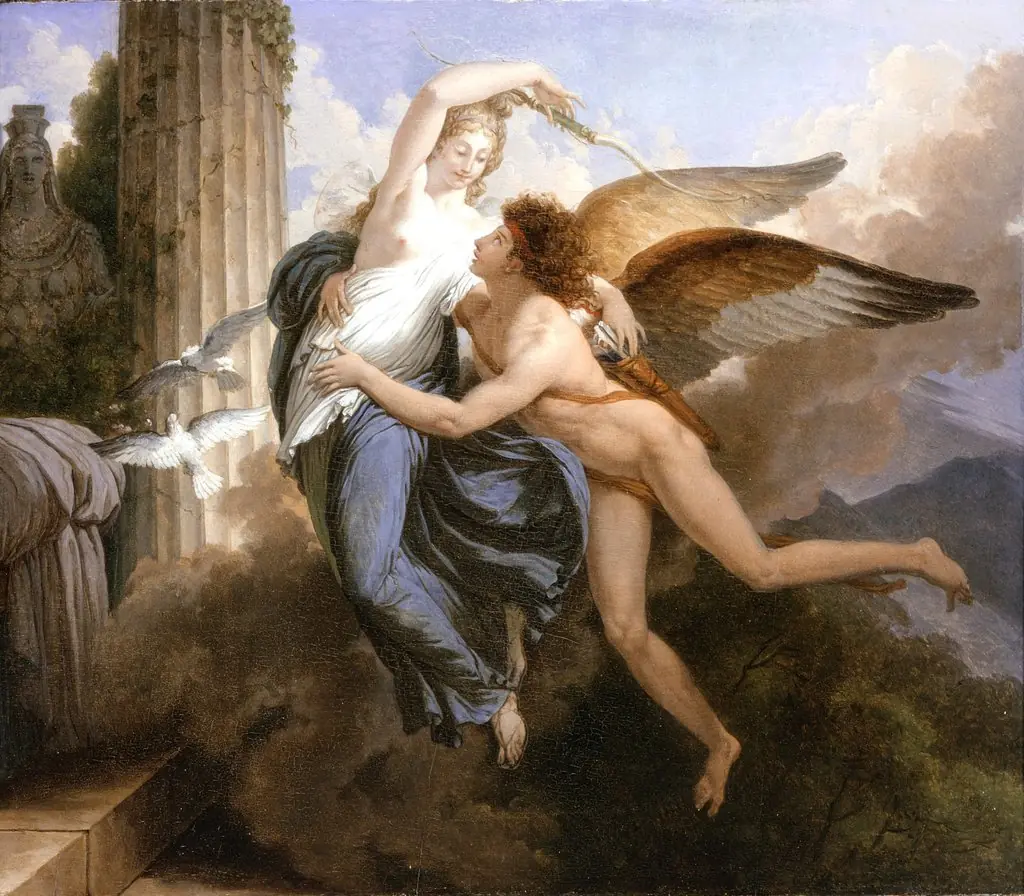
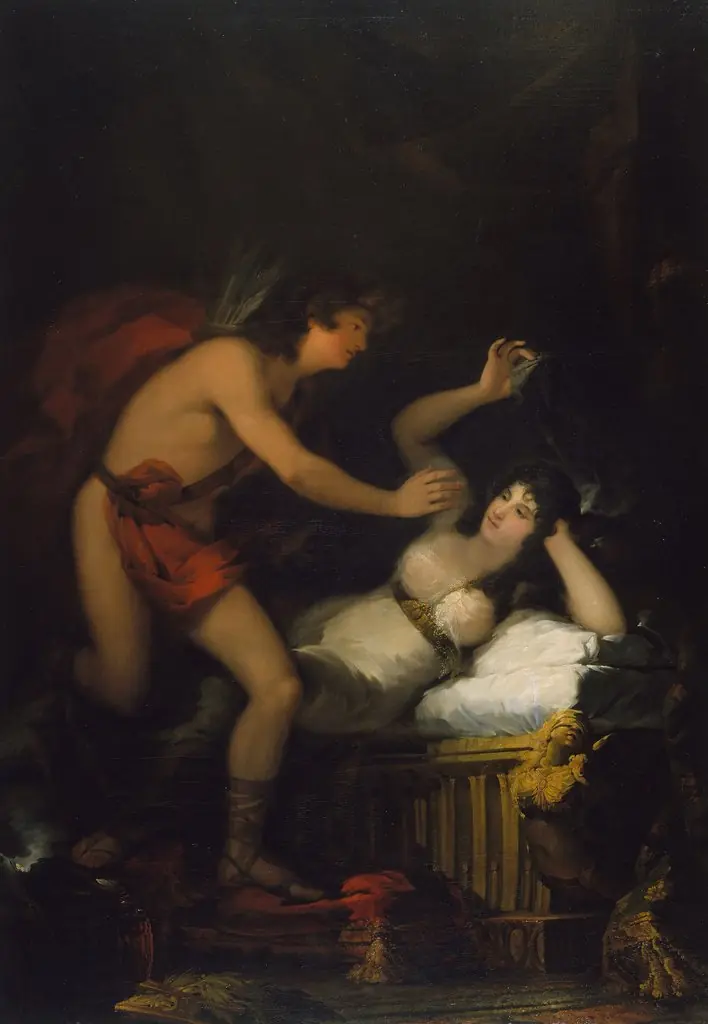
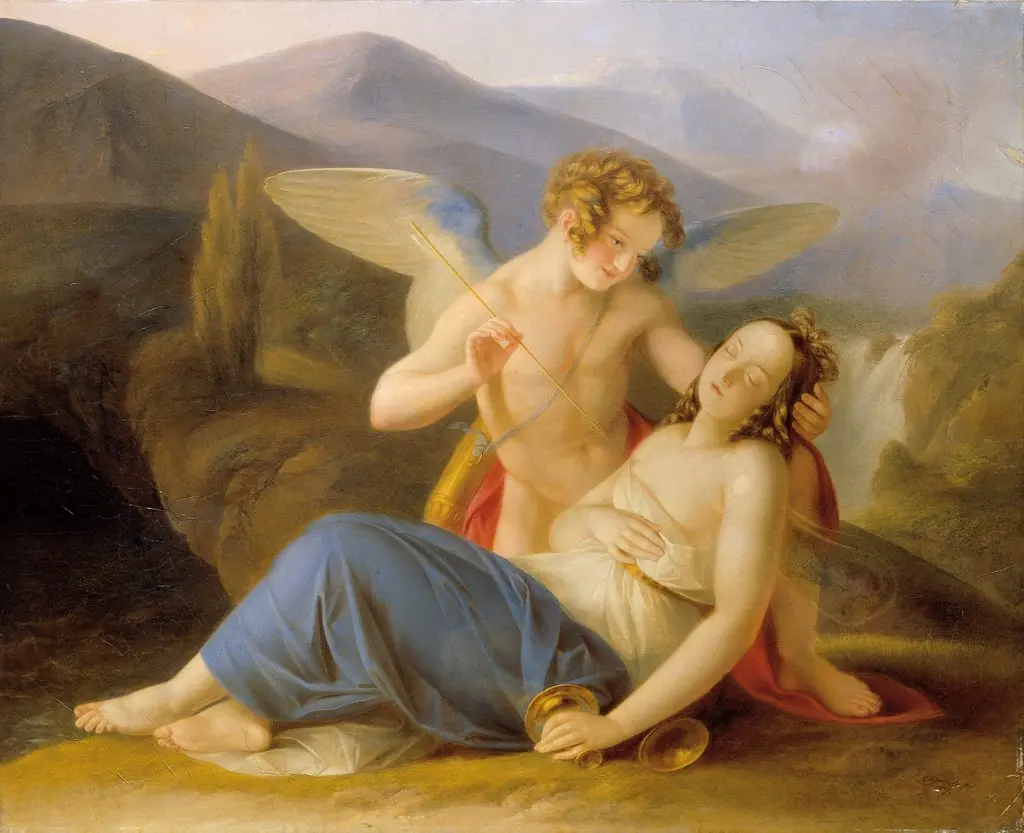
The painting illustrates the moment between Cupid and Psyche as they embrace in a private, forested setting. Cupid, identifiable by his wings and bow, is the god of love; Psyche, a mortal woman, is draped in a translucent garment. Their intimate posture suggests the culmination of her trials and their impending union. The scene draws from Apuleius’s tale, where divine love transcends human limitation, rendered here with quiet solemnity rather than overt drama.
Technique & Style
Hamilton employs chiaroscuro to shape the figures against a dim, wooded backdrop. The contrast between the pale skin of the lovers and the deep shadows enhances their three-dimensionality. The foliage is rendered with loose, atmospheric brushwork, while the red canopy above adds a subtle focal point. The style aligns with Neoclassical ideals—elegant forms, restrained emotion—but the lighting reveals a sensitivity to Romantic mood, distinguishing it from more rigid contemporary works.
History & Provenance
Created after Hamilton’s return to Dublin in the early 1790s, the painting reflects his mature engagement with mythological themes. It was likely commissioned or painted for a private Irish collector, given the period’s interest in classical subjects among the educated elite. The work entered the National Gallery of Ireland’s collection in the 19th century, where it has remained, representing a rare example of Hamilton’s mythological output outside his portrait practice.
Context
In late 18th-century Ireland, classical mythology was a favored subject among artists influenced by Enlightenment ideals and Grand Tour aesthetics. Hamilton’s training in Rome and exposure to Neoclassical trends informed his approach. While portrait commissions dominated his career, this painting signals a broader cultural appetite for mythological narratives, particularly those exploring love, transformation, and divine-human relationships.
Legacy
Though Hamilton is primarily remembered for portraiture, this painting stands as a significant example of his engagement with narrative myth. It reveals his technical adaptability and sensitivity to emotional tone. The work contributes to the Irish art historical record by illustrating how local artists absorbed and reinterpreted European classical traditions, offering a quieter, more introspective take on a widely depicted myth.
Own this work as a print
Artist & collection
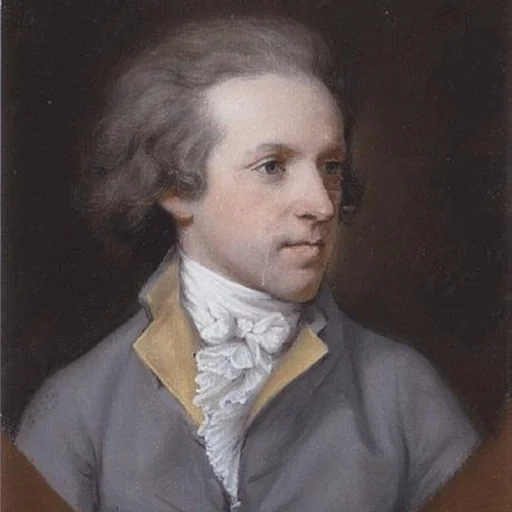
Artist
Hugh Douglas Hamilton RHA (c. 1739 – 10 February 1808) was an Irish painter who specialised in portrait painting. He spent considerable periods in London and Rome before returning to Dublin in the early 1790s. Until the…

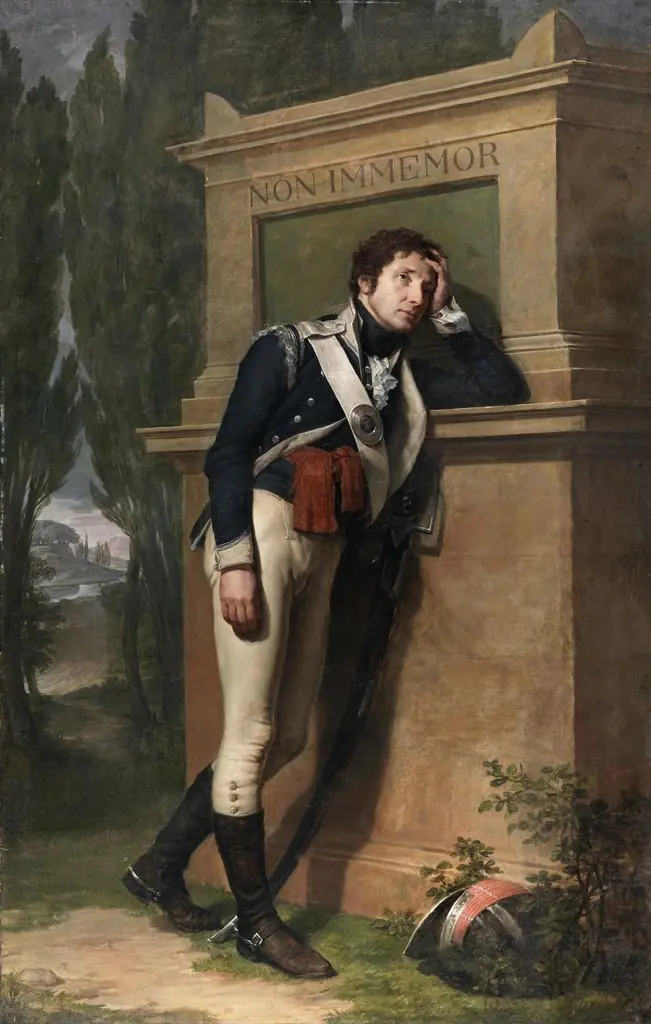 Portrait of Lieutenant Richard Mansergh Saint George (1756/9-1798)
 Portrait of Richard Lovell Edgeworth (1744-1817)
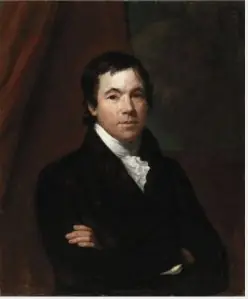 Portrait of John Philpot Curran (1750-1817)
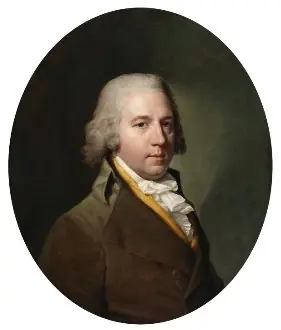 Portrait of a Gentleman
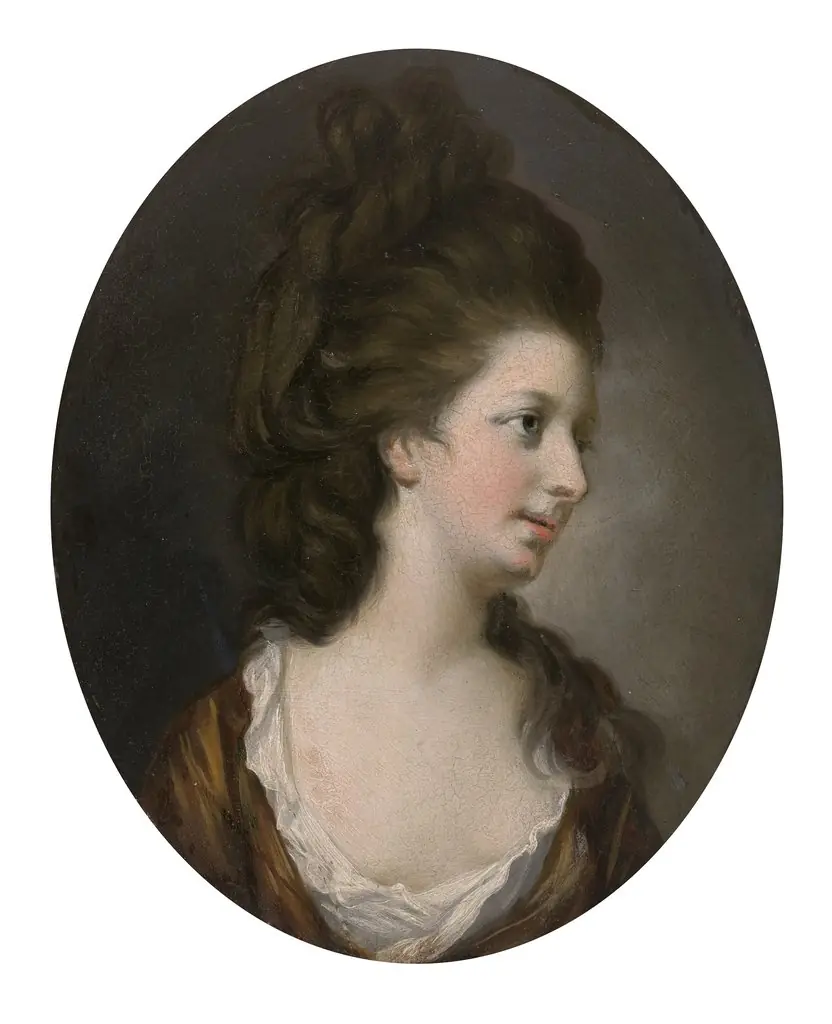 Portrait of The Hon. Mrs John Beresford (née Montgomery) (?1757-1788)
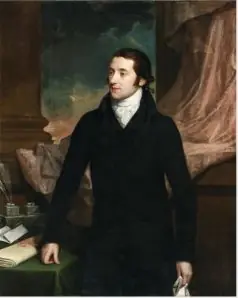 Portrait of William Cusack-Smith, later 2nd Bt (1766-1836)
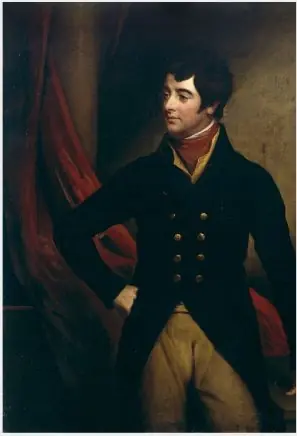 Portrait of Lord Edward FitzGerald (1763-1798)
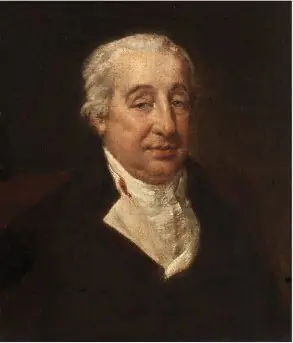 Portrait of the Rt Hon. David La Touche of Marlay (1729-1817)