Artwork
Adoration of the Magi (Triptych)
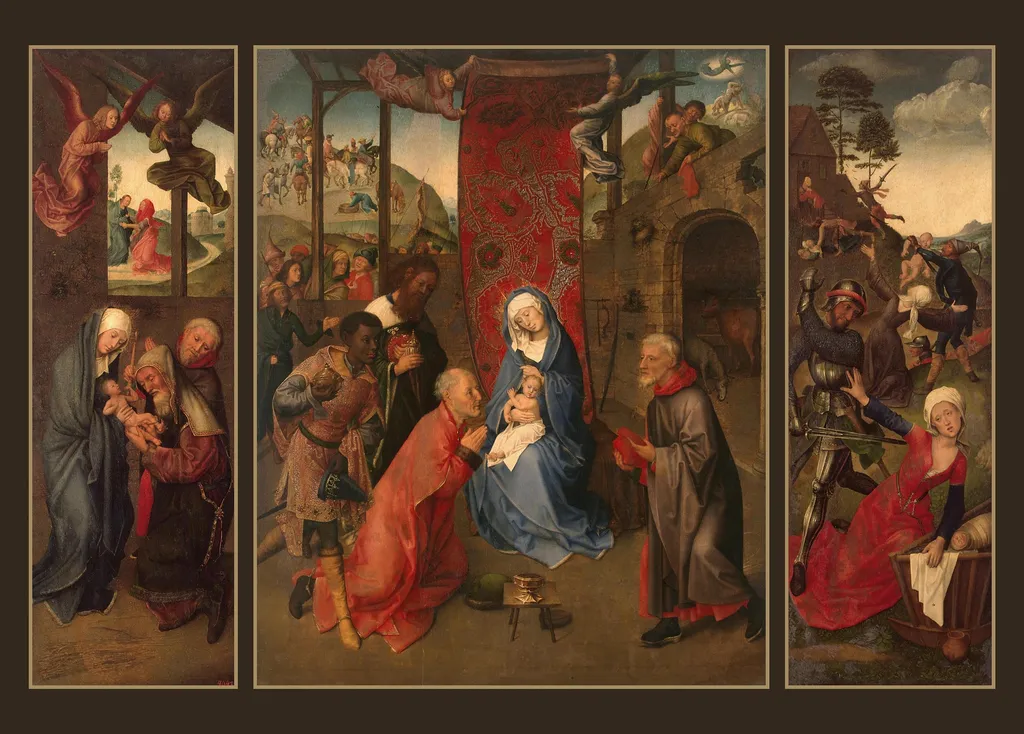
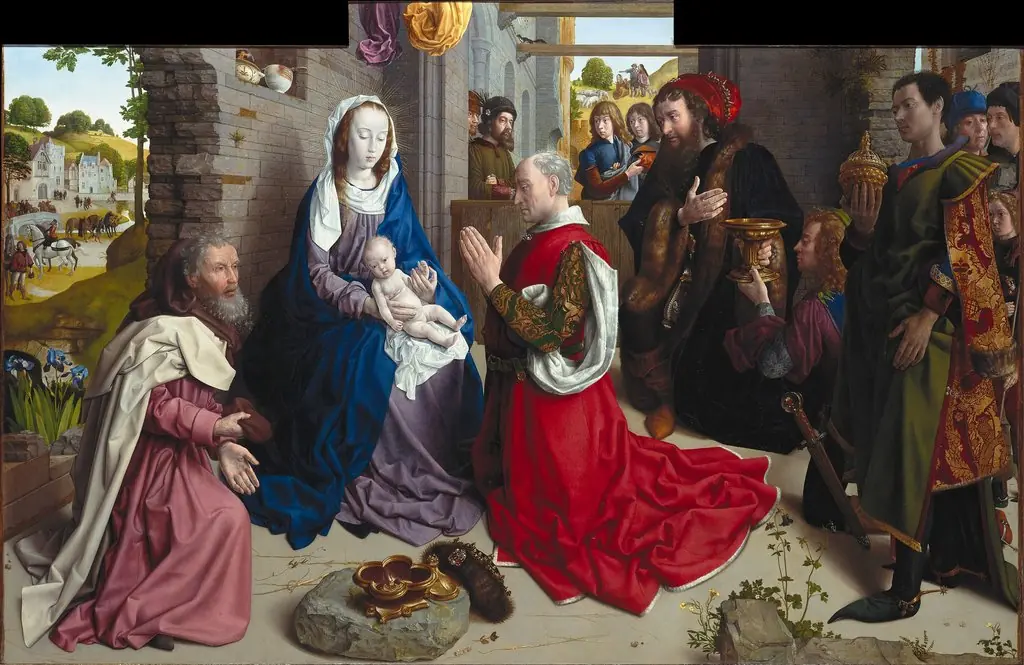
Adoration of the Magi (Triptych) is an oil painting by the Northern Renaissance artist Hugo Van der Goes. It dates from 1460 and is held in the collection of the Hermitage Museum.
About this work
Overview
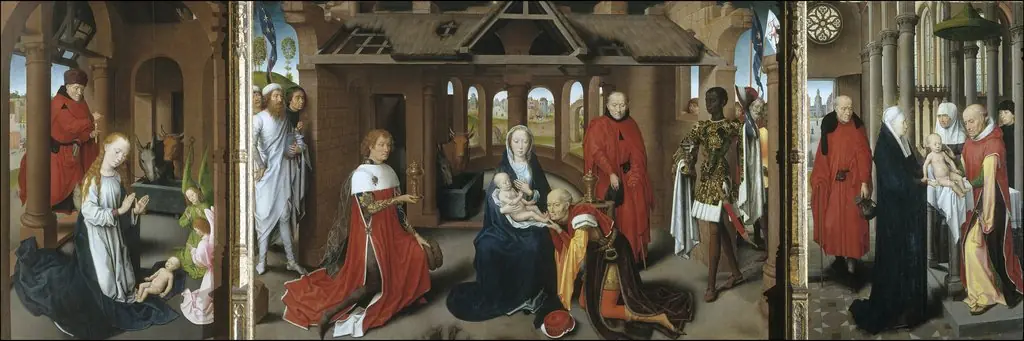
Created around 1460 by the Flemish painter Hugo van der Goes, this oil‑on‑canvas triptych belongs to the Northern Renaissance. It is composed of three panels that together narrate episodes from the early life of Christ, including the adoration by the Magi, the Massacre of the Innocents and the circumcision. The work is part of the collection of the State Hermitage Museum in St. Petersburg.
Subject & Meaning
The central panel focuses on the Virgin Mary, crowned with a starry halo, cradling the infant Jesus as three Magi kneel before them, one in vivid red, another in muted gray. Flanking scenes expand the narrative: the left panel shows angels above a small altar, while the right depicts a soldier and a woman with a child amid the turmoil of the Massacre of the Innocents, underscoring themes of divine protection and human suffering.
Technique & Style
Van der Goes employs a rich palette of reds and gold leaf, especially in the halos, to emphasize sanctity. The composition is densely populated, with figures arranged in dynamic poses that convey movement. His handling of oil allows for subtle modeling of faces and textiles, while the red curtain behind the central group creates a theatrical depth characteristic of his monumental style.
History & Provenance
The artist, a leading figure among Early Netherlandish painters, produced the triptych for an unknown patron in the mid‑15th century. Over the centuries it passed through several private collections before entering the State Hermitage Museum, where it remains on display as a representative example of van der Goes’s religious oeuvre.
Context
During the late medieval period, the Adoration of the Magi served as a visual affirmation of Christ’s universal kingship, a motif frequently commissioned for churches and private devotion. Van der Goes’s inclusion of the Massacre of the Innocents and the circumcision reflects a broader narrative strategy, linking the infant’s vulnerability with his later fulfillment of messianic prophecy.
Artist & collection
Artist
Hugo van der Goes (c. 1430/1440 – 1482) was a Flemish painter who was one of the most significant and original Early Netherlandish painters of the late 15th century. Van der Goes was an important painter of altarpieces…