Artwork
Seascape
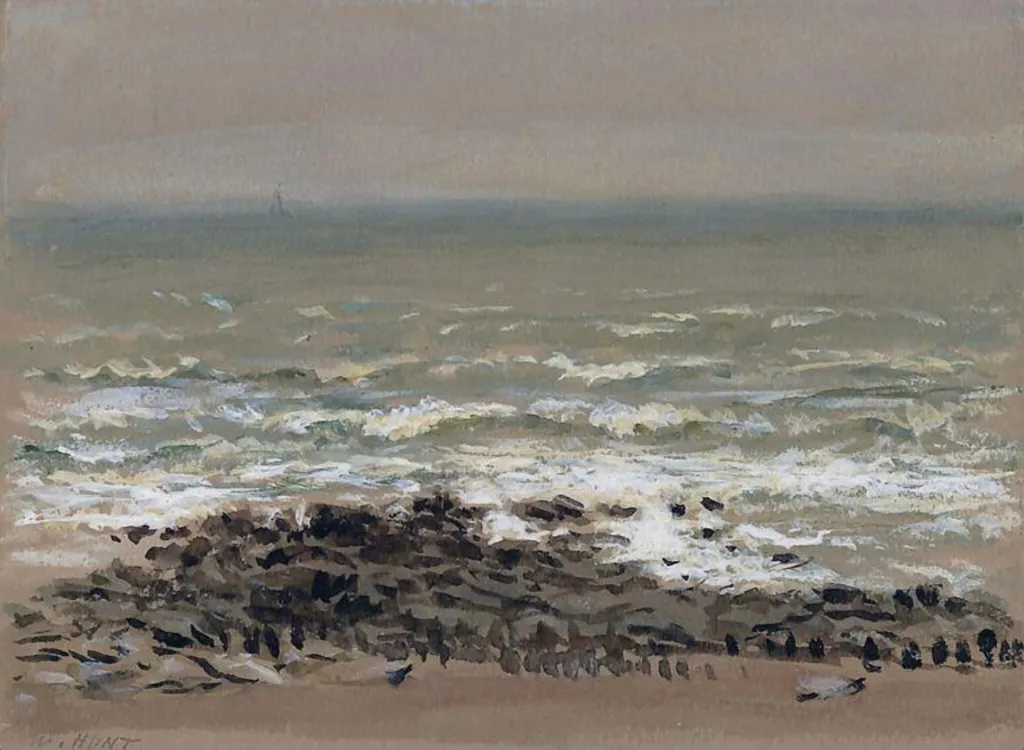
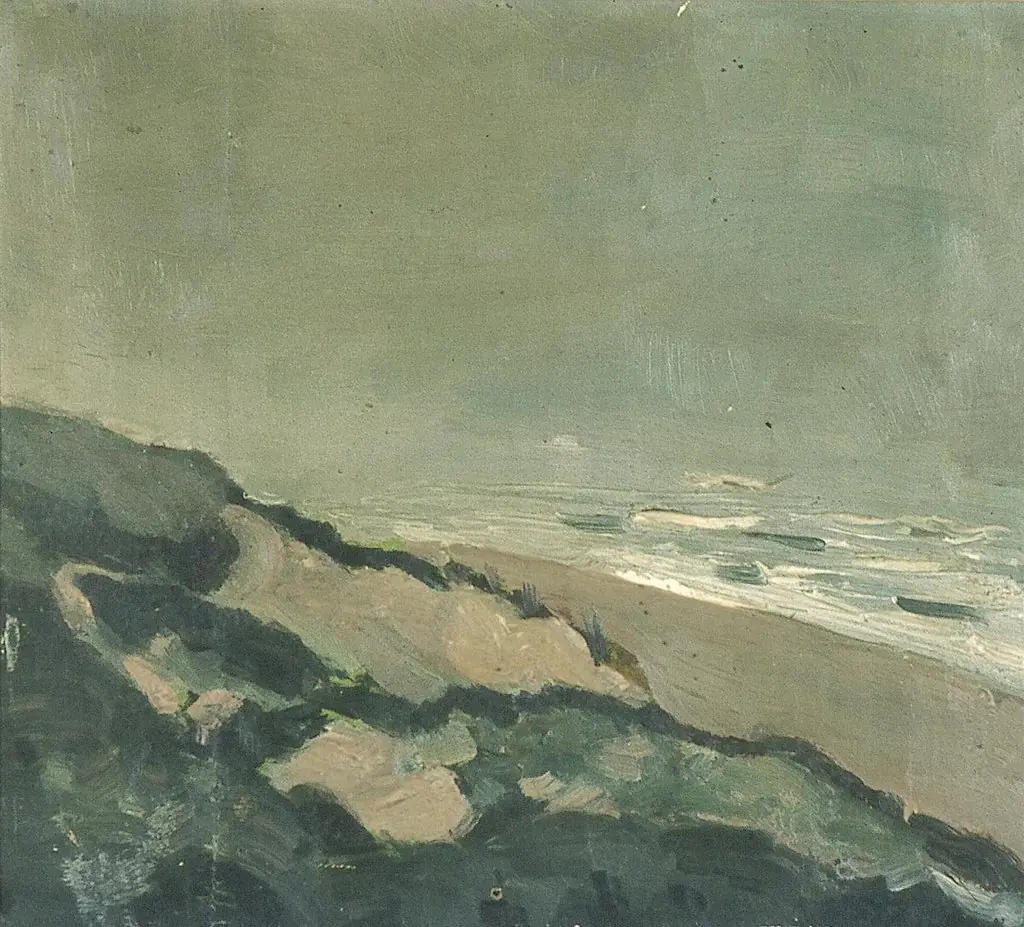
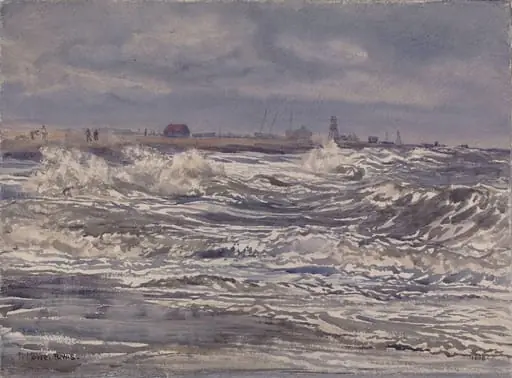
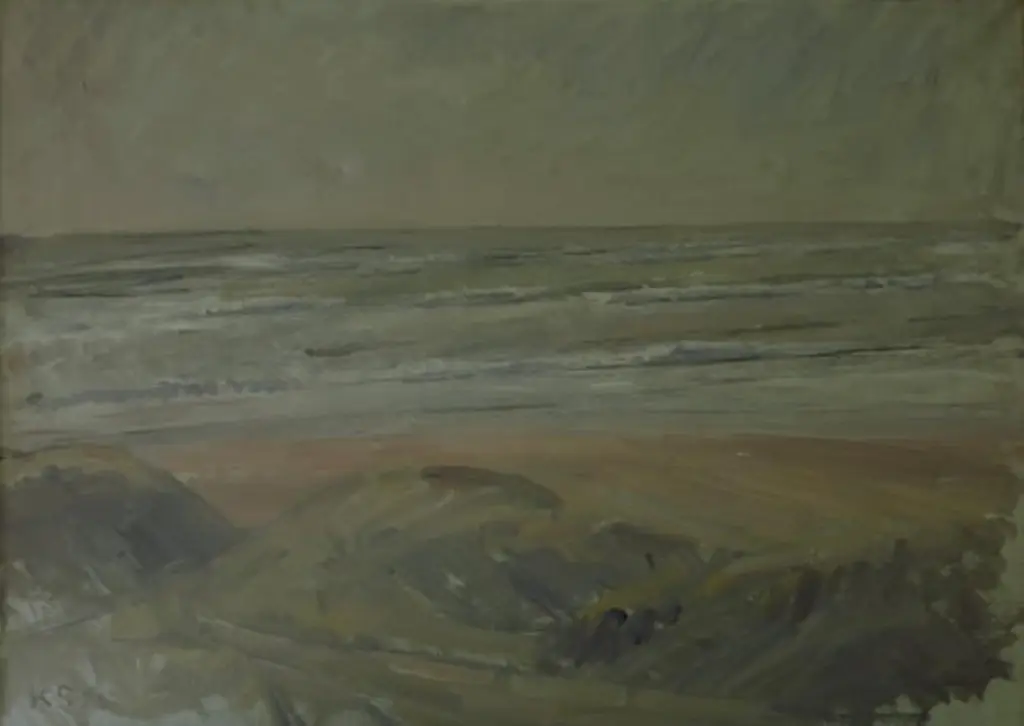
Seascape is a watercolor work on paper by the British Romanticist artist William Henry Hunt. It dates from 1810 and is held in the collection of the Victoria and Albert Museum.
About this work
Overview
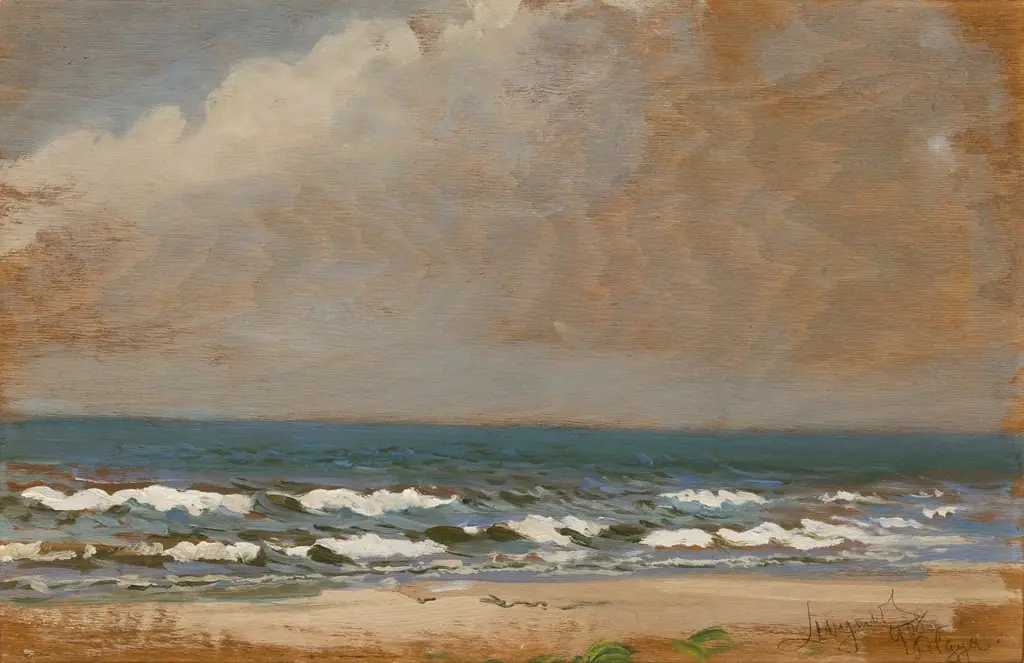
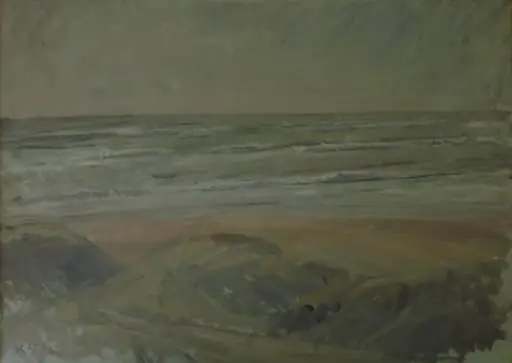
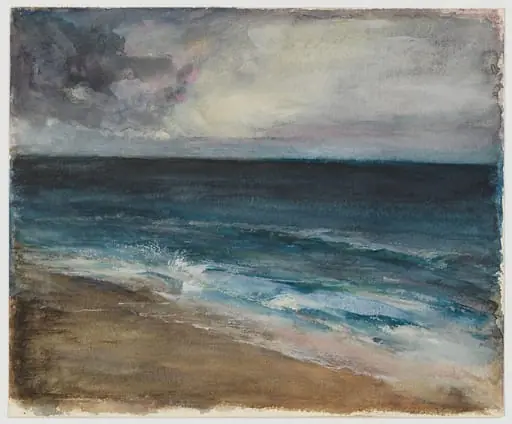
Seascape, executed in watercolor in 1810, presents a coastal scene where waves break upon a dark, uneven shore. The water is rendered in muted gray‑blue tones, its surface frothy with white foam that recedes into a hazy horizon. The composition captures a brief moment of turbulent surf against a subdued, atmospheric backdrop.
Subject & Meaning
The work focuses on the natural forces of sea and shore, emphasizing the transient energy of crashing waves and the shifting quality of light on water. By isolating the marine environment, the painting invites contemplation of nature’s power and impermanence, themes central to Romantic sensibilities.
Technique & Style
Hunt employs rapid, loose brushwork that conveys the immediacy of the surf, while his palette remains restrained to earthy and muted hues. The watercolor medium allows for delicate washes that suggest mist and foam, and the overall execution reflects the artist’s precise yet naturalistic approach to rendering atmospheric effects.
History & Provenance
Created by English watercolourist William Henry Hunt, an early‑19th‑century practitioner associated with British Romanticism, the piece is part of the Victoria and Albert Museum’s collection. Hunt, better known for still‑life and genre subjects, produced this marine study as a rare departure from his usual themes.
Context
Within the Romantic movement, artists frequently turned to untamed landscapes to express emotional depth. Hunt’s Seascape aligns with this trend, using the sea’s volatility to evoke a sense of awe, while his meticulous observation reflects the period’s interest in naturalistic detail.
Own this work as a print
Artist & collection

Artist
William Henry Hunt (London 28 March 1790 – 10 February 1864), was an English watercolourist.