Artwork
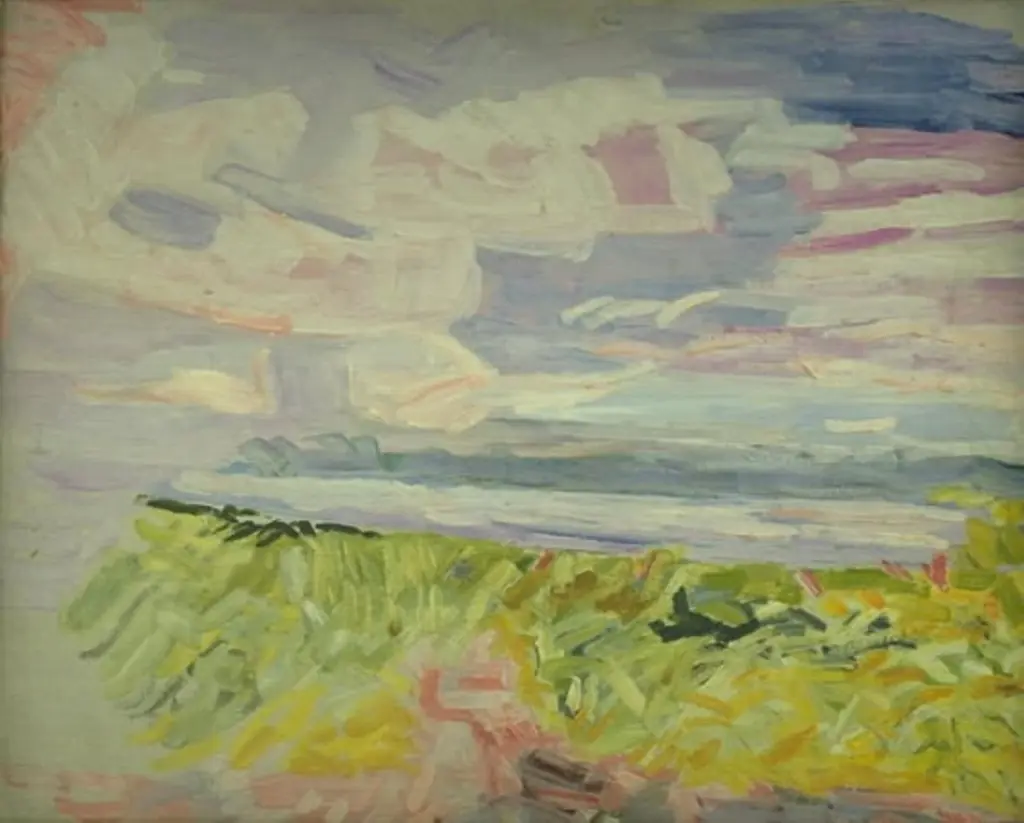
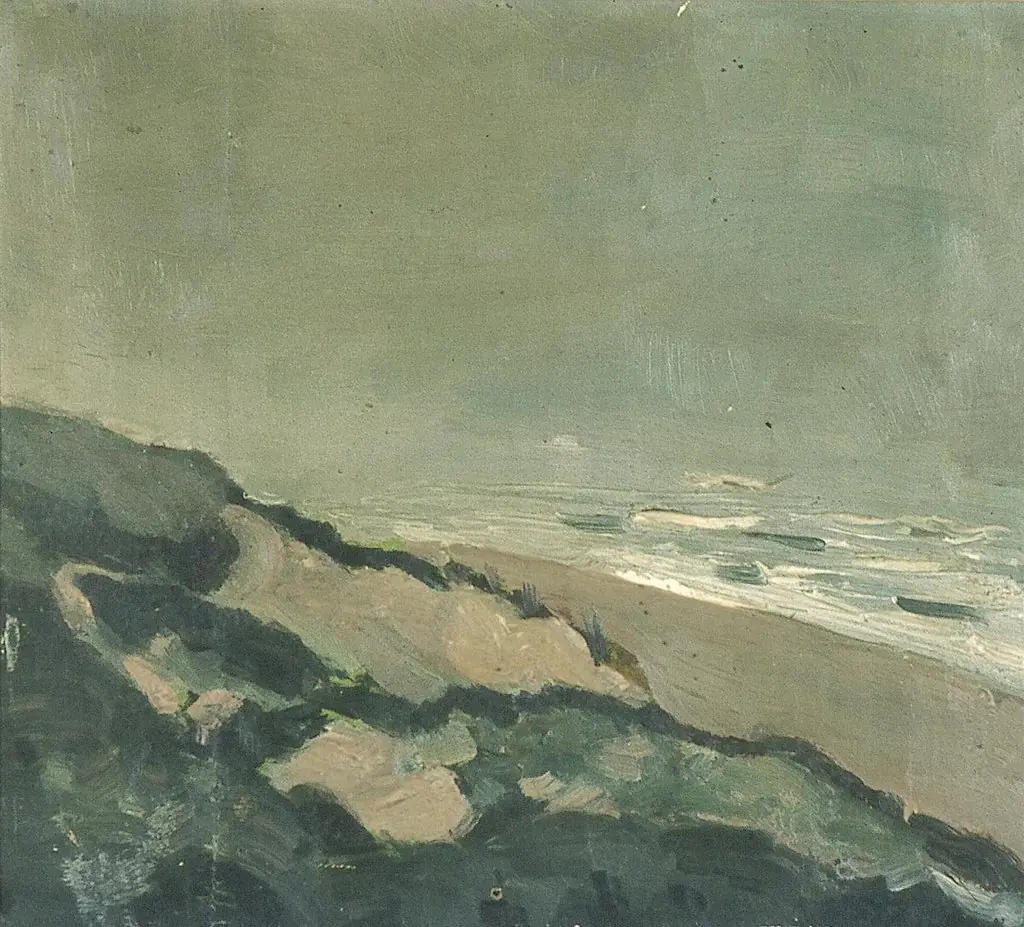
Udsigt fra klitter over Vesterhavet
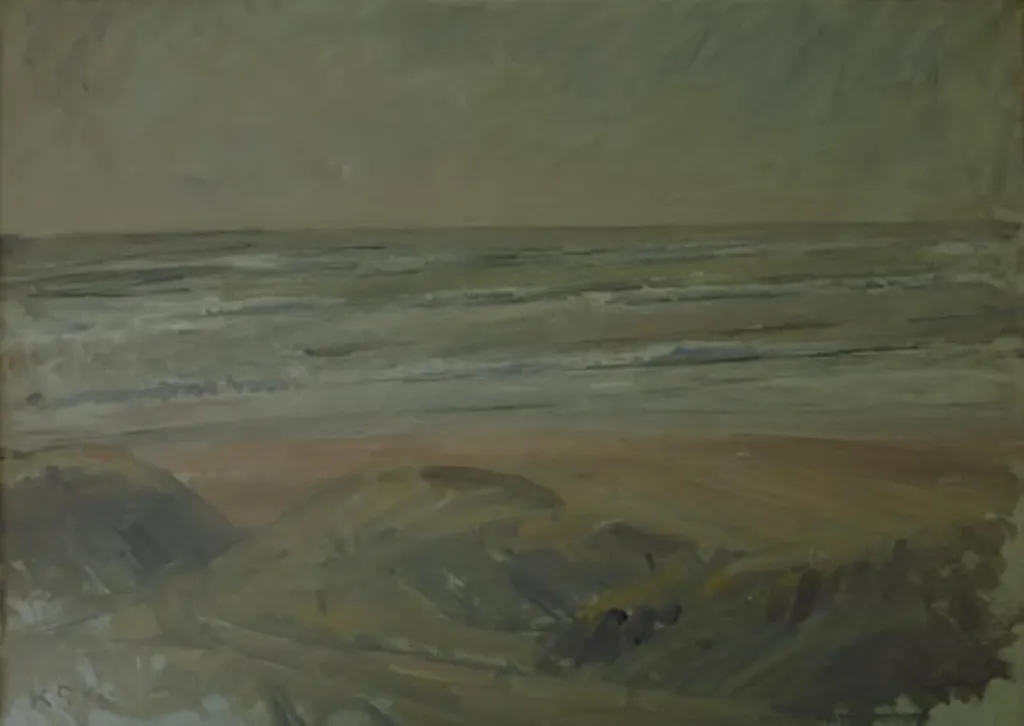
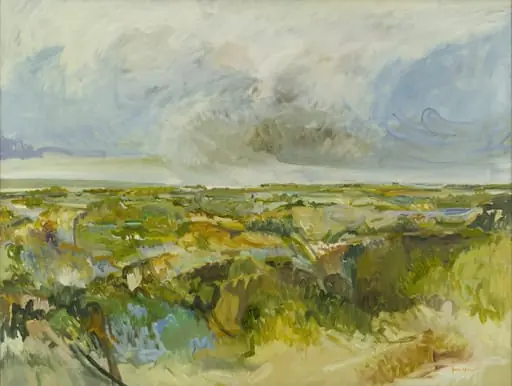
Udsigt fra klitter over Vesterhavet is a photography by Unknown. It dates from 1925 and is held in the collection of the Statens Museum for Kunst. Created in 1925, this photograph captures a coastal dune landscape along Denmark’s western shore.
About this work
Overview
Created in 1925, this photograph captures a coastal dune landscape along Denmark’s western shore. The image is part of the Museum of Ethnography’s collection, where it is preserved as a quiet record of natural terrain. Its composition emphasizes stillness and spatial openness, with no human presence or overt narrative. The work reflects a mid-1920s interest in unadorned natural forms.
Subject & Meaning
The low horizon and muted tones—beige, gray, and faint blue—convey a sense of solitude and temporal stillness.
The scene depicts a vast, flat expanse of sand dunes stretching toward the North Sea. The low horizon and muted tones—beige, gray, and faint blue—convey a sense of solitude and temporal stillness. There is no indication of human activity, suggesting an emphasis on nature’s quiet endurance. The image invites contemplation of landscape as a silent, enduring presence rather than a setting for action.
Technique & Style
The photograph employs soft focus and subtle tonal gradations to render the dunes and sky with minimal contrast. Light is diffused, enhancing the hazy atmosphere of the coastal environment. The composition avoids dramatic angles or focal points, instead favoring a balanced, horizontal structure that mirrors the land’s flatness. This restrained approach aligns with early modernist tendencies toward observational purity.
History & Provenance
The photograph entered the Museum of Ethnography’s holdings shortly after its creation, likely as part of a broader effort to document Danish natural environments. Its preservation within an ethnographic institution, rather than a fine arts context, suggests its value was seen in its anthropological or documentary qualities—capturing a landscape as a cultural and ecological constant.
Context
In the 1920s, Scandinavian photographers increasingly turned to rural and coastal landscapes as subjects of quiet study, moving away from staged or romanticized imagery. This work aligns with a regional trend of seeking authenticity in unaltered nature. Similar images from the period often emphasized solitude and the subtle rhythms of the environment, reflecting broader cultural interests in simplicity and place.
Legacy
Though not widely exhibited outside institutional archives, the photograph contributes to a body of early 20th-century Nordic landscape photography that prioritized restraint and observation. Its presence in the Museum of Ethnography underscores its role as a visual record rather than a celebrated artwork, influencing later documentary approaches to natural environments in Denmark.
Artist & collection

 Domestic Scene
 Giacomo and Cardinal Marco, investing Andrea, Abbot of San Zeno, with his Benefice
 The Nymph of Fontainebleau
 Portrait of a Woman
 Madonna and Child with Saints in the Enclosed Garden
 Venus and Minerva
 Family Group of Four on Sofa
 Wall painting from Room H of the Villa of P. Fannius Synistor at Boscoreale