Artwork
Scherzando
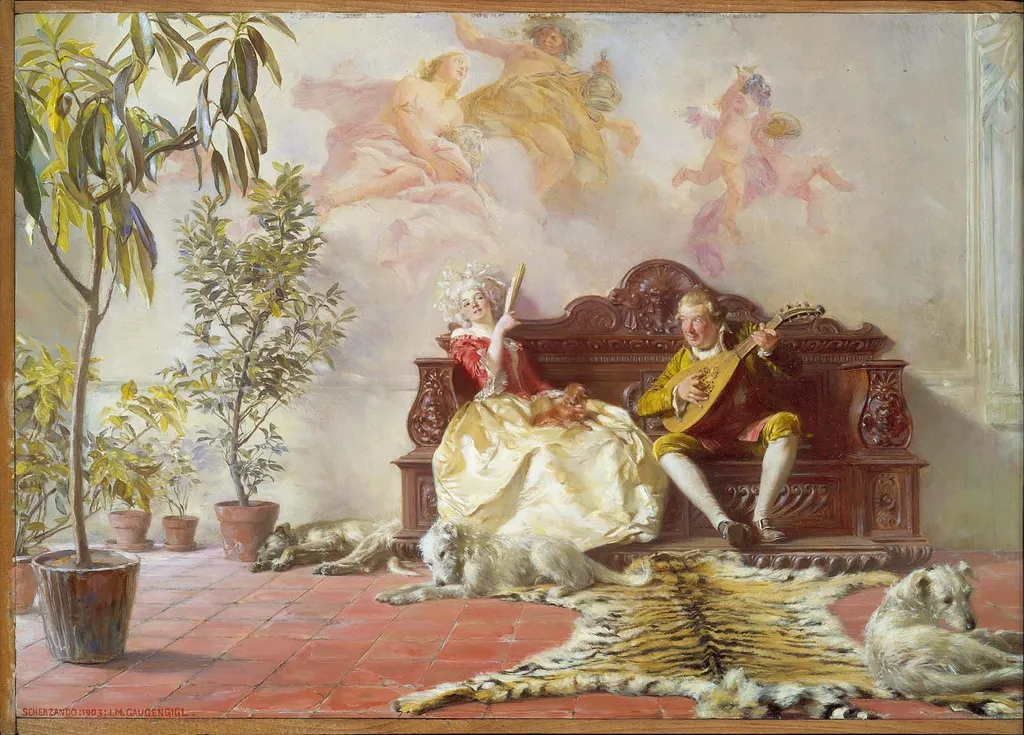
Scherzando is an oil painting by the Post-Impressionist artist Ignaz Gaugengigl. It dates from 1903 and is held in the collection of the Museum of Fine Arts Boston.
About this work
Overview
Scherzando is an oil painting created in 1903 by Ignaz Gaugengigl, a German-American artist recognized for his portraits and historical scenes. The work is part of the post-impressionist movement and is housed in the Museum of Fine Arts, Boston.
Subject & Meaning
The painting depicts a serene 18th-century scene with a man in a yellow suit playing the lute and a woman in a red dress and white skirt observing him with a fan. Accompanying them are two dogs and a tiger skin, set against a backdrop of a cherub-adorned wall, a potted plant, and red-tiled flooring. The composition conveys a sense of leisure and intimacy.
Technique & Style
Gaugengigl employed chiaroscuro to achieve depth and contrast, characteristic of post-impressionist techniques that emphasize light and shadow for emotional and spatial effects.
History & Provenance
Created in 1903, Scherzando is now part of the Museum of Fine Arts, Boston's collection, reflecting the institution's interest in late 19th and early 20th-century European and American art.
Context
While Gaugengigl's work was influenced by historical and portrait traditions, Scherzando's post-impressionist leanings place it within early 20th-century artistic movements that sought to innovate traditional representation.
Legacy
As part of the Museum of Fine Arts, Boston, Scherzando contributes to the understanding of Gaugengigl's contribution to post-impressionism in America, though detailed analysis of its broader impact on the art historical canon is less defined.
Artist & collection
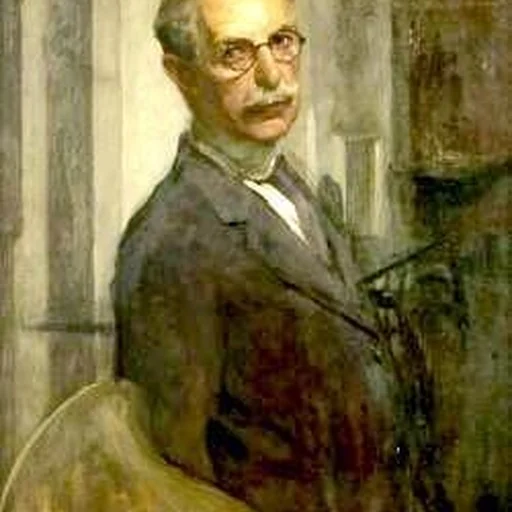
Artist
Ignaz Michael Marcel Gaugengigl (16 January 1855 – 3 August 1932) was a German-American painter and engraver who worked primarily in the United States. He specialized in portraits and historical paintings.

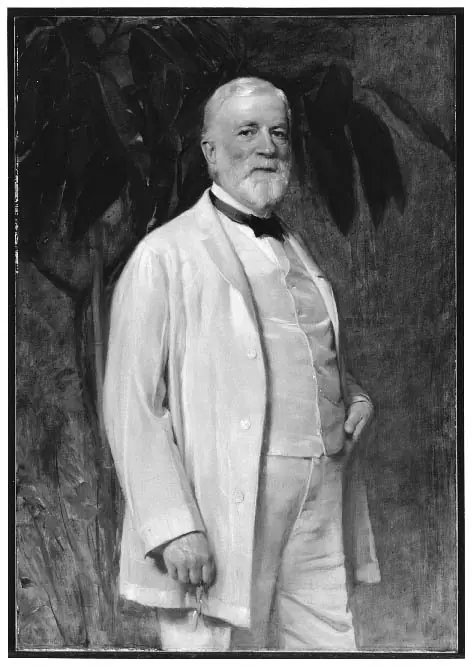
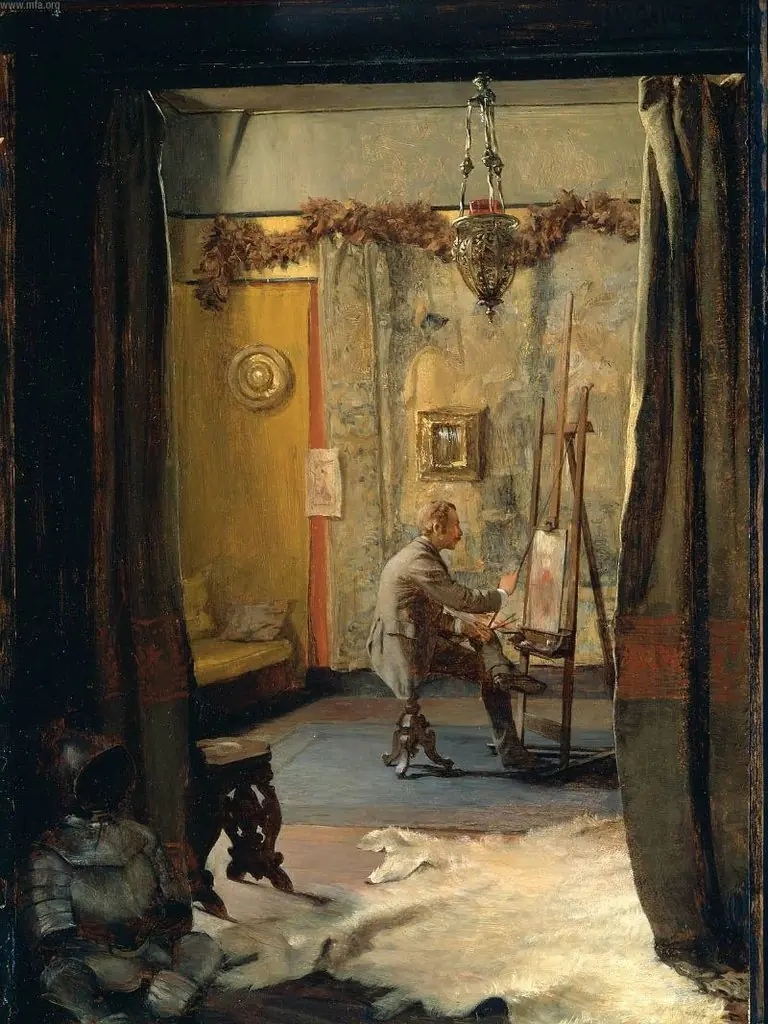
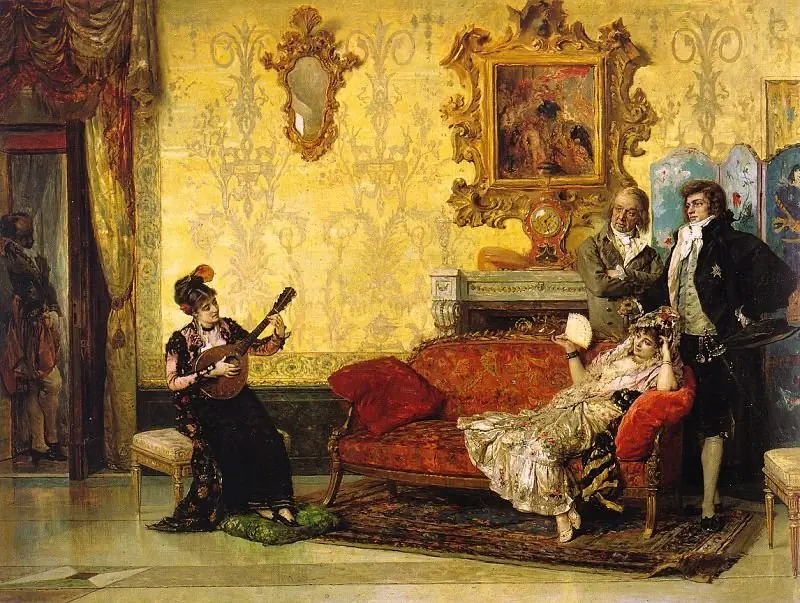 The Concert
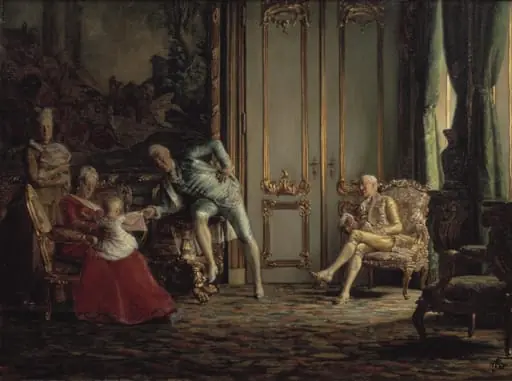 An Interior from the Past Century. Scene from the Court of Christian VII
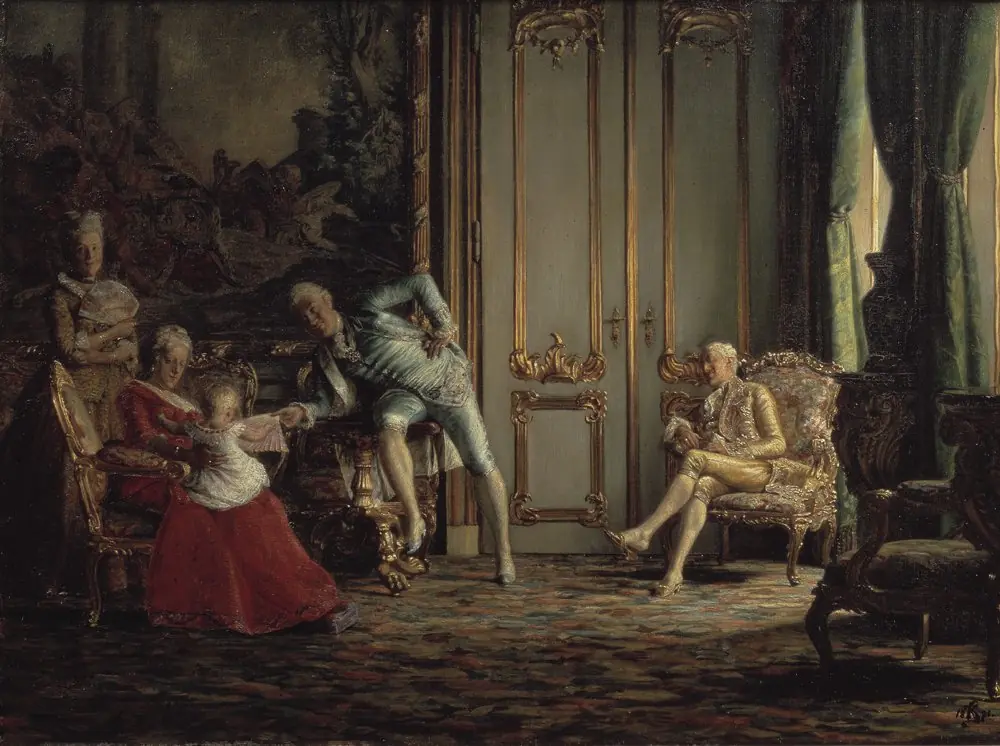 Et interiør fra forrige århundrede
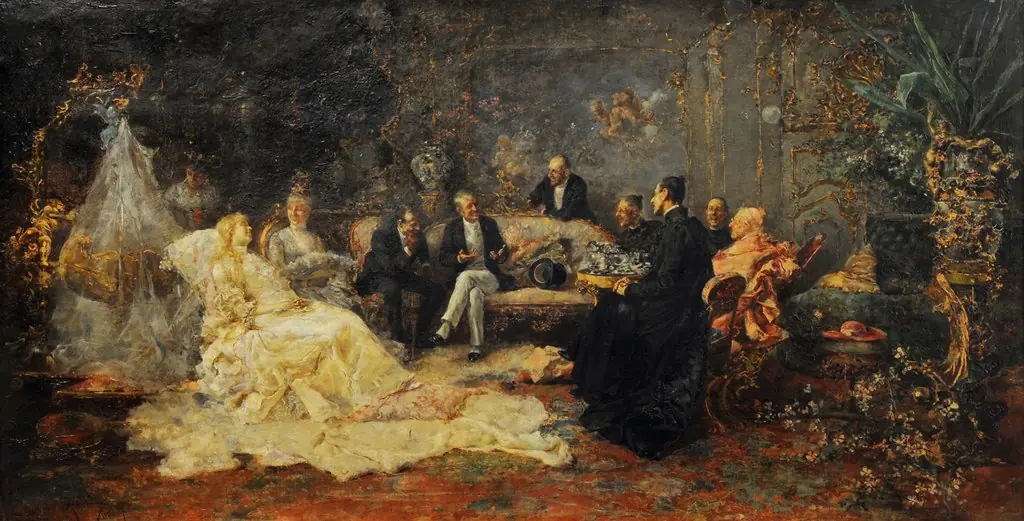 The convalescent
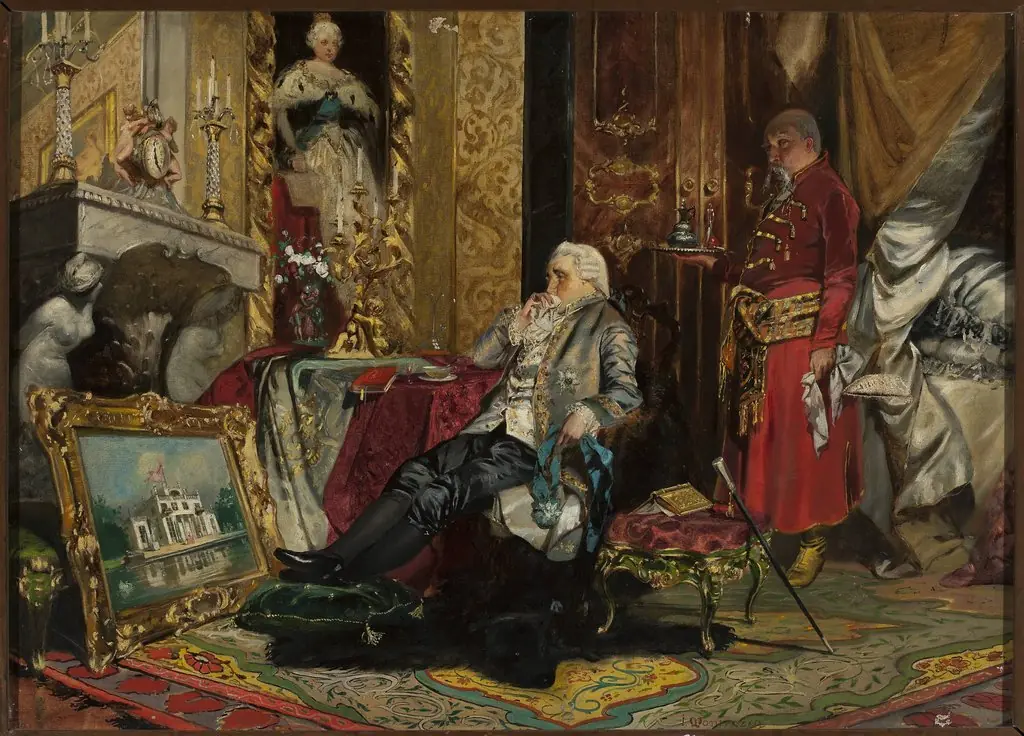 King Stanisław August Poniatowski in Petersburg
 The Venetian Ambassador's Room at Knole, Kent
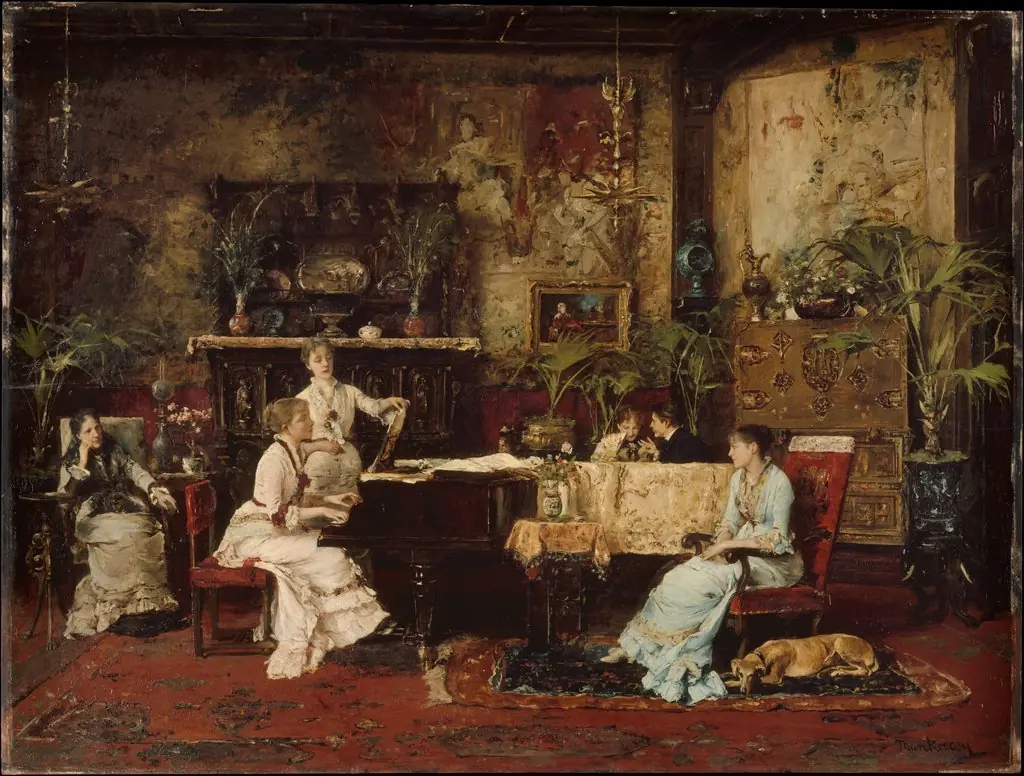 The Music Room
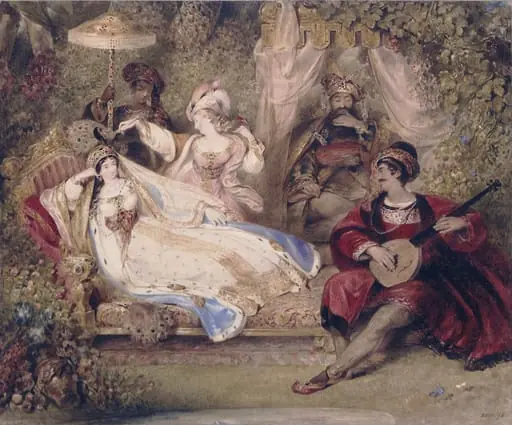 Feramorz relating he story of the Peri
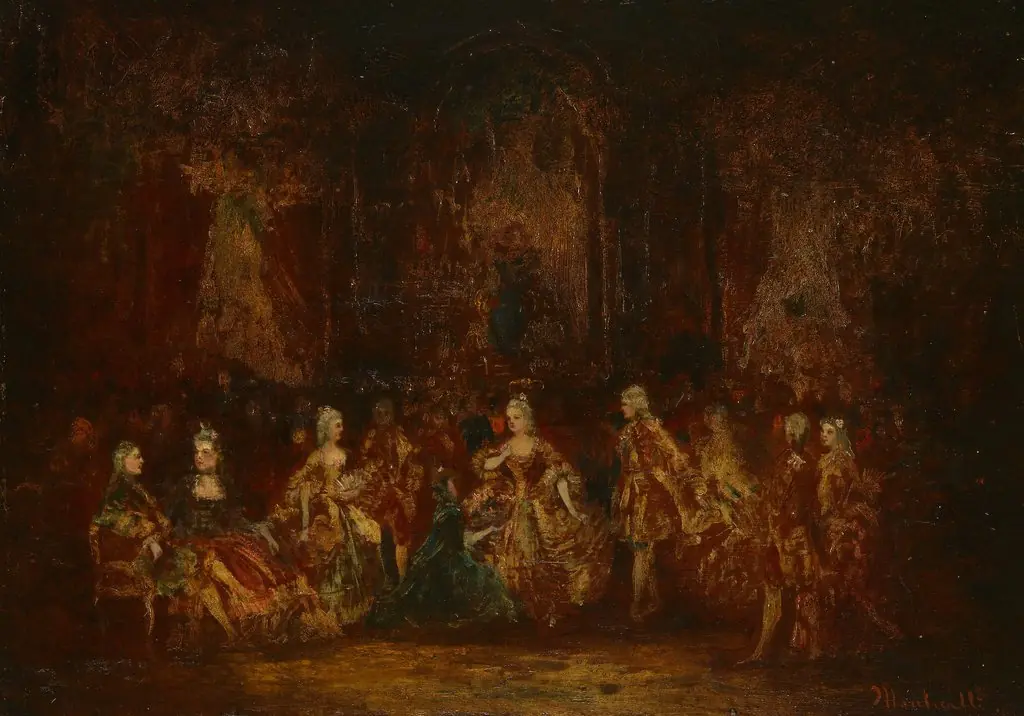 Persons in Louis XV Costumes
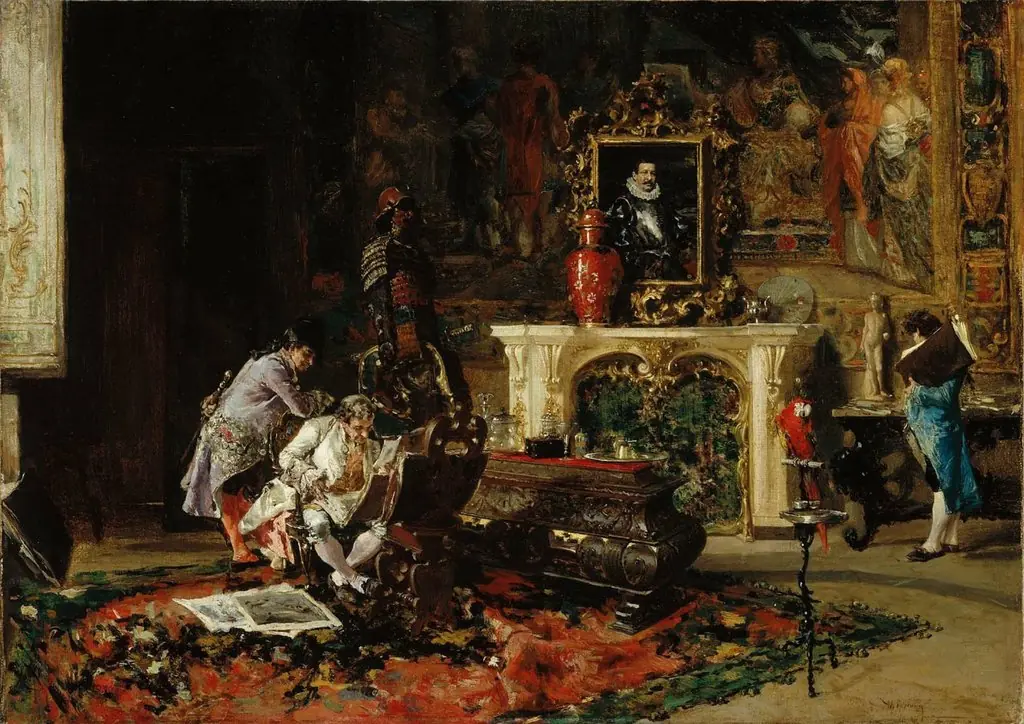 Antiquaries
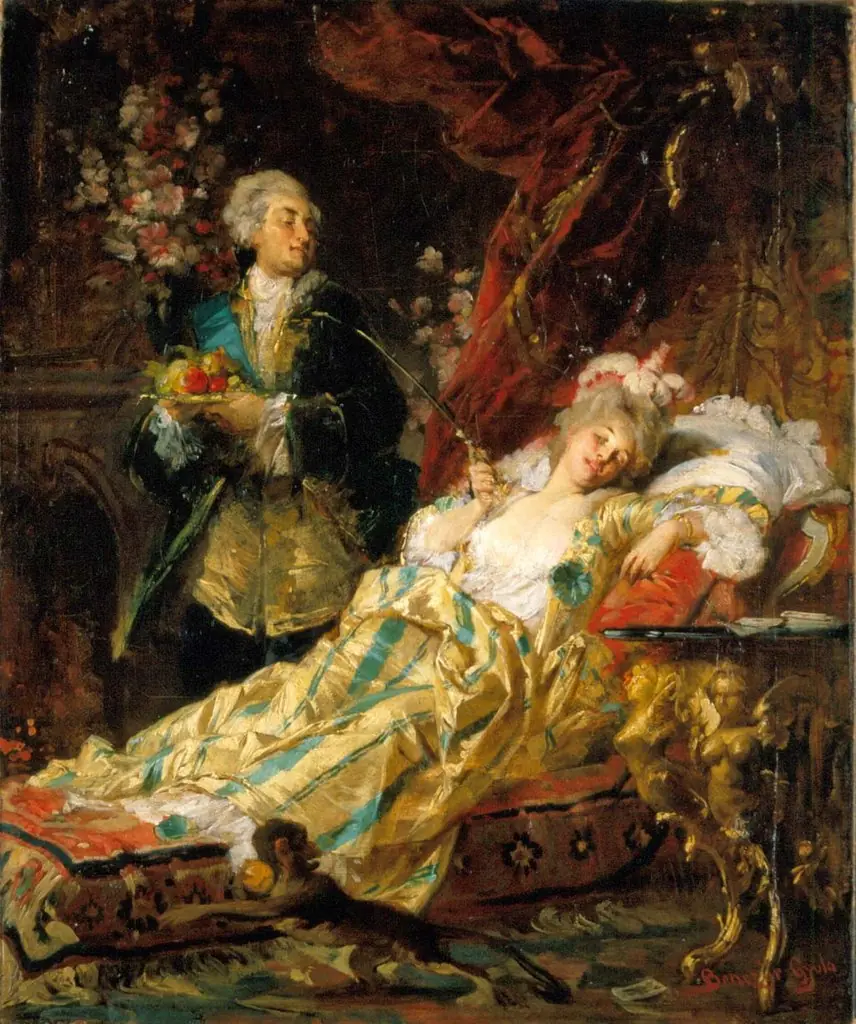 Louis XV and Madame Dubarry
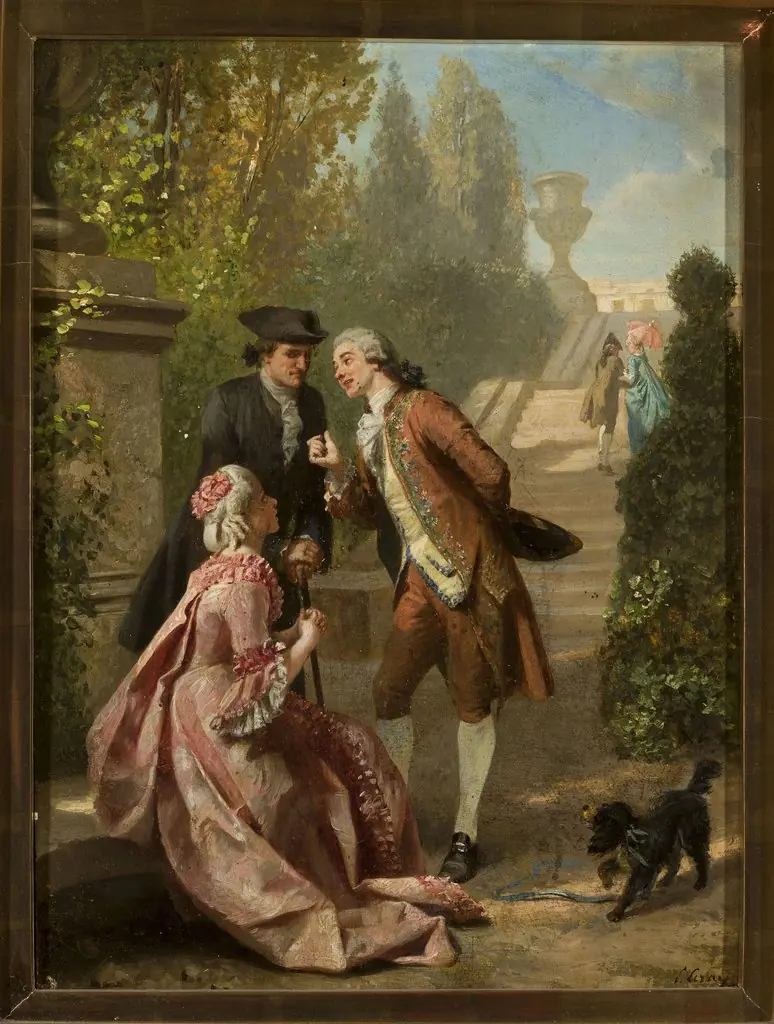 Scene in a park