Artwork
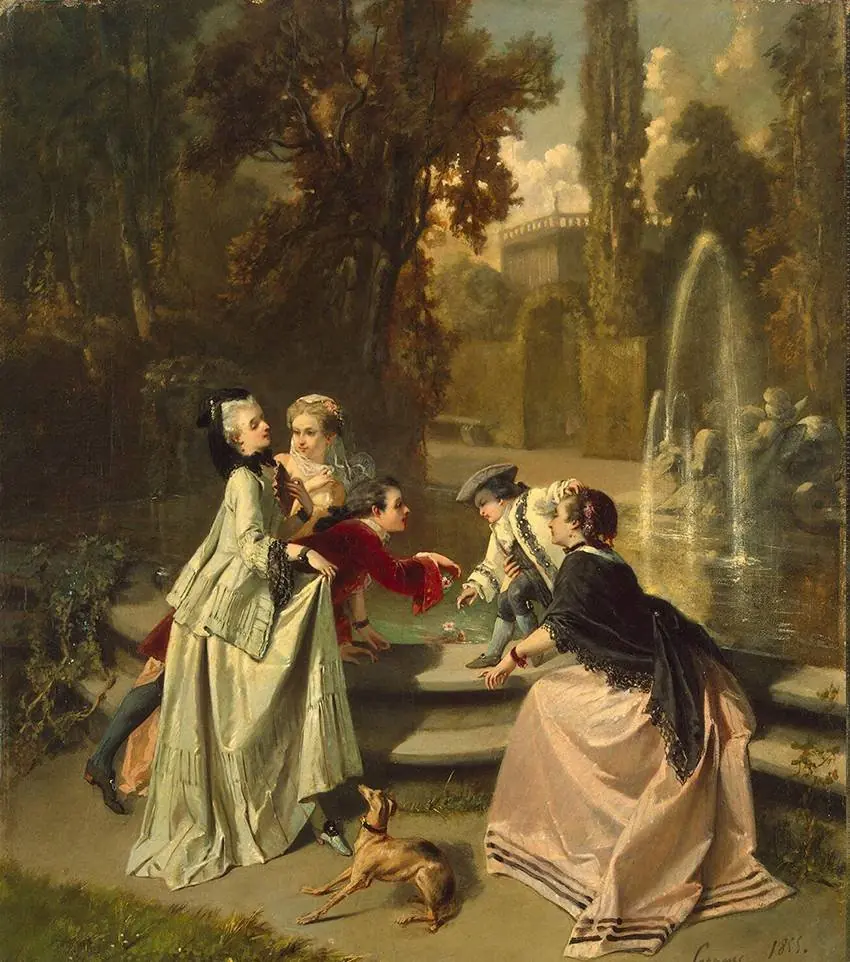
Scene in a park
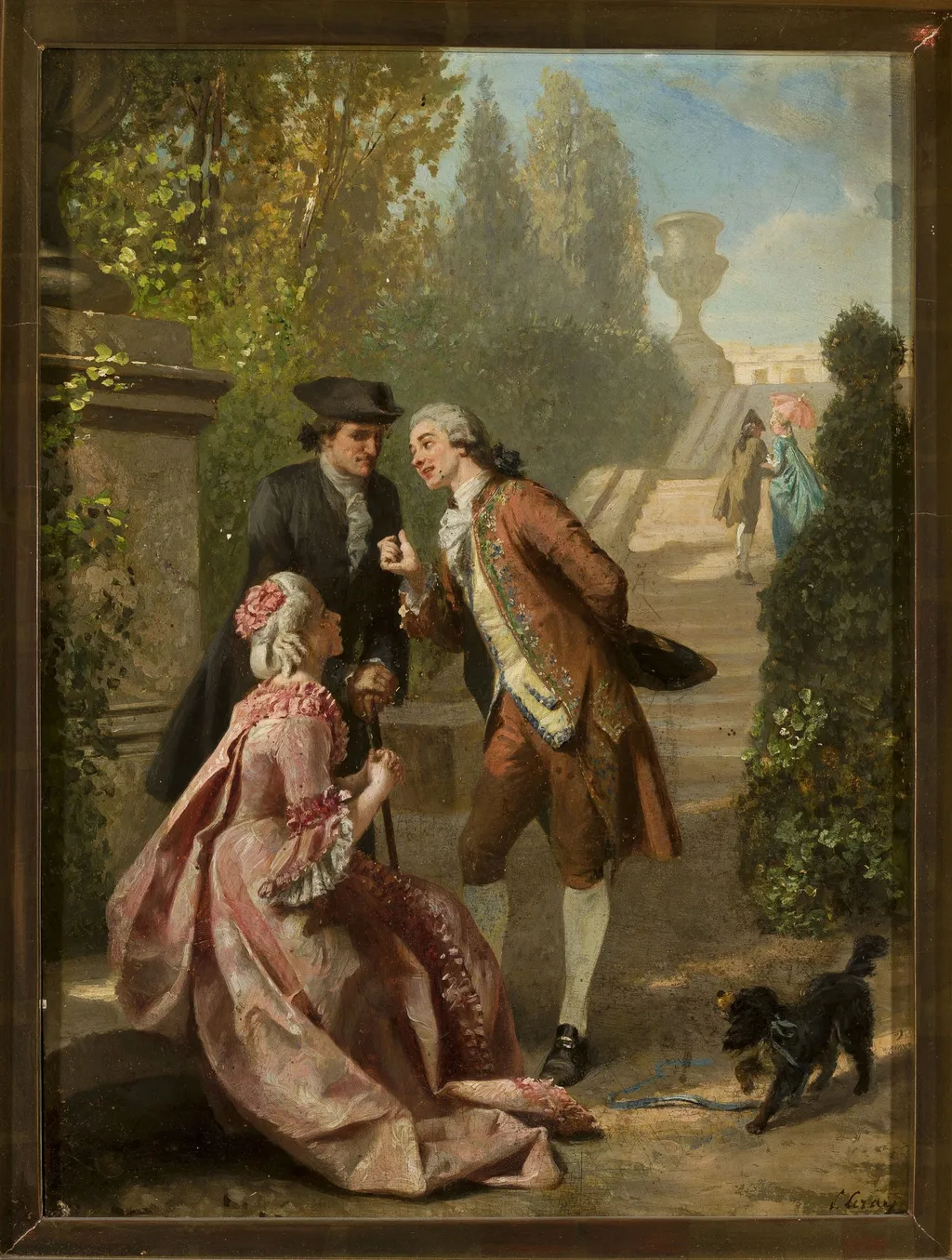
Scene in a park is an oil painting by Prudent Louis Leray. It dates from 1859 and is held in the collection of the National Museum in Warsaw.
About this work
Overview
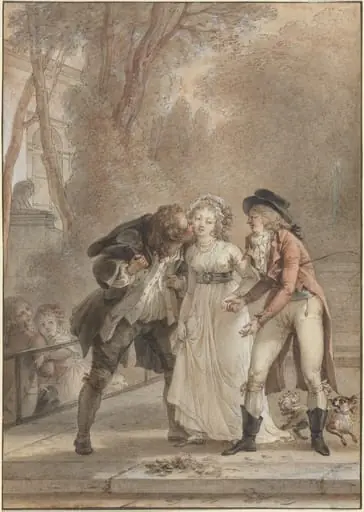
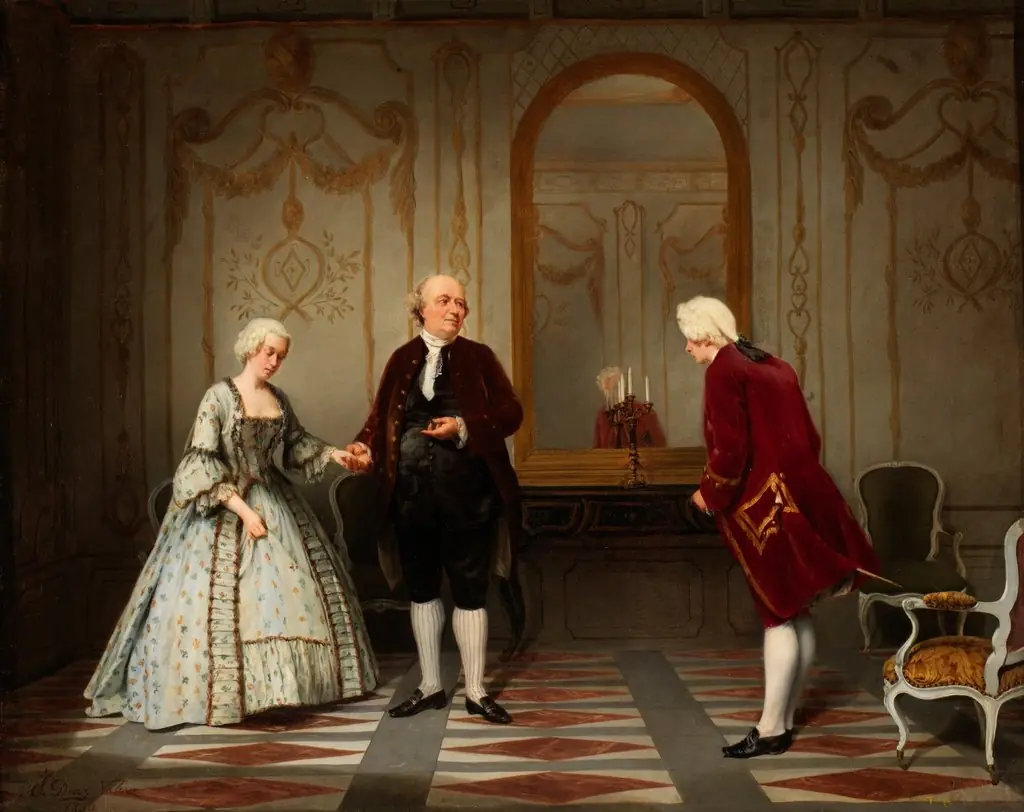
Created around 1859, this oil on canvas by Prudent Louis Leray depicts a leisurely afternoon in a sun‑lit park. The composition centers on a small group of elegantly dressed figures, accompanied by a leashed black dog, set against a backdrop of trees and shrubbery. The work is part of the collection of the National Museum in Warsaw.
Subject & Meaning
The scene captures a moment of social interaction: a man in a brown coat converses with a seated woman in a pink dress, while another gentleman in a black suit and hat watches from behind. The woman's walking stick and the presence of the dog suggest a casual promenade, reflecting mid‑nineteenth‑century leisure practices among the urban middle class.
Technique & Style
The painting’s realistic yet slightly idealized treatment aligns with the academic traditions prevalent in French genre painting of the period.
Leray employs a restrained palette of earth tones and muted pastels, rendering the figures with soft modeling and delicate brushwork. Light filters through the foliage, creating subtle contrasts that illuminate the subjects while preserving atmospheric depth. The painting’s realistic yet slightly idealized treatment aligns with the academic traditions prevalent in French genre painting of the period.
History & Provenance
The work entered the National Museum in Warsaw’s holdings in the early twentieth century, though the exact acquisition details remain undocumented. It has been displayed intermittently in exhibitions focusing on French genre painters and nineteenth‑century European leisure scenes, contributing to the museum’s representation of cross‑national artistic exchange.
Context
During the 1850s, French artists frequently turned to park and garden settings to explore themes of modernity, social etiquette, and the pleasures of urban life. Leray’s composition reflects this trend, situating his figures within a cultivated natural environment that underscores the period’s fascination with public spaces as sites of genteel recreation.
Artist & collection