Artwork
Under the Flowers (Sous les Fleurs)
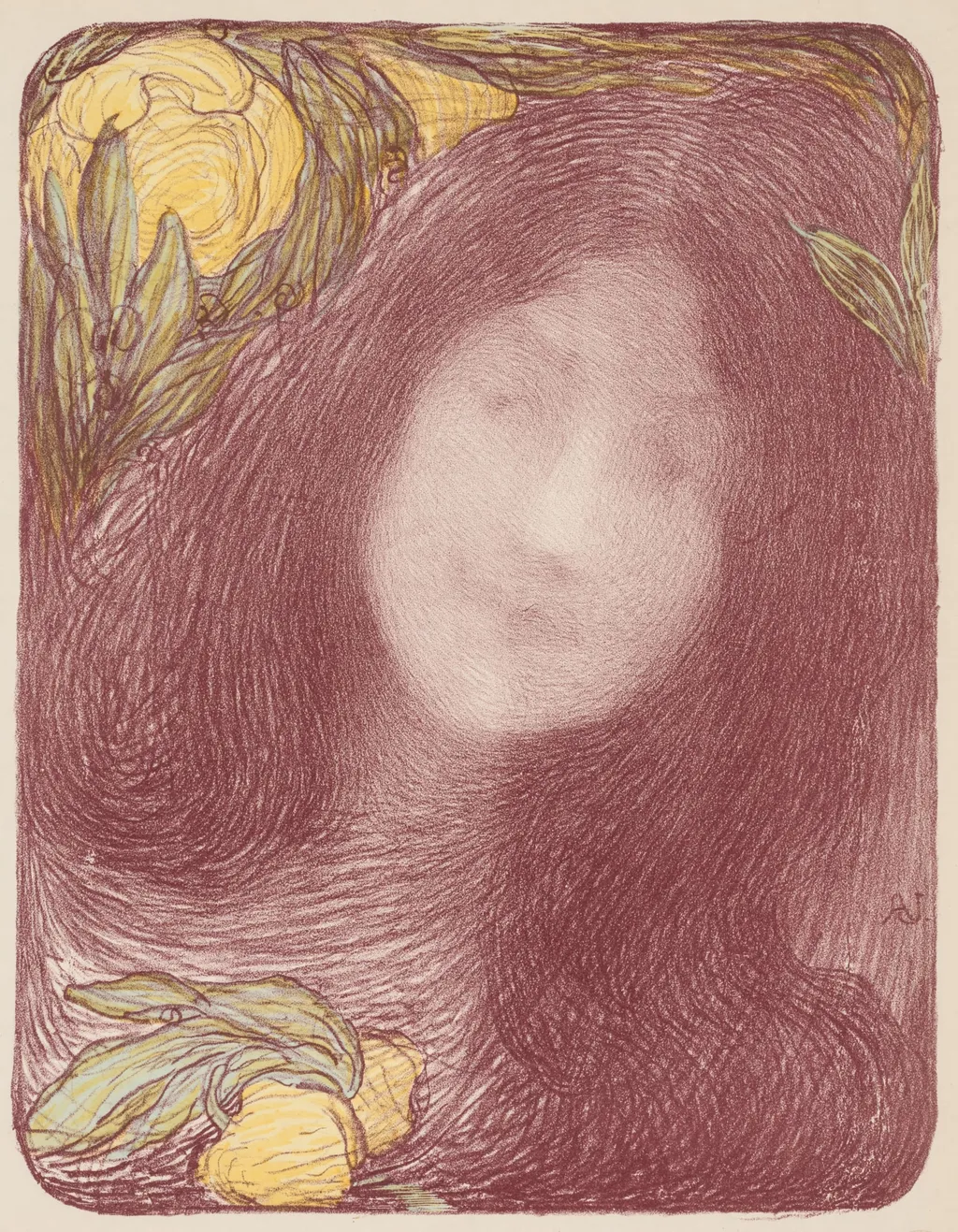
Under the Flowers (Sous les Fleurs) is a print by the Impressionist artist Imprimerie Champenois. It dates from 1897 and is held in the collection of the Cleveland Museum of Art.
About this work
Overview
Created in 1897 by Imprimerie Champenois, this print is part of a series of decorative lithographs produced for commercial distribution.
Created in 1897 by Imprimerie Champenois, this print is part of a series of decorative lithographs produced for commercial distribution. It depicts a female face partially obscured by an abundance of flowering stems, rendered in a stylized manner that blends natural observation with graphic simplification. The work was intended for domestic decoration, reflecting late 19th-century tastes in illustrated prints.
Subject & Meaning
The image presents a woman’s face emerging from a dense mass of blossoms, her features softened and partially concealed. The flowers do not merely frame her but seem to envelop her, suggesting a tension between visibility and concealment. This ambiguity invites interpretation—whether as a metaphor for femininity, nature’s dominance, or the fragility of identity—without asserting a fixed narrative.
Technique & Style
The print employs lithographic techniques to achieve bold, flat areas of color with subtle tonal transitions. Yellow petals are rendered with thick, confident lines, while the hair and face use softer gradients to suggest volume. The contrast between the sharp botanical forms and the blurred facial features creates a visual rhythm that leans toward decorative art rather than strict realism, echoing contemporary trends in poster design.
History & Provenance
Produced by Imprimerie Champenois, a prominent French printer known for commercial lithographs, the work was likely distributed as a wall decoration in middle-class homes. It entered the collection of The Cleveland Museum of Art in the 20th century, where it is preserved as an example of fin-de-siècle graphic design rather than fine art. Its origin as a mass-produced item distinguishes it from unique artistic prints.
Context
Emerging during a period when floral motifs dominated interior decoration, the print reflects the era’s fascination with nature as both ornament and emotional symbol. While influenced by Impressionist color use and loose brushwork, it adapts these elements for reproducibility. Similar designs appeared in magazines and advertisements, blurring boundaries between art, commerce, and domestic aesthetics.
Legacy
Though not attributed to a single artist, the print remains a representative artifact of late 19th-century commercial art. It illustrates how artistic styles were adapted for mass consumption, influencing later graphic design. Its preservation in a major museum underscores its value as a cultural document, offering insight into the visual language of everyday life at the turn of the century.
Artist & collection
Artist
French printmakers at the end of the 1800s used flat colors and bold outlines to make posters and illustrations pop.

 Untitled
 Young Woman with Long Hair
 Girl with Long Hair
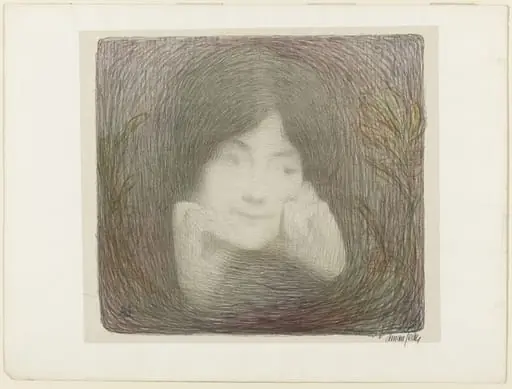 Untitled
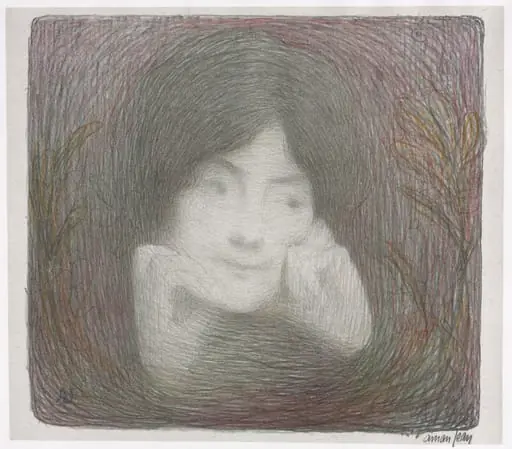 L'Album d'estampes de la Galerie Vollard: Mlle. Mornéo de la Comédie-Française
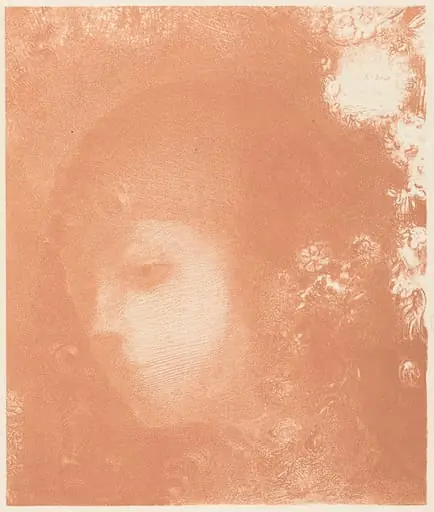 Tete d'Enfant avec Fleurs (Head of a Child with Flowers)
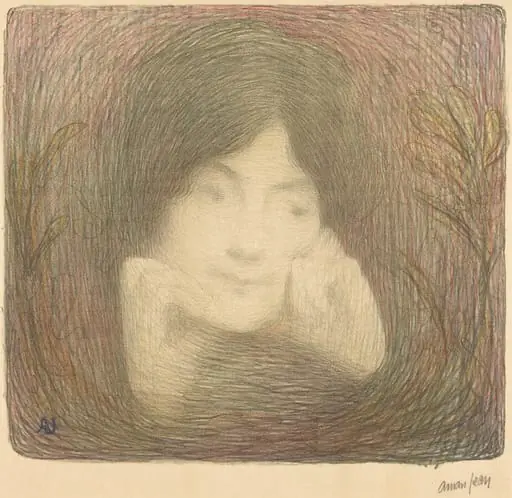 Mlle Moréno de la Comédie-Française
 An Irish Girl or Annie
 Intimité (Privacy)
 La Rieuse: Madame Albert Besnard