Artwork
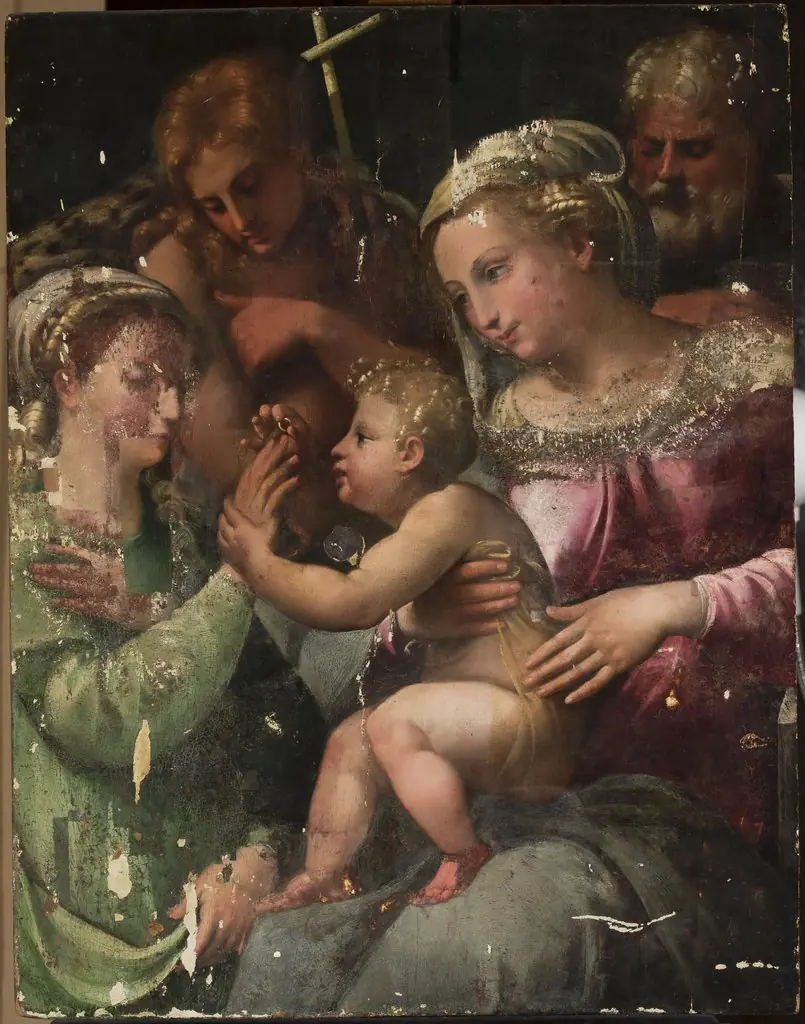
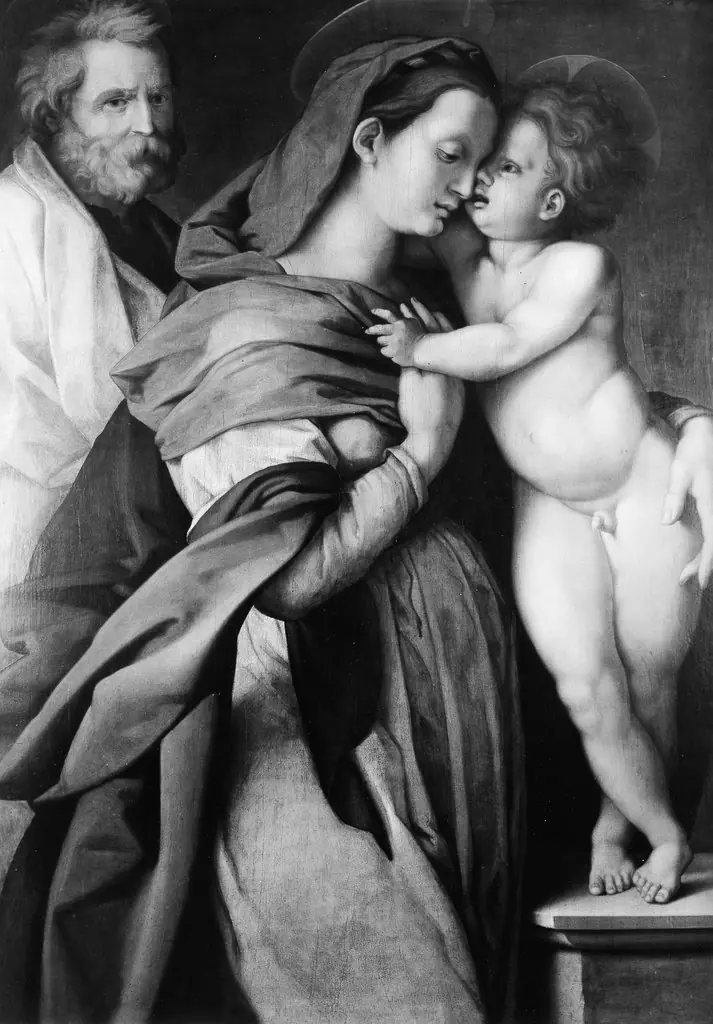
The Holy Family and St John
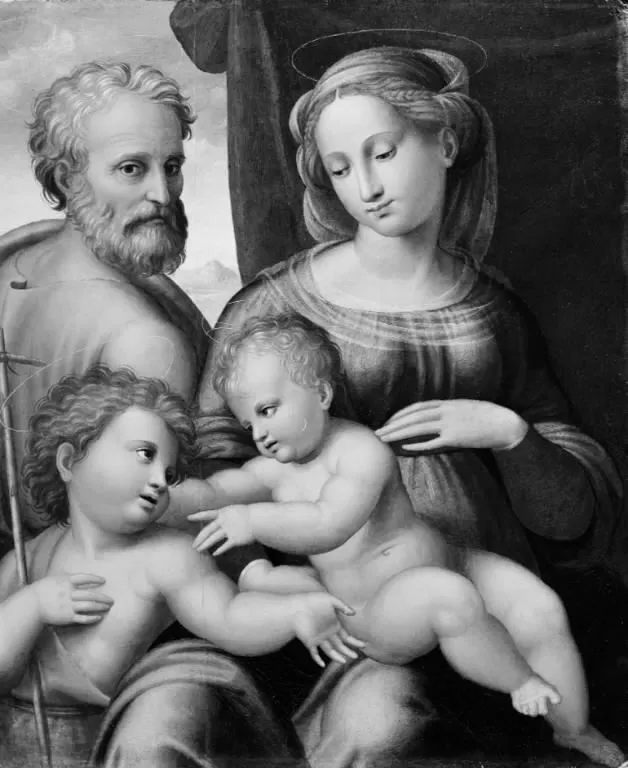
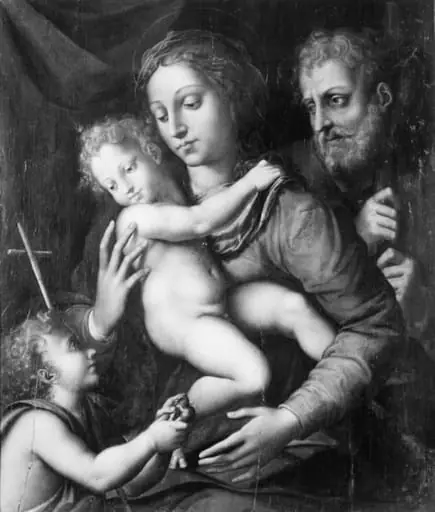
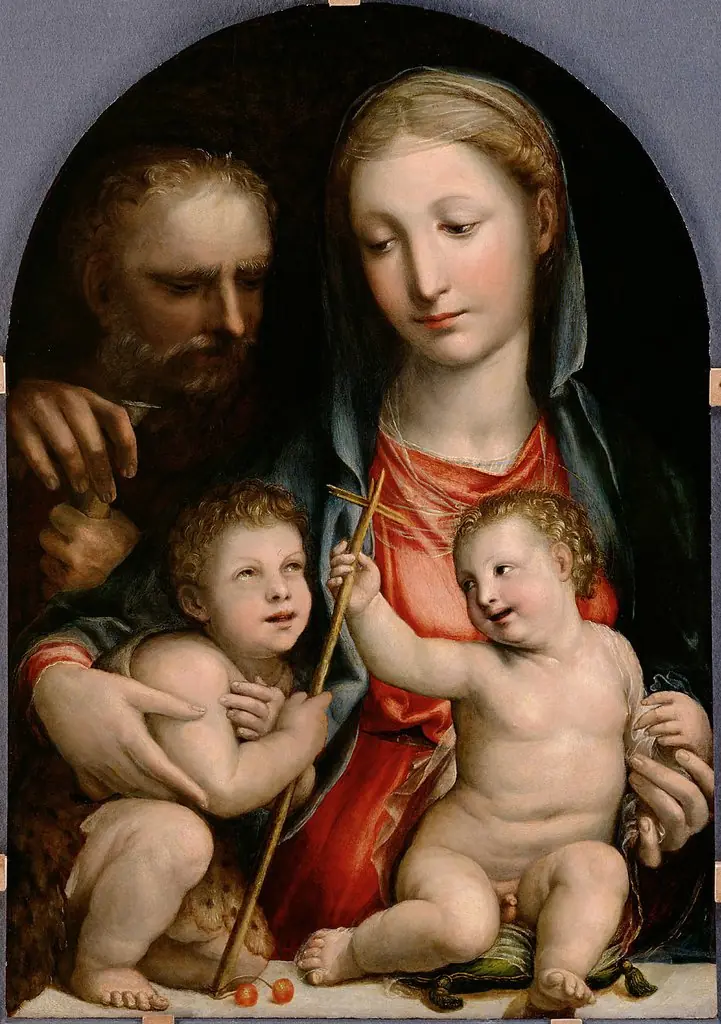
The Holy Family and St John is an unspecified painting by the Mannerist artist Innocenzo di Pietro Francucci da Imola. It dates from 1529 and is held in the collection of the Statens Museum for Kunst.
About this work
Overview
Innocenzo da Imola’s 1529 oil painting *The Holy Family and St John* presents a compact grouping of the Virgin Mary, infant Christ, Saint Joseph, and a youthful Saint John the Baptist. Rendered in the subdued lighting typical of early Mannerist religious works, the composition draws the viewer’s focus to the intimate interaction of the four figures, which are set against an unadorned background.
Subject & Meaning
The central figure of the Virgin cradling the infant Jesus is flanked by Joseph, identifiable by his white beard and staff, and the child John, whose outstretched hand reaches toward Mary. The halos above Mary and the infant, together with the modest setting, underscore the sacred nature of the scene while emphasizing familial tenderness and the prophetic link between Christ and John.
Technique & Style
Da Imola employs a restrained chiaroscuro, allowing soft shadows to model the faces and suggest volume without dramatic contrast. The muted palette and careful handling of light create a calm atmosphere, while the elongated proportions and slightly artificial spatial arrangement reflect the stylistic experimentation characteristic of mid‑16th‑century Mannerism.
History & Provenance
Created in 1529, the work remained in Italy before entering the collection of Denmark’s Statens Museum for Kunst, where it is currently displayed. Its acquisition reflects the museum’s broader effort to represent Italian Mannerist painting within its European holdings.
Context
Innocenzo da Imola, active in Bologna during the early to mid‑1500s, worked within a tradition that blended the High Renaissance’s balanced composition with the emerging Mannerist tendency toward complexity and elegance. This painting exemplifies his synthesis of devotional content with the period’s evolving visual language.
Artist & collection
Artist
Innocenzo di Pietro Francucci da Imola
Innocenzo (di Pietro) Francucci (c. 1490 – c. 1550), generally known as Innocenzo da Imola, was an Italian painter and draftsman.