Artwork
Peisaj
Peisaj is a print by Doru Ionescu. It dates from 1938 and is held in the collection of the National Museum of Art of Romania.
About this work
Overview
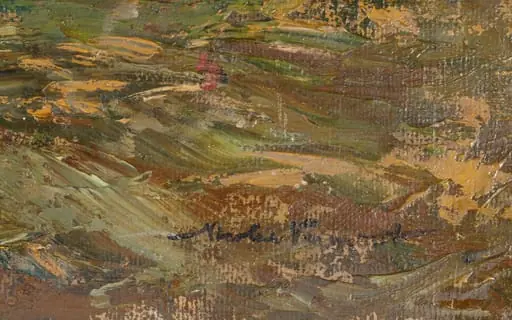
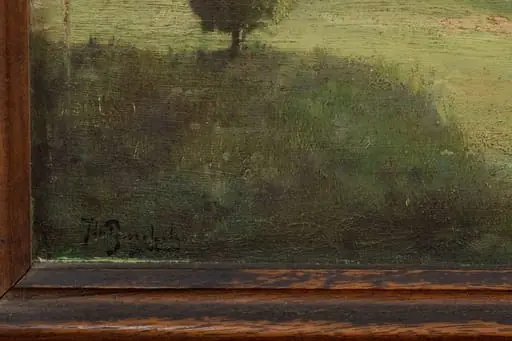
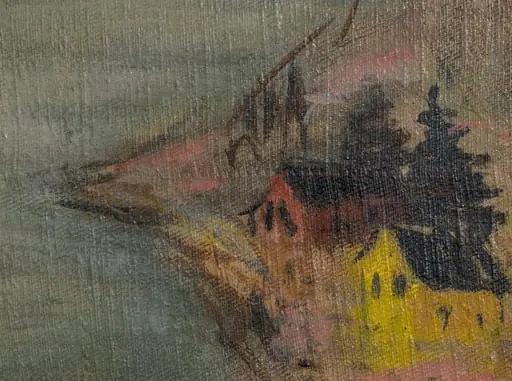
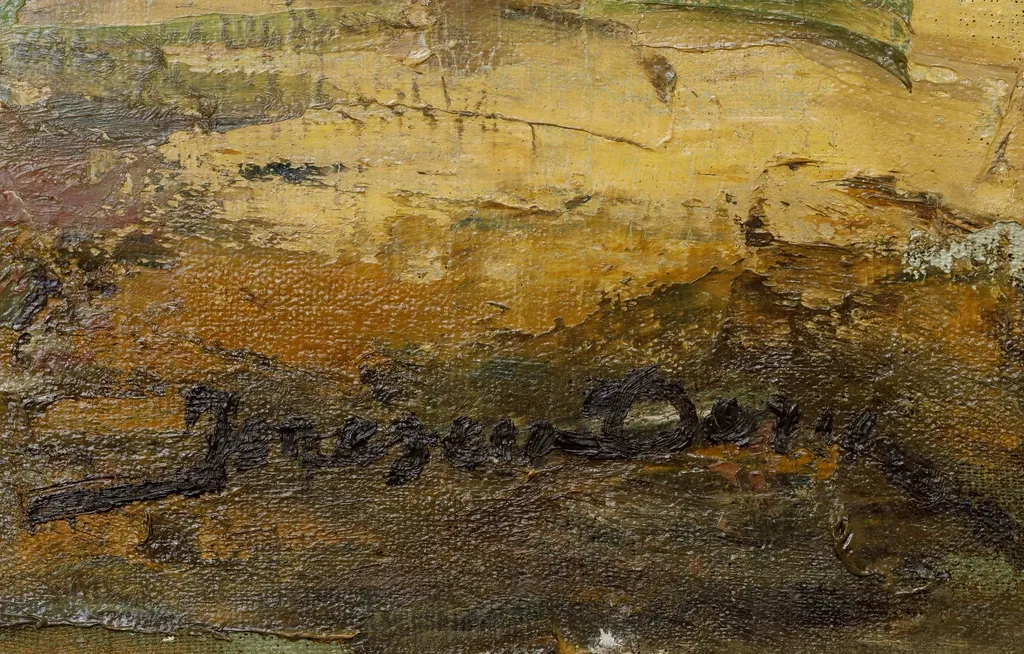
Peisaj, dated around 1938, is a small-scale oil painting by Romanian artist Doru Ionescu. It presents a fragmented, non-narrative landscape rendered with aggressive physicality. The surface is built through layered, unblended strokes that resist conventional representation, prioritizing material presence over pictorial clarity.
Subject & Meaning
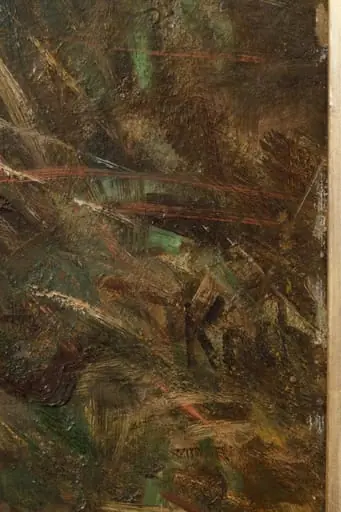
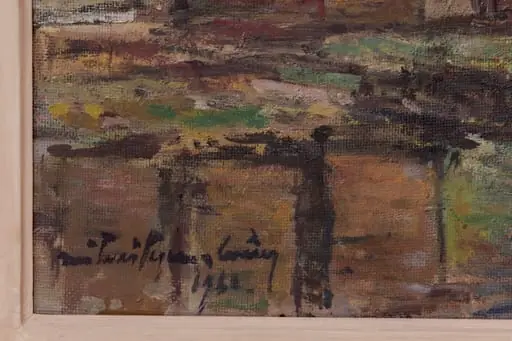
The painting avoids clear topographical detail, suggesting only the suggestion of landforms or vegetation through dark, angular smears at the lower edge. No identifiable structures or figures appear. The work’s meaning lies in its evocation of terrain as a tactile, almost geological entity—more about the weight of earth than its appearance.
Technique & Style
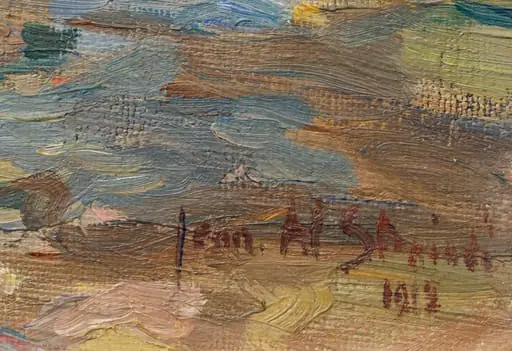
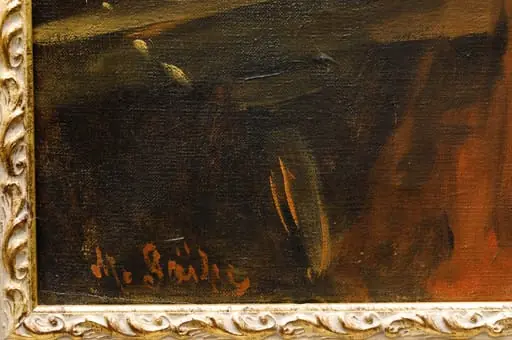
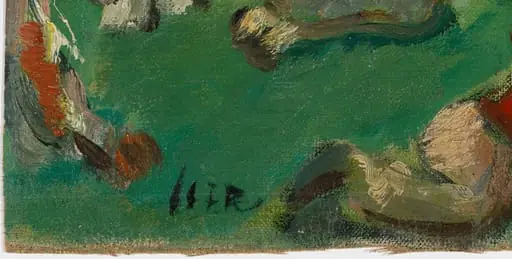
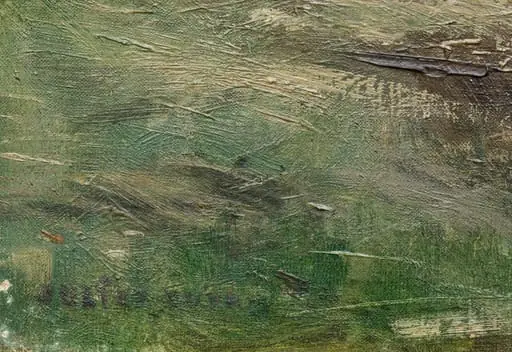
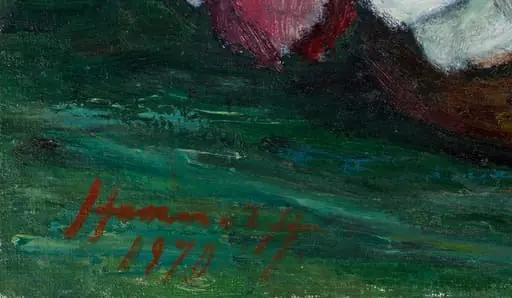
Ionescu applied paint thickly and irregularly, using a palette knife or stiff brush to build ridges and fissures. Colors are muted: ochres, burnt umber, and charcoal gray dominate. The surface alternates between granular roughness and abrupt, knife-cut edges, creating a tension between chaos and control typical of early 20th-century expressive realism.
History & Provenance
The painting’s early ownership history is undocumented. It remained in private Romanian collections until the late 20th century, with no record of public exhibition prior to the 1990s. Its survival through political upheavals in Romania suggests it was preserved as a personal rather than public artifact.
Context
Created during a period of rising nationalism in Romania, Peisaj diverges from official artistic mandates favoring idealized rural scenes. Its raw, unpolished aesthetic aligns more closely with Central European Expressionist tendencies than with state-sanctioned realism, reflecting an individual response to landscape amid cultural tension.
Legacy
Peisaj is not widely reproduced or studied, but it exemplifies a quiet strain of Romanian modernism that valued material experimentation over narrative. Its influence is indirect, seen in later Romanian artists who embraced texture and emotional immediacy over academic precision.
Artist & collection
Artist
Doru Ionescu made prints of quiet landscapes. His only work in this set is Peisaj, a print that shows a stretch of trees and open sky. Without more facts, it’s hard to place him in a specific tradition, but the piece…