Artwork
William Hogarth's Business Card
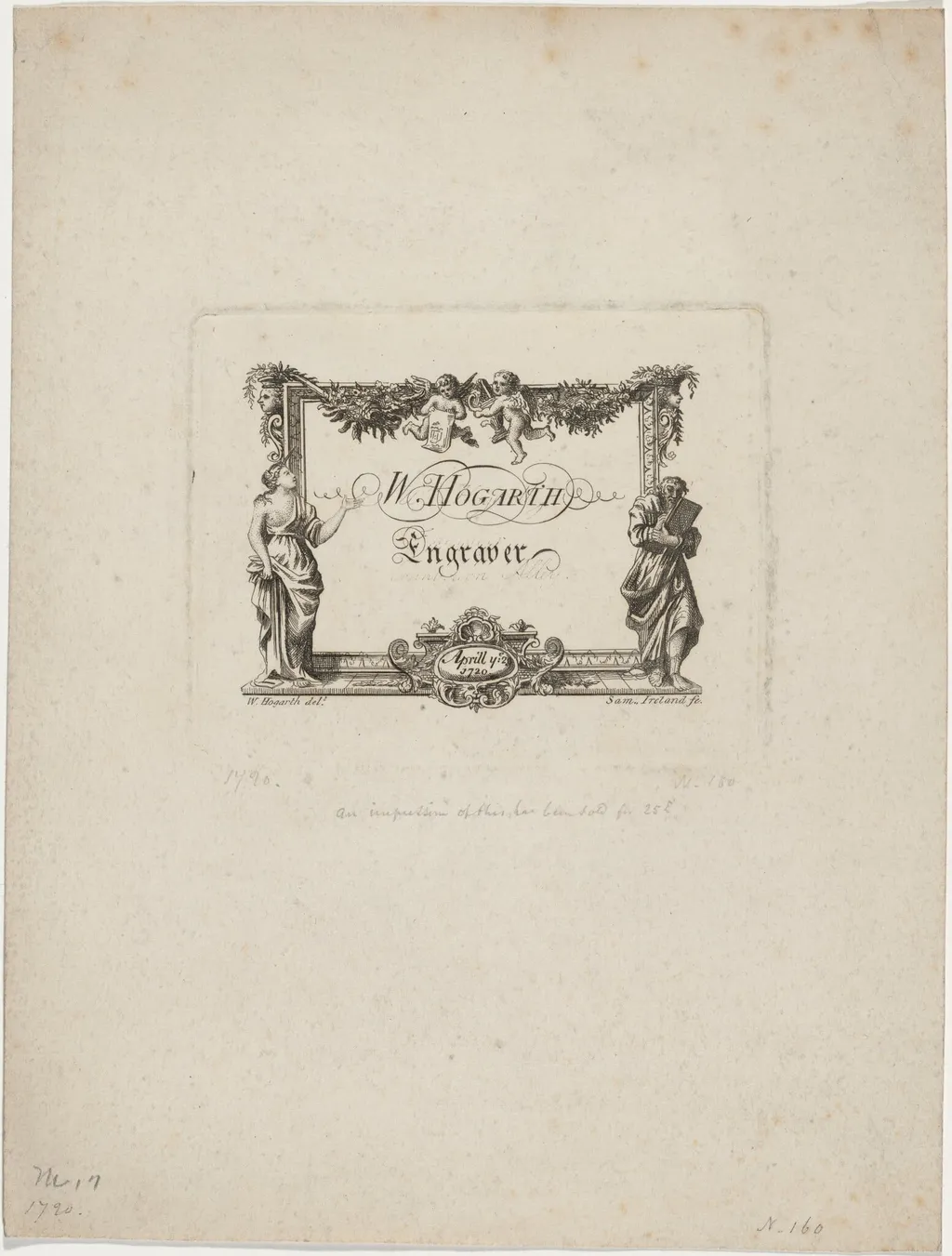
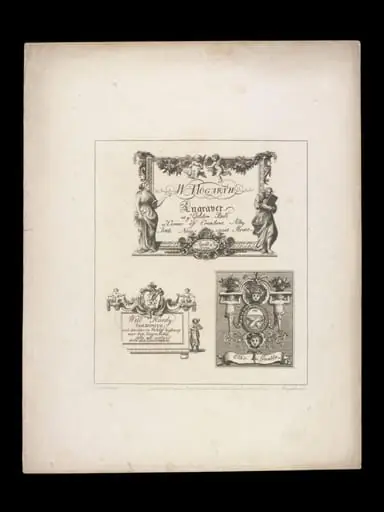
William Hogarth's Business Card is an ink print by the Baroque artist Samuel Ireland. It dates from 1760 and is held in the collection of the National Gallery of Art. An engraved print from around 1760, this piece functions as a professional identifier for William Hogarth.
About this work
Overview
An engraved print from around 1760, this piece functions as a professional identifier for William Hogarth. Designed to be reproduced and distributed, it presents his trade as an engraver through a stylized frame. Unlike a personal calling card, it carries the visual language of heraldry and classical ornament, signaling both craftsmanship and status within the print trade.
Subject & Meaning
The composition blends personal identity with institutional authority, positioning Hogarth not merely as a craftsman but as a figure of cultural standing.
Two sculpted figures, resembling classical statuary, support a decorative border enclosing Hogarth’s name and title. Above, cherubs and a wreath suggest artistic inspiration, while below, a coat of arms and scrollwork imply legitimacy and lineage. The composition blends personal identity with institutional authority, positioning Hogarth not merely as a craftsman but as a figure of cultural standing.
Technique & Style
Executed in fine-line engraving, the design relies on precise incisions to render delicate textures—feathers of cherubs, folds of drapery, and intricate scrollwork. The composition is symmetrical and densely detailed, reflecting the conventions of 18th-century commercial printing. The style merges decorative elegance with functional clarity, tailored for reproduction and wide circulation.
History & Provenance
Though often attributed to Hogarth himself, the print was actually engraved by Samuel Ireland in 1760, likely under Hogarth’s direction. It was produced as a reusable template for promoting his services. Surviving examples are rare, suggesting limited initial distribution. Its existence confirms the early use of visual branding by artists seeking to market their professional identity.
Context
In mid-18th-century London, artists increasingly relied on printed materials to attract patrons. Hogarth’s card reflects a broader trend of self-promotion among printmakers, who competed for commissions in a growing commercial art market. The use of classical motifs aligned with Enlightenment ideals of refinement, helping artists distinguish themselves as serious professionals rather than mere tradesmen.
Legacy
This print stands as an early example of an artist using graphic design to define their professional persona. It prefigures modern branding practices in the arts, demonstrating how visual symbols could communicate expertise and prestige. Though not widely known today, it remains a significant artifact in the history of artistic self-representation and print culture.
Artist & collection

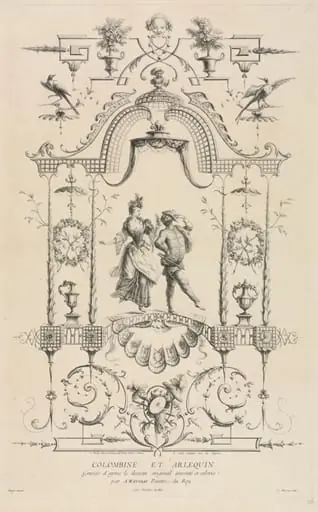 Columbine and Harlequin
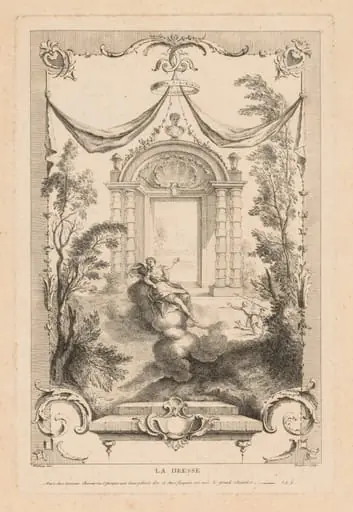 The Goddess, Diana on the Clouds
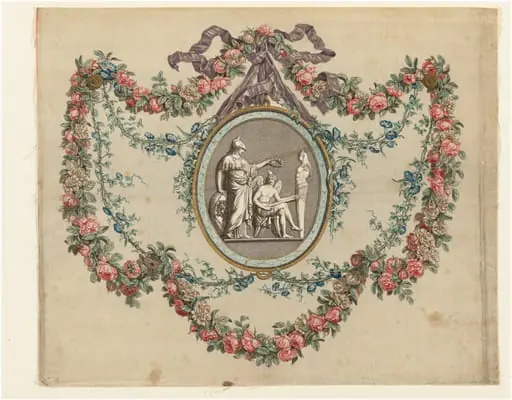 Minerva Crowning the Genius of Fine Arts
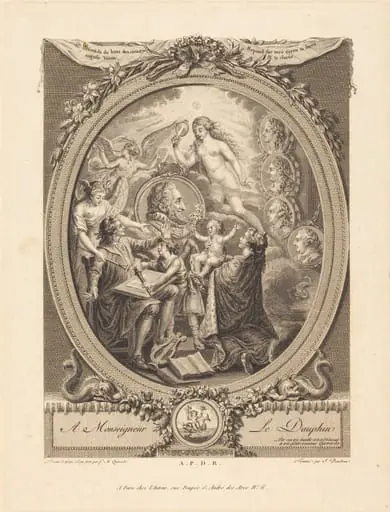 Allegory in Honor of Henri IV
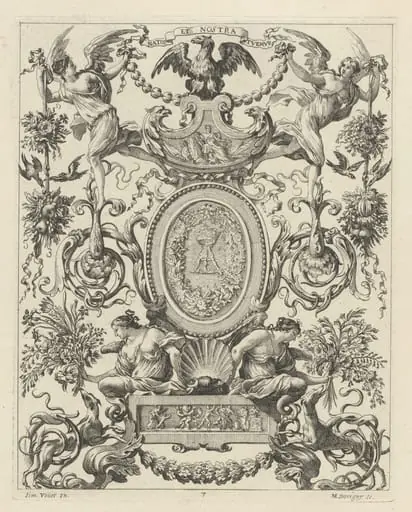 Ornamental Panel Surmounted by an Eagle and the Motto NATOS ET NOSTRA TUEMUR
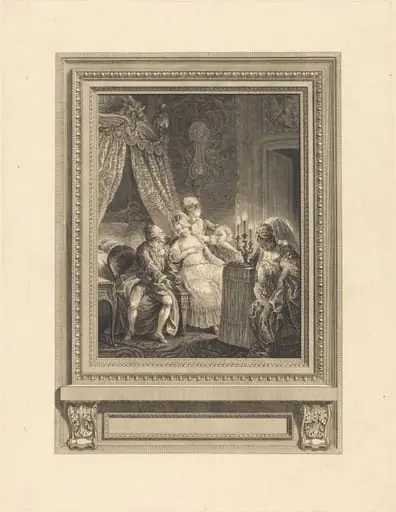 La nuit
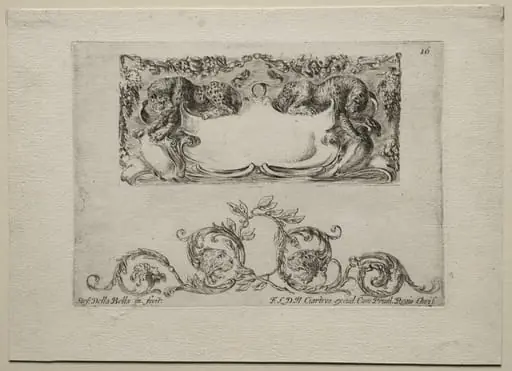 Collection of Various Caprices and New Designs of Cartouches and Ornaments: No 16
 Seated Woman Embroidering
 Architectural Motif with a Landscape
 Le jour
 H Beard Print Collection
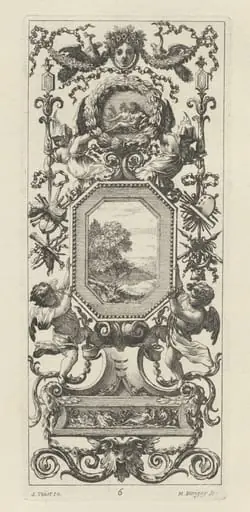 Ornamental Panel Surmounted by the Crowned Head of a Woman and Two Peacocks