Artwork
Peasant Wedding
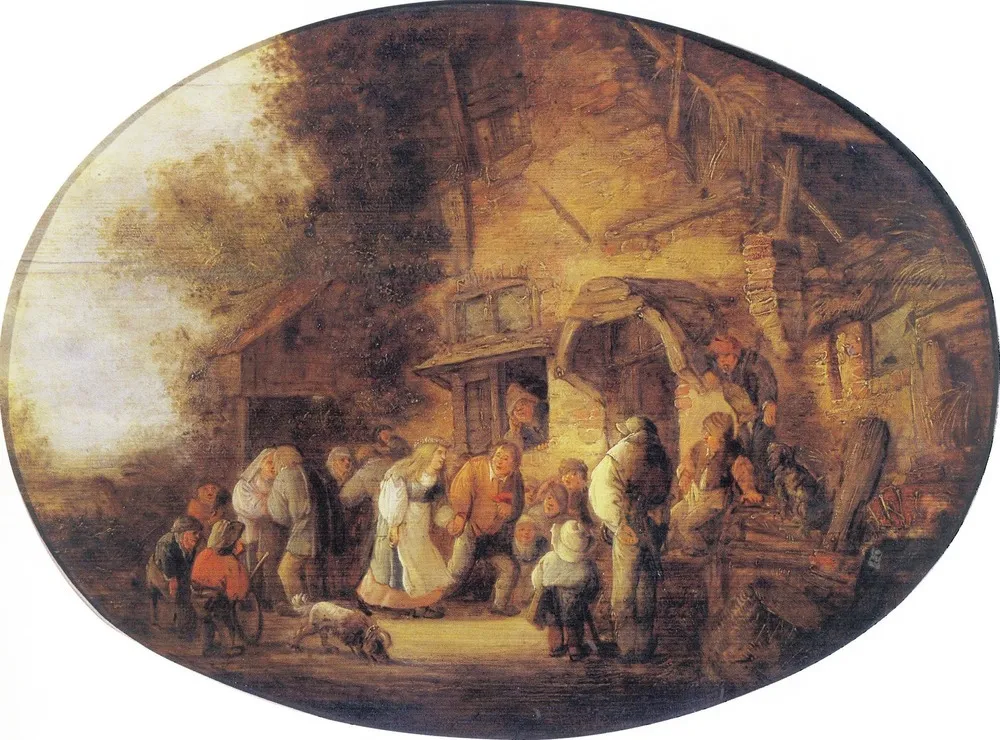
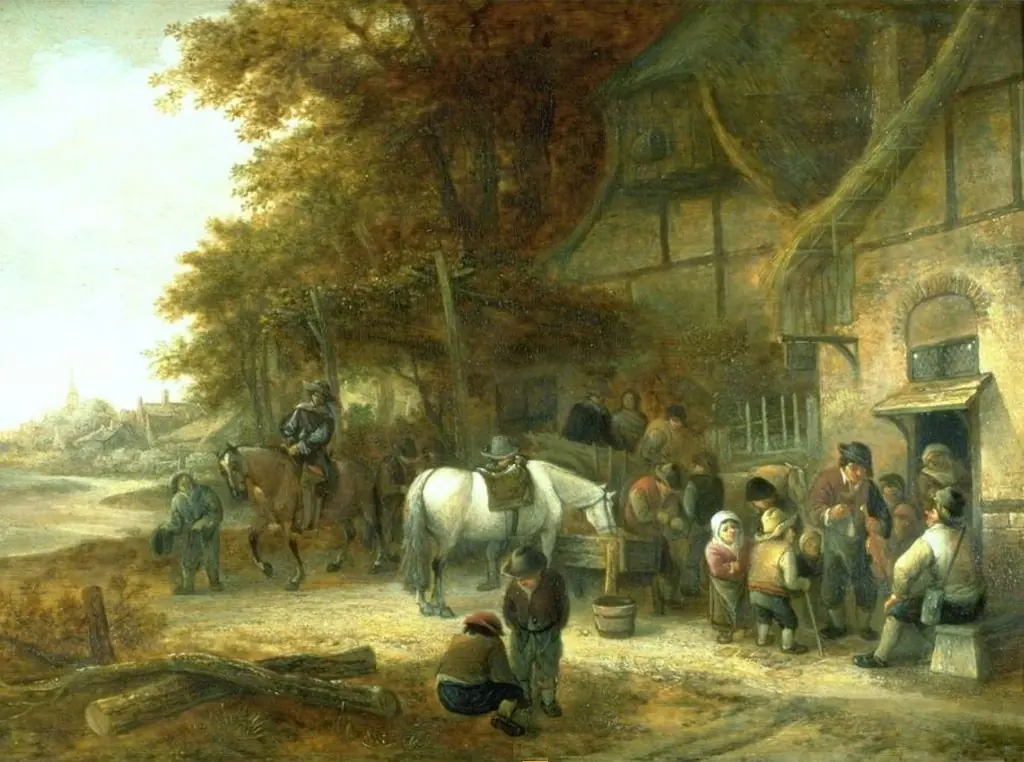
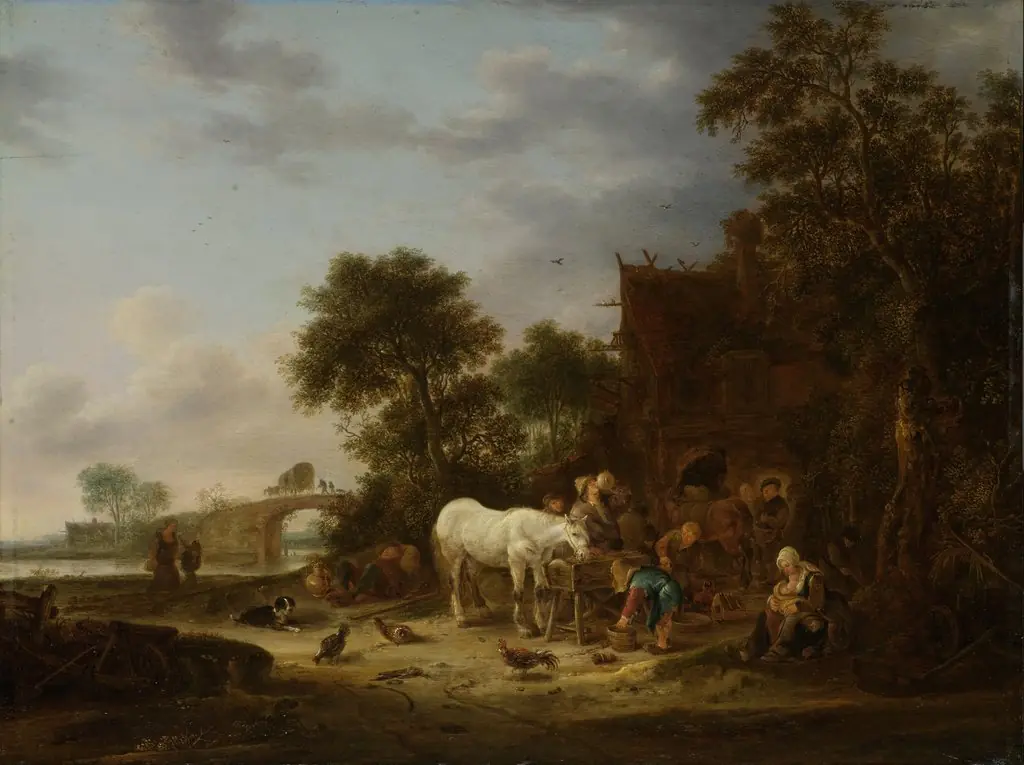
Peasant Wedding is an oil painting by the Dutch Golden Age artist Isaac van Ostade. It dates from 1643 and is held in the collection of the Pushkin Museum of Fine Arts.
About this work
Overview
Isaac van Ostade’s 1643 oil painting titled *Peasant Wedding* presents a genre scene of a rural marriage celebration. Executed in oil on canvas, the work is part of the collection of the State Hermitage Museum in St. Petersburg. The composition captures a moment of communal festivity set outdoors, emphasizing everyday life in the Dutch Golden Age.
Subject & Meaning
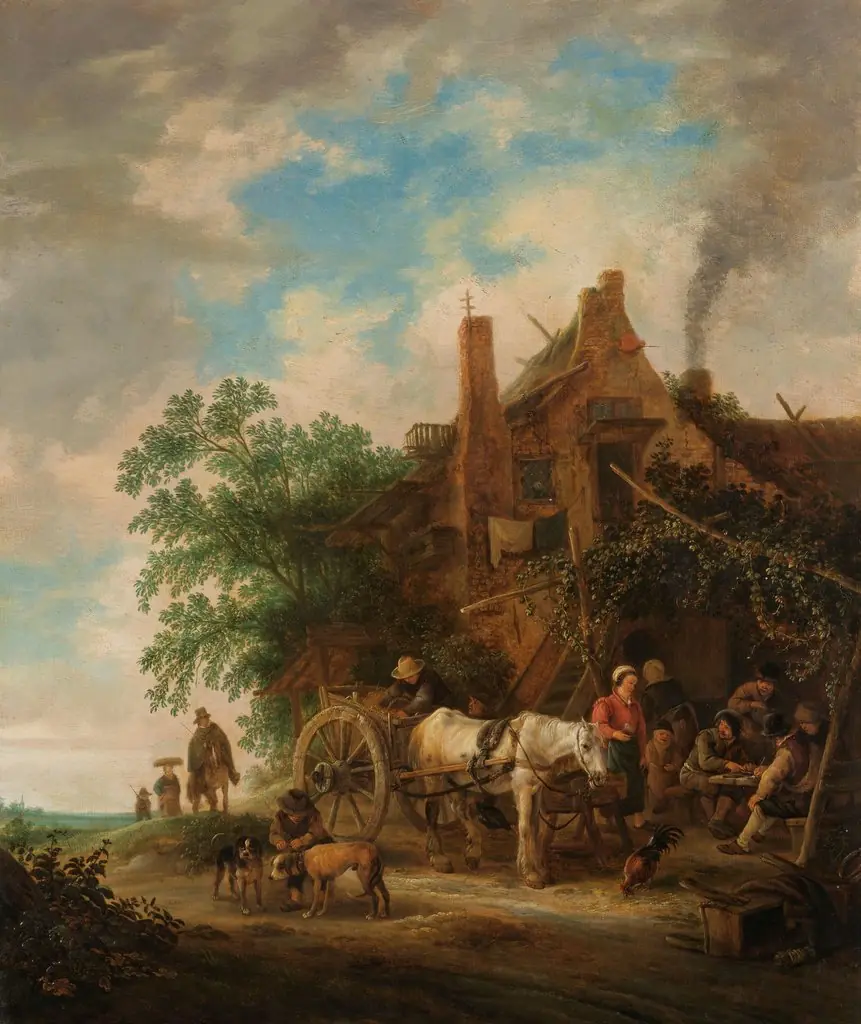
The canvas portrays a village wedding gathering around a modest wooden structure. Central to the scene are the bride and groom, illuminated by a lantern that highlights their faces, while neighbors converse, observe, and a dog rests nearby. The painting reflects the social customs of 17th‑century Dutch peasantry, celebrating communal bonds and the ritual of marriage.
Technique & Style
Van Ostade employs chiaroscuro to create depth, contrasting the darkened background with the warm glow of the lantern. This interplay of light and shadow lends a tangible intimacy to the figures and objects, such as the cart laden with sacks. The brushwork combines fine detail in facial expressions with broader strokes for the surrounding landscape, characteristic of his genre works.
History & Provenance
Created in 1643, *Peasant Wedding* entered the State Hermitage Museum’s holdings during the 19th‑century expansion of the Russian imperial collection. The painting has remained in the museum’s permanent display, offering visitors insight into Dutch genre painting and the artist’s contribution to the period’s visual culture.
Context
Isaac van Ostade, the younger brother of landscape painter Adriaen van Ostade, specialized in lively scenes of rural life. This work aligns with his focus on everyday activities, distinguishing itself from the more formal religious or mythological subjects of his contemporaries. The painting reflects the Dutch Republic’s interest in portraying the virtues and simplicity of the lower classes.
Artist & collection