Artwork
Ruines du Chateau de Bouzols Pres du Puy en Delay
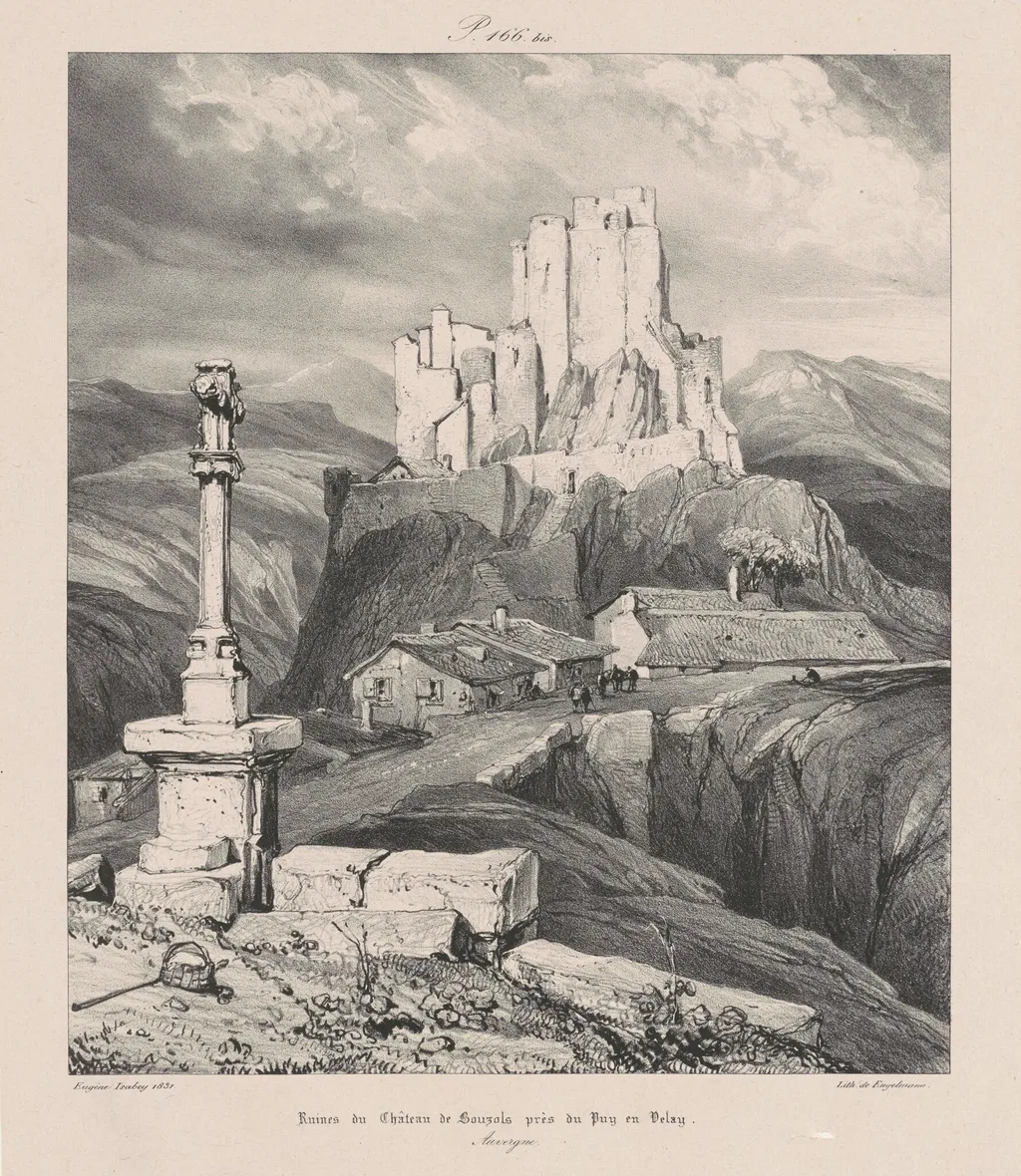
Ruines du Chateau de Bouzols Pres du Puy en Delay is an ink print by the Romanticist artist Eugène Isabey. It dates from 1831 and is held in the collection of the National Gallery of Art.
About this work
Overview
Created in 1831 by French artist Eugène Isabey, this lithograph captures the remnants of Château de Bouzols near Puy-en-Velay. Executed in the Romantic tradition, the work transforms architectural decay into a quiet meditation on time and memory. Isabey’s choice of lithography allowed for nuanced tonal gradations, enhancing the atmosphere of erosion and solitude.
Subject & Meaning
The scene centers on a crumbling fortress perched on a rugged cliff, its walls softened by vegetation and weather. A collapsed column lies half-hidden in the foreground, while a modest village nestles below, underscoring the contrast between human transience and enduring landscape. The composition evokes a sense of quiet abandonment, inviting contemplation rather than narrative.
Technique & Style
Isabey employed lithography to achieve a delicate, sketch-like quality, using soft lines and subtle washes to suggest erosion and atmospheric haze. The forms are rendered with loose, suggestive strokes rather than sharp detail, lending the ruins an ethereal, fading presence. Light clouds and muted tones reinforce the mood of gentle decay, avoiding dramatic contrast in favor of subdued melancholy.
History & Provenance
The work was produced during a period when French artists increasingly turned to regional ruins as subjects, influenced by growing interest in national heritage. Isabey traveled extensively in central France, sketching medieval sites for publication. This print likely originated as part of a series documenting historic landmarks, circulated among collectors and intellectuals of the era.
Context
In the early 1830s, Romanticism in France emphasized emotion, nature, and the sublime in decay. Ruined castles, once symbols of feudal power, became poetic metaphors for the passage of time and the fragility of human achievement. Isabey’s image aligns with this trend, reflecting broader cultural fascination with memory and loss in the post-revolutionary landscape.
Legacy
Though not widely exhibited today, the lithograph remains an example of Isabey’s skill in translating topographical observation into evocative printmaking. It contributed to a broader visual archive of French heritage sites, influencing later generations of artists and antiquarians who sought to document the nation’s architectural past with sensitivity rather than grandeur.
Own this work as a print
Artist & collection
Artist
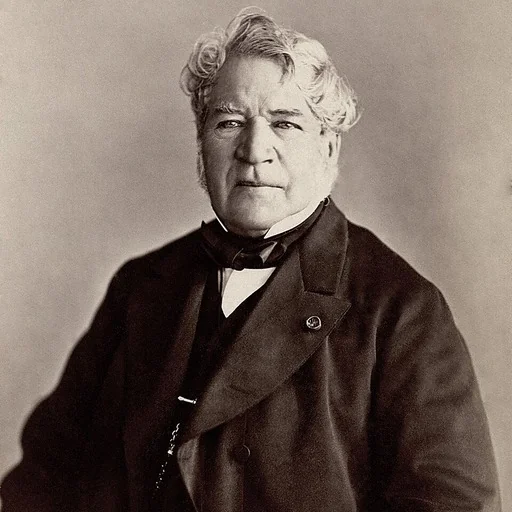
Eugène Louis Gabriel Isabey (French pronunciation: ; 22 July 1803 – 25 April 1886) was a French painter, lithographer and watercolorist in the Romantic style.

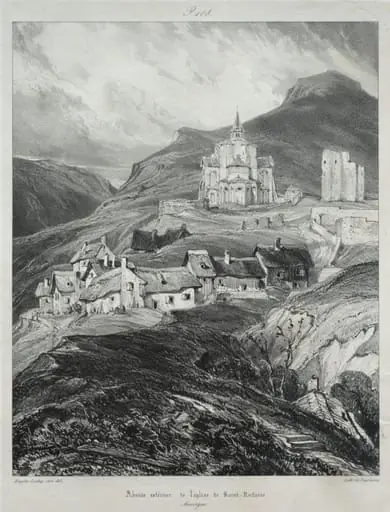 Voyages pittoresques et romantiques dans l'ancienne France, Auvergne: Abside de l'église de Saint Nectaire
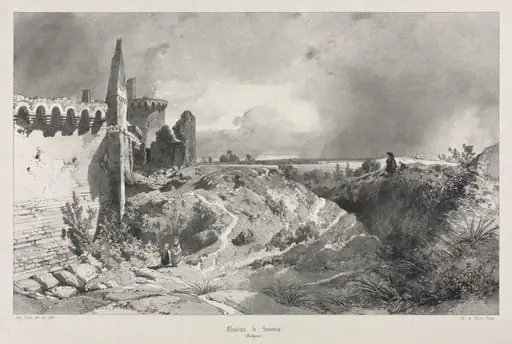 Voyages pittoresques et romantiques dans l'ancienne France. Bretagne: Chateau de Susinio
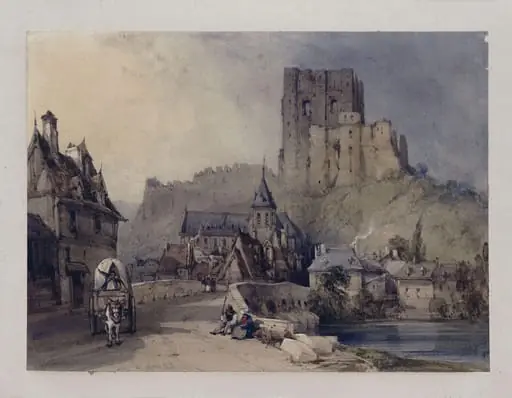 Mont Richard on the Cher (Loir-et-Cher)
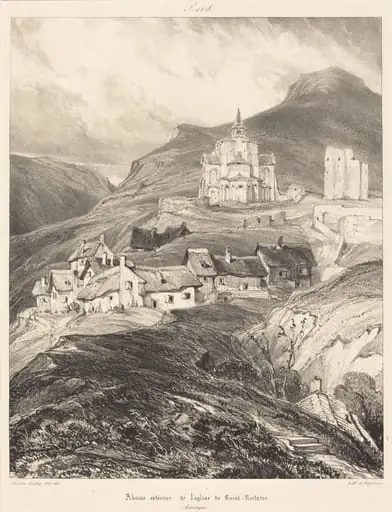 Abside de l'église de Saint-Nectaire
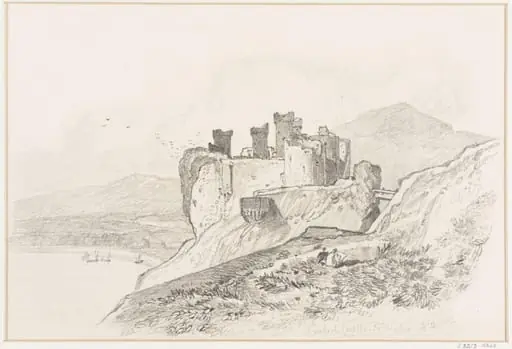 Harlech Castle, Merionethshire
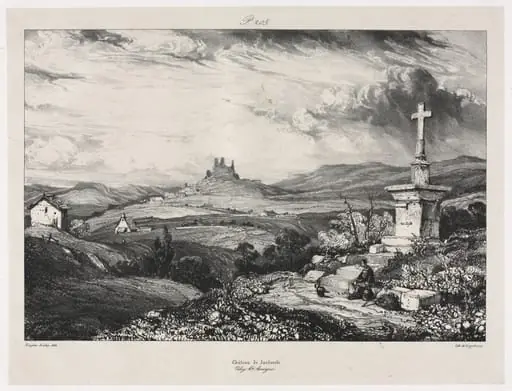 Château de Larderole
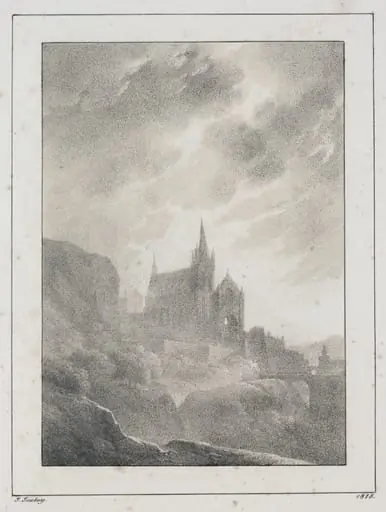 The Cathedral
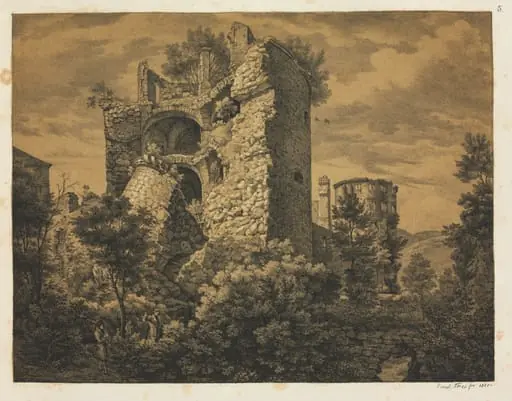 Six Views of Heidelberg Castle: Tower
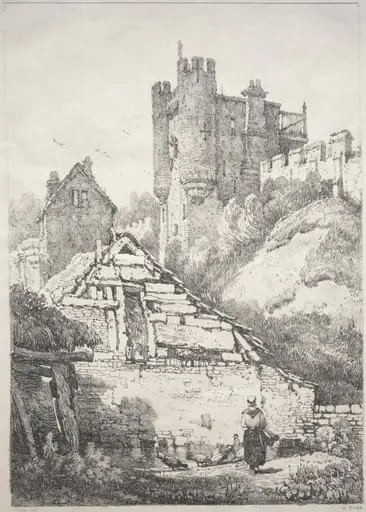 A Series of Ancient Buildings and Rural Cottages in the North of England: At York, Farmyard with Chickens