Artwork
Voyages pittoresques et romantiques dans l'ancienne France, Auvergne: Abside de l'église de Saint Nectaire
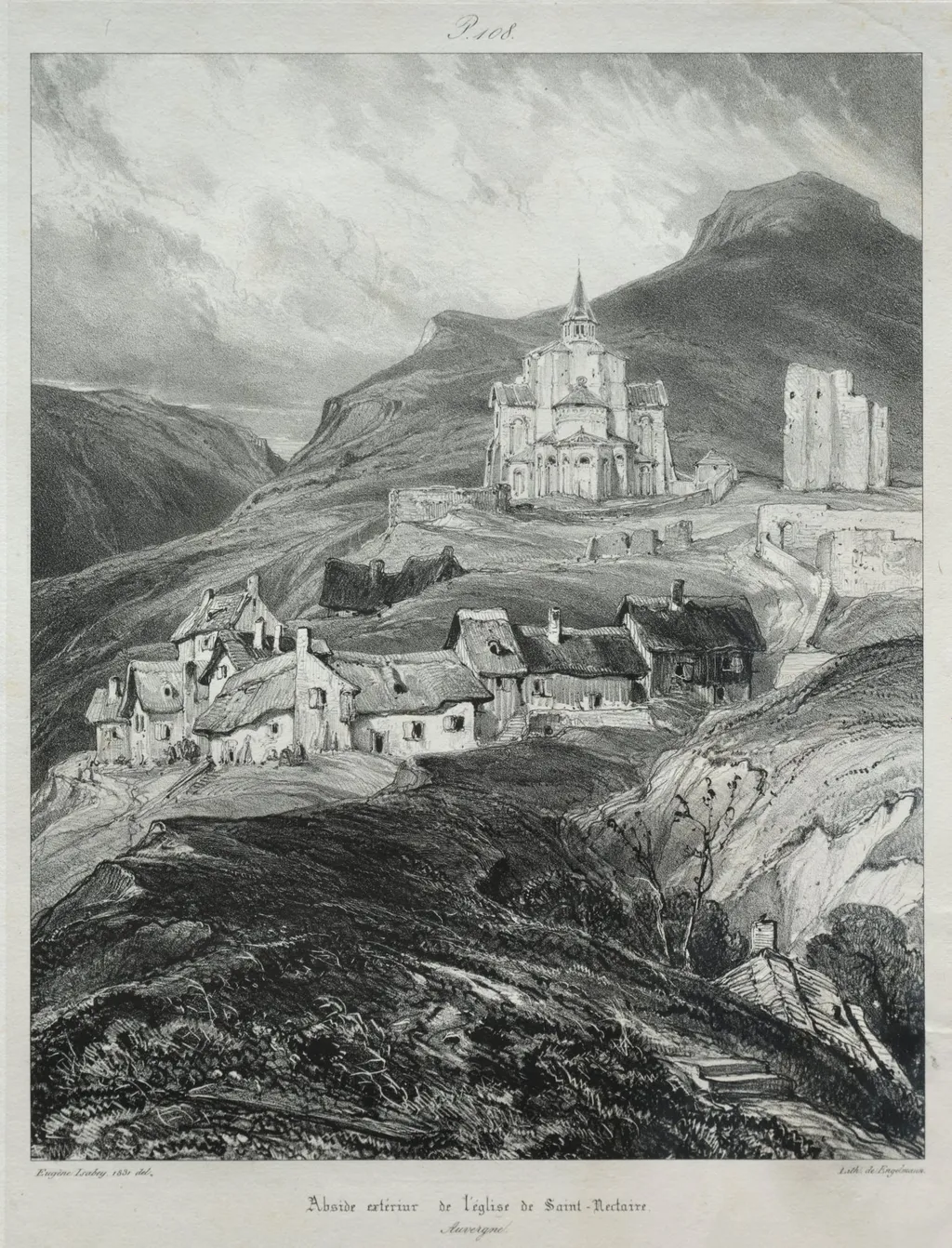
Voyages pittoresques et romantiques dans l'ancienne France, Auvergne: Abside de l'église de Saint Nectaire is a print by the Romanticist artist Eugène Isabey. It dates from 1831 and is held in the collection of the Cleveland Museum of Art.
About this work
Overview
Created in 1831 by French artist Eugène Isabey, this lithograph is one of many plates in the series Voyages pittoresques et romantiques dans l'ancienne France.
Created in 1831 by French artist Eugène Isabey, this lithograph is one of many plates in the series Voyages pittoresques et romantiques dans l'ancienne France. It captures the apse of the church of Saint-Nectaire in the Auvergne region, emphasizing architectural detail within a natural landscape. The work exemplifies Isabey’s role in documenting France’s historic structures through the lens of Romantic sensibility, blending topographical accuracy with atmospheric mood.
Subject & Meaning
The scene centers on the stone apse of Saint-Nectaire’s church, perched atop a hill amid a cluster of modest dwellings with sloped roofs. A winding path leads the eye through the foreground, while rugged cliffs rise behind, anchoring the structure in its remote, mountainous setting. The composition suggests quiet reverence for place and time, evoking a sense of enduring spiritual presence amid rural isolation.
Technique & Style
Isabey employed lithography to achieve subtle gradations of tone, using chiaroscuro to model the church’s stonework and define the contours of the terrain. Light falls unevenly across surfaces, enhancing volume and depth without overt drama. The delicate handling of shadow and highlights lends the scene a quiet realism, characteristic of Romantic-era printmaking that favored emotional resonance over idealization.
History & Provenance
The print was produced as part of a multi-volume publication commissioned to record France’s architectural heritage. It entered the collection of The Cleveland Museum of Art through documented acquisition, where it remains as a representative example of early 19th-century French topographical prints. Its preservation reflects ongoing scholarly interest in Romantic-era visual documentation of regional monuments.
Context
During the 1830s, France experienced renewed interest in its medieval past, spurred by nationalist sentiment and the rise of historic preservation movements. Isabey’s series responded to this cultural current, offering accessible images of lesser-known sites like Saint-Nectaire. These prints served both as artistic records and as tools for fostering regional identity amid rapid modernization.
Legacy
Though not widely exhibited today, the work contributes to a broader archive of Romantic-era visual ethnography. It preserves the appearance of Saint-Nectaire’s church before later restorations and offers insight into how artists interpreted rural heritage. Its quiet precision continues to inform studies of 19th-century print culture and the intersection of art and historical memory.
Artist & collection
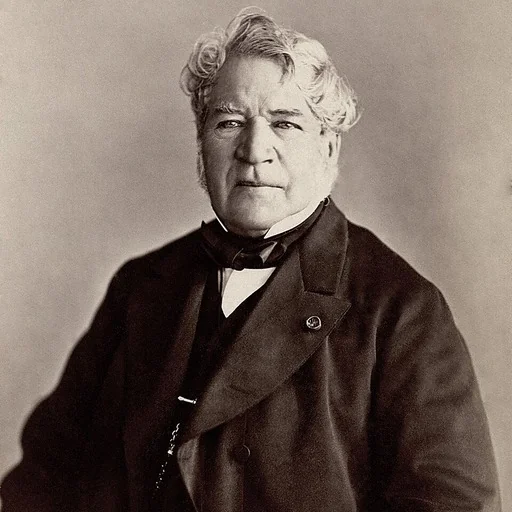
Artist
Eugène Louis Gabriel Isabey (French pronunciation: ; 22 July 1803 – 25 April 1886) was a French painter, lithographer and watercolorist in the Romantic style.

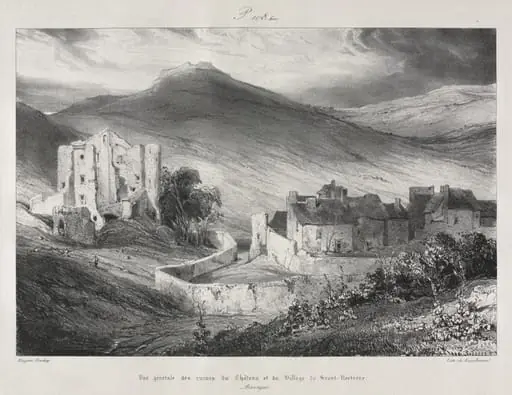 Voyages pittoresques et romantiques dans l'ancienne France, Auvergne: Ruines du château et du village de Saint Nectaire
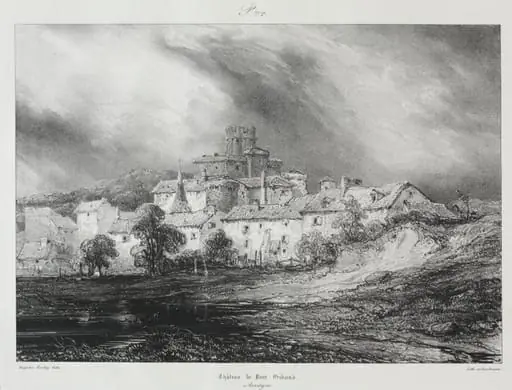 Voyages pittoresques et romantiques dans l'ancienne France, Auvergne: Château de Pont-Gibaud
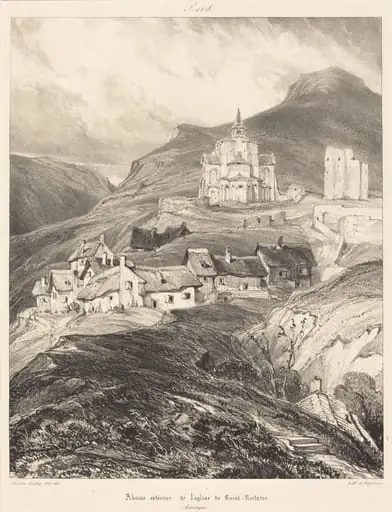 Abside de l'église de Saint-Nectaire
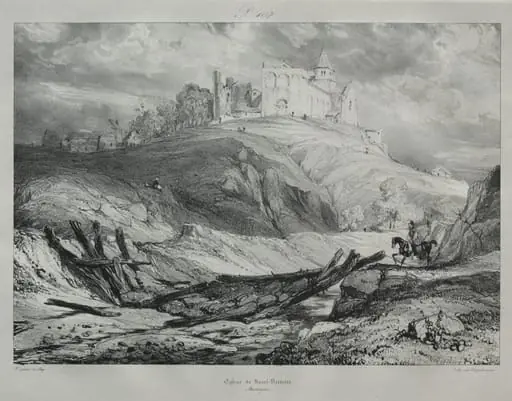 Église de St. Nectaire
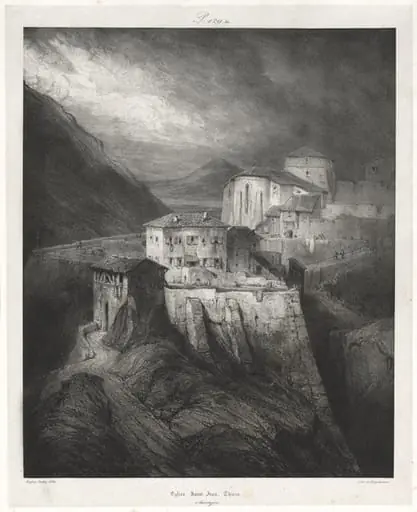 Picturesque and Romantic Journeys in Old France: Auvergne (vol. II): St. John Church, Thiers, Plate 129
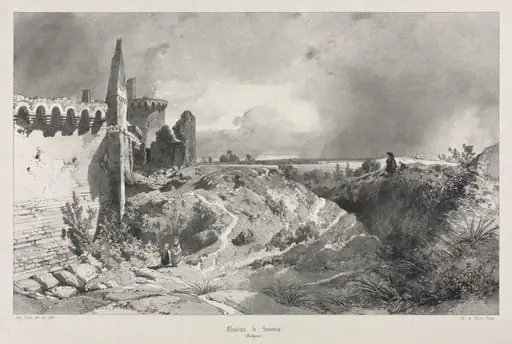 Voyages pittoresques et romantiques dans l'ancienne France. Bretagne: Chateau de Susinio
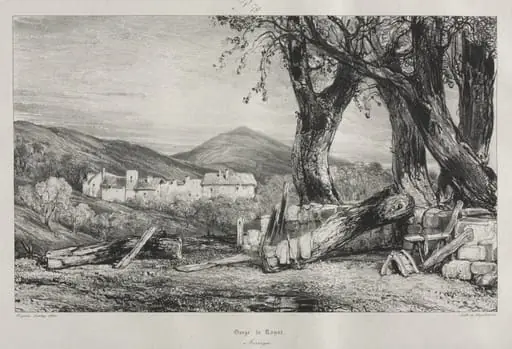 Picturesque and Romantic Journeys in Old France: Auvergne (vol. II), Gorge of Royat, Plate 79