Artwork
St. Valery sur somme
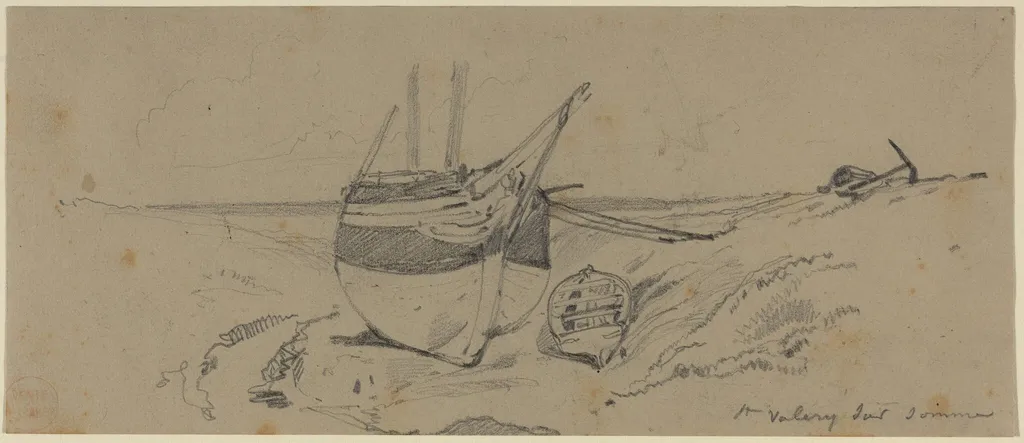
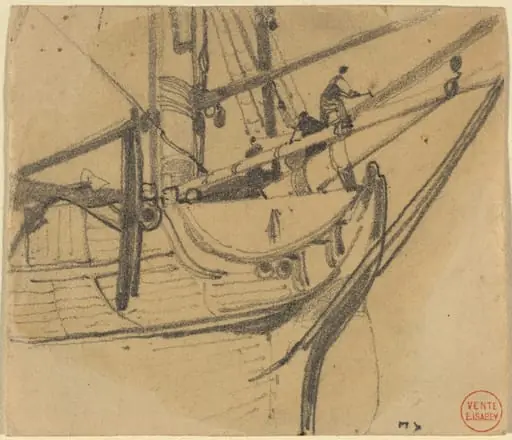
St. Valery sur somme is a graphite drawing by the Romanticist artist Eugène Isabey. It dates from 1844 and is held in the collection of the National Gallery of Art. St.
About this work
Overview
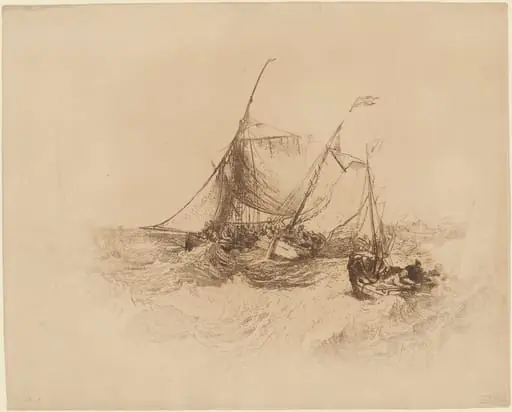
St. Valery sur somme is a graphite drawing on light brown wove paper, created in 1844 by French Romantic artist Eugène Isabey. The work depicts a coastal scene of Saint-Valery-sur-Somme, characterized by loose, expressive lines and attention to light and shadow.
Subject & Meaning
The drawing focuses on a beach scene with two contrasting vessels: a large, three-masted ship stranded on the sand and a nearby small rowboat. The composition reflects Isabey’s emphasis on capturing the emotional and atmospheric qualities of coastal landscapes.
Technique & Style
Isabey employed quick, loose graphite strokes to convey the movement of waves and the play of light and shadow. The light pencil work suggests a possibly rapid, outdoor execution, aligning with Romantic-era expressive and spontaneous drawing practices.
History & Provenance
Created in 1844, the drawing exemplifies Isabey’s Romantic style, though detailed provenance (ownership history) is not provided in the available information.
Context
St. Valery sur somme sits within the broader context of French Romantic landscape art, emphasizing emotion, atmosphere, and the sublime in natural settings. Isabey’s work, while known more for watercolors and lithographs, contributes to this tradition with his graphite pieces.
Legacy
As part of Isabey’s oeuvre, the drawing contributes to the understanding of 19th-century French Romantic landscape drawing techniques and themes, though its specific impact or influence is not detailed in the provided information.
Artist & collection
Artist
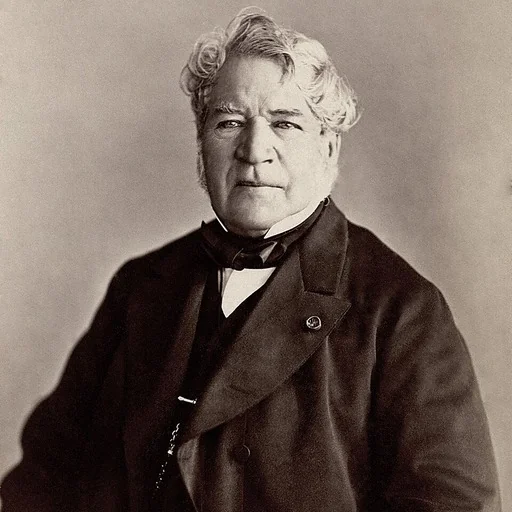
Eugène Louis Gabriel Isabey (French pronunciation: ; 22 July 1803 – 25 April 1886) was a French painter, lithographer and watercolorist in the Romantic style.

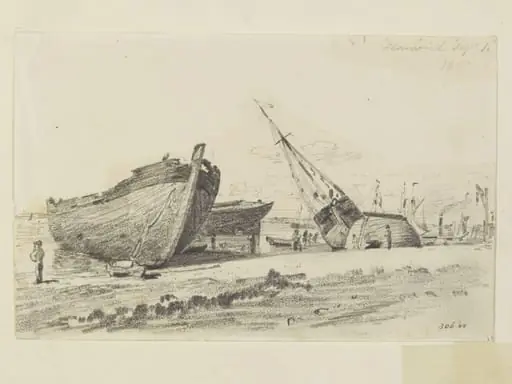 The breakwater at Harwich, with ships on the beach
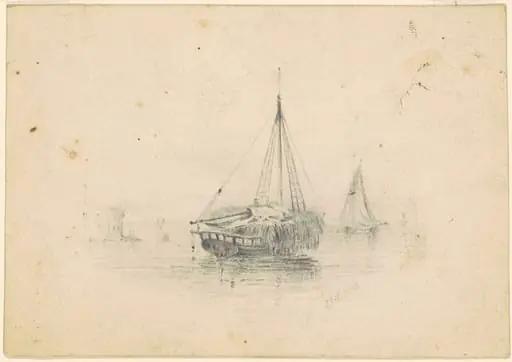 Boats at Anchor
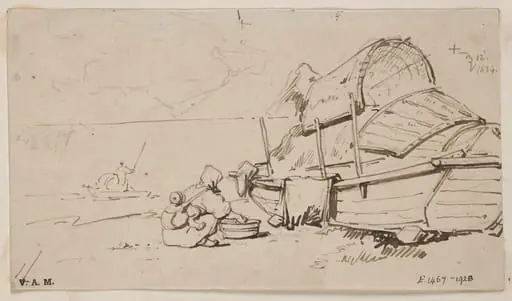
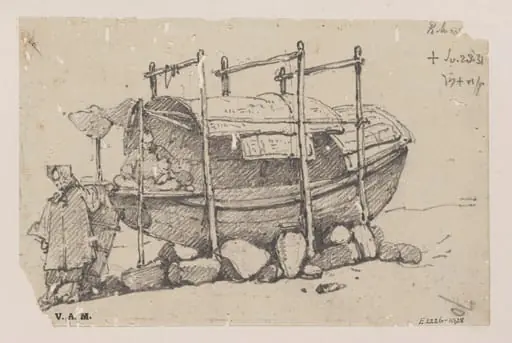 Figures by a beached Tanka boat
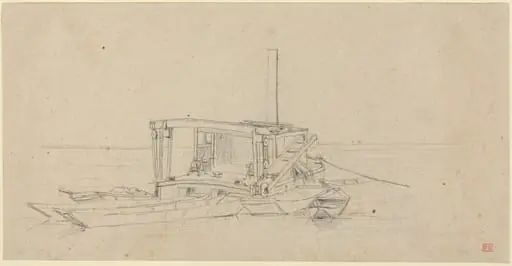 River Dredges and Lighters
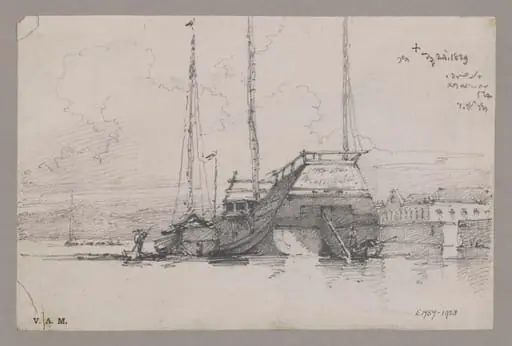 Chinese junk
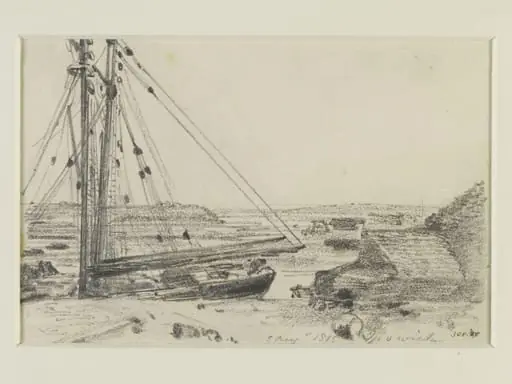 Shipping, near Ipswich
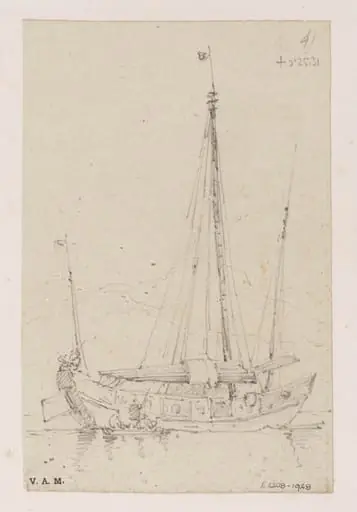 A three-masted junk with a smaller boat alongside
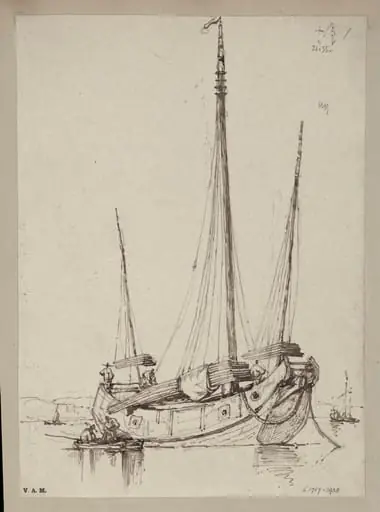 A junk hauling planks aboard
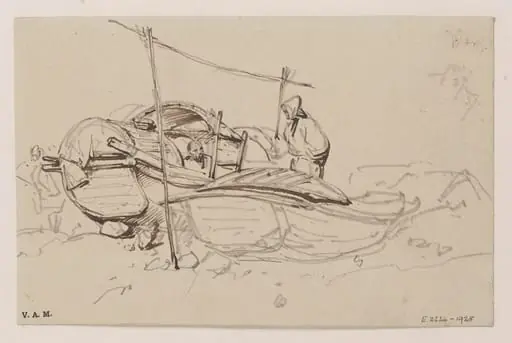 Untitled
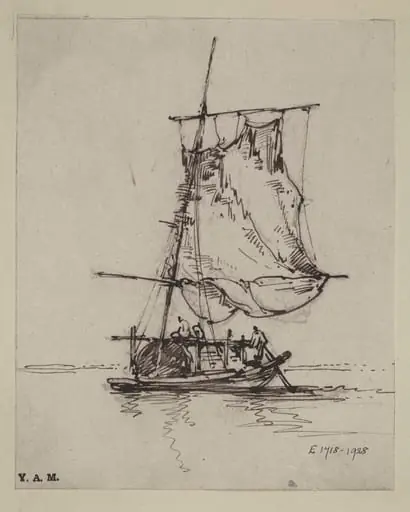 A drawing by George Chinnery of a Tanka boat with a large sail or net raised
 Calais Pier
 A boatwoman and child beside a beached Tanka boat