Artwork
Odaliscă (Paulina)
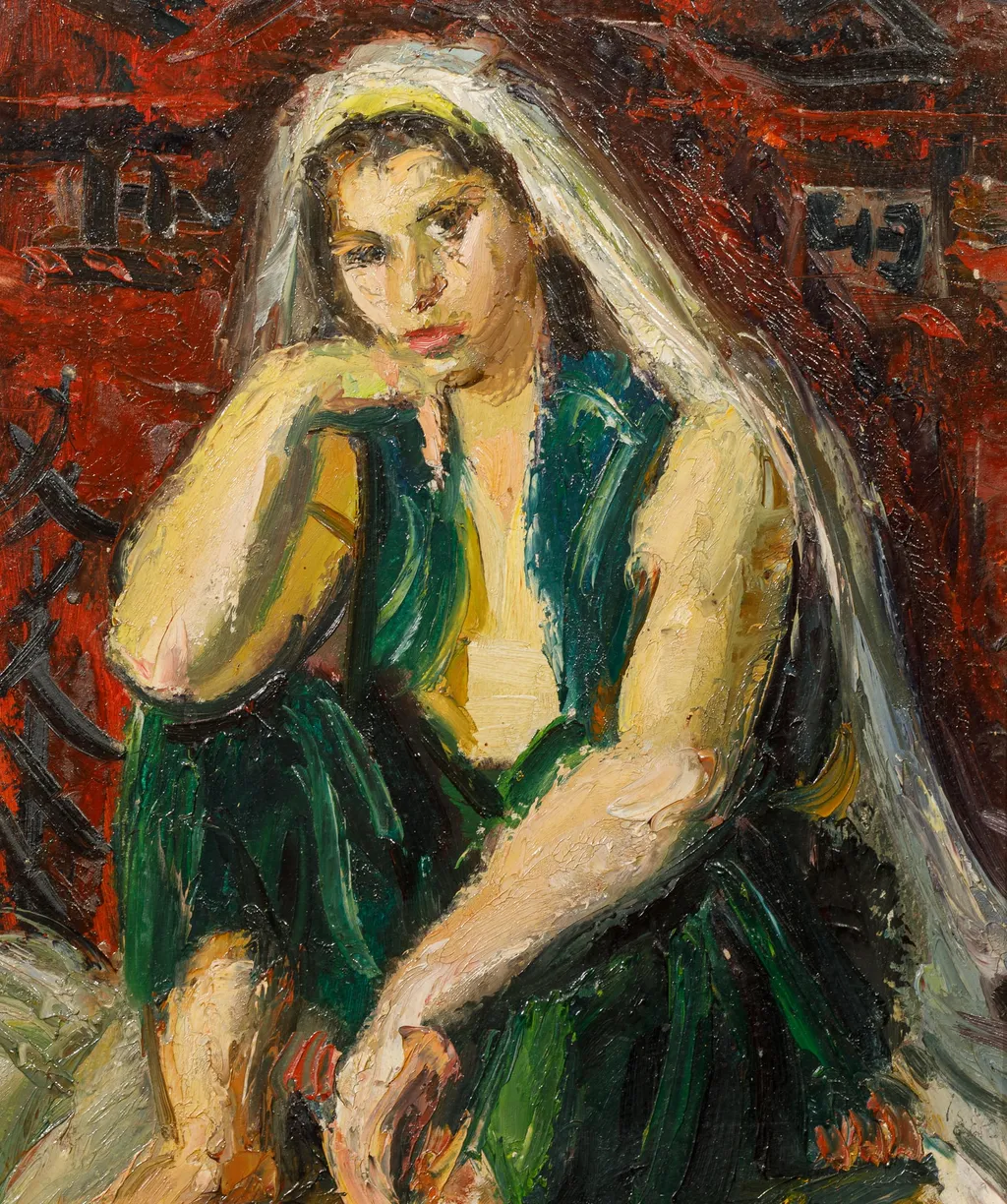
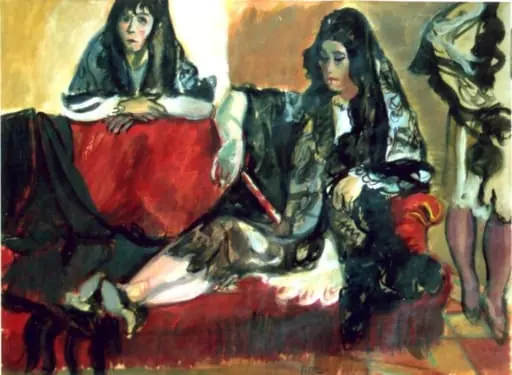
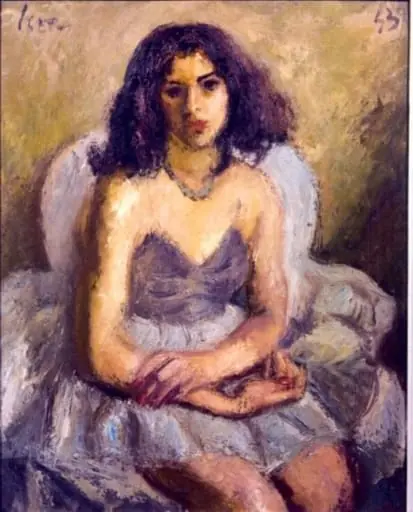
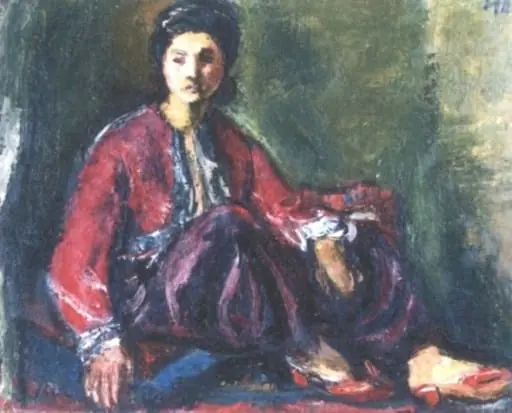
Odaliscă (Paulina) is a print by Iosif Iser. It dates from 1943 and is held in the collection of the National Museum of Art of Romania.
About this work
Overview
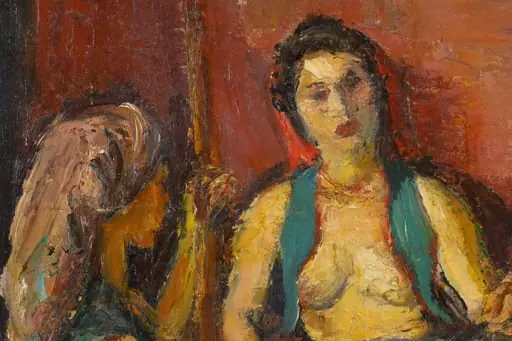
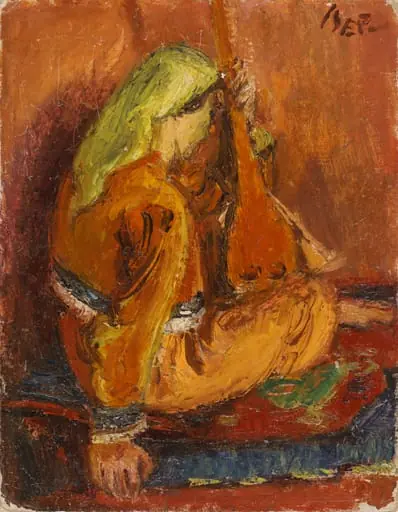
The composition centers on her relaxed form against a textured, crimson background, emphasizing materiality over idealized beauty.
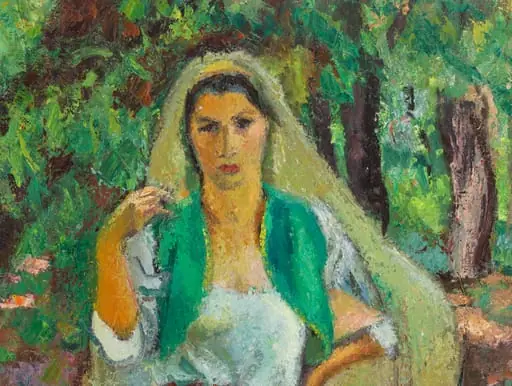
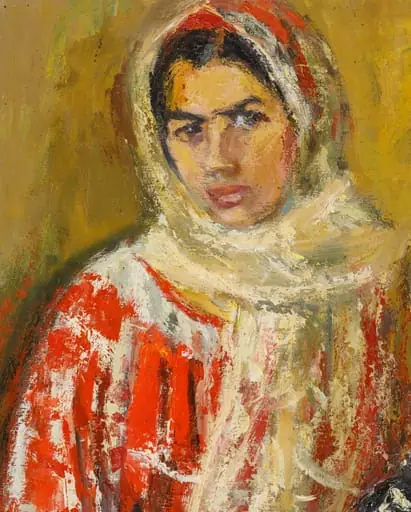
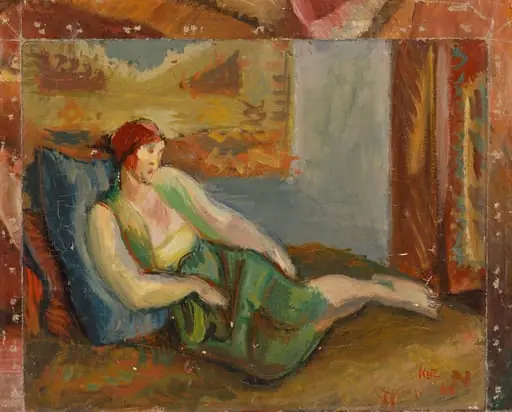
Painted in 1943 by Iosif Iser, Odaliscă (Paulina) depicts a seated woman in a quiet, introspective posture. The figure, identified as Paulina, is rendered with deliberate physicality through thick, uneven applications of paint. The composition centers on her relaxed form against a textured, crimson background, emphasizing materiality over idealized beauty. The work reflects Iser’s engagement with expressive brushwork during a period of artistic experimentation in Romania.
Subject & Meaning
The subject, Paulina, is portrayed without narrative context, inviting contemplation rather than storytelling. Her headscarf and modest attire suggest cultural or domestic identity, yet the painting avoids exoticism. The stillness of her pose and the absence of facial detail shift focus to the physical presence of the figure and the emotional weight carried by color and texture, evoking solitude rather than spectacle.
Technique & Style
Iser employs impasto to build the figure’s form, using heavy, irregular strokes that give skin and fabric a tactile, almost sculptural quality. The background’s rough, red surface contrasts with the muted yellows and greens of her clothing, creating visual tension. The paint is applied with urgency, leaving visible ridges and uneven edges that reject smooth finish in favor of raw, immediate expression.
History & Provenance
Created during World War II, the painting emerged from Iser’s studio in Bucharest amid political instability and cultural isolation. It remained in private hands in Romania for decades before entering a public collection. Its survival through wartime conditions and later state cultural policies underscores its significance as a personal, non-conformist work within a constrained artistic environment.
Context
In 1940s Romania, official art promoted socialist realism, yet Iser pursued a more personal, expressionist language. Odaliscă (Paulina) diverges from state-sanctioned ideals by emphasizing texture and emotional tone over idealized form. The painting aligns with broader European modernist currents that valued subjective experience, even as Romania’s cultural climate grew increasingly restrictive.
Legacy
Though not widely exhibited during Iser’s lifetime, Odaliscă (Paulina) has since been recognized as a key example of Romanian modernism’s quieter, introspective strand. Its emphasis on materiality and psychological presence influenced later generations of artists seeking alternatives to political art. The work endures as a quiet testament to individual expression under pressure.
Artist & collection