Artwork
Saint James Defeating the Infidels
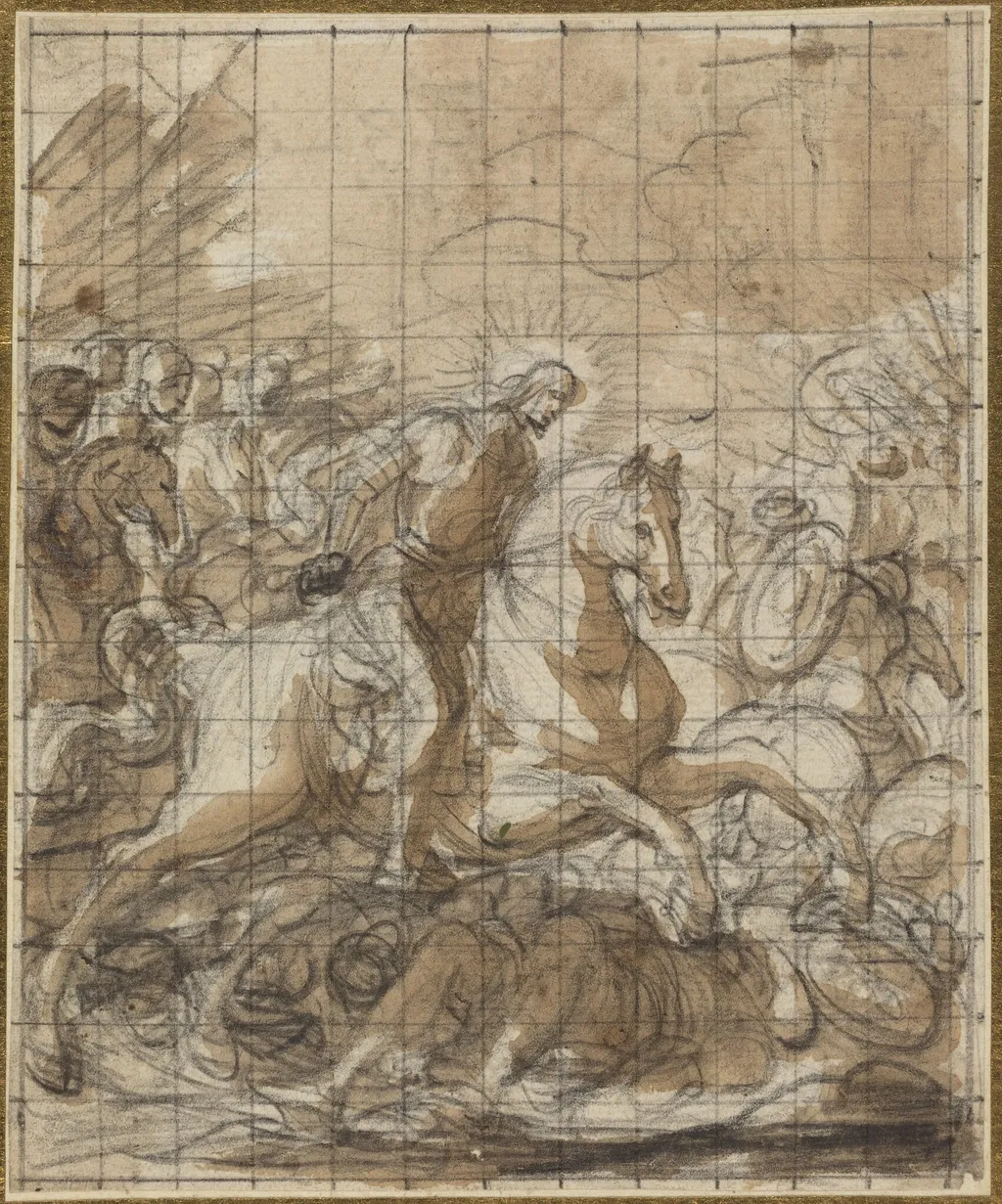
Saint James Defeating the Infidels is a chalk drawing by the Baroque artist Italian 18th Century. It dates from 1700 and is held in the collection of the National Gallery of Art. This drawing, executed in black chalk and brown wash, depicts a dynamic battle scene centered on two mounted figures in combat.
About this work
Overview
This drawing, executed in black chalk and brown wash, depicts a dynamic battle scene centered on two mounted figures in combat. Squared lines indicate preparatory planning, suggesting it was a study for a larger composition. The sketch captures motion through rapid, expressive strokes and layered washes, emphasizing tension and chaos without detailed finish.
Subject & Meaning
The scene illustrates Saint James the Greater, traditionally believed to have appeared as a warrior saint in battle against Muslim forces in medieval Spain. The central clash symbolizes divine intervention in defense of Christendom. Surrounding figures convey panic and desperation, reinforcing the narrative of holy conflict and human vulnerability.
Technique & Style
The artist employed swift, sketchy chalk lines to convey movement and muscular tension, particularly in the horses and riders. Brown wash adds shadow and depth, while the squared grid on the surface hints at transfer for a final work. Background swirls suggest dust, motion, and disorder, typical of Baroque-era preparatory drawings focused on emotional intensity over detail.
History & Provenance
The drawing likely dates to the late 16th or early 17th century, a period when religious themes remained central to Spanish art. Its survival as a study suggests it was valued by the artist or a collector for its compositional energy. No definitive provenance is recorded, but its style aligns with Spanish workshop practices of the time.
Context
During the Counter-Reformation, depictions of Saint James as a warrior saint were promoted in Spain to reinforce Catholic identity amid conflict with Muslim powers. Artists frequently used sketches like this to explore dramatic movement and religious symbolism before committing to altarpieces or frescoes, making such studies vital to the period’s visual culture.
Legacy
This drawing exemplifies how Baroque artists used rapid, expressive techniques to convey spiritual drama and physical force. Its emphasis on motion and emotional immediacy influenced later generations of draftsmen, particularly in Spain and Italy, where religious narratives demanded visceral impact over static form.
Artist & collection

Artist
This Italian artist carved bronze figures in the 18th century, blending myth and motion in metal.

![Design for a Wall of a Music Room [recto], by Italian 18th Century](https://artifactworldgallery.com/img/italian-18th-century--design-for-a-wall-of-a-music-room-recto--1582534309a804bd-w320.webp)
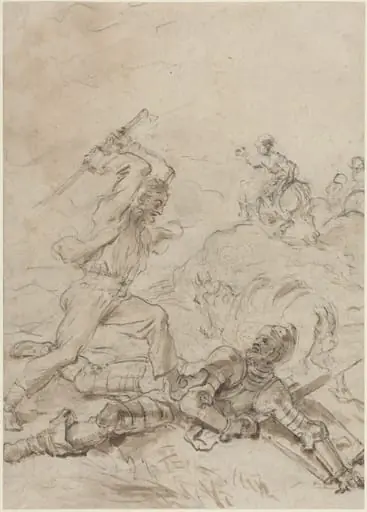 The Muleteer Attacking Don Quixote as He Lies Helpless on the Ground
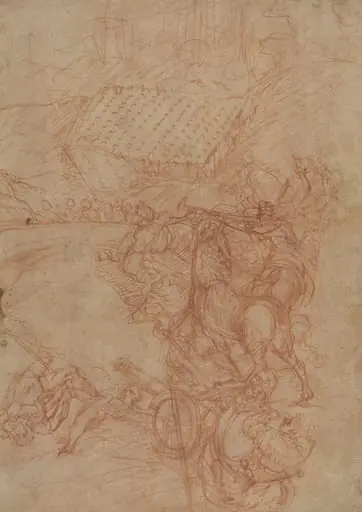 The Battle of Spoleto
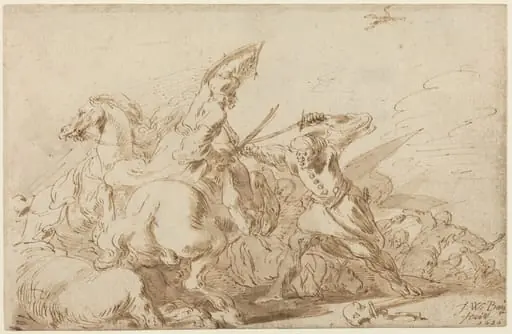 A Battle between Oriental Cavalry and Soldiers
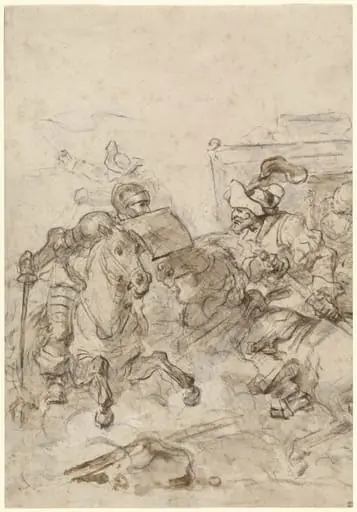 Don Quixote Attacking the Biscayan
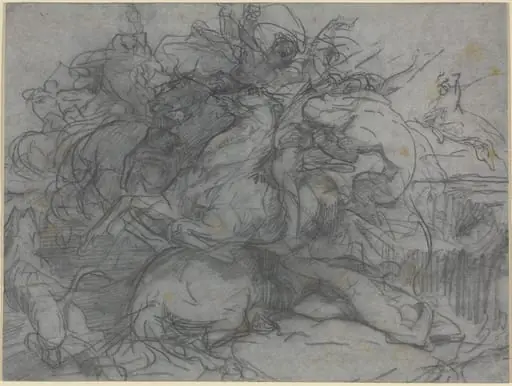 Study for "Surprise" (Battle of the Tigers)
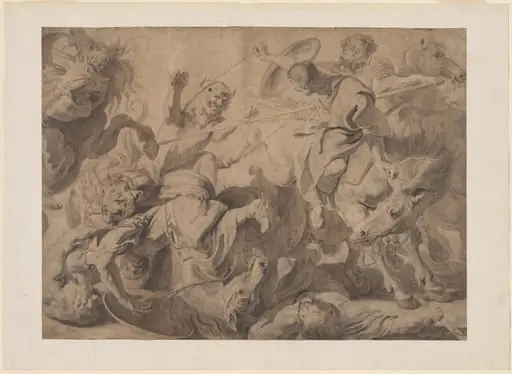 Lion Hunt
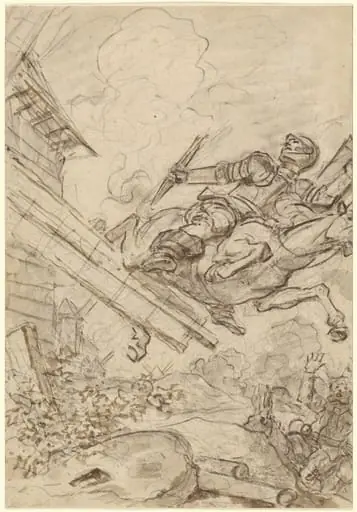 Don Quixote Attacking the Windmill
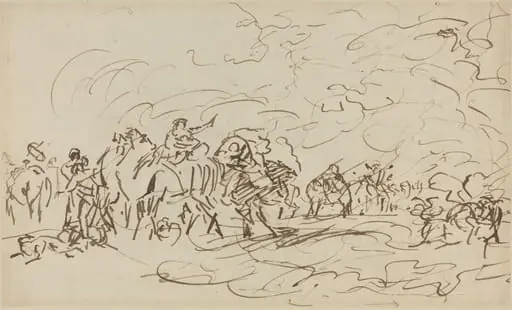 Sandstorm in the Desert Overtaking a Caravan
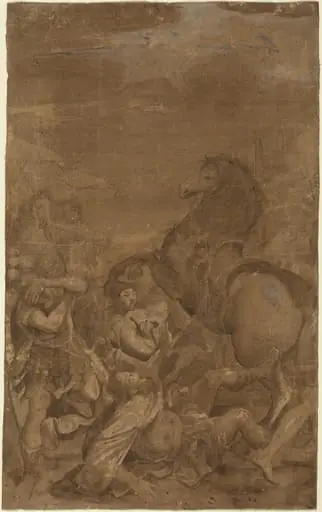 The Conversion of Saint Paul
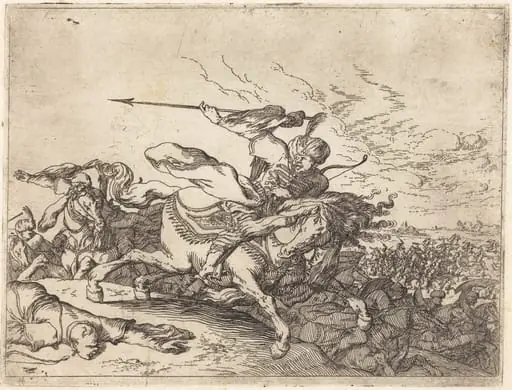 Capricci di varie battaglie
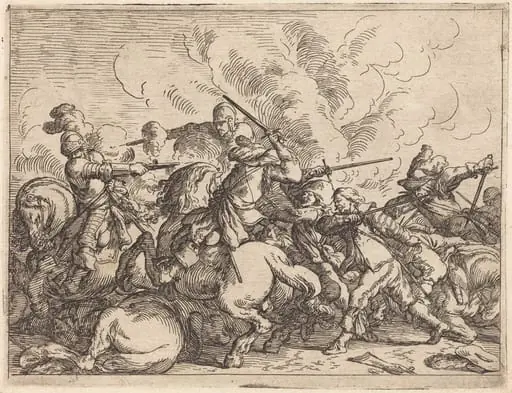 Capricci di varie battaglie
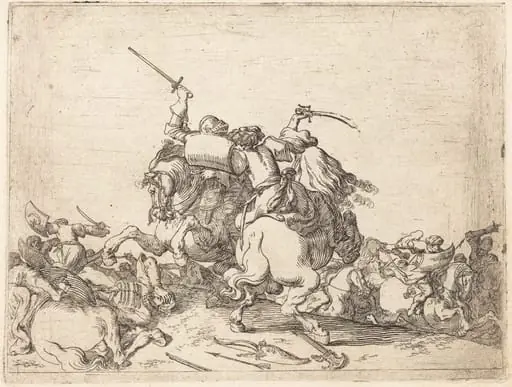 Capricci di varie battaglie