Artwork
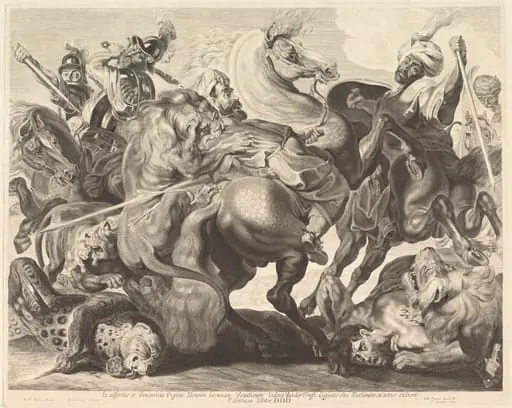
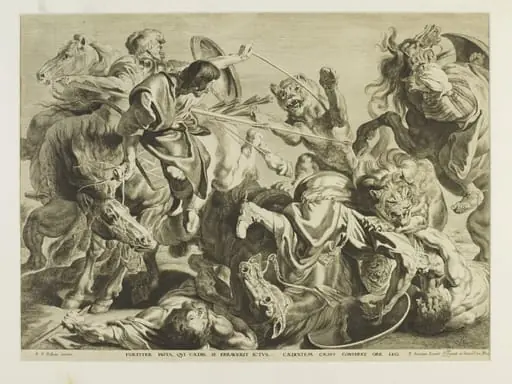
Lion Hunt
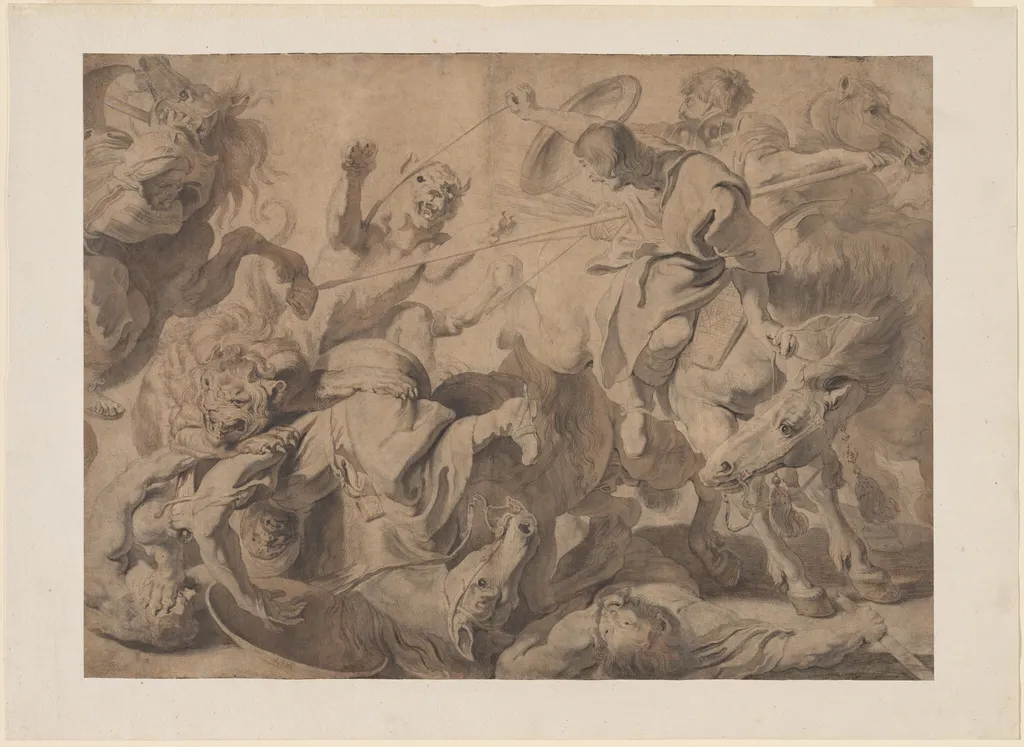
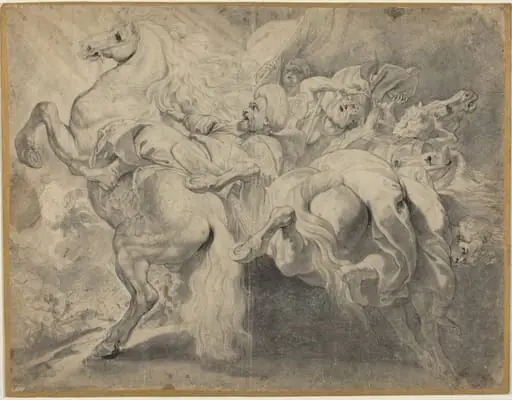
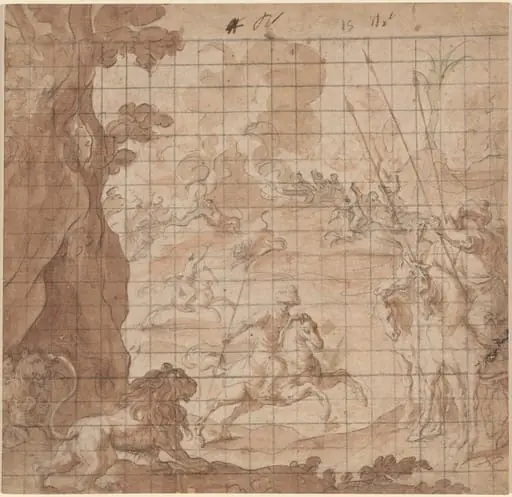
Lion Hunt is a chalk drawing by the Baroque artist Pieter Claesz Soutman. It dates from 1616 and is held in the collection of the National Gallery of Art.
About this work
Overview
Pieter Claesz Soutman’s drawing entitled Lion Hunt dates to around 1616. Executed in pen and brown ink with a brown‑gray wash applied over black chalk, the work also incorporates touches of red chalk and white highlights. The composition is organized around a vertical fold through the centre, and the image was incised for transfer.
Subject & Meaning
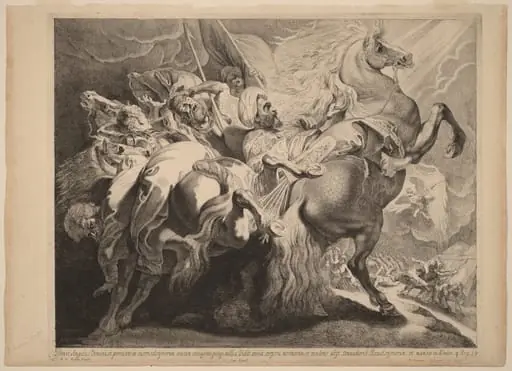
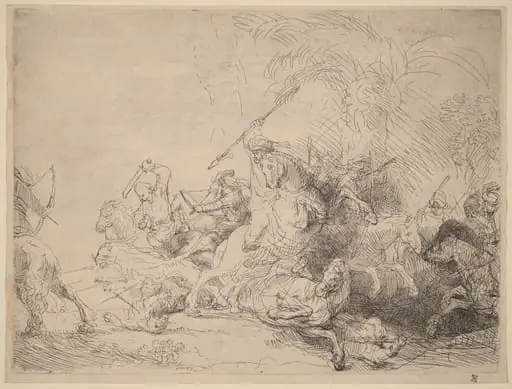
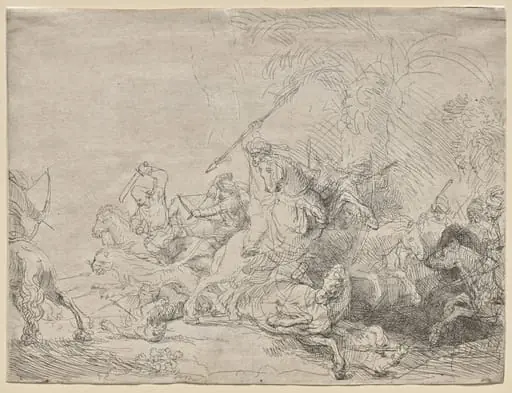
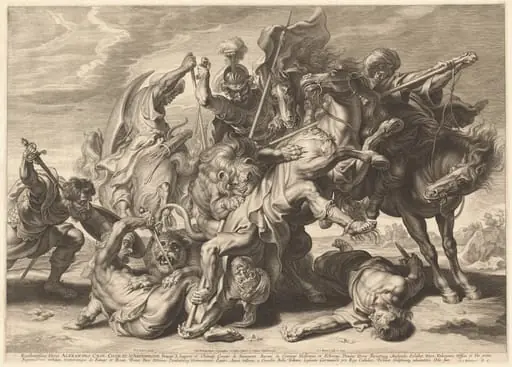
The scene depicts a chaotic chase in which a mounted rider thrusts a sword at a lion while other horsemen and beasts clash around him. The tangled figures convey a sense of violent struggle, emphasizing the peril and intensity of the hunt.
Technique & Style
Soutman employed rapid, sketch‑like strokes, allowing the ink and wash to create a dense, swirling mass of forms. The use of red chalk at the lower left and bottom centre provides limited colour accents, while white heightening adds contrast. Overlapping lines and varied hatching generate a feeling of movement and disorder.
History & Provenance
Created in the early seventeenth century, the drawing reflects the artist’s interest in dynamic narrative subjects. Its method of incising for transfer suggests it may have been used as a model or study for a larger work, though specific ownership records prior to its museum acquisition are not documented.
Context
The work belongs to the Baroque period, a time when artists frequently explored dramatic, action‑filled scenes. Hunt motifs were popular for illustrating human bravery against nature’s ferocity, aligning with contemporary tastes for theatrical composition.
Artist & collection