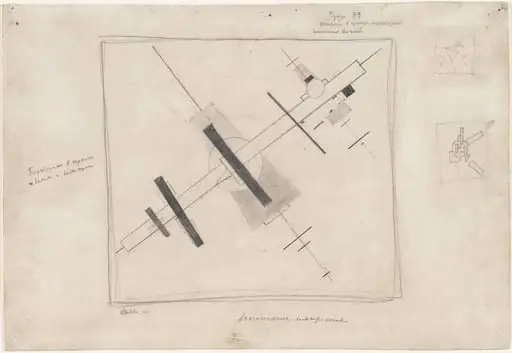
Artwork
Untitled
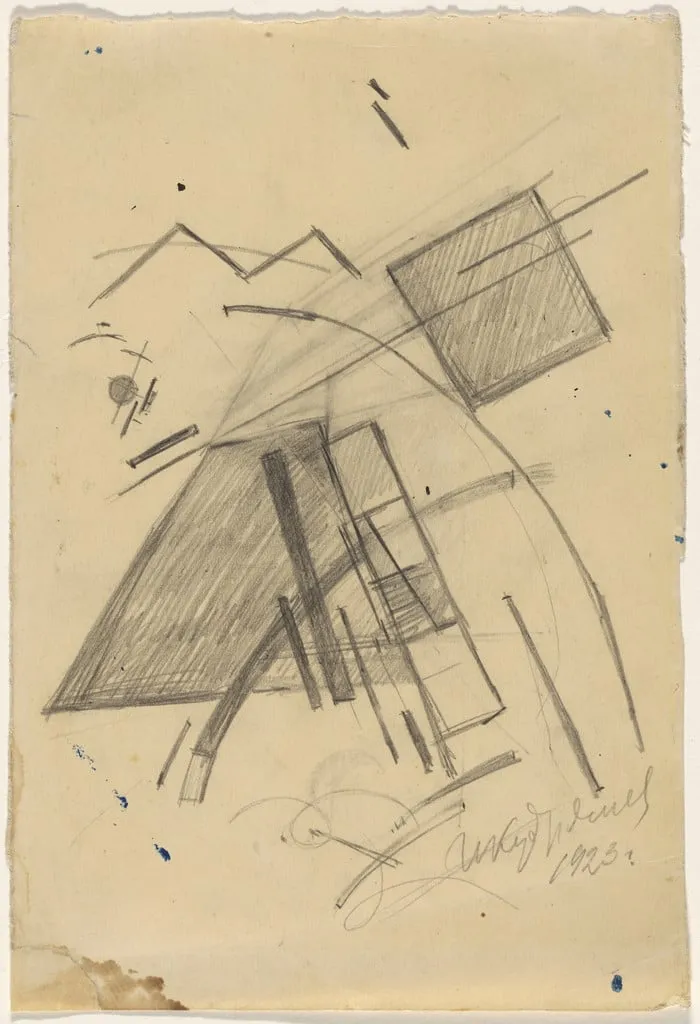
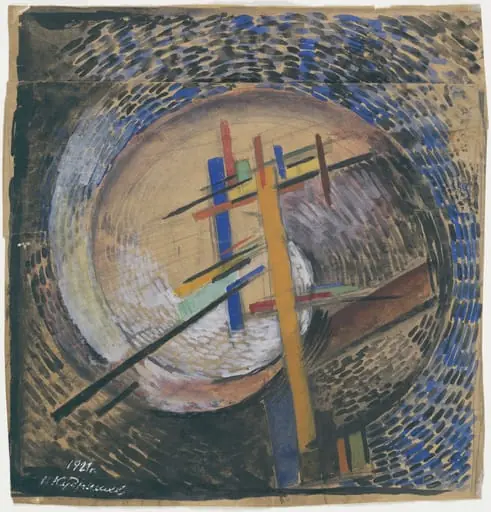
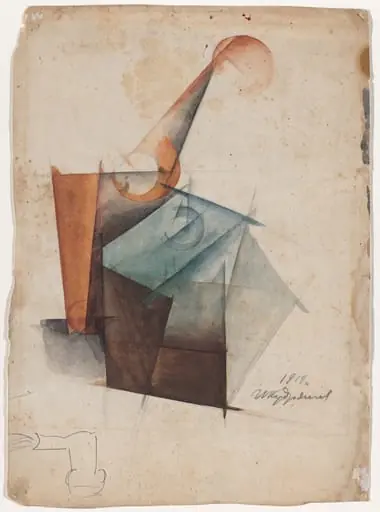
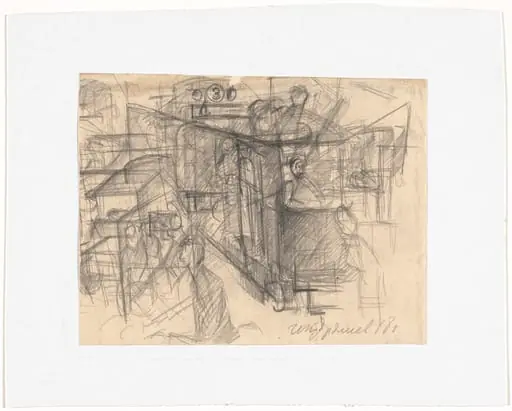
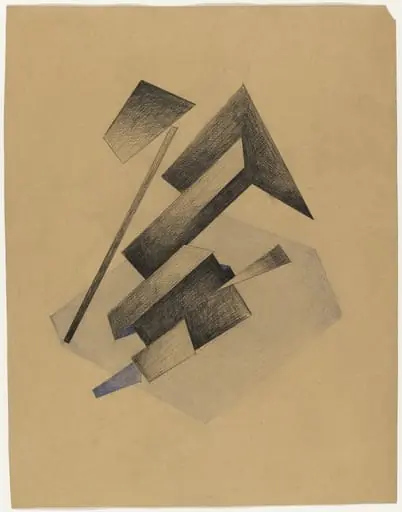
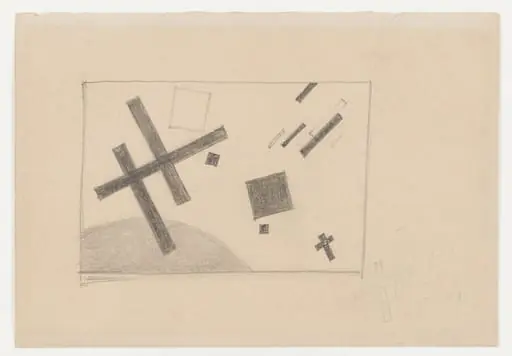
Untitled is a graphite drawing by Ivan Kudriashov. It dates from 1923 and is held in the collection of the Museum of Modern Art.
About this work
Overview
Created in 1923, this pencil drawing by Ivan Kudriashov is part of The Museum of Modern Art’s collection. Executed on aged, yellowed paper, the work presents a minimal architectural form rendered in loose, rapid strokes. The artist’s signature, faint and hurried, appears in one corner, suggesting a private or spontaneous gesture rather than a polished composition.
Subject & Meaning
The drawing depicts a rudimentary house, reduced to basic geometric shapes: a peaked roof formed by two sharp triangles and small rectangular windows. No context or figures accompany the structure, leaving its meaning ambiguous. It may reflect a memory, a prototype, or an exercise in simplification—offering no narrative, only form.
Technique & Style
Kudriashov used quick, overlapping pencil lines to suggest volume and structure without shading or detail. Some strokes appear tentative or reworked, while others seem to hover independently, creating a sense of instability. The absence of cross-hatching or tonal gradation emphasizes line over texture, aligning with early modernist tendencies toward abstraction.
History & Provenance
The work entered The Museum of Modern Art’s collection as part of a broader acquisition of early 20th-century Russian drawings. Its origins prior to institutional acquisition remain undocumented, though its material quality and informal execution suggest it was not intended for public display at the time of creation.
Context
Made in the aftermath of the Russian Revolution, this drawing reflects a period when artists increasingly turned to abstraction and economy of form. Amid societal upheaval, many reduced subjects to essentials—houses, figures, and objects became symbols rather than representations, echoing broader cultural shifts toward minimalism.
Legacy
Though not widely exhibited, the drawing contributes to understanding how Russian avant-garde artists explored simplicity in drawing. Its unpolished quality and structural reduction influenced later studies of line and form, serving as an example of how everyday subjects could be reimagined through stripped-down visual language.
Artist & collection