Artwork
Disaster at Sea
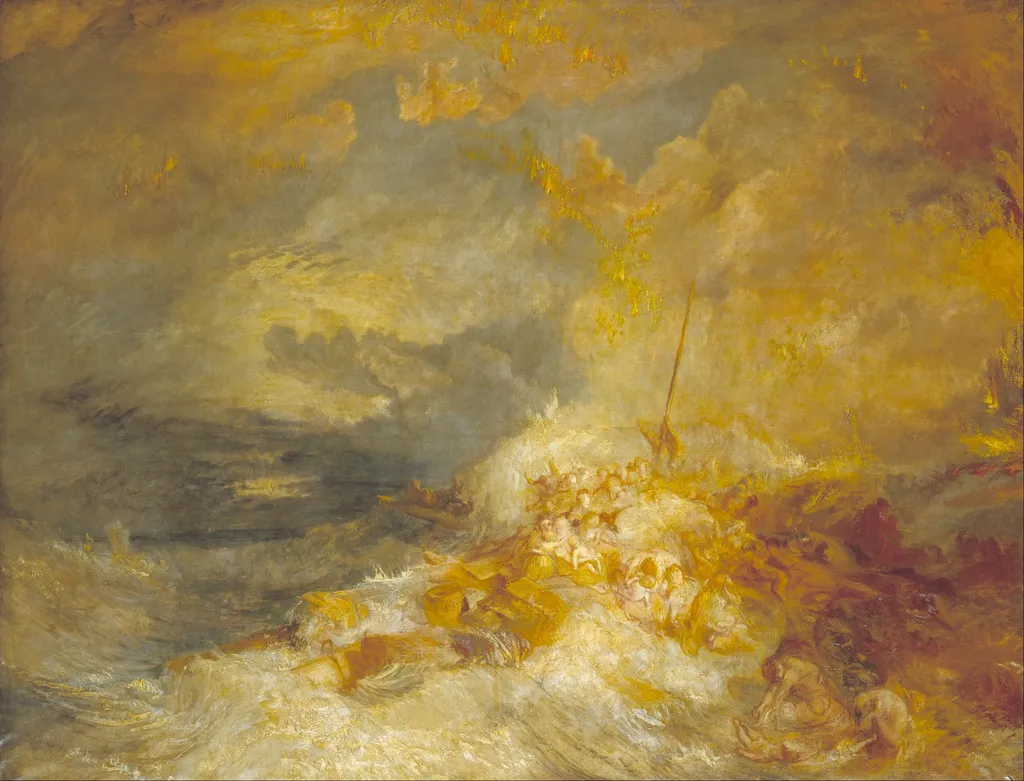
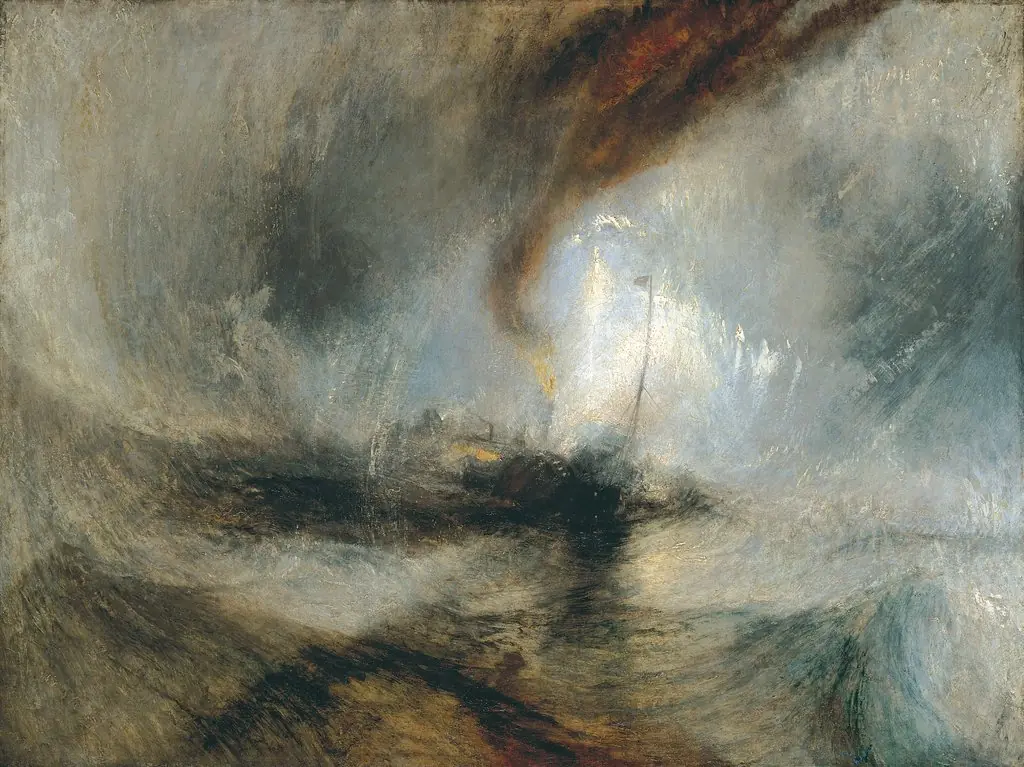
Disaster at Sea is an oil painting by Joseph Mallord William Turner. It dates from 1835 and is held in the collection of the National Gallery.
About this work
Overview
The scene shows figures struggling amid churning waves, their forms barely distinguishable against the turbulent sea.
Painted around 1835, A Disaster at Sea is an oil work by J.M.W. Turner that captures a shipwreck in violent motion. The scene shows figures struggling amid churning waves, their forms barely distinguishable against the turbulent sea. Though never exhibited during Turner’s life, the painting reflects his late-period shift toward atmospheric abstraction, where form dissolves into light and movement. Its unfinished appearance aligns with his evolving approach to emotional expression over literal detail.
Subject & Meaning
The painting likely responds to two real maritime tragedies: the 1833 sinking of the Amphitrite, which drowned convicts en route to Australia, and the Hibernia fire, where insufficient lifeboats led to mass loss. Turner does not depict a specific vessel but conveys the universal horror of abandonment at sea. The figures’ desperation and the absence of rescue suggest themes of human vulnerability and institutional failure, rendered without moralizing or narrative clarity.
Technique & Style
Turner employs thick, sweeping brushwork and layered glazes to evoke the sea’s chaos. Warm golds and ochres contrast with cool blues, creating emotional tension rather than naturalistic lighting. Forms are suggested rather than defined—bodies merge with debris, masts dissolve into foam. The composition’s diagonal thrusts and swirling currents guide the eye through the turmoil, emphasizing motion over clarity. Texture is built through impasto and scumbling, enhancing the sense of elemental force.
History & Provenance
After Turner’s death in 1851, the painting entered the Turner Bequest, a vast collection of works bequeathed to the nation. It was cataloged among his unfinished pieces and remained largely unseen until the 20th century. In 1910, it was transferred to the Tate Gallery, now Tate Britain, where it resides among other late works that challenged conventional painting norms. Its inclusion in the bequest ensured its preservation as a key example of Turner’s experimental phase.
Context
Turner had encountered Théodore Géricault’s The Raft of the Medusa in London during the 1820s, a work that profoundly influenced his treatment of human suffering at sea. While Géricault’s painting emphasized heroic realism, Turner’s approach was more atmospheric and ambiguous. This shift mirrored broader changes in British art, where emotional resonance and sensory experience began to outweigh narrative precision, anticipating later movements like Impressionism.
Legacy
A Disaster at Sea stands as a pivotal example of Turner’s late style, where paint itself becomes a vehicle for emotional and sensory truth. Its abandonment of clear form influenced later artists seeking to convey inner experience through abstraction. Though not widely known in his time, the painting now contributes to understanding how Turner redefined landscape and narrative painting, bridging Romanticism and modern visual language.
Own this work as a print
Artist & collection

Artist
Joseph Mallord William Turner was born in 1775 at Maiden Lane, Covent Garden, where his father kept a barber and wig-making shop.

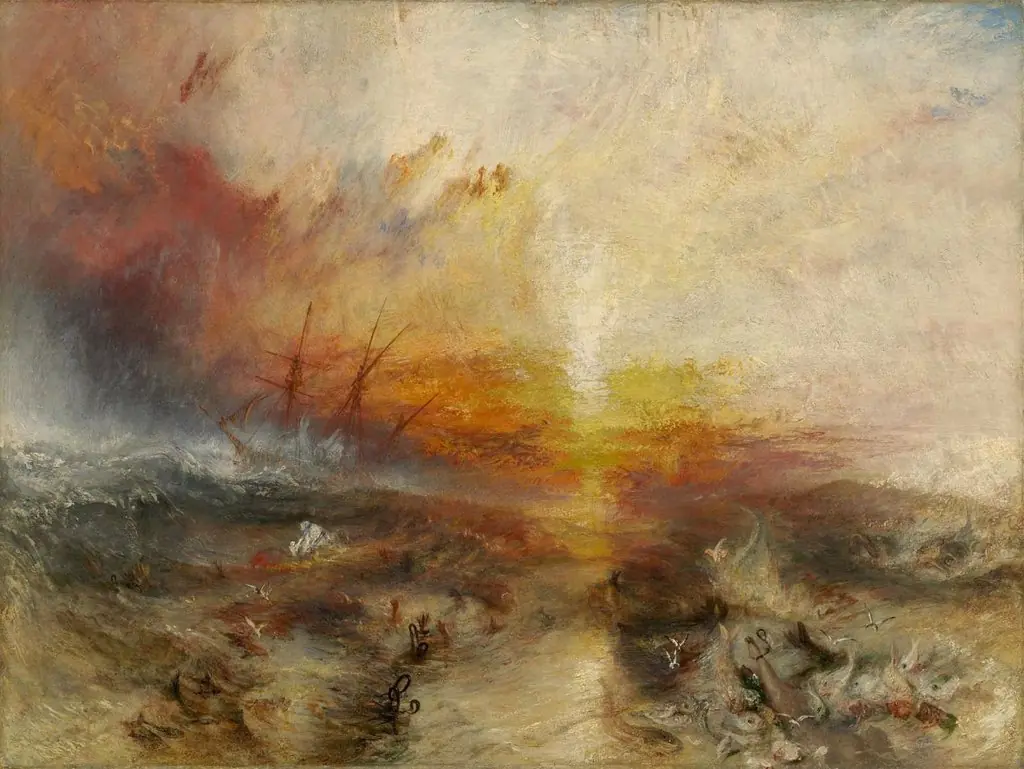 The Slave Ship
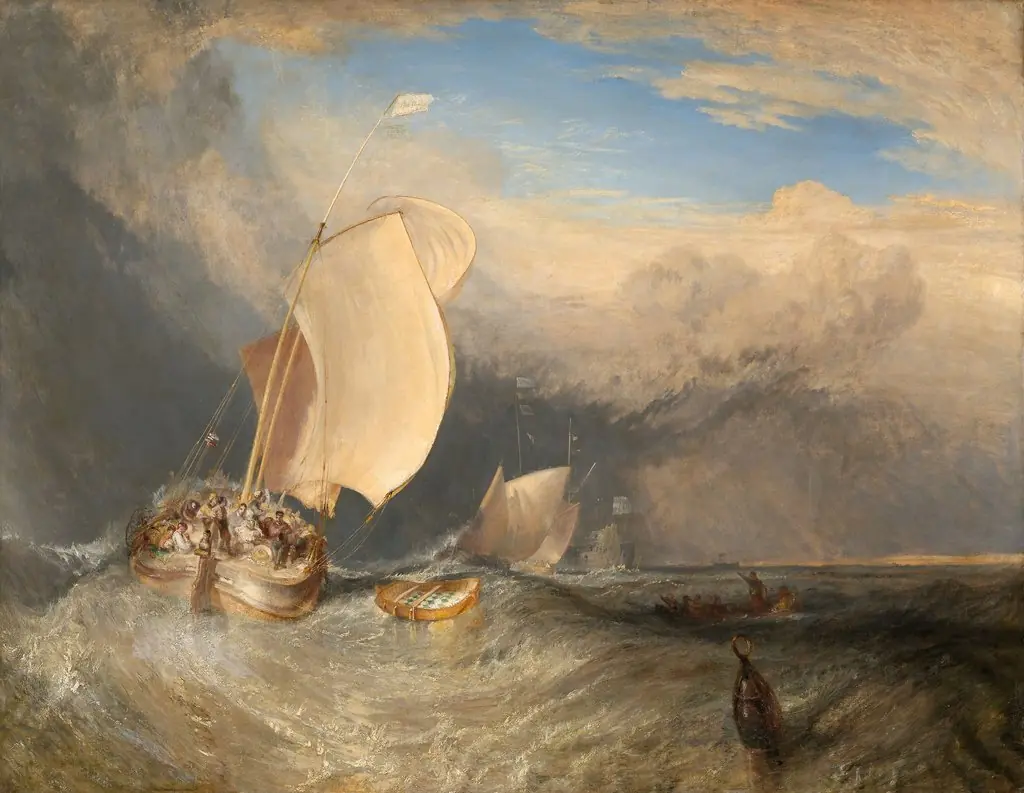 Fishing Boats with Hucksters Bargaining for Fish
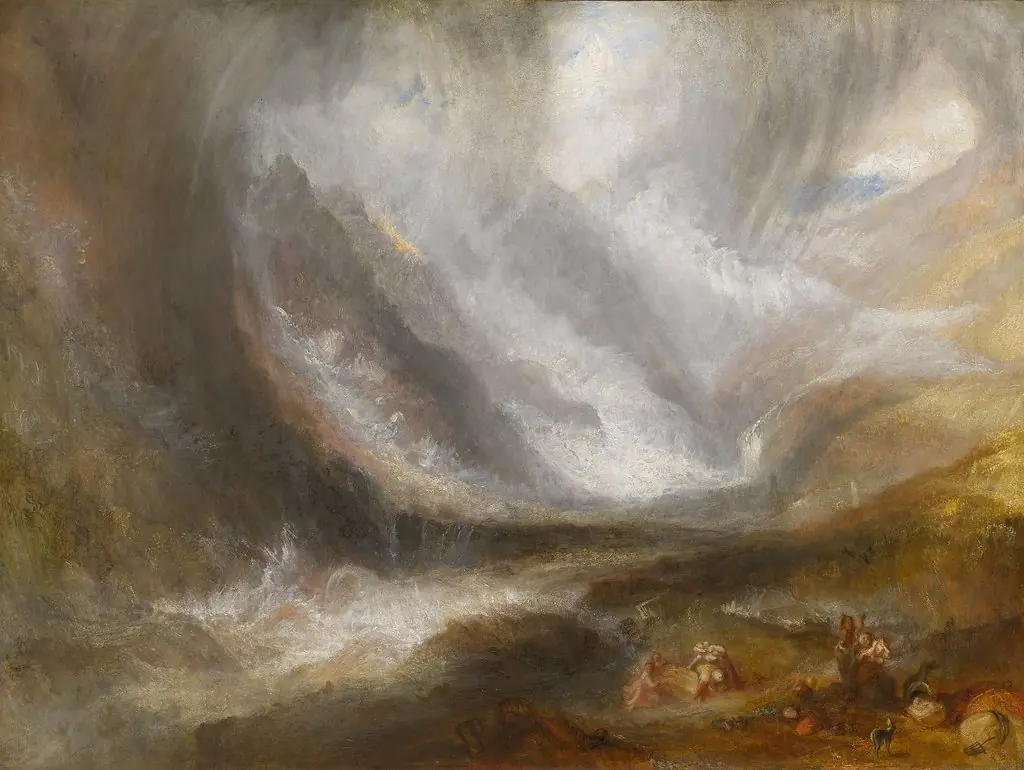 Valley of Aosta: Snowstorm, Avalanche, and Thunderstorm
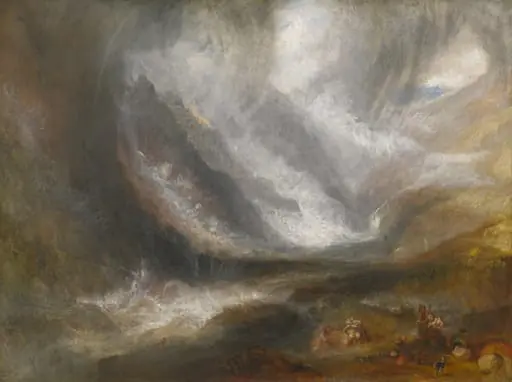 Valley of Aosta: Snowstorm, Avalanche, and Thunderstorm
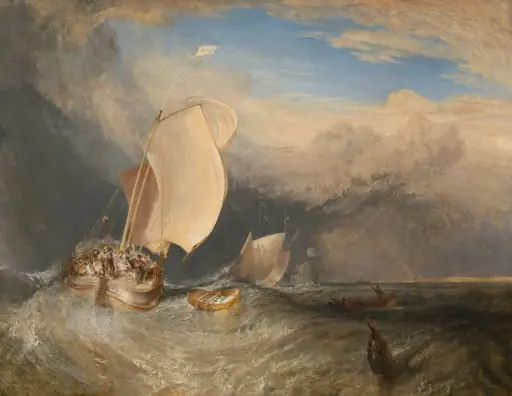 Fishing Boats with Hucksters Bargaining for Fish
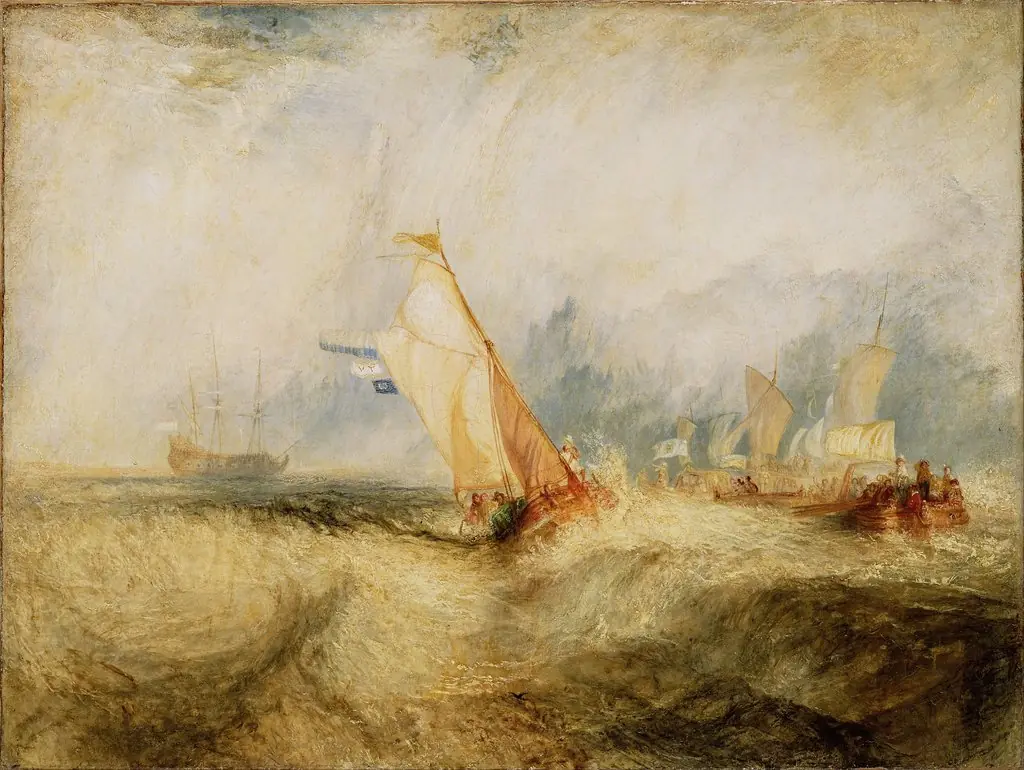 Van Tromp
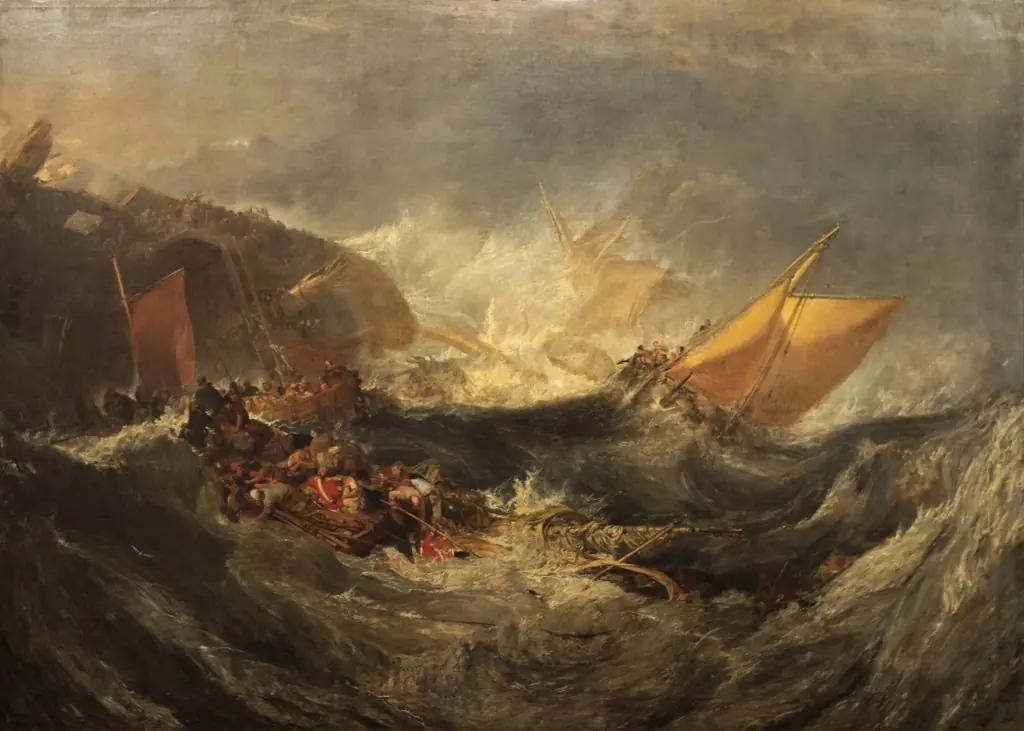 The Wreck of a Transport Ship
 Snow Storm: Steam-Boat off a Harbour's Mouth