Artwork
Fishing upon the Blythe-Sand, Tide Setting In
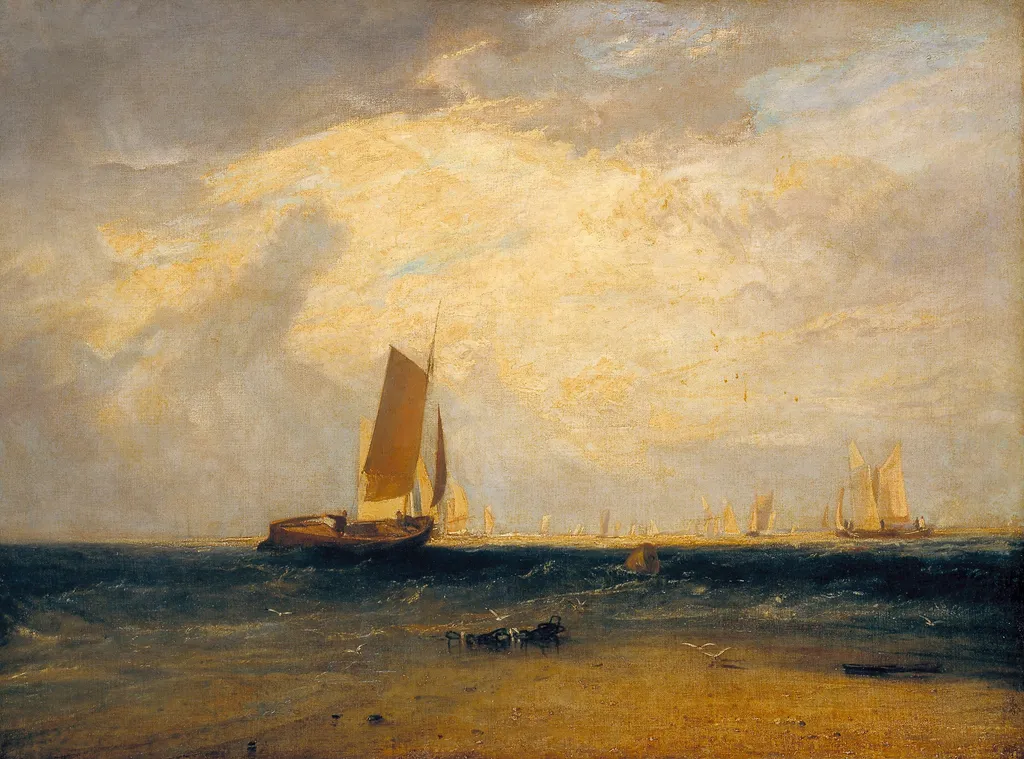
Fishing upon the Blythe-Sand, Tide Setting In is an oil painting by Joseph Mallord William Turner. It dates from 1809 and is held in the collection of the National Gallery. J.
About this work
Overview
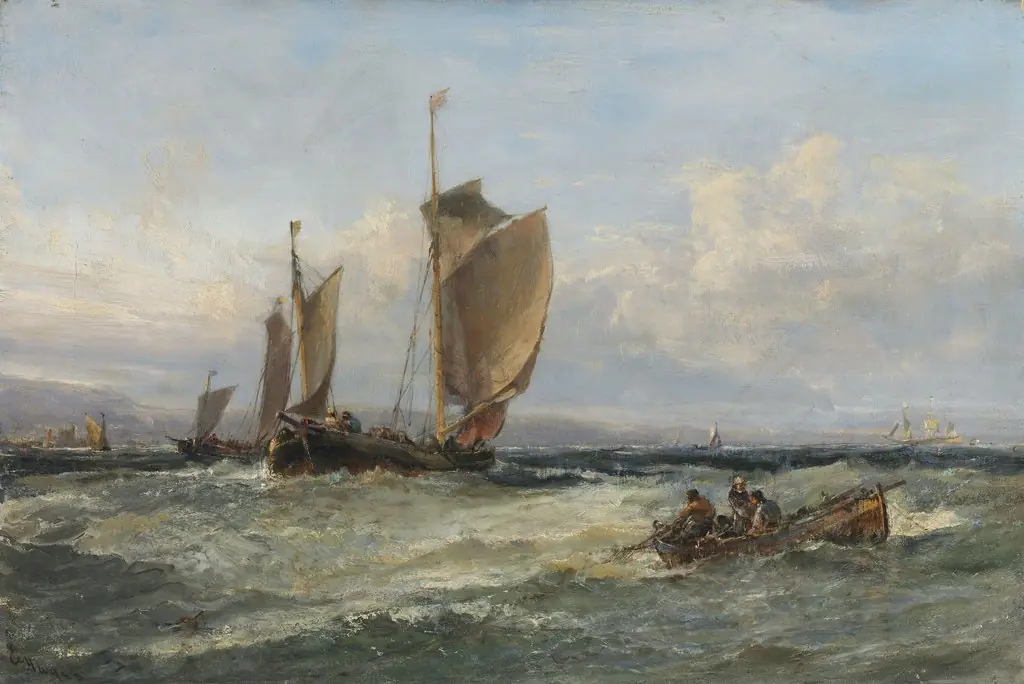
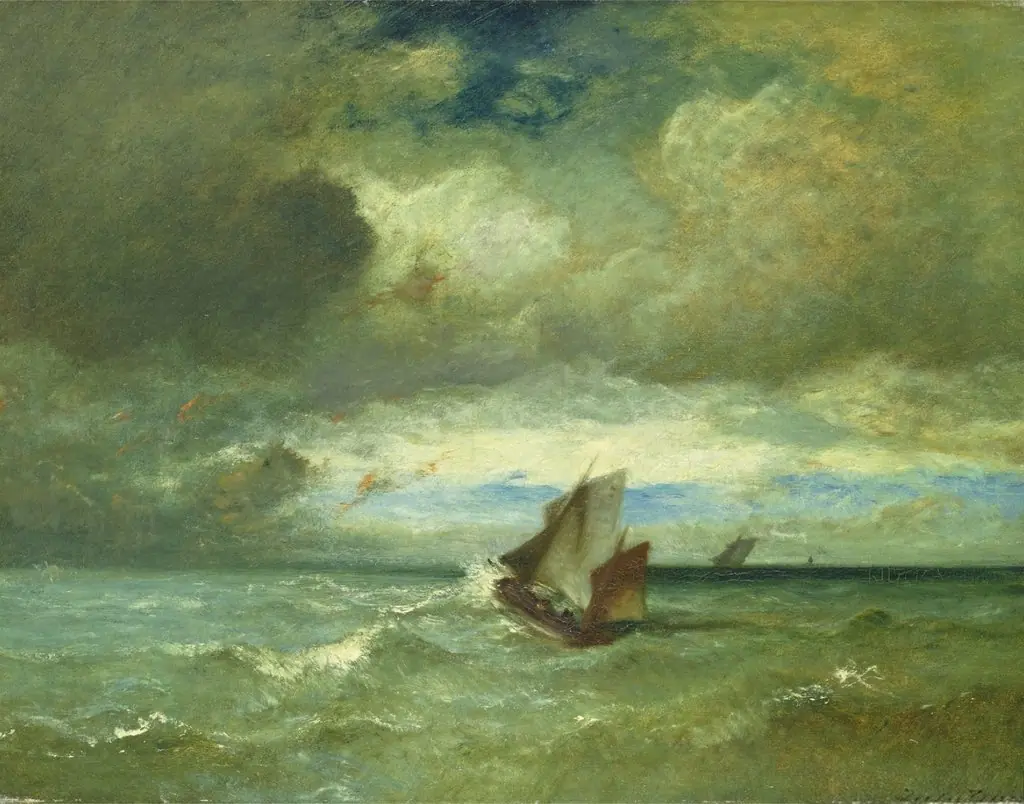
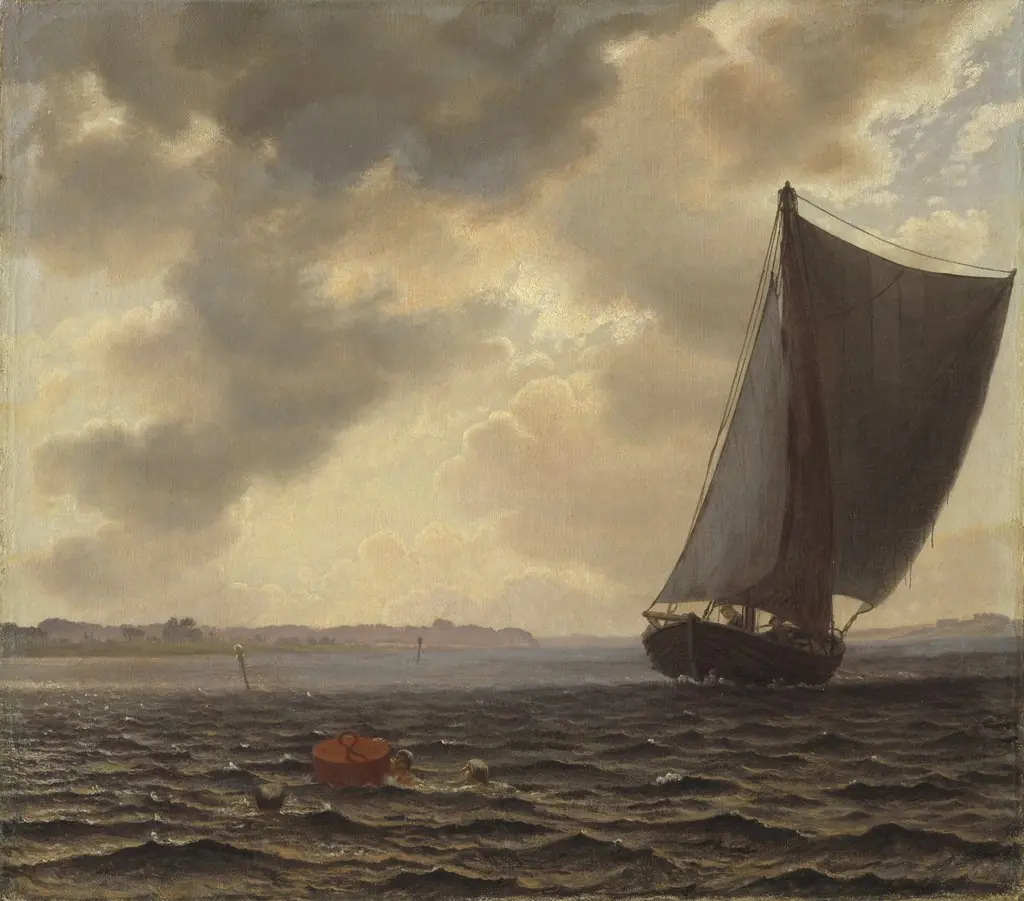
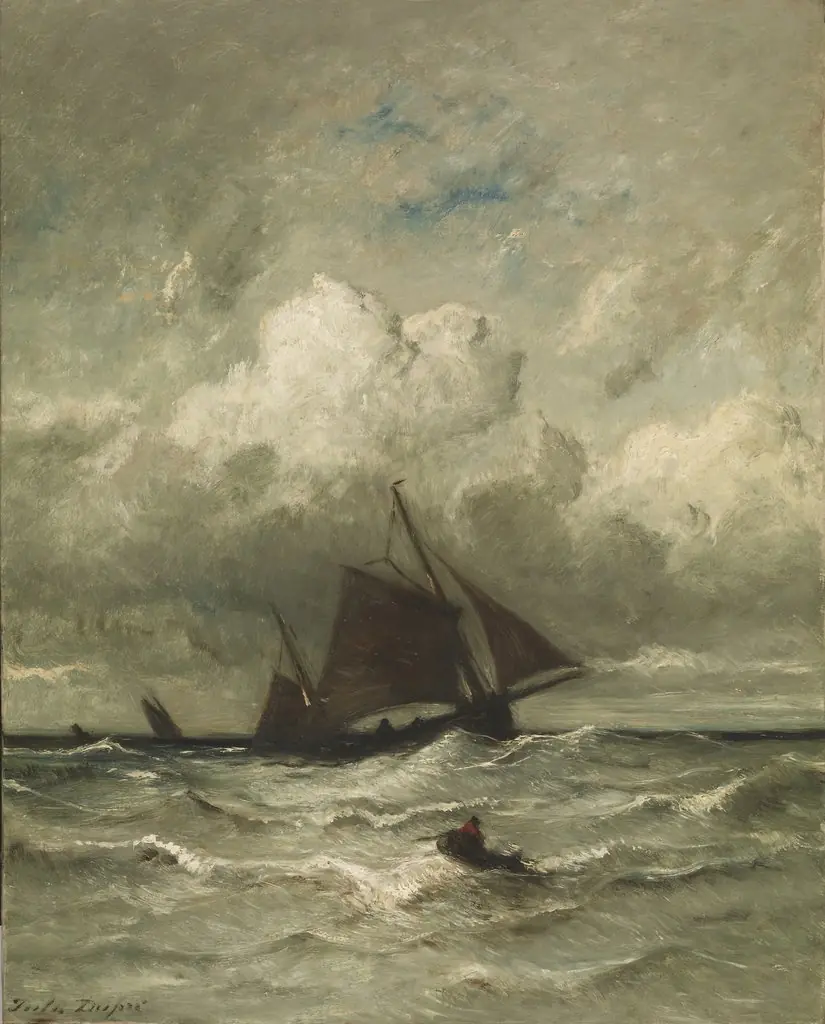
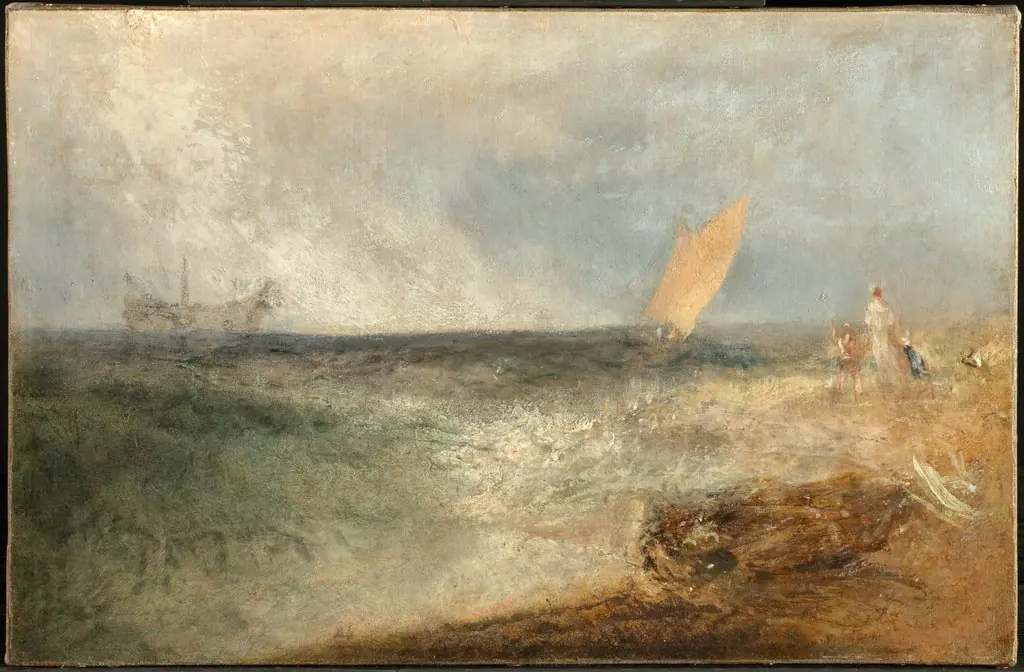
J.M.W. Turner’s 1809 oil painting captures a tranquil stretch of the Blythe Sands in the Thames Estuary, near Sheerness. The composition balances a modest boat in the foreground with a larger ship farther out, set against a sky where clouds part to let sunlight spill over the water, creating a gentle, atmospheric scene.
Subject & Meaning
The work focuses on the interplay between land, sea, and sky, using the silhouettes of vessels to suggest human activity within a vast natural setting. The darkened sails of the nearer craft contrast with lighter forms in the distance, emphasizing depth and the fleeting quality of light at tide‑setting hour.
Technique & Style
Turner employs loose, expressive brushwork and a nuanced palette to render the shifting light, employing chiaroscuro to model forms against the luminous sky. The handling of color and tone generates a sense of atmospheric perspective, guiding the eye from the foreground boat to the receding horizon.
History & Provenance
Initially shown in Turner’s Marylebone studio, the painting was not sold despite an offer from Sir George Beaumont, who had previously criticized Turner’s work. It later appeared at the 1815 Royal Academy exhibition. Retained by Turner until his death, it entered the Turner Bequest and now resides in Tate Britain, London.
Own this work as a print
Artist & collection

Artist
Joseph Mallord William Turner was born in 1775 at Maiden Lane, Covent Garden, where his father kept a barber and wig-making shop.