Artwork
Kylpylakana
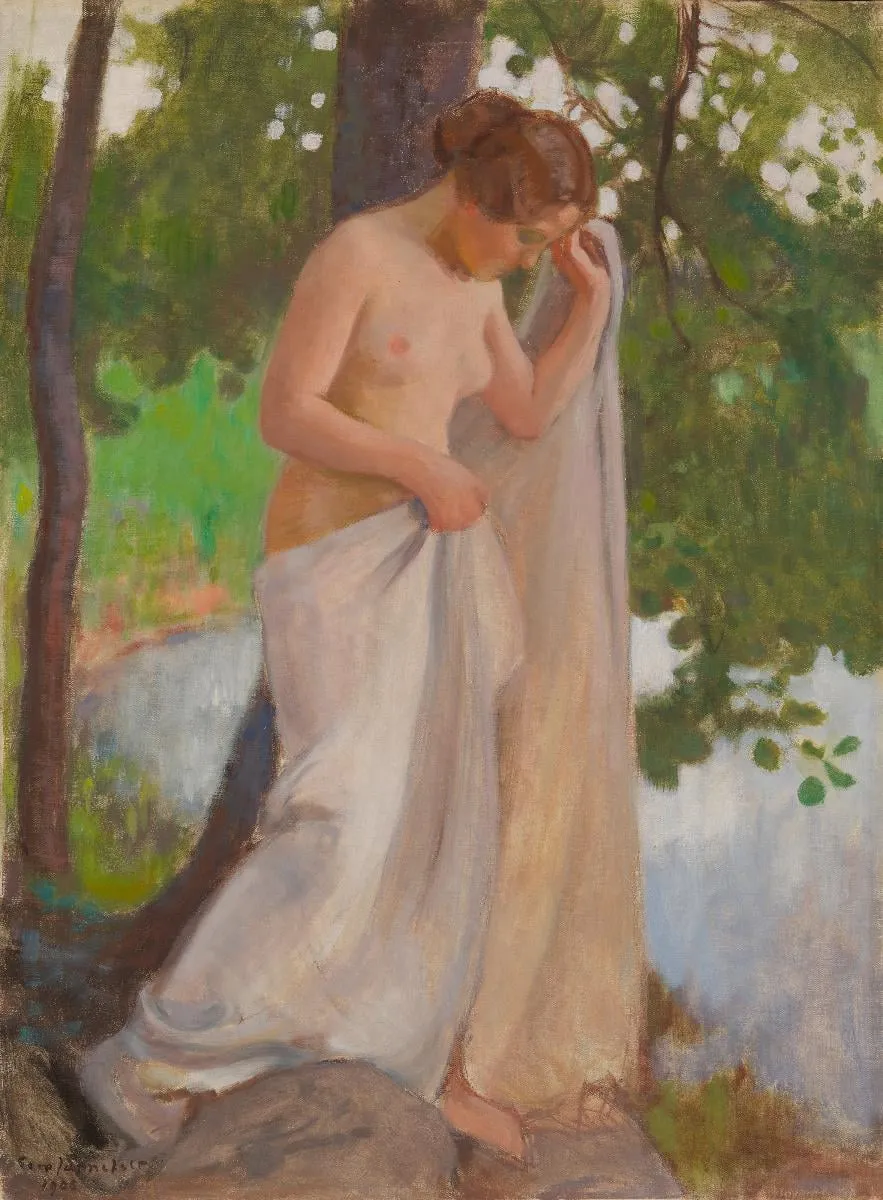
Kylpylakana is an unspecified painting by the Realist artist Eero Järnefelt. It dates from 1910 and is held in the collection of the Finnish National Gallery.
About this work
Overview
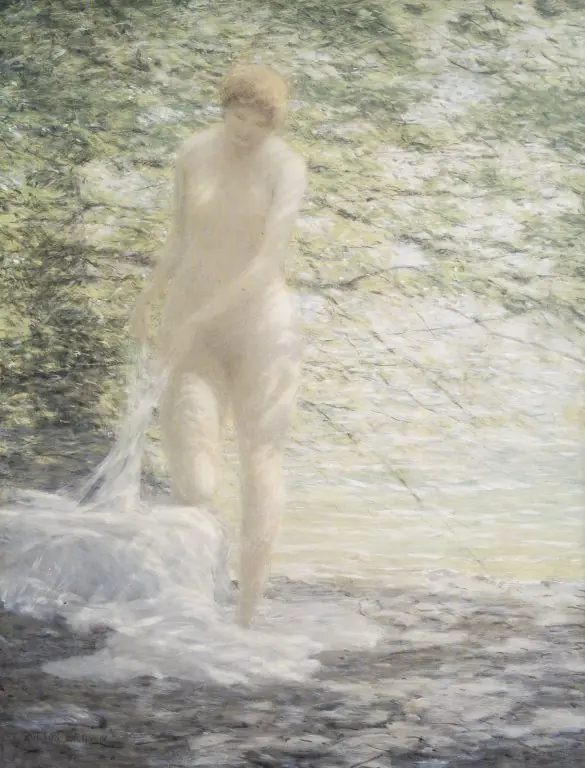
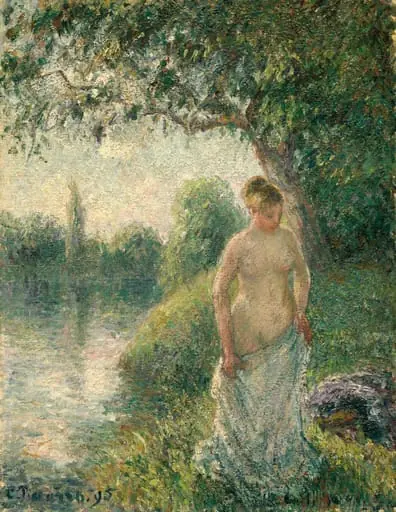
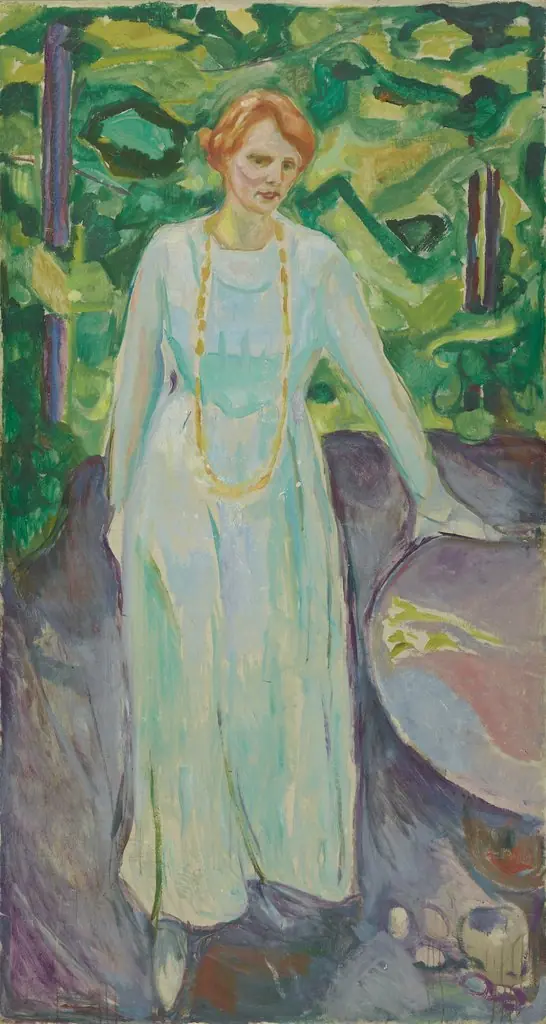
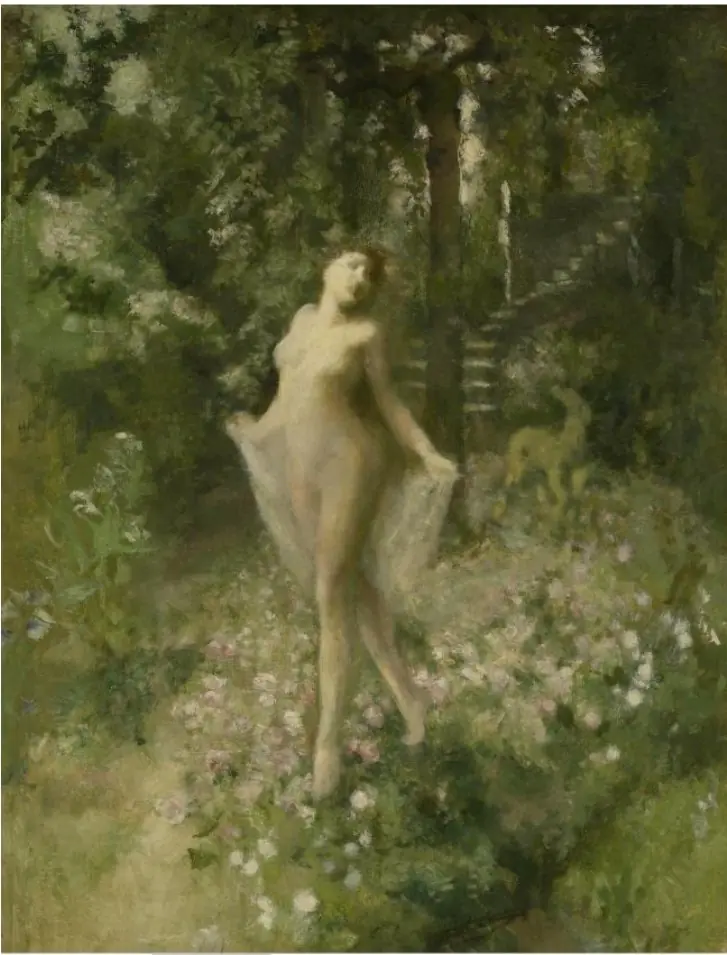
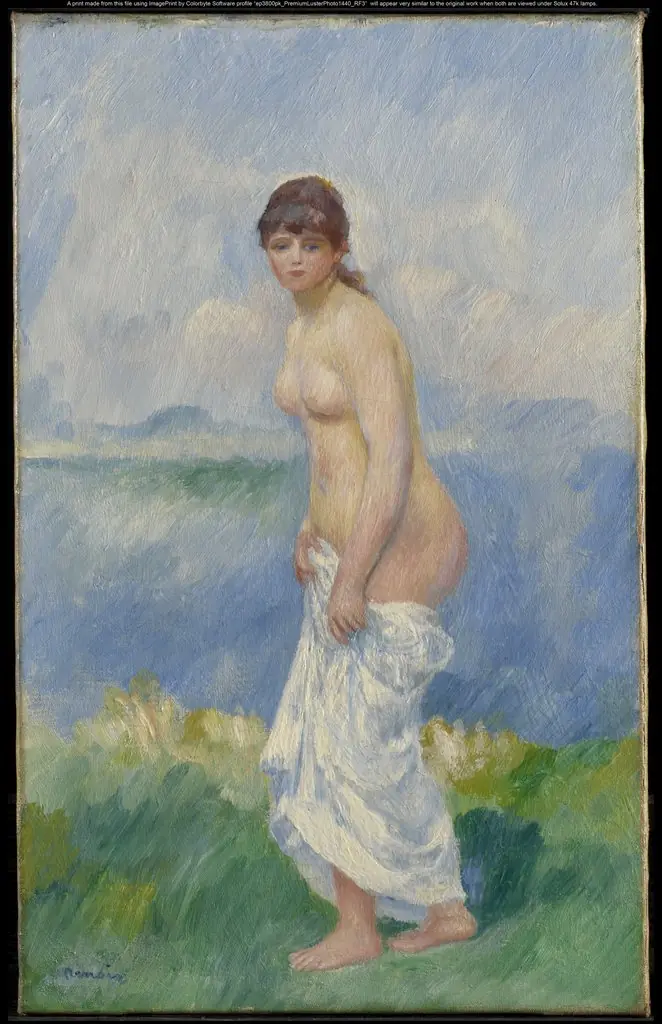
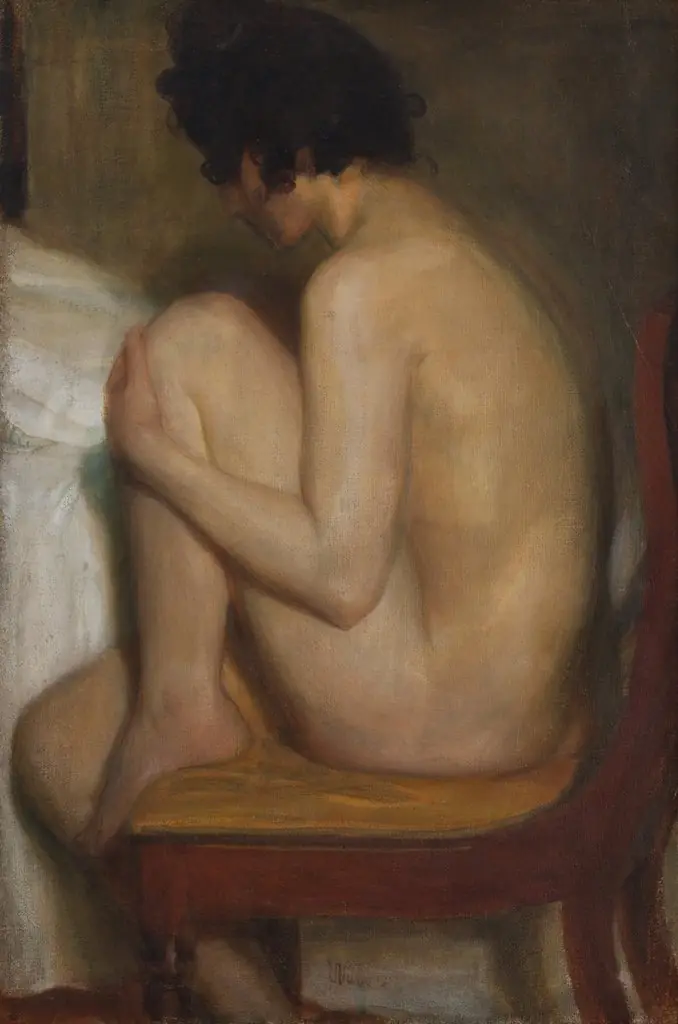
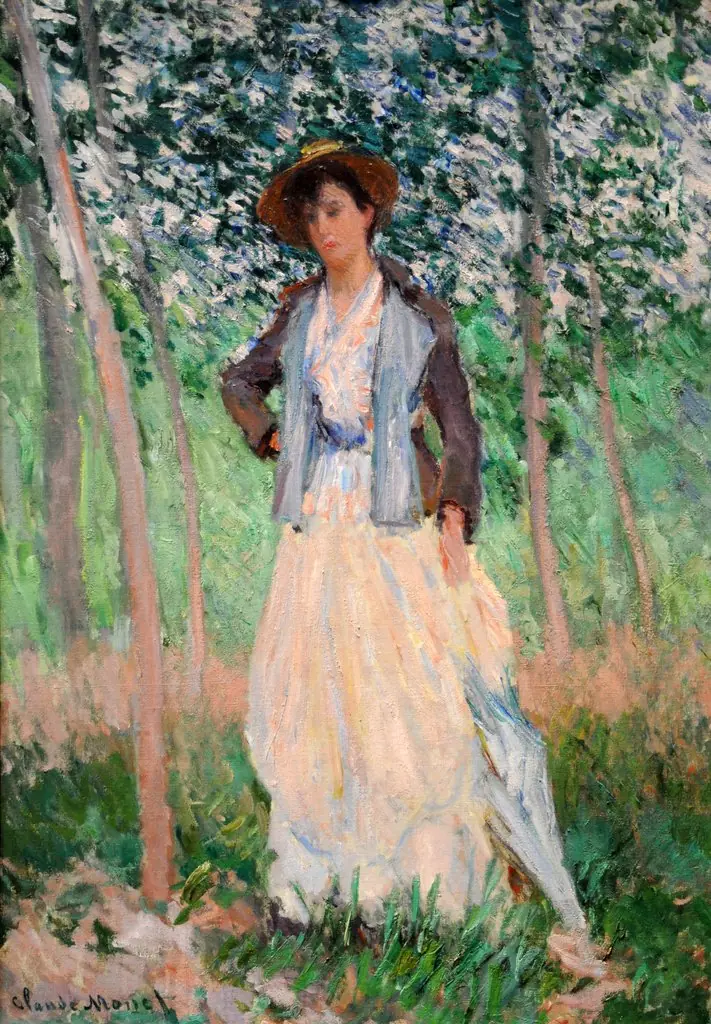
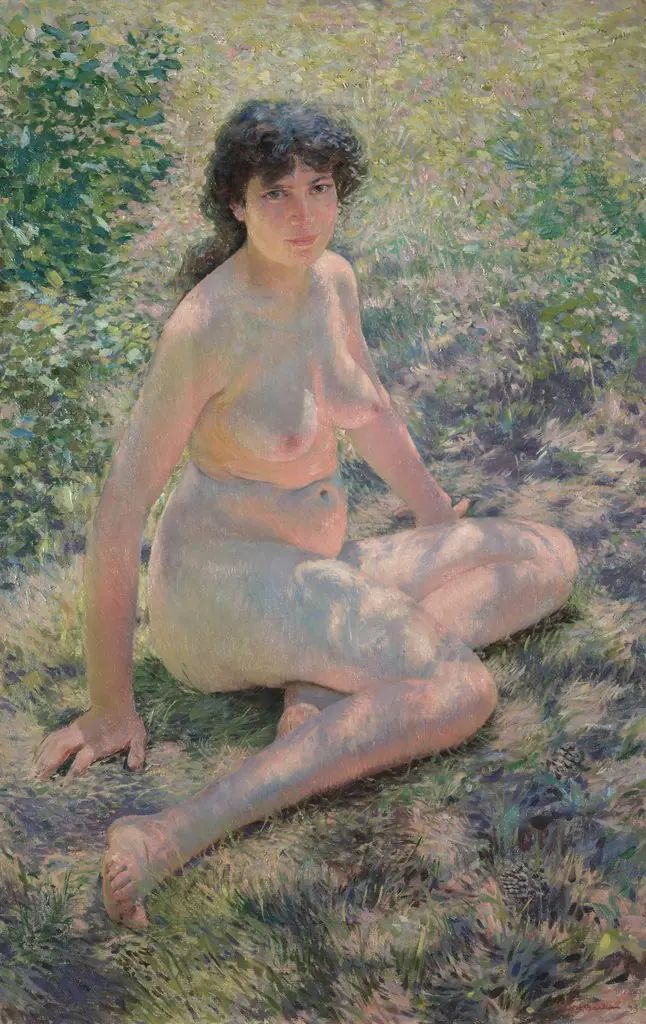
Painted around 1910 by Eero Järnefelt, Kylpylakana is a genre scene depicting a solitary woman in a natural setting. The work captures a quiet, intimate moment, free from narrative drama. The figure stands barefoot among trees, her posture still and contemplative, framed by a landscape of muted greens and soft light. The painting avoids theatricality, focusing instead on presence and atmosphere.
Subject & Meaning
The woman, dressed in a loose, light garment, appears in a moment of personal stillness, possibly after bathing. Her hands rest gently—one on her chest, the other holding fabric at her waist—suggesting modesty or reflection. The setting, neither domestic nor sacred, implies a private ritual within nature. The absence of context invites interpretation, emphasizing solitude over storytelling.
Technique & Style
Järnefelt employs thick, tactile brushwork, particularly on the figure’s skin and the folds of her dress, using impasto to create texture and volume. The paint is applied with deliberate weight, giving the surface a physical presence. Background trees and water are rendered with looser strokes, contrasting with the figure’s solidity. This technique enhances the sense of immediacy and materiality.
History & Provenance
Created during Järnefelt’s mature period, Kylpylakana reflects his interest in Finnish rural life and naturalism. It was likely painted in the countryside near Lake Saimaa, where he often worked. The painting remained in Finnish collections after its completion and is now held in a public museum, though its early ownership details are not widely documented.
Context
In early 20th-century Finland, artists like Järnefelt turned to everyday scenes as expressions of national identity. Kylpylakana aligns with broader Nordic trends favoring quiet realism over romanticism. While not overtly political, its focus on a solitary woman in nature resonates with contemporary ideals of simplicity and connection to the land.
Legacy
Kylpylakana endures as a quiet example of Finnish naturalism, admired for its restrained emotion and tactile paint handling. It influenced later generations of Finnish painters who sought to capture interiority within landscape. Though not widely exhibited internationally, it remains a significant work in Finnish art history for its understated dignity and technical sensitivity.
Artist & collection

Artist
Erik "Eero" Nikolai Järnefelt was a Finnish painter and art professor. He is best known for his portraits and landscapes of the area around Koli National Park, in the North Karelia region of Finland. He was a medal…