Artwork
'King Arthur' schooner, Liverpool
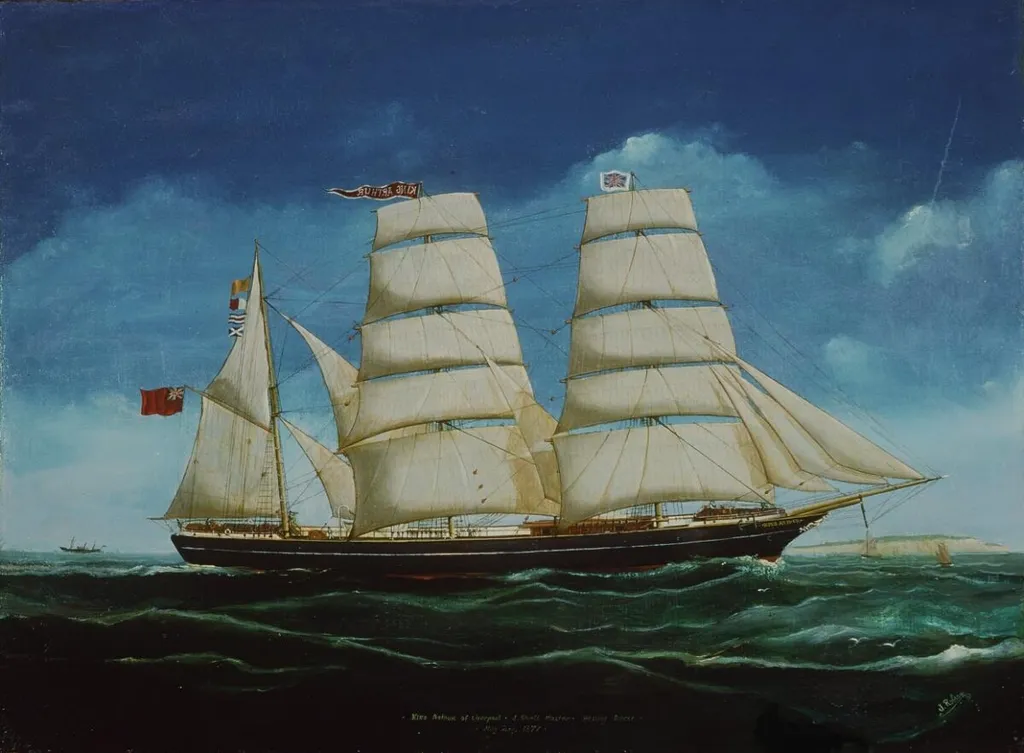
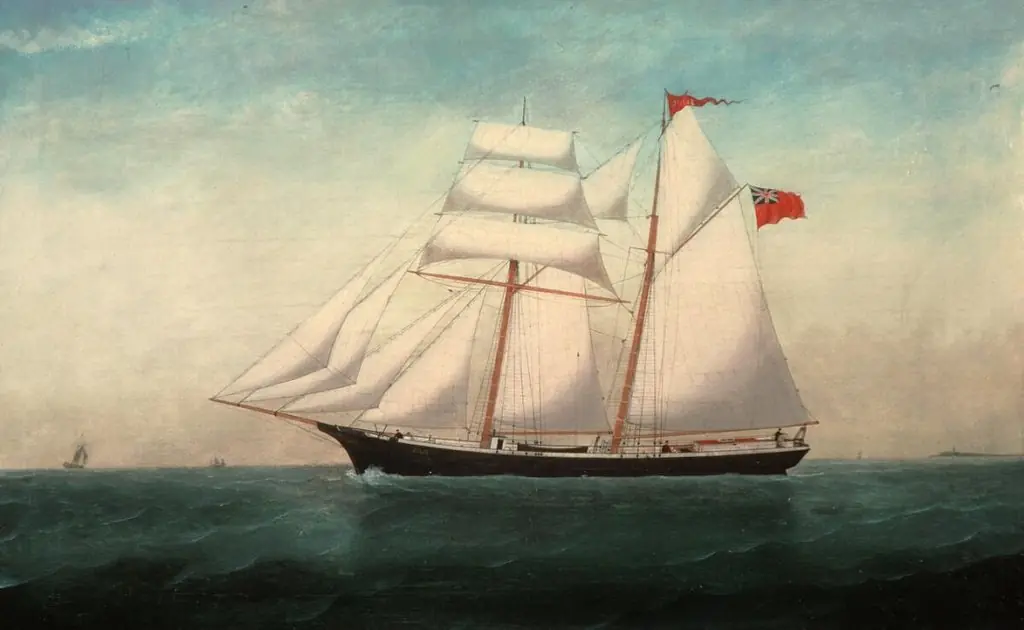
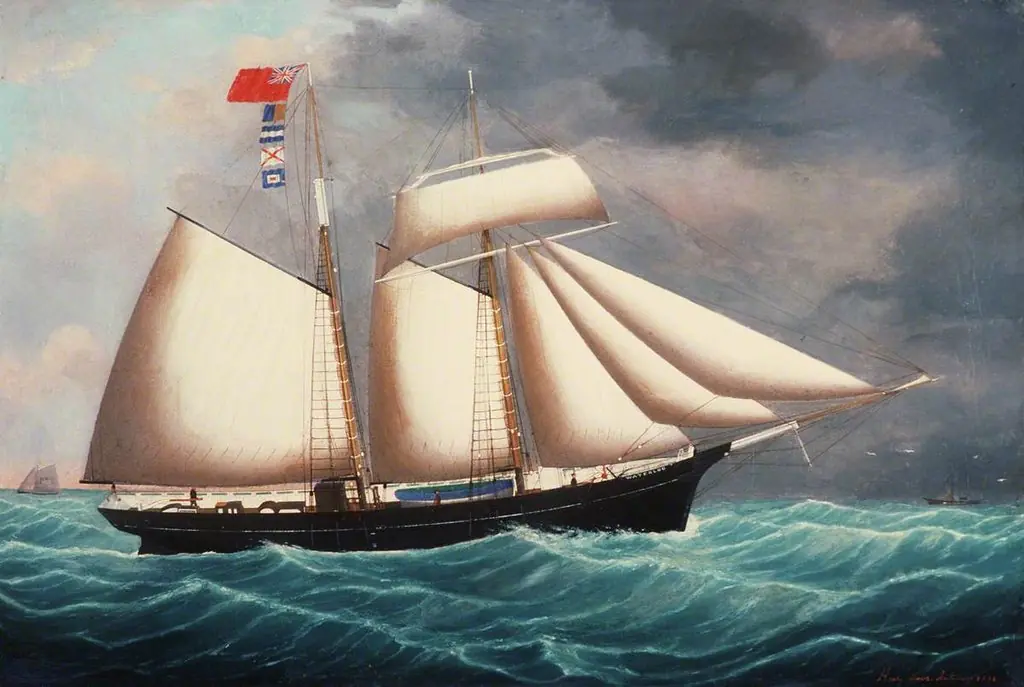
'King Arthur' schooner, Liverpool is an oil painting by the Impressionist artist J. Robson. It dates from 1890 and is held in the collection of the National Library of Wales. Painted in 1890 by J.
About this work
Overview
Painted in 1890 by J. Robson, this oil on canvas depicts the schooner 'King Arthur' underway near Liverpool. The work belongs to the collection of the National Library of Wales and represents a modest example of late 19th-century British marine painting. It captures a vessel in motion, emphasizing the interaction between ship and sea rather than port activity or human presence.
Subject & Meaning
The painting conveys no narrative beyond the vessel’s passage, focusing instead on the quiet dignity of maritime labor in a turbulent environment.
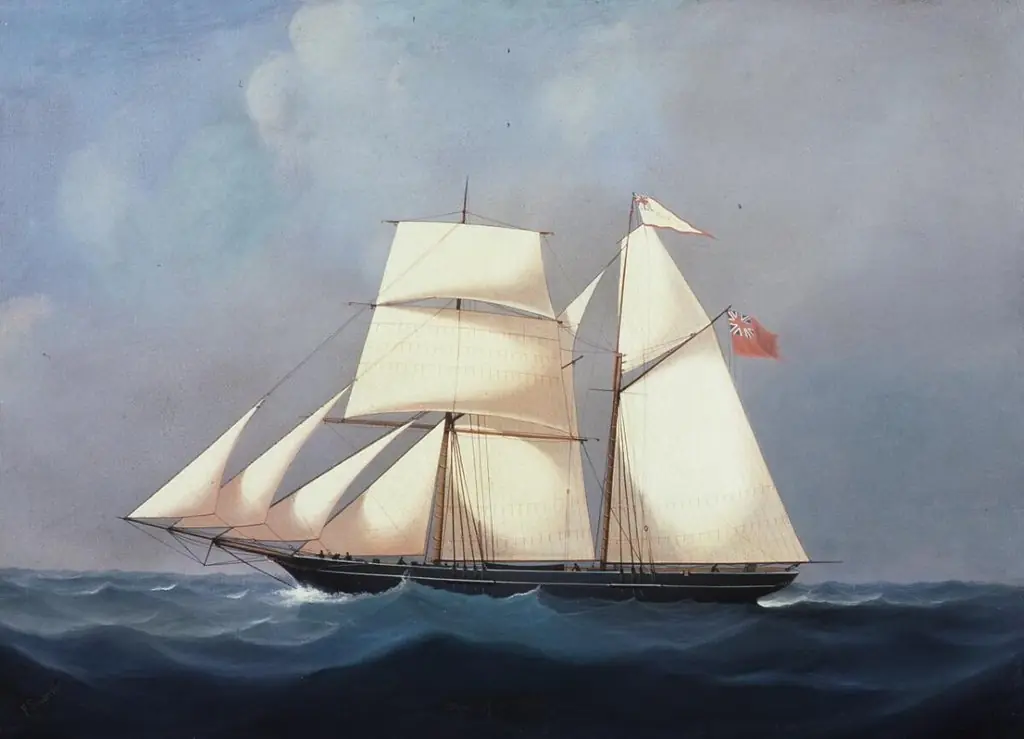
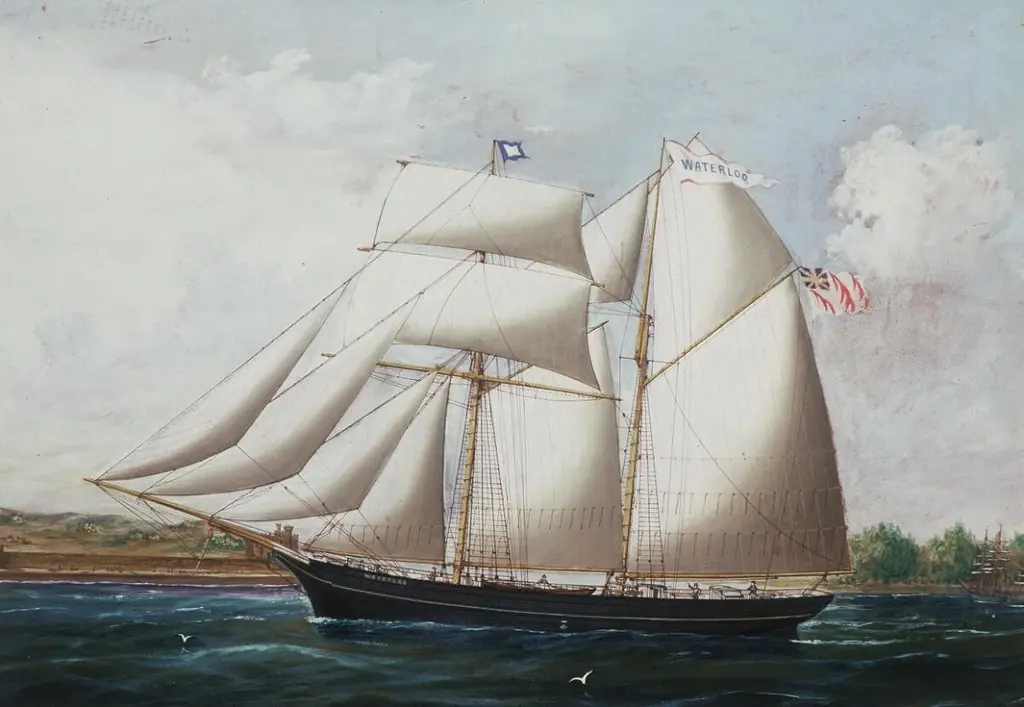
The 'King Arthur' is portrayed as a working vessel, its dark hull and light sails suggesting practical use rather than luxury. The red flag with a white emblem and the banner on the mast imply identification or ownership, possibly commercial or regional. The painting conveys no narrative beyond the vessel’s passage, focusing instead on the quiet dignity of maritime labor in a turbulent environment.
Technique & Style
Robson employs loose brushwork to suggest wind and wave motion, with quick strokes defining the sails and water. Contrast between the dark hull and pale canvas, along with the sky’s soft gradations, creates a sense of depth and atmospheric light. While not overtly dramatic, the handling of light and shadow subtly enhances the feeling of movement without resorting to theatrical chiaroscuro.
History & Provenance
The painting entered the National Library of Wales’ collection in the 20th century, likely through donation or acquisition tied to regional maritime heritage. No record of exhibition or public display prior to its institutional custody is documented. Its survival suggests it was valued locally, perhaps by a shipowner, merchant, or collector connected to Liverpool’s shipping trade.
Context
In 1890, Liverpool remained a major port for transatlantic and coastal trade, and schooners like the 'King Arthur' were vital for regional commerce. Marine paintings of this era often served as records of vessels or expressions of civic pride. Robson’s work aligns with this trend, offering a quiet, unembellished view of a working ship rather than a grand naval scene.
Legacy
The painting endures as a quiet testament to the everyday maritime life of late Victorian Britain. It holds no major artistic innovation but contributes to the broader archive of regional marine art. Its preservation in a national institution underscores its value as a historical document, reflecting the scale and character of coastal shipping at the turn of the century.
Artist & collection
Artist
J. Robson painted ships in the 1800s, when tall wooden schooners like the one in *King Arthur’ Schooner, Liverpool* sliced through the waves. His brush caught the rigging, sails, and hulls of working boats in oils,…