Artwork
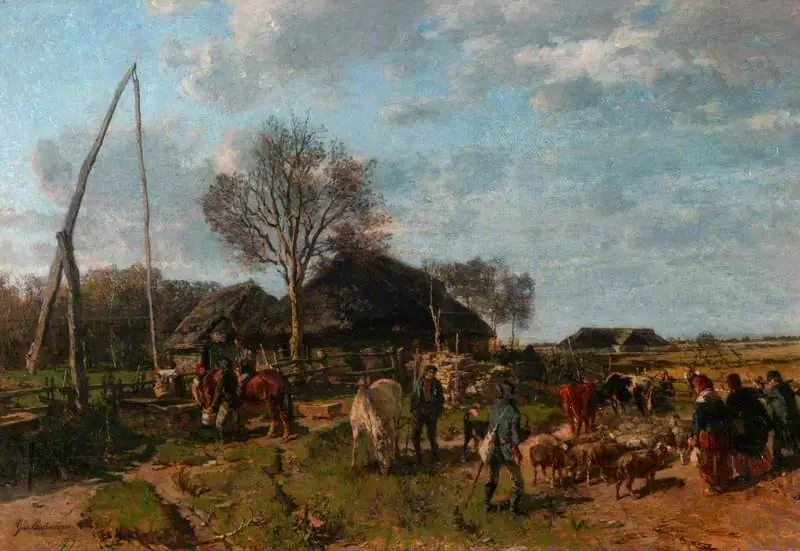
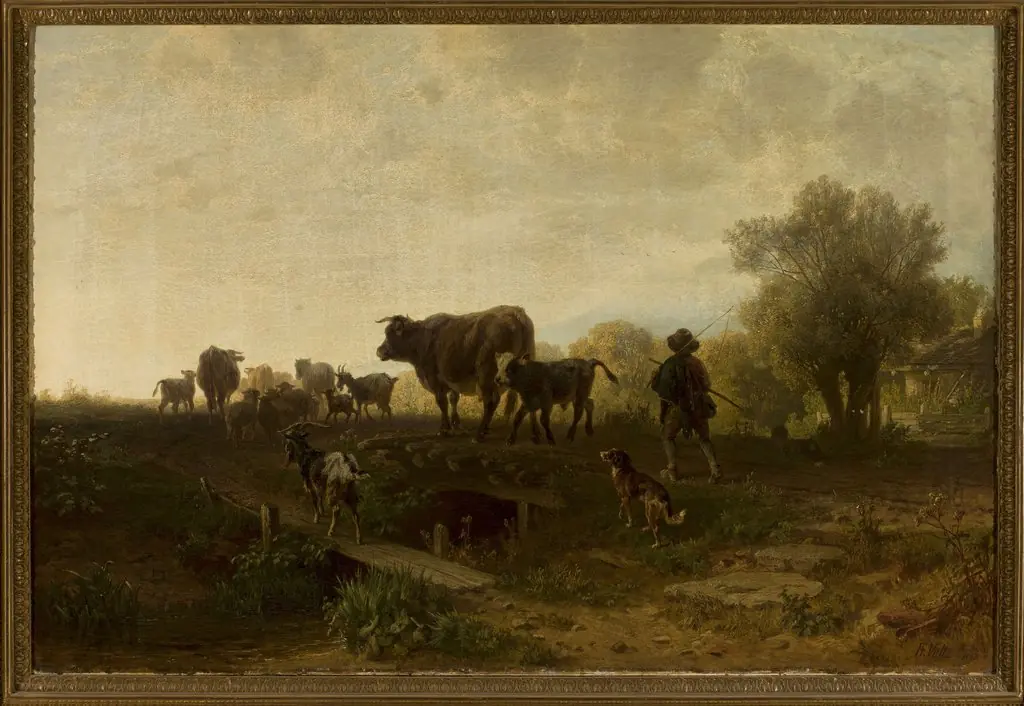
Cattle's Return
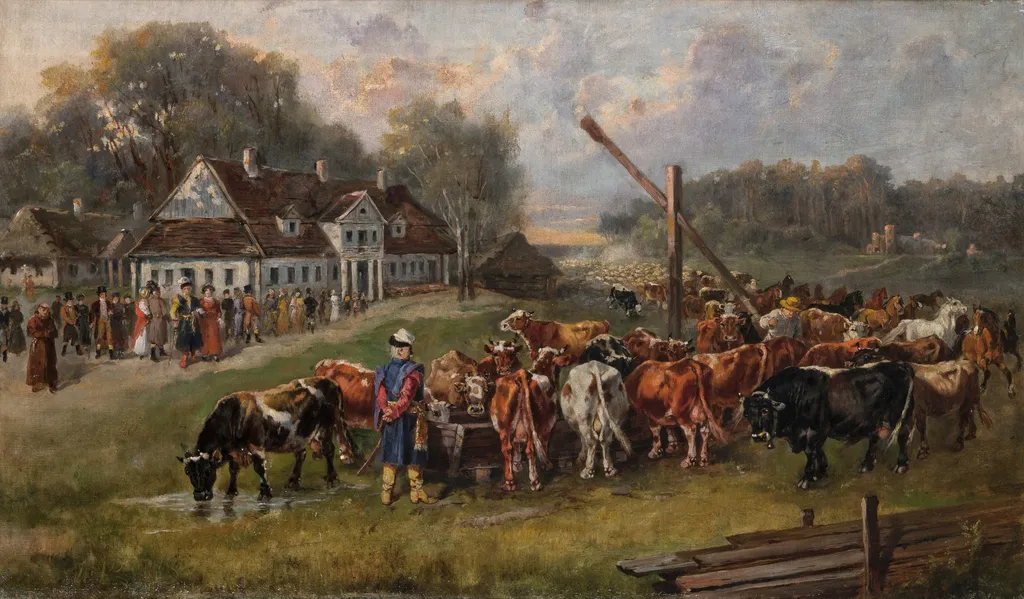
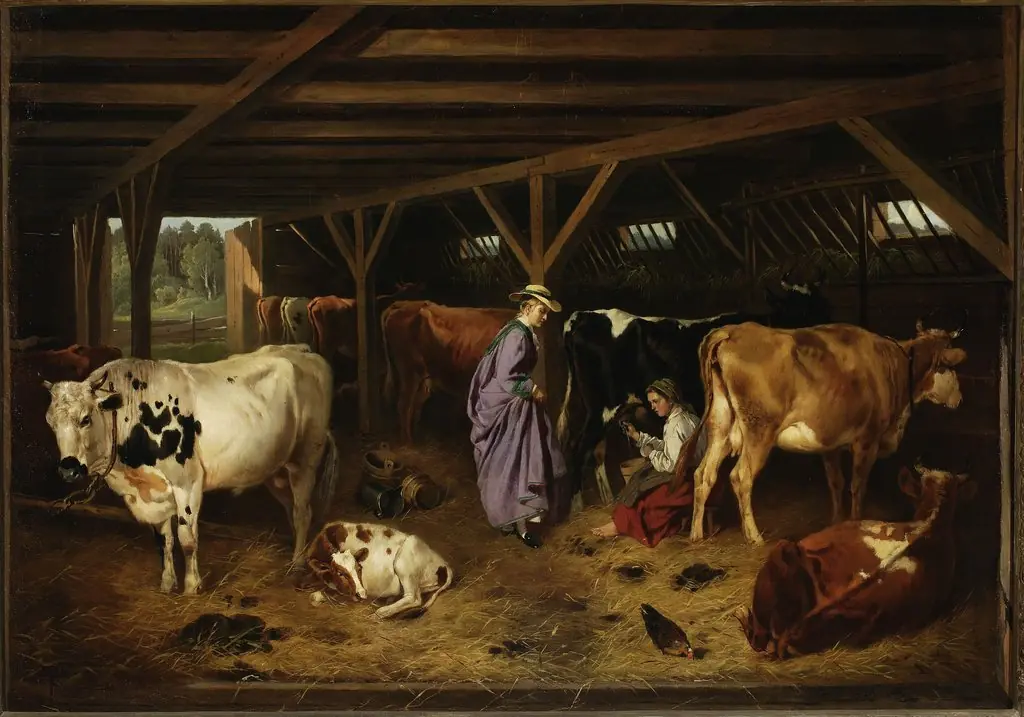
Cattle's Return is an oil painting by Józef Brodowski the Elder. It is held in the collection of the National Museum in Kraków.
About this work
Overview
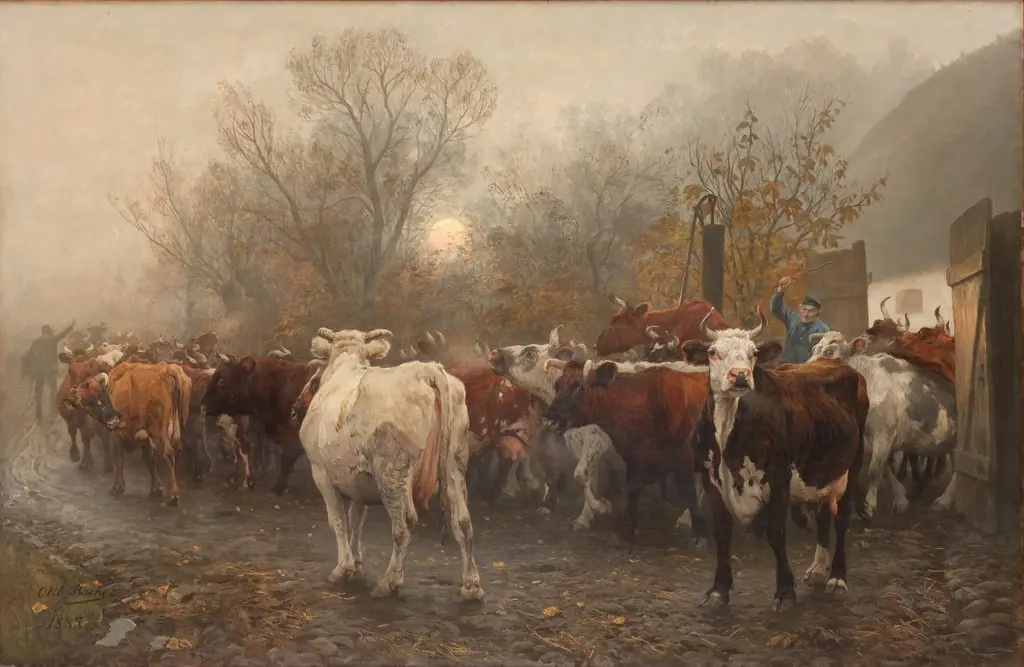
Józef Brodowski the Elder’s oil painting *Cattle’s Return* dates to 1868, several years after the artist’s death in 1853. The work belongs to the Polish Classical tradition and is part of the National Museum in Kraków’s collection. It portrays a bucolic moment of livestock being gathered near a water source, set against a modest rural backdrop.
Subject & Meaning
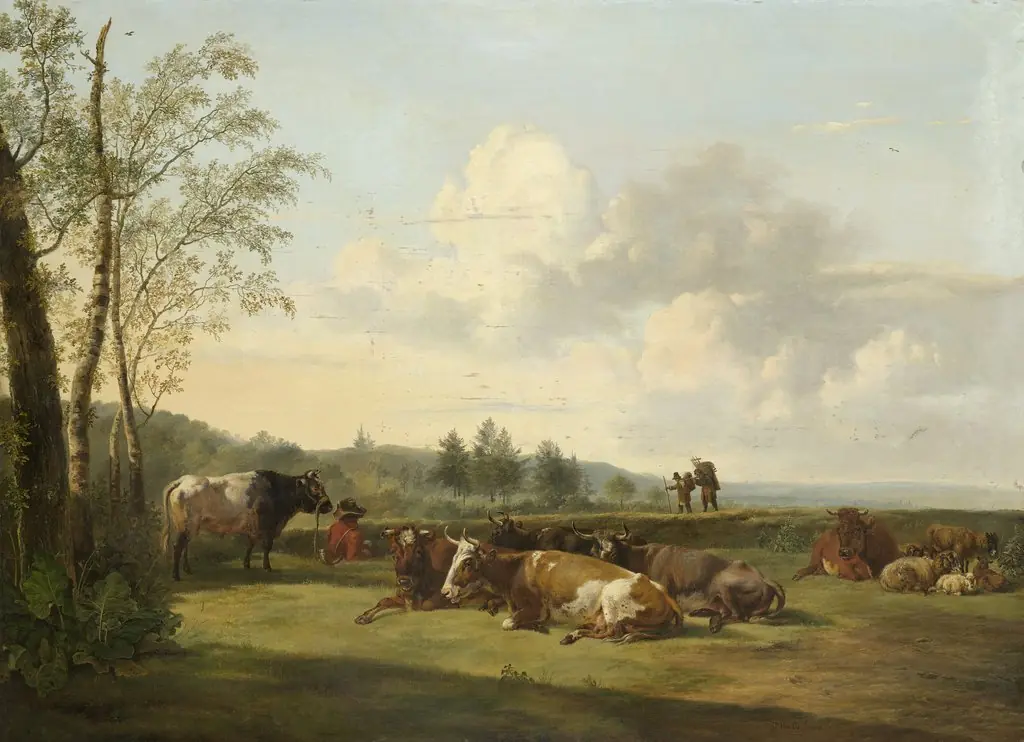
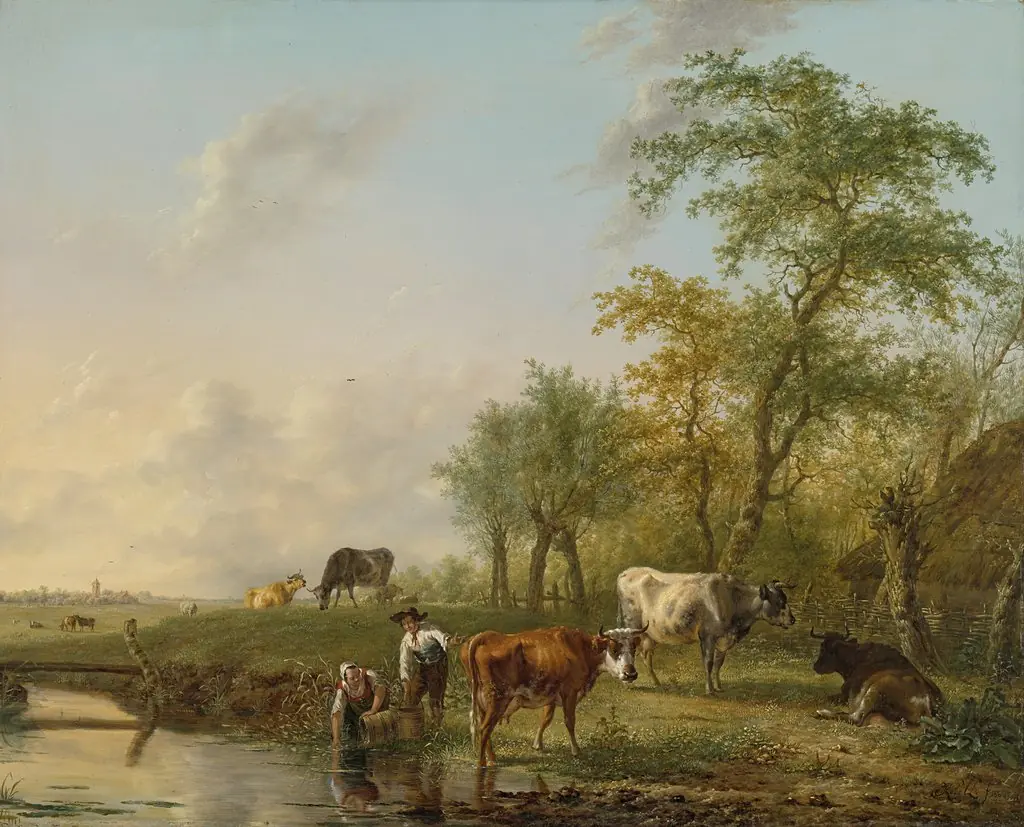
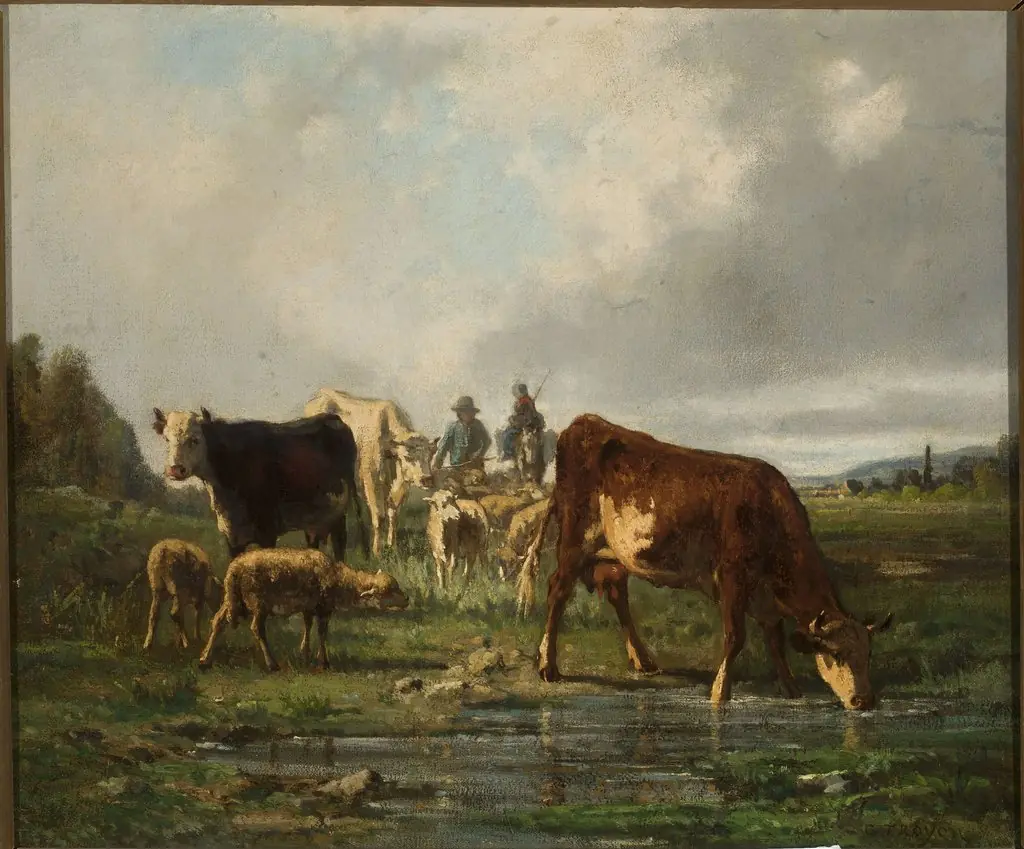
The composition centers on a group of brown and white cattle clustered around a trough, some drinking while others stand alert. A lone figure in a blue‑red coat watches over the herd, suggesting the presence of a shepherd or farmhand. A distant farmhouse with a tiled roof and surrounding trees frames the scene, emphasizing the everyday rhythms of agrarian life.
Technique & Style
Executed in oil on canvas, the painting employs chiaroscuro to model the animals and figures, creating contrast between illuminated forms and shadowed ground. The palette balances earthy tones with the brighter hues of the man’s coat, while the cloudy sky adds atmospheric depth. The overall handling reflects the disciplined, realistic approach typical of early‑19th‑century Classicism.
History & Provenance
Although Brodowski the Elder was active in the early 1800s, *Cattle’s Return* was completed posthumously in 1868, likely from sketches or a studio version left by the artist. The National Museum in Kraków acquired the work, where it remains on display as part of its Polish 19th‑century holdings.
Context
The painting illustrates a common theme in Polish art of the period: the idealization of rural labor and the connection between people and the land. By focusing on a simple, everyday scene, Brodowski aligns with contemporary efforts to document national life while adhering to Classical compositional principles.
Artist & collection
Artist
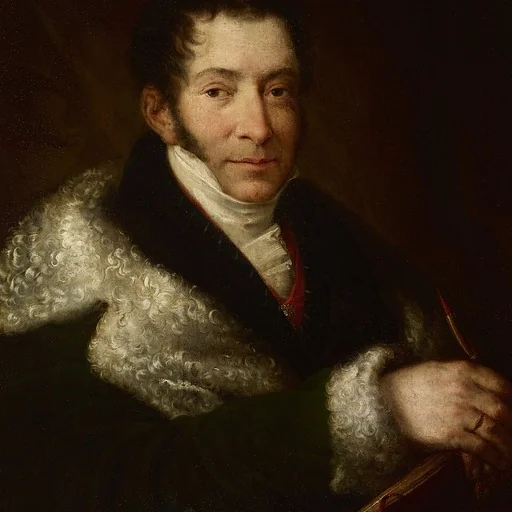
Józef Brodowski, (c.1775/81 – 1853) was a Polish painter in the Classical style. He is called The Elder to distinguish him from Józef Brodowski (1828–1900), who was apparently not related.