Artwork
A Cossack
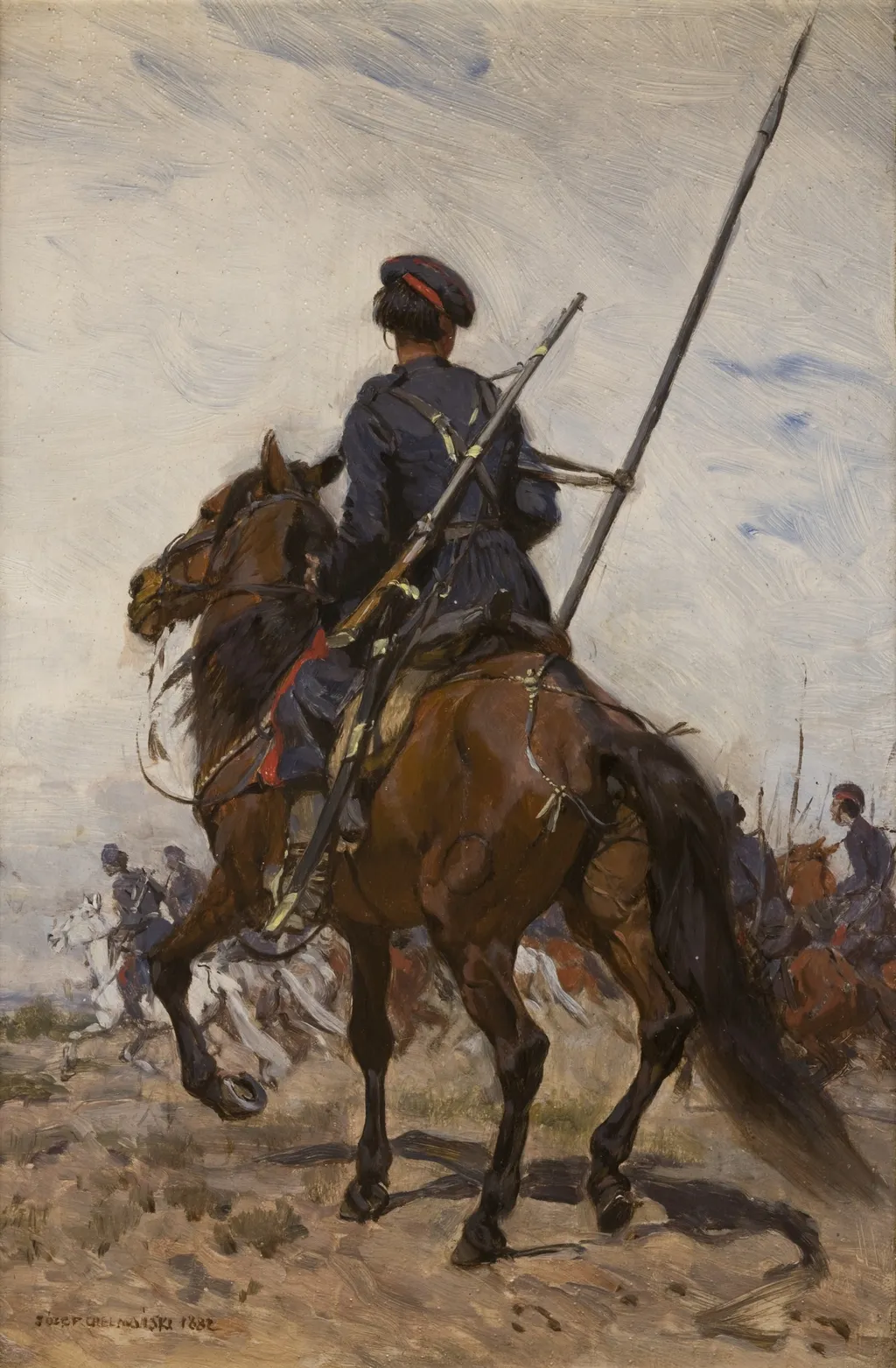
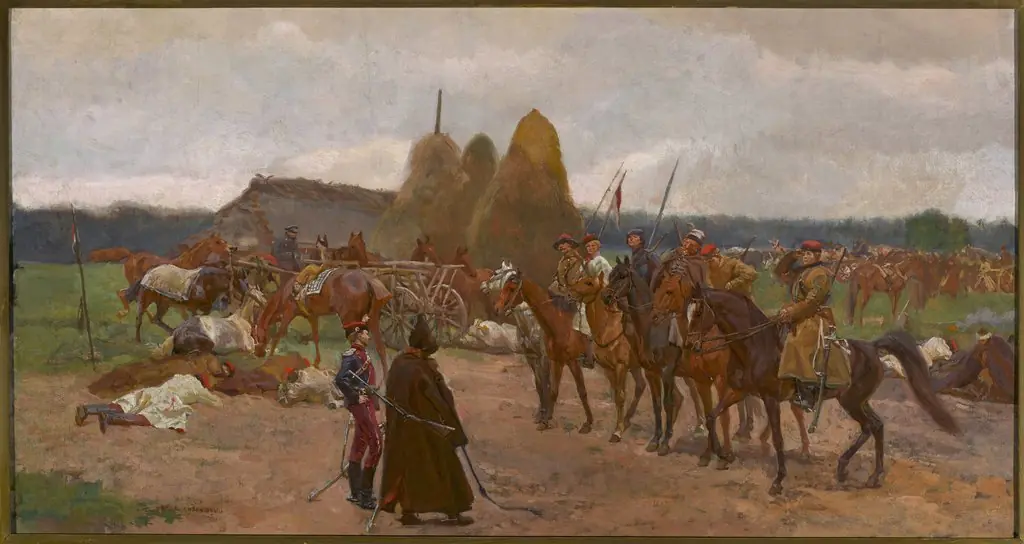
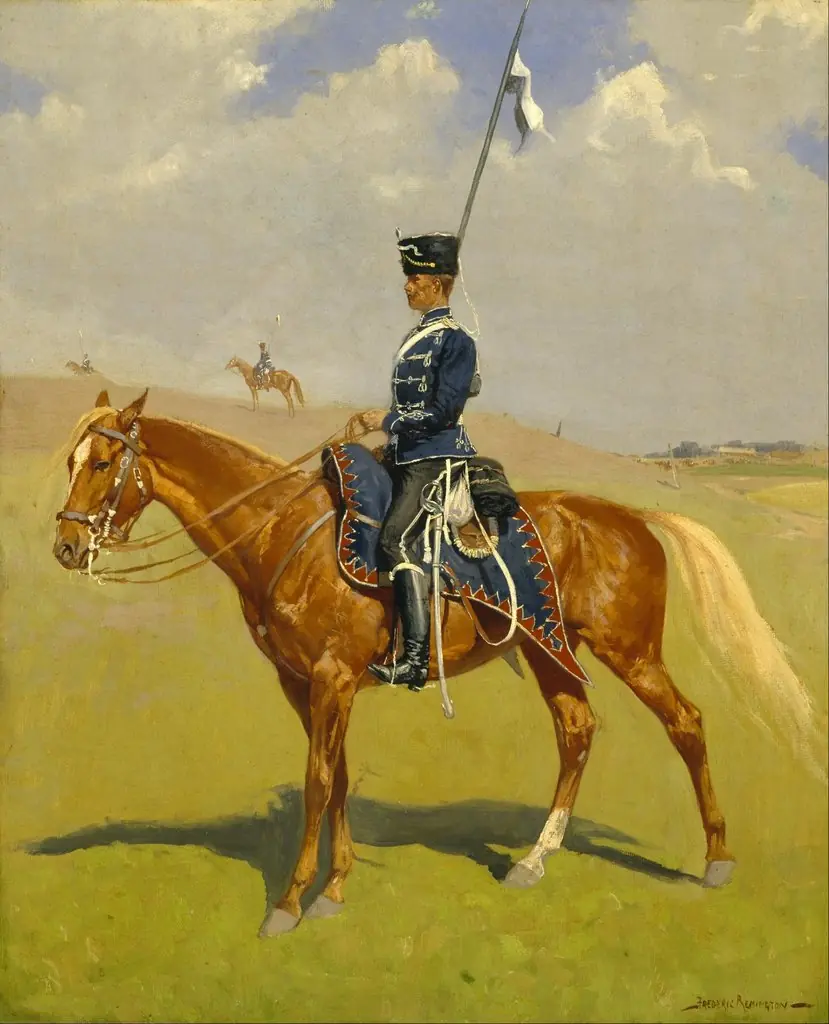
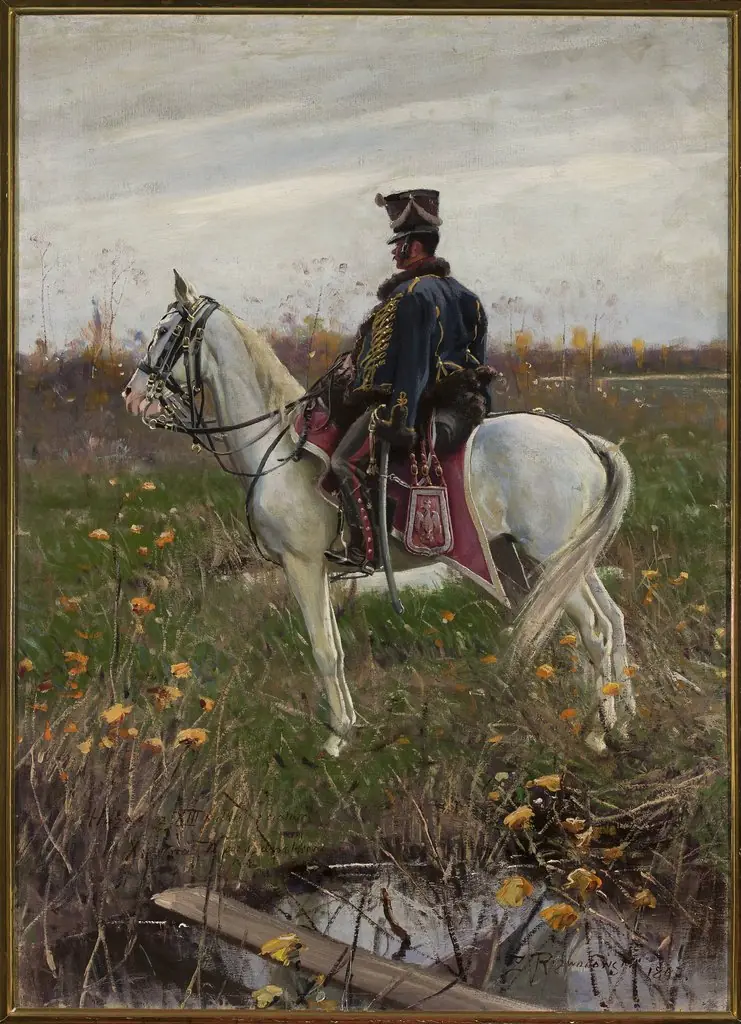
A Cossack is an oil painting by Józef Chełmoński. It dates from 1892 and is held in the collection of the National Museum in Kraków.
About this work
Overview
The painting belongs to a series of genre scenes Chełmoński produced during Poland’s partition era, reflecting his focus on rural and military life.
Painted in 1892 by Józef Chełmoński, *A Cossack* is an oil-on-canvas work depicting a solitary equestrian figure against a muted landscape. The painting belongs to a series of genre scenes Chełmoński produced during Poland’s partition era, reflecting his focus on rural and military life. Its composition emphasizes stillness and solitude, contrasting with the broader historical turbulence of the time. The piece is now held in the National Museum in Kraków.
Subject & Meaning
The painting presents a Cossack rider turned away from the viewer, gripping a long pole, likely a standard or lance. His dark blue uniform and red-banded hat suggest military affiliation, while the distant, indistinct riders hint at a larger group. Chełmoński avoids narrative clarity, instead evoking a sense of quiet dignity and isolation. The figure becomes a symbol of resilience, embodying the enduring presence of Cossack identity amid political fragmentation.
Technique & Style
Chełmoński employed thick, visible brushwork to render texture in the horse’s coat, the rider’s uniform, and the dusty ground. The palette is restrained—earthy browns, muted grays, and a touch of red—enhancing the somber mood. Light is diffused across a pale, overcast sky, unifying the scene without dramatic contrast. The loose handling of background figures creates depth without distraction, focusing attention on the central rider’s stillness.
History & Provenance
Created in 1892, the painting emerged during Chełmoński’s mature period, when he increasingly turned to historical and folk subjects. It entered the collection of the National Museum in Kraków shortly after its completion, likely through direct acquisition or donation. Its preservation in a major Polish institution reflects its recognition as a representative work of late 19th-century Polish realism, though it was never widely exhibited abroad.
Context
Poland was partitioned among three empires during Chełmoński’s lifetime, and national identity was preserved through cultural expression. Cossacks, historically linked to Ukrainian and southern Polish frontier regions, were romanticized as symbols of autonomy and martial tradition. Chełmoński’s depiction avoids heroism, instead offering a restrained, almost melancholic portrayal that resonated with contemporary audiences seeking cultural continuity.
Legacy
While not among Chełmoński’s most reproduced works, *A Cossack* remains a key example of his ability to merge realism with emotional restraint. It influenced later Polish painters who sought to depict national subjects without overt nationalism. The painting’s quiet intensity continues to be studied for its subtle handling of atmosphere and its refusal to dramatize history, offering a contemplative counterpoint to more theatrical contemporaries.
Own this work as a print
Artist & collection
Artist
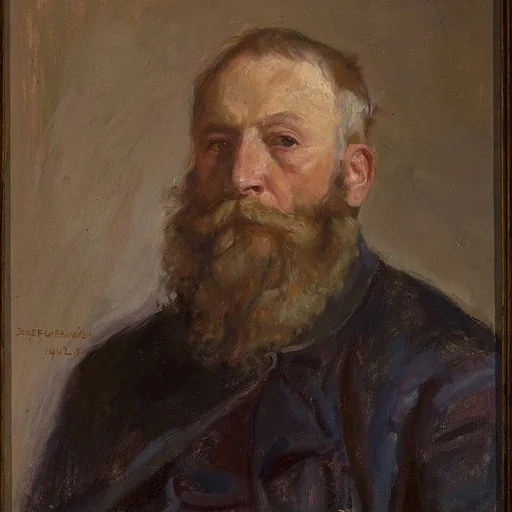
Józef Marian Chełmoński (7 November 1849 – 6 April 1914) was a Polish painter, known for his realistic paintings of landscapes, rural scenes and genre scenes presenting historical and social contexts of the late Romantic period in…