Artwork
Jay
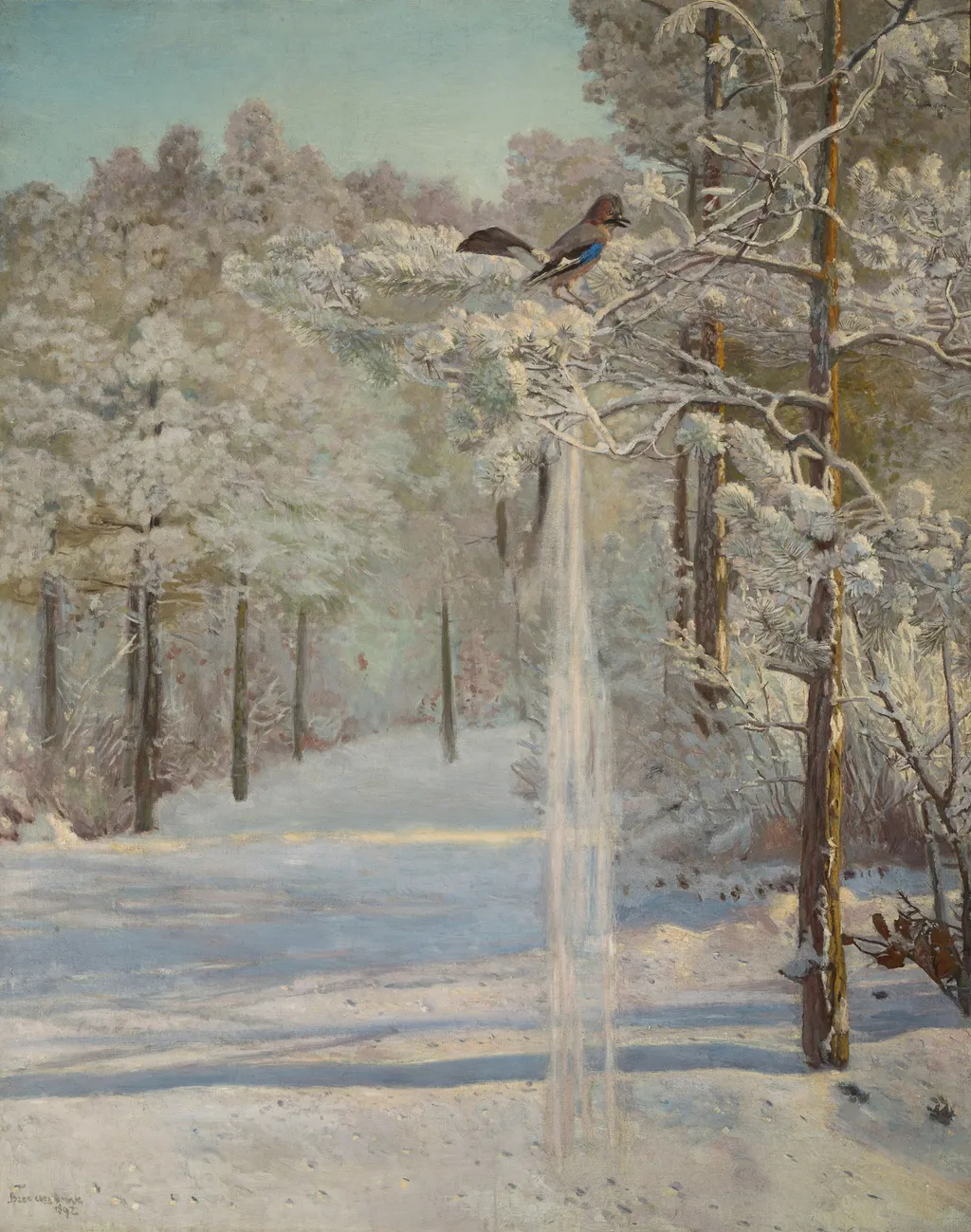
Jay is an oil painting by the Post-Impressionist artist Józef Chełmoński. It dates from 1896 and is held in the collection of the National Museum in Warsaw.
About this work
Overview
Created in 1896 by the Polish painter Józef Chełmoński, *Jay* is an oil on canvas that portrays a solitary Eurasian jay set against a wintry forest. The work belongs to the post‑Impressionist phase of Chełmoński’s career, a period when he moved beyond the Romantic realism of his earlier landscapes. The painting is part of the National Museum in Warsaw’s permanent collection.
Subject & Meaning
The central figure is a bright‑blue and red Eurasian jay perched on a frosted branch, its vivid plumage contrasting sharply with the muted, snow‑covered trees. The bird’s isolation amid the silent, white‑blanketed forest evokes a moment of quiet observation, highlighting the resilience of wildlife in harsh winter conditions.
Technique & Style
Chełmoński employs a palette of cool whites and grays for the snowy backdrop, while the jay is rendered in saturated blues and reds. Thick, impasto brushstrokes are evident on the trunks and branches, giving the coniferous foliage a tactile, textured surface. The overall handling reflects post‑Impressionist concerns with color contrast and painterly surface.
History & Provenance
After its completion, the painting entered the collection of the National Museum in Warsaw, where it remains on display. Its acquisition aligns with the museum’s effort to preserve works that document Polish artistic responses to the country’s partitioned status in the late nineteenth century.
Own this work as a print
Artist & collection
Artist
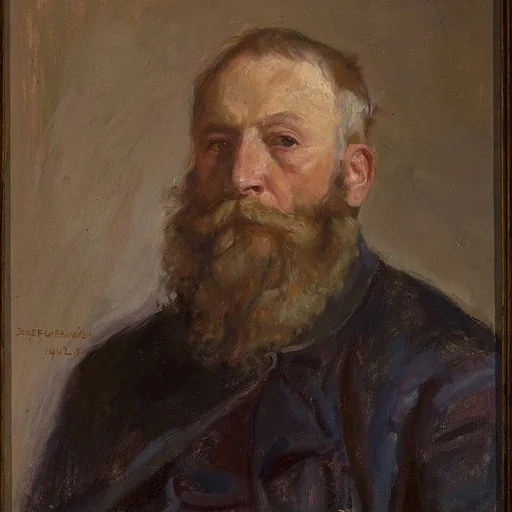
Józef Marian Chełmoński (7 November 1849 – 6 April 1914) was a Polish painter, known for his realistic paintings of landscapes, rural scenes and genre scenes presenting historical and social contexts of the late Romantic period in…