Artwork
My Models – Triptych (Right Part)
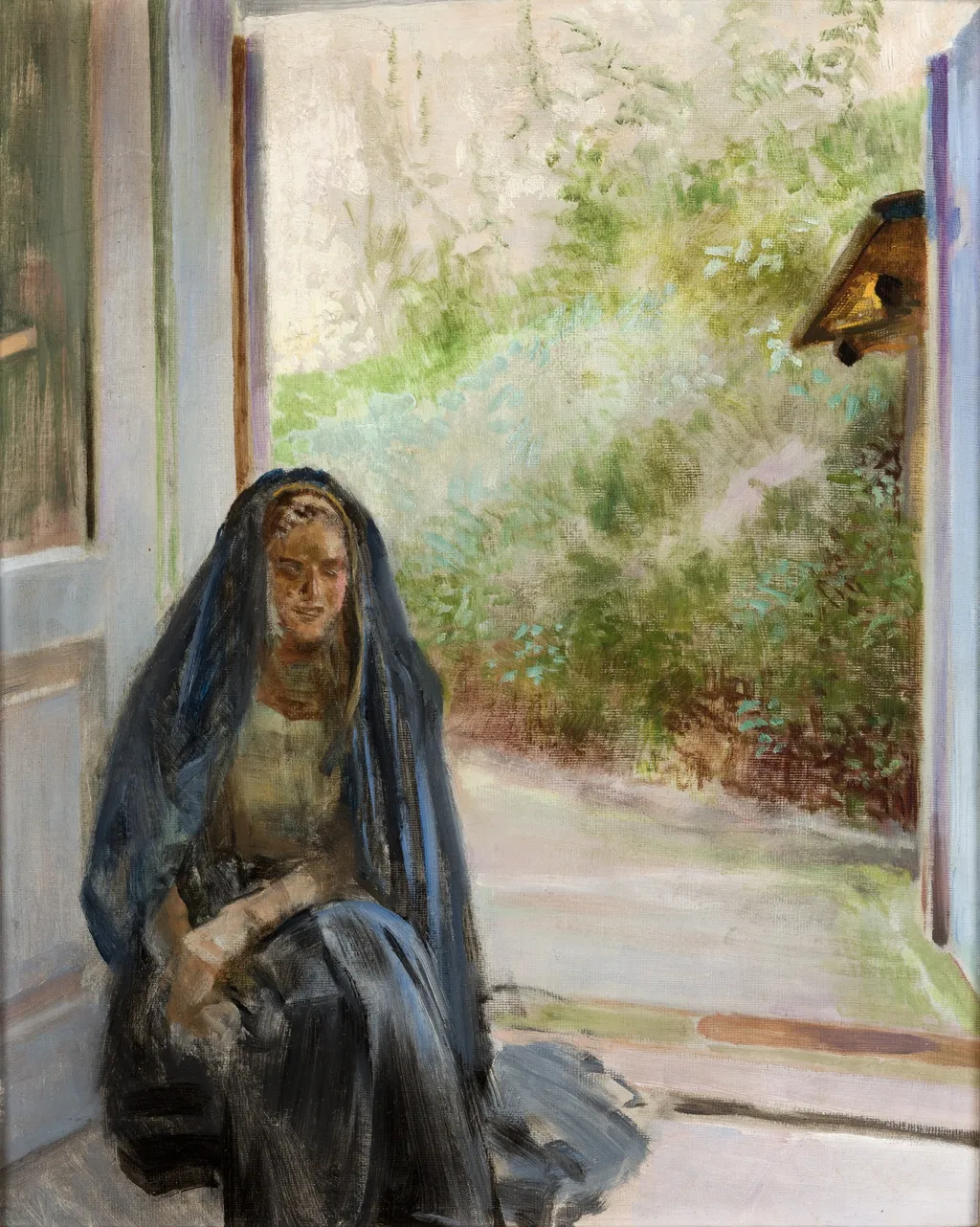
My Models – Triptych (Right Part) is an unspecified painting by the Post-Impressionist artist Jacek Malczewski. It dates from 1909 and is held in the collection of the National Museum in Kraków.
About this work
Overview
It reflects the artist’s engagement with Symbolism and the broader Young Poland movement, blending personal observation with allegorical intent.
Painted in 1909 by Jacek Malczewski, this panel is the right section of a triptych titled *My Models*. It reflects the artist’s engagement with Symbolism and the broader Young Poland movement, blending personal observation with allegorical intent. The work resides in the National Museum in Kraków, where it contributes to a larger exploration of identity, femininity, and national consciousness through intimate, staged scenes.
Subject & Meaning
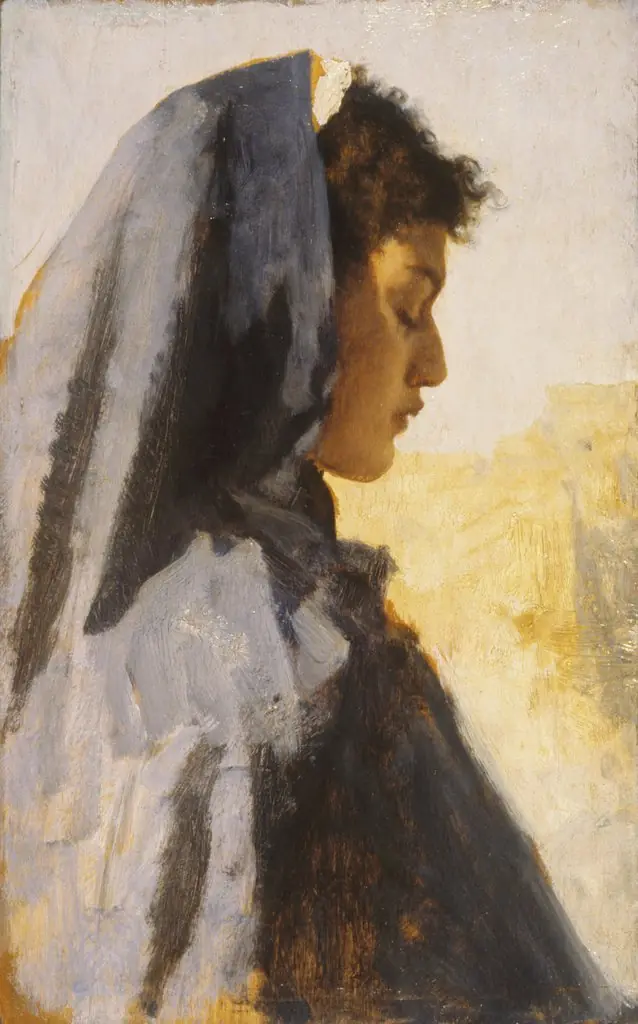
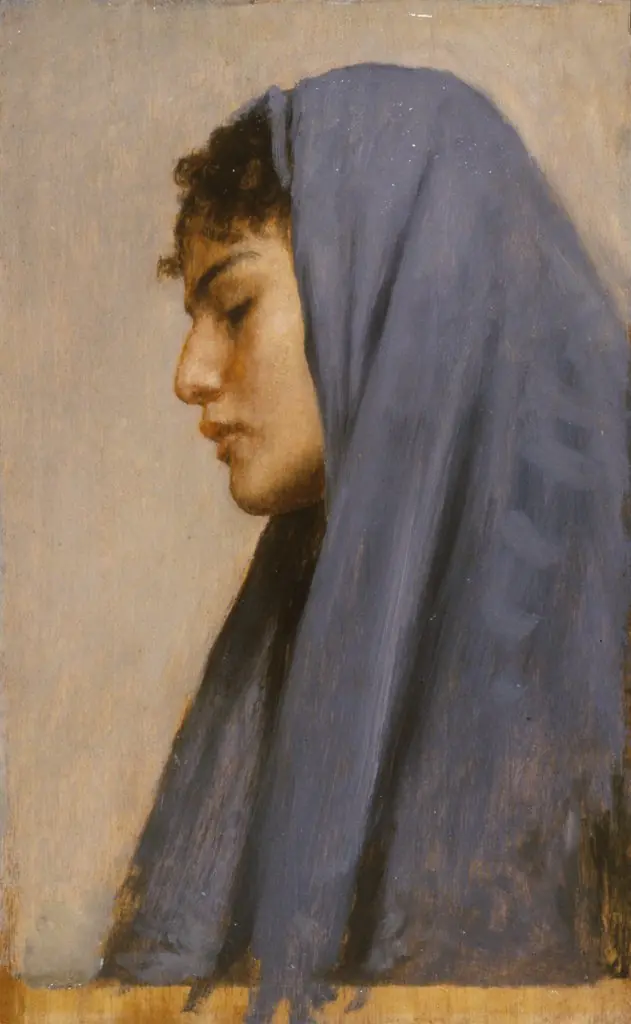
The central figure is a woman seated on the floor, draped in a dark blue cloth that obscures her head and shoulders, evoking both modesty and mystery. Her stillness and inward gaze suggest contemplation, possibly symbolizing the quiet resilience of Polish womanhood during a period of national fragmentation. The absence of overt narrative invites interpretation rooted in personal and cultural introspection rather than literal storytelling.
Technique & Style
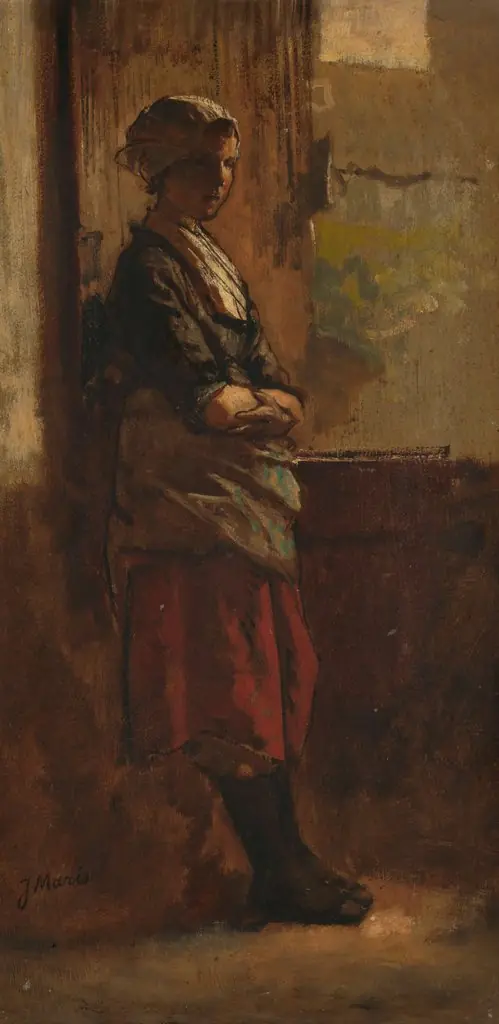
Malczewski employs a restrained palette of deep blues and muted light tones to create a quiet contrast between figure and background. The window frame introduces a structured division between interior and exterior, while the soft rendering of the garden beyond suggests a psychological space as much as a physical one. His use of chiaroscuro is subtle, emphasizing form through tonal gradation rather than dramatic lighting.
History & Provenance
The triptych was completed during a period of intense artistic and political reflection in partitioned Poland. Malczewski, based in Kraków, often drew from local traditions and personal relationships to construct symbolic compositions. The work entered the National Museum’s collection shortly after its creation, preserved as part of a broader effort to document the visual culture of the Young Poland movement.
Context
In early 20th-century Poland, artists like Malczewski turned to allegory and myth to navigate the absence of political sovereignty. By portraying models—often women from his circle—in contemplative poses, he transformed private moments into public metaphors. This panel, part of a three-part series, reflects a broader trend of using domestic scenes to encode national longing and spiritual endurance.
Legacy
Malczewski’s triptych remains a key example of how Symbolist aesthetics were adapted to express Polish cultural identity under foreign rule. Its quiet intensity influenced later generations of artists seeking to merge personal expression with collective memory. The work continues to be studied for its nuanced interplay of form, symbolism, and historical context within Central European modernism.
Artist & collection
Artist
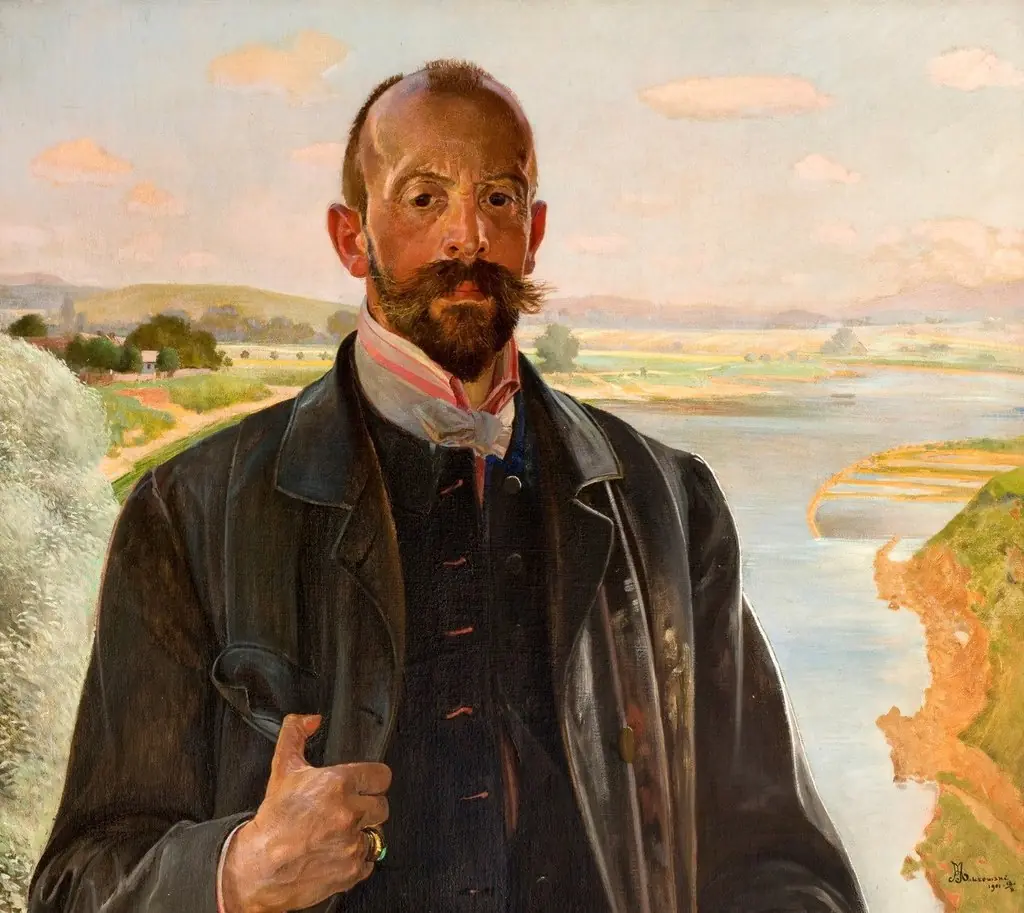
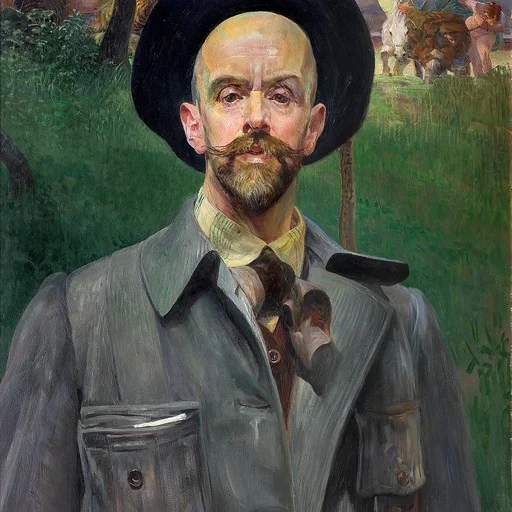
Jacek Malczewski (Polish: ; 15 July 1854 – 8 October 1929) was a Polish symbolist painter who was one of the central figures of the patriotic Young Poland movement.